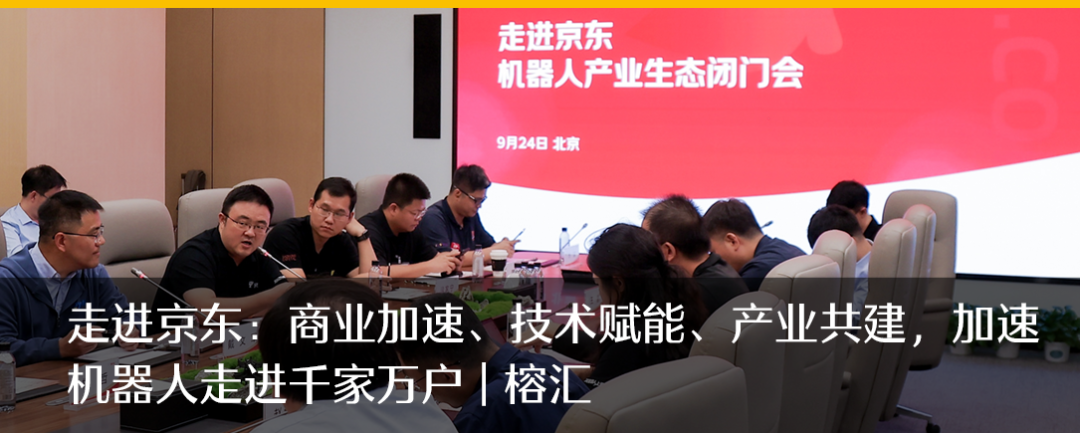
Decoding New Policies and Market Signals: How Tech and Healthcare Innovators Can Tap the Hong Kong Stock Market | Ronghui

Back to fundamentals, building differentiation.
In the first half of 2025, as China's economic fundamentals continued to recover and foreign capital returned to Hong Kong for asset allocation, the Hong Kong IPO market remained active, with deal volume, fundraising amounts, and market liquidity all climbing.
Driving this strong market pulse were new policies. From Chapter 18A for biotech companies and Chapter 18C for specialist technology companies, to the "Tech Enterprise Express" launched in May this year, the Hong Kong Stock Exchange has continued to optimize its listing regime and policies. The Tech Enterprise Express offers one-stop listing advisory services and allows companies to submit listing applications on a confidential basis.
At the same time, global investors have grown more confident in China's frontier technology sectors, including artificial intelligence, embodied intelligence, and advanced manufacturing. The healthcare sector, led by innovative drugs, has also been boosted by major license-out transactions, pushing the sector upward.
Recently, Gaorong Ventures, together with CICC, JPMorgan, Kirkland & Ellis, and DFIN, hosted a closed-door session on Hong Kong listings, offering practical guidance for tech and healthcare innovation companies seeking to go public in Hong Kong.
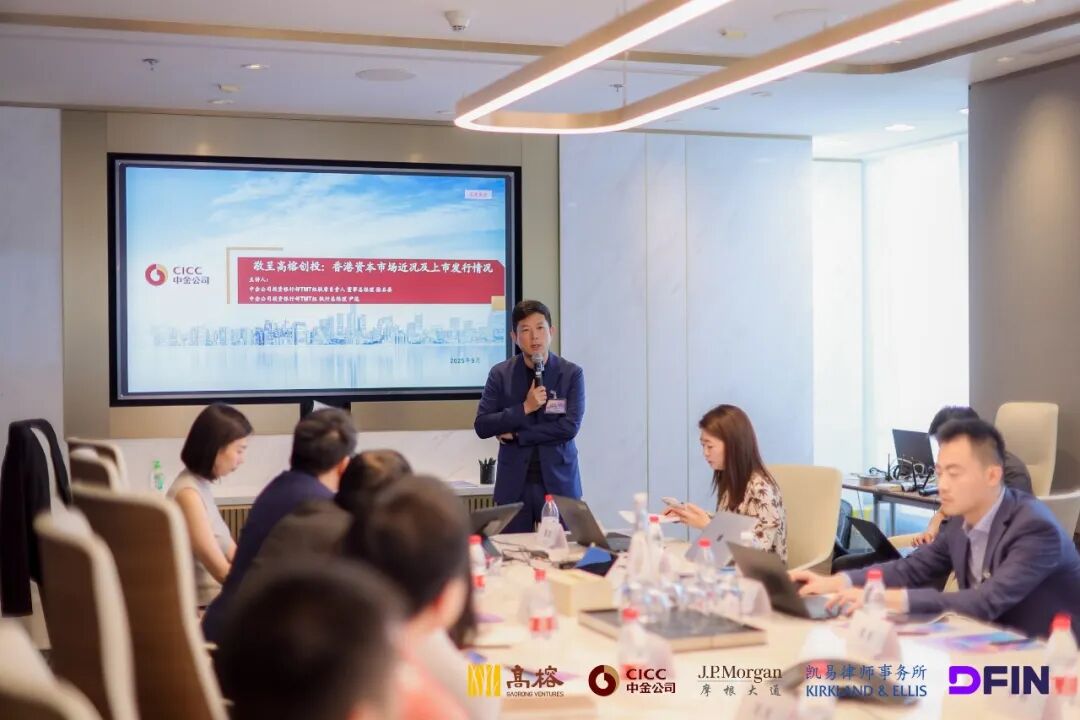

So far in 2025, five of Gaorong Ventures' portfolio companies have successfully listed in Hong Kong, including Geekplus in robotics, Bloks and Bufan Group in consumer sectors, and Mirxes and Saint Bella in healthcare and wellness.
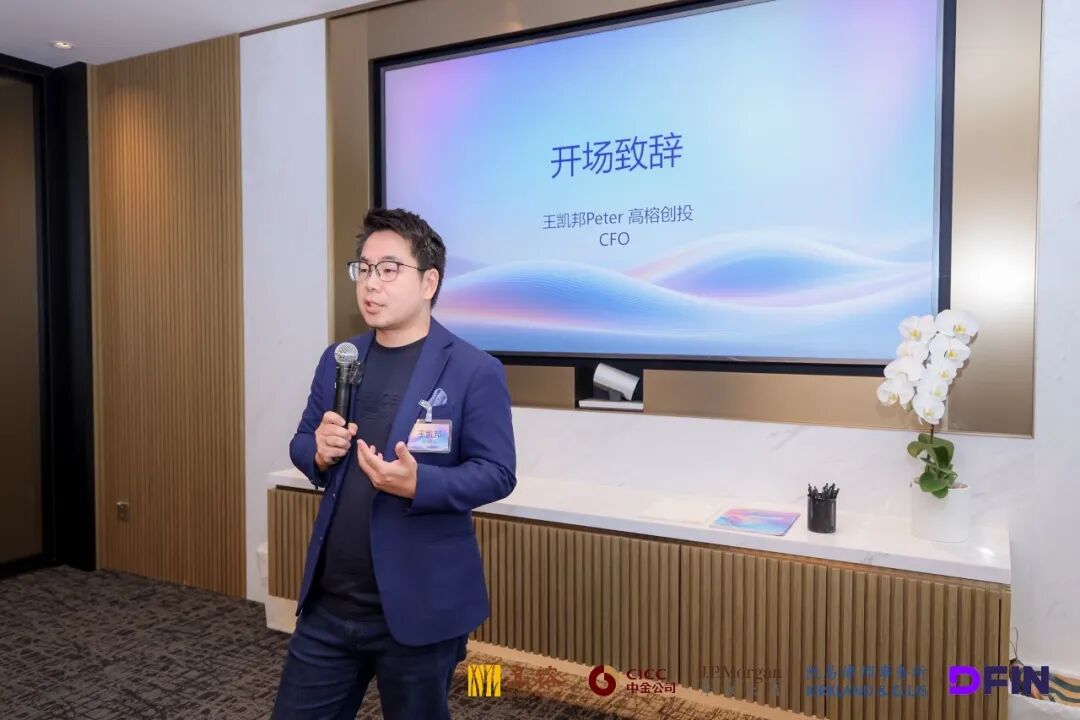
In his opening remarks, Kaibang Wang, CFO of Gaorong Ventures, said, "We look forward to seeing Hong Kong continue to unlock the value of its financial center, fully leverage the function of the secondary market, and build a bridge for growth-oriented companies to reach global markets and global investors."
He emphasized that while a company's own business development, fundamentals, and innovation capability are foundational, being able to seize capital market windows is also critical. "We will continue to support companies while building a more vibrant capital market ecosystem that truly helps businesses."
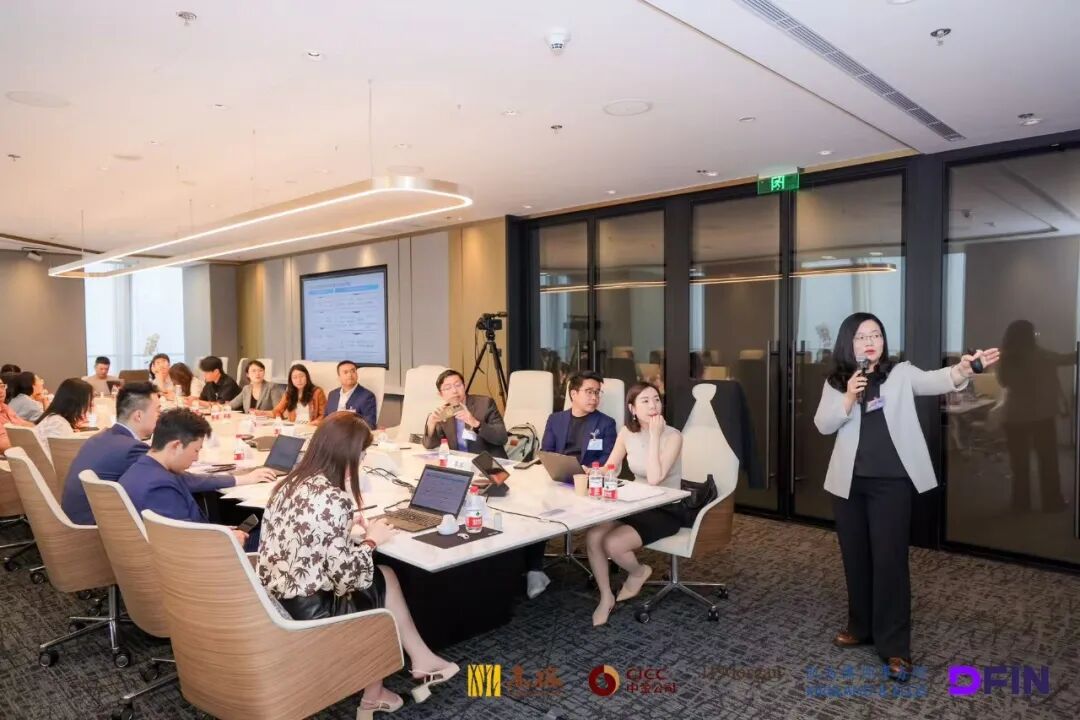
Zhang Xiaoxia, Vice President of Global Listing Services at Hong Kong Exchanges and Clearing, shared insights into this year's vibrant Hong Kong new issuance market, drawing from the latest listing cases and data. The emergence of DeepSeek at the beginning of the year triggered a revaluation of the Hong Kong market, opening a window for companies to list and raise additional capital. Meanwhile, Hong Kong IPOs have attracted diversified investors, signaling the return of international investor confidence.

Shiyan Xu, Co-Head of CICC's Investment Banking TMT Group and Managing Director, along with Hang Yin, Executive Director of CICC's Investment Banking TMT Group, offered a systematic overview for tech companies on recent Hong Kong market developments, the supporting factors for future market trends, and key points for listing preparation.
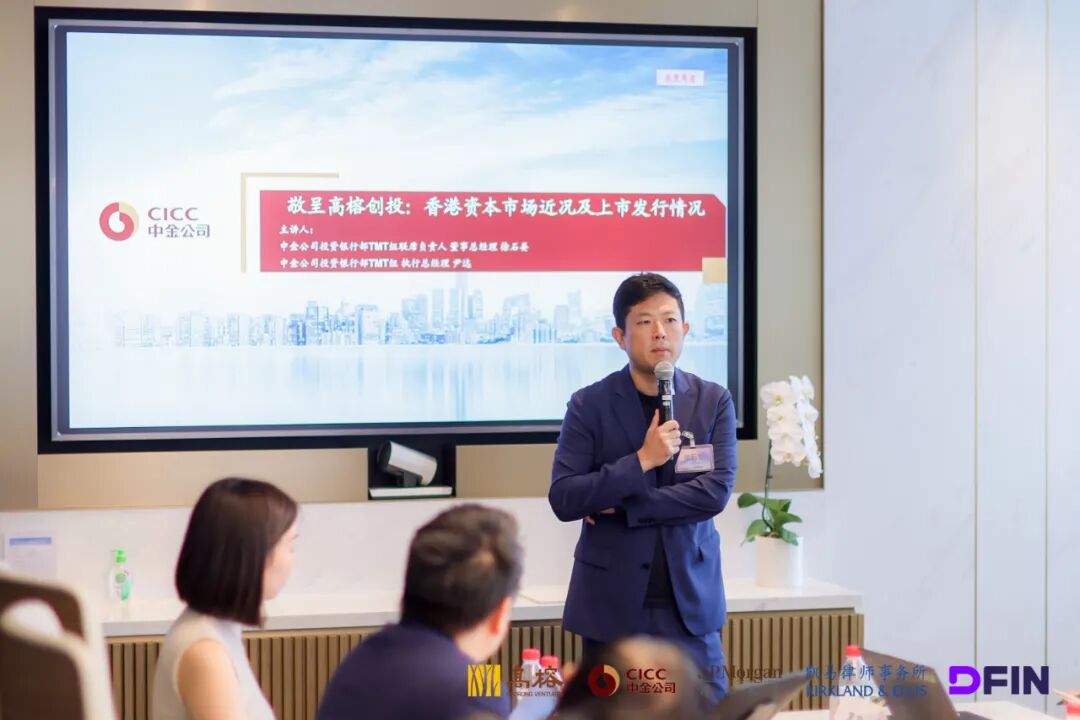
The CICC team traced several major thematic rotations in the Hong Kong market this year. The first wave involved a batch of large A+H dual-listed companies, the second wave saw consumer companies listing in Hong Kong, and coming up toward year-end and early next year, a pipeline of AI, robotics, and other high-tech companies is waiting in the wings. "Whether these companies — along with the AI and technology strategies of Hong Kong's tech leaders — can deliver real earnings growth by late this year and next year, shifting from narrative-driven to fundamentals-driven momentum, will be a crucial factor in sustaining the market's momentum."
From an investor perspective, global interest in Chinese tech assets is gradually returning. Take Geekplus as an example: its cornerstone investors included international long-only funds, and its international placement was 30.17 times oversubscribed, setting a record for the highest international placement multiple in Hong Kong's tech sector as of July 2025.
Notably, Chinese investors accounted for more than half of cornerstone investors in high-quality Hong Kong IPOs this year. The CICC team noted this signals a shift in IPO pricing power: "At least in the TMT sector, pricing power used to sit with overseas long-only funds, but increasingly it's Chinese and Asian investors setting the price."
Currently, over 200 projects have filed A1 applications and are advancing their listing plans in the Hong Kong IPO market. Quality companies with advantages in scale, profitability, revenue growth, and industry position will continue to see strong subscription demand in the coming period. "Even small- and mid-cap companies, if they have sufficient differentiation, high enough competitive barriers in niche segments, and predictable market growth, will likewise attract attention from top-tier investors."
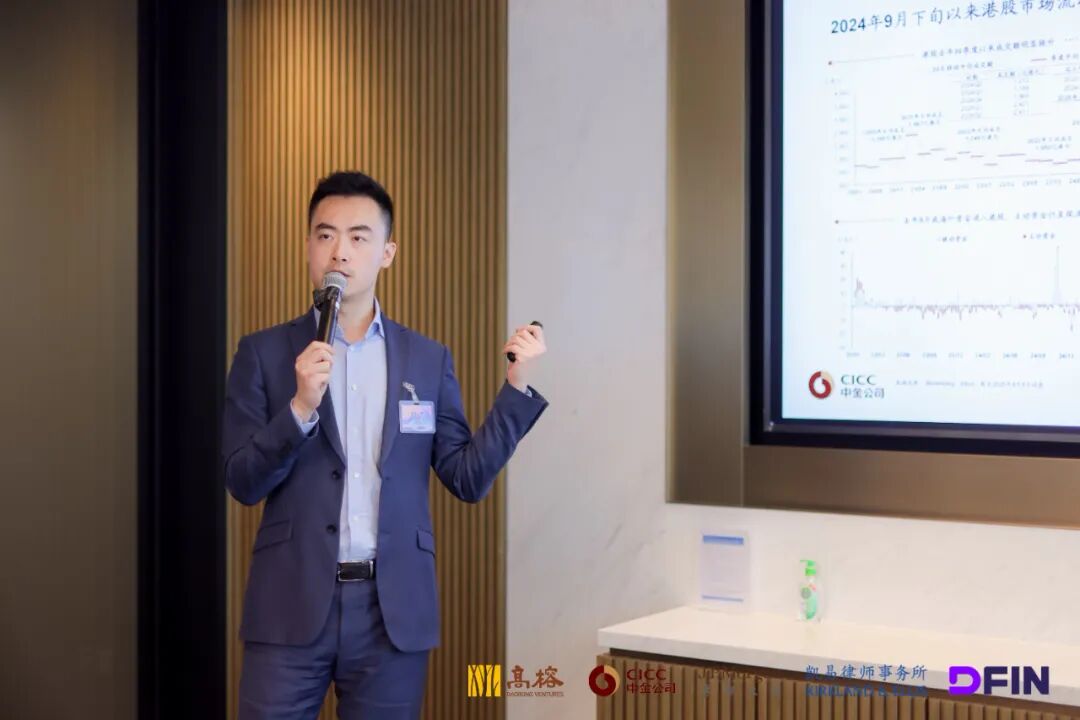
The CICC team concluded by sharing key considerations for Chapter 18C companies listing in Hong Kong. In 2023, the Hong Kong Stock Exchange's Chapter 18C rules took effect to enable "specialist technology" companies to list and raise capital, focusing on hard tech sectors, particularly companies that have not yet achieved large-scale commercialization or even profitability.
Beyond requirements for market capitalization, revenue, R&D, and investor qualifications, the CICC team emphasized that because Chapter 18C-listed companies are at early commercialization stages, regulators and investors will also focus on their future commercialization pathways — such as which target markets will drive revenue growth, and expectations for when profitability will be achieved.

Dr. Yang Huang, Head of Healthcare Research for Greater China at JPMorgan, analyzed trends in the Hong Kong biotech sector and IPO market from a secondary market perspective.
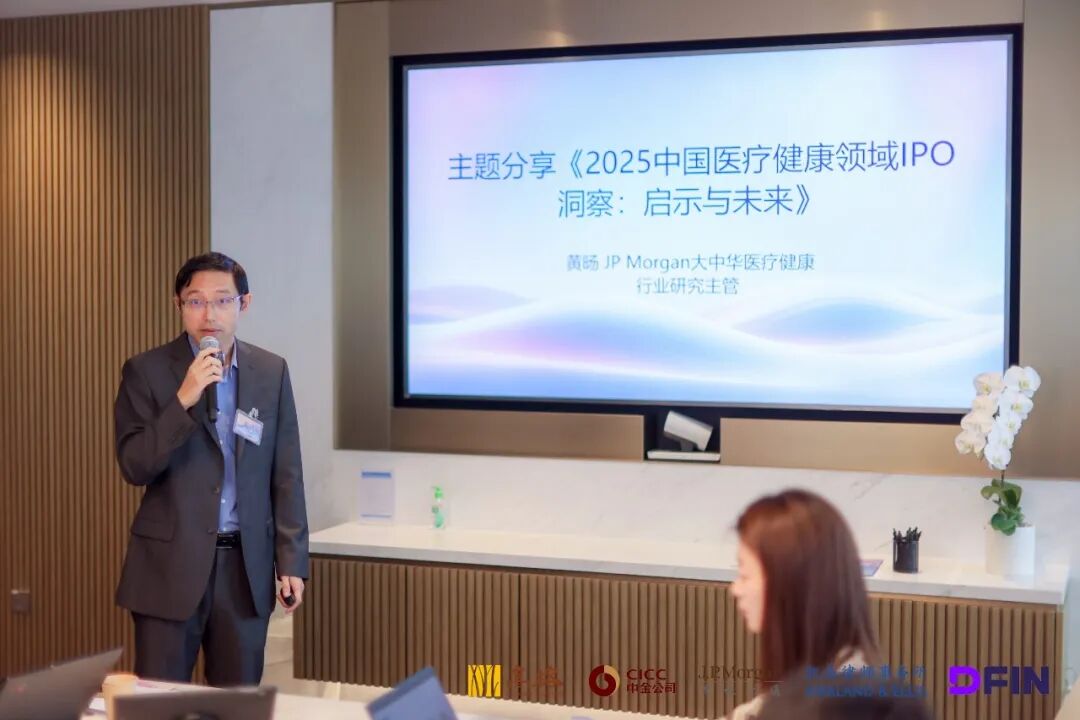
So far in 2025, driven by multiple factors — booming innovative drug BD transactions, policy support across the biopharma value chain, and investors' low sector positioning — China's healthcare industry has delivered standout performance, with the Hang Seng Healthcare Index leading the pack.
For some time now, Chinese innovative drug license-outs have gathered strong momentum. In 2024, Chinese innovative drug BD transaction value accounted for 27.7% of the global total; in the first half of 2025, this exploded to 44.5%. Huang noted that the industry has long harbored a common misconception: that overseas companies buy Chinese biopharma assets because they're cheap. "But we believe overseas MNCs' interest in Chinese assets focuses on innovation and speed rather than cost — the core appeal is China's strong innovative drug R&D capability and faster drug development speed, especially in preclinical and early clinical stages." In oncology, for example, multinational drugmakers paid higher mean upfront payments for Chinese assets ($213 million) than the global mean ($195 million).
Huang further expressed confidence in the sustainability of Chinese innovative drug license-outs. On the demand side, overseas drugmakers may face a "patent cliff" in coming years and need new pipeline arrangements. On the supply side, Chinese innovative drug companies are increasingly focused on first-in-class exploration; and while overseas licensing of Chinese innovative drug assets has concentrated heavily in oncology, there remains broad room for expansion into autoimmunity, cardiovascular, metabolic diseases, and even neurodegenerative diseases.
From a secondary market perspective, in the first half of 2025, Chinese healthcare companies' results met or exceeded expectations, with relatively solid fundamentals providing strong support for sector growth. "This has also fueled the recovery in healthcare IPOs." Through September this year, healthcare IPOs accounted for 21% of Hong Kong listings by deal count, covering biopharma, medical services, and medical devices.
Currently, a pipeline of healthcare companies is queued up for Hong Kong listings, and market attention is spreading from innovative drugs to related industries, such as CXO and medical devices — which share the same "going global" trajectory as innovative drugs. "The market's main thread still comes down to innovation — whether you can tell a different story and establish differentiated competitive advantages in a particular field."

According to Hong Kong Stock Exchange disclosures, since Chapter 18A took effect in 2018 through early September 2025, 77 biotech companies have listed under Chapter 18A rules, raising over $16.6 billion in IPO proceeds.
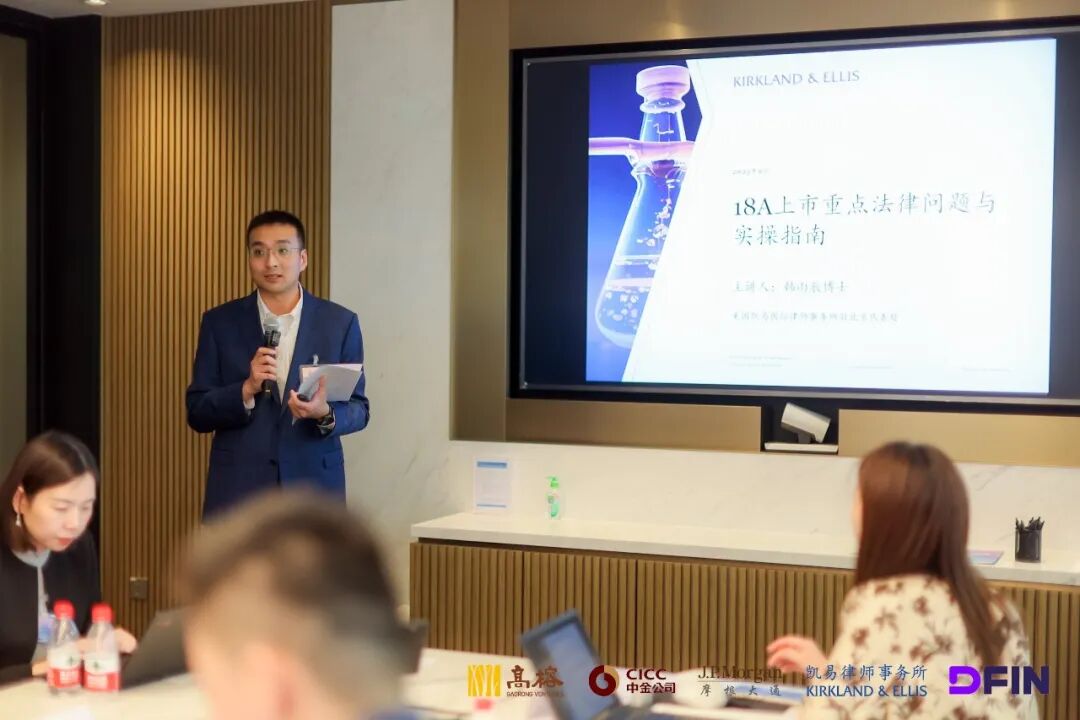
Dr. Yuchen Han, Capital Markets Partner at Kirkland & Ellis, provided a focused analysis of the Chapter 18A listing pathway for biotech companies in Hong Kong, combining listing rules with case studies. He emphasized that the most important eligibility requirement for Chapter 18A listing applicants is that "at least one core product has passed the concept stage" — a point requiring particular attention from companies.
For example, in pharmaceuticals and biologics, companies must demonstrate that a core product has completed Phase I clinical trials for a new drug or at least one clinical trial for a drug based on a previously approved product or biosimilar, and that the regulatory authority does not object to proceeding to Phase II (or subsequent) clinical trials. For medical device companies, the core product must be classified as Class II or above under the relevant regulatory classification standard, with at least one clinical trial completed in humans, and the regulatory authority or accredited body must not object to the company proceeding to the next stage of clinical trials or marketing the device.
Additionally, Dr. Han provided in-depth coverage of key legal and practical issues around use of proceeds and information disclosure, offering professional guidance for companies in the biotech sector.
The sustainability of market windows depends on the external macro environment, but also on the fundamentals of innovative companies themselves. Those that can solidify differentiated competitive barriers, read the market pulse, and seize opportunities will ultimately reach a larger stage.