Soaring Across the Global Talent Pool: Ubiquitous Talent and Opportunity Through the Eyes of Global Entrepreneurs | Ronghui

Organizational development at global companies must always stay tightly aligned with the business.
On the journey of Chinese companies going global, beyond supply chain and engineering dividends, the diligence, resilience, and capacity for rapid learning and iteration among Chinese entrepreneurs give us ample reason to believe they possess the core competitiveness to go the distance on the international stage.
Along the way, how to build and manage a global organization that can support rapid business expansion is the critical question. An increasing number of companies going overseas have already moved to "awareness first," placing heavy emphasis on localization and organizational capability building.
At the same time, a new generation of recruiting, collaboration, and communication tools is evolving at astonishing speed, bringing entirely new organizational forms and transformations in how work gets done for global enterprises.
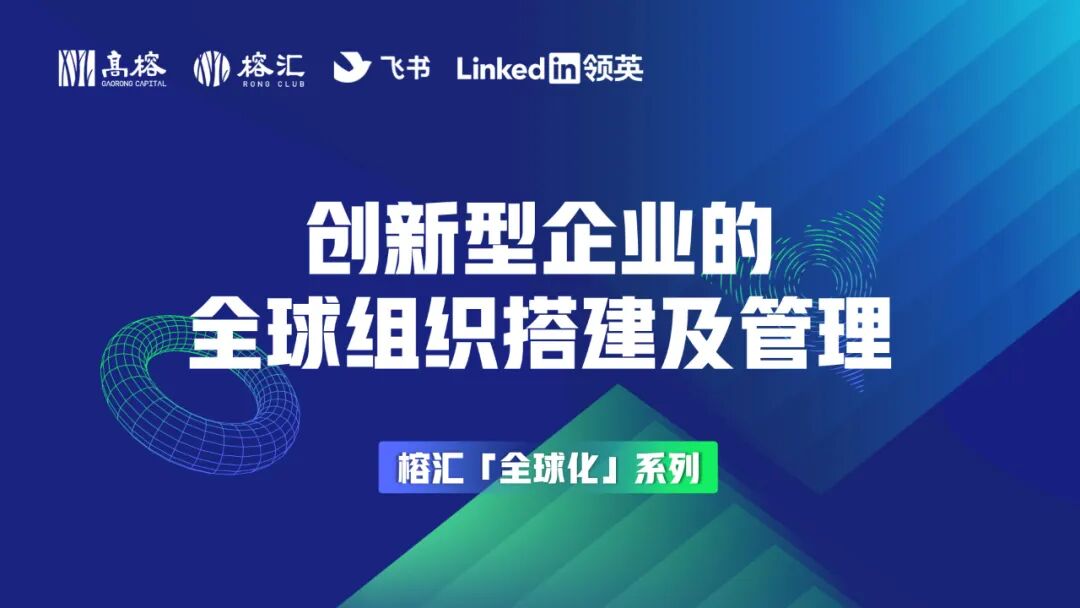
Recently, Gaorong Ventures invited seasoned practitioners from Lark and LinkedIn to share their global management practices and how tools and platforms can empower organizations. SaaS unicorn Deel, along with Gaorong portfolio companies Wiz.ai and Style3D, also joined Lark Consulting in a discussion on organizational structure, talent attraction, and culture building for global enterprises.
Gaorong Ventures will continue to host more events and discussions on global organizational management and related topics. Entrepreneurs committed to global market expansion are welcome to follow and participate.
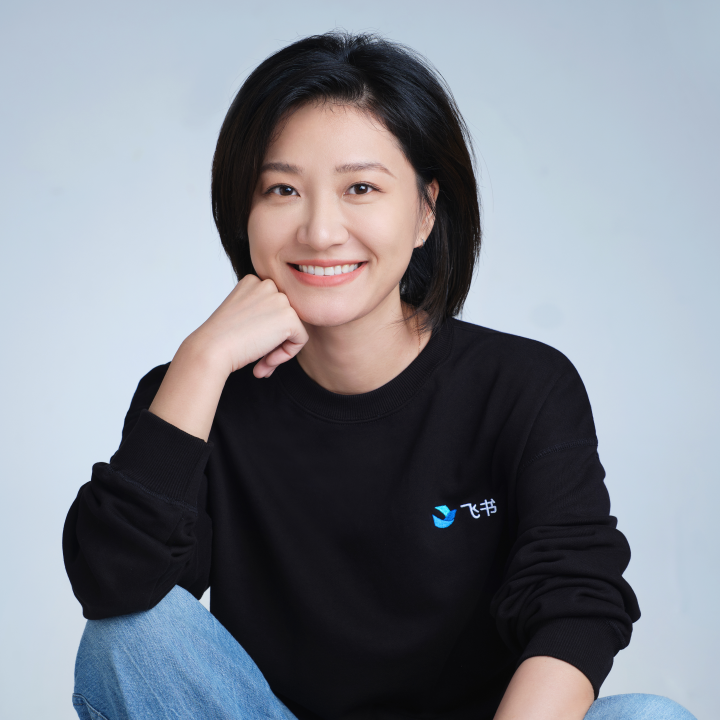
Lark on Global Management: Using Tools to Put Culture and Systems into Practice
Lin Chan, Chief Commercial Officer, Lark
When it comes to management, we believe there are three core pillars behind it — culture, systems, and tools. Culture governs hearts and minds; it's about alignment on values and vision. Systems are the hard rules of management. And both culture and systems can ultimately be operationalized through tools. That's why we've placed such emphasis on tools from Day 1.
For example, in the globalization process, language barriers are a major challenge. Through tools, requirements that would otherwise fall on individual employees can be transformed into organizational capabilities, lowering collaboration costs. Lark, for instance, supports real-time translation in video meetings, allowing employees in different countries to communicate in their native languages. We found that after launching this feature, people became more willing to express themselves and engage.
When laying out overseas operations and building teams, our experience is that product and R&D teams can be set up based on where talent is distributed, but there must be input from people with deep understanding of local markets. This is especially true for B2B businesses — you must find reliable local teams to execute go-to-market. Of course, in the very early stages, local Chinese or expatriate employees can help bridge understanding in both directions; as you dig deeper into a market, that's when you bring in native teams.

Cross-Border Remote Work Is the Trend: Startups Are the Early Adopters and Beneficiaries
Cui Yang, Chief Strategy Officer, LinkedIn China
Today, we're seeing talent and organizations, collaboration and tools all advancing toward globalization. Cross-border remote work is a long-term, irreversible trend we're observing.
One reason is that global talent is embracing more flexible work models. Based on LinkedIn platform data, the volume of remote job postings, views, and applications worldwide has risen sharply — and views and applications are outpacing postings, indicating that remote positions are in short supply.
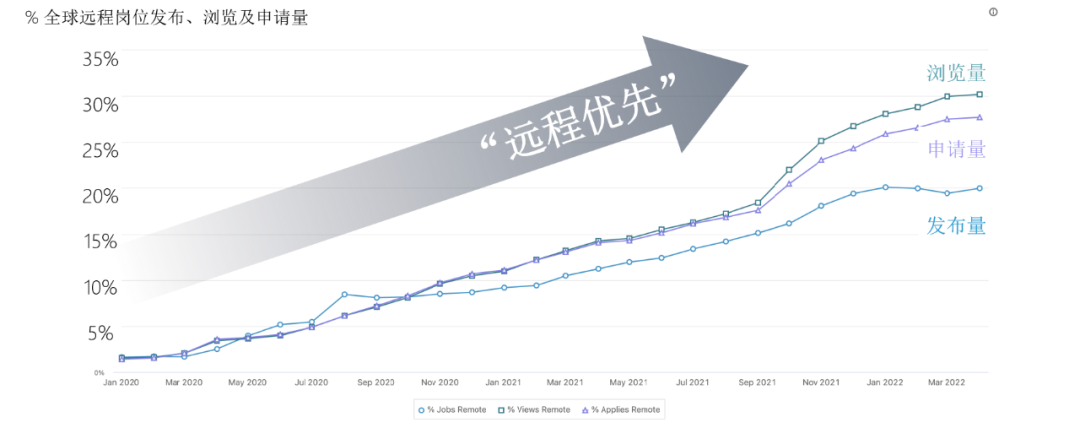
In the cross-border remote context, for employers, talent is everywhere; for global job seekers, opportunity is everywhere. Talent and opportunity are dramatically expanded on a worldwide scale. Beyond helping companies tap into global talent pools, remote hiring can also reduce talent costs and build employer brand. Looking at key roles, IT and technical positions, programmers, sales, and business development roles can increasingly be filled through global remote recruitment.
Going forward, whether it's recruitment platforms like LinkedIn or products like Deel, companies can be helped to build remote teams more efficiently in emerging markets. Having local administrative and HR teams with corresponding infrastructure on the ground is no longer mandatory. So relative to large corporations, startups will actually be the early adopters and beneficiaries of remote hiring models, able to expand with lighter and more agile organizational structures.

Global Enterprise Organization Building Stays Close to the Business
Yuan Lingzi, Vice President, Lark Consulting
As global companies emerge and grow, we're seeing several phenomena and trends in organization and management.
First, founders of this new generation of global companies themselves have strong global backgrounds and naturally high acceptance and openness toward globalization.
Second, global enterprises build their organizations very close to the business — organizational expansion follows the market, with ample flexibility and innovative capacity.
Third, an increasing number of companies expanding from China are changing in their acceptance of local culture, including greater respect for indigenous culture and more empowerment and leeway for local teams.
Finally, technology and tools are underpinning organizational development for global enterprises. New organizational forms, management approaches, and cultural enablement can all be realized through new tools and technology.
Starting from a Single Country Is Inferior to Starting from a Global Dimension
Wang Shuo, Co-founder, Deel
Deel's business is dedicated to solving compliance and global payroll challenges for global enterprises. From its founding day, Deel was clear about being an international company, not one focused on the U.S. market.
We know that talent is distributed everywhere, and so are opportunities. Today, starting from a single country is inferior to starting from a global dimension — whether in terms of market share or the talent recruitment pool, it's vastly larger.
From a functional perspective, Deel's engineering and product design teams are in Europe; our sales team is global, with teams in the U.S., Europe, Asia, and Latin America, each with a marketing team underneath. Though these sales teams started small, once we refined our model and polished our product, we could enter each market very quickly. So thinking about selling to global markets from Day 1 was essential to our growth.
In hiring, we focus on two things. If a candidate's capabilities basically meet our requirements, I often ask: What are your expectations, what are your future career plans, what do you hope to gain by joining us? Through their answers, I can tell whether Deel's platform and what we're doing can meet their expectations and whether we can grow together.
Additionally, for sales roles, we heavily emphasize whether they have data analysis capabilities. Making strategic moves based on data analysis is extremely important.

Heavy Localization for Enterprise Customers
Zhang Chenchen, CEO, Wiz.ai
Wiz.ai was founded in Singapore in 2019, dedicated to solving all interaction problems between B2C enterprises and their customers in emerging markets. We started with voice customer service robots in low-resource languages, then automated channels including phone, email, and SMS; subsequently, based on accumulated user data, we began providing customer insights to clients. Today, Wiz.ai's business has expanded from Singapore to Indonesia, the Philippines, Malaysia, and even Latin America.
Our customers are primarily large enterprises, so our organization building is relatively heavy on localization — in each country we have sales, solutions, product R&D, and delivery teams.
In attracting excellent talent, I actually think there are similarities globally. How do you find people who truly have an ownership mentality and are suited to a startup environment? The key is still to observe carefully during talent screening. There are some good interview questions: What was your past workflow like, how did you handle conflicts with other departments, how did you resolve the worst situations, and so on.
Additionally, you can continuously reinforce ownership through daily practice and cultural osmosis. For example, I often talk with colleagues about why our startup can be competitive against big tech on certain projects. If you truly have problem-solving capabilities and earn client trust through diligence and attitude, then we are very proud of you.

Overseas Frontline Teams Feed Customer Insights Back to Headquarters
Feng Wenyun, HRVP, Style3D
Style3D is built on leading 3D soft-body simulation engine technology, dedicated to creating the digital infrastructure for the physical world. Our core product is Style3D, currently providing 3D simulation design software primarily for the fashion industry.
From Day 1, we knew Style3D had to become a global company. Beyond the founding team's original vision, this was also because our core customers are overseas, including ZARA, H&M, Decathlon, and others.
We began building overseas teams in 2021, including teams in the U.S. and Europe. As a startup, our product iteration speed is fast, and business strategy adjusts in response to market changes. For managing overseas teams, we've realized two things are crucial.
First, in the relatively early stages of a product, co-creation with customers is necessary. This requires overseas frontline teams to promptly feed back customer needs and market insights to the product and R&D teams at headquarters.
Second, we need more effective communication mechanisms and transmission of company culture to help overseas teams integrate better with domestic teams, and to keep overseas teams fully informed of the company's strategic picture.