Conversation with Style3D: An AI + 3D Dream Team Building the World's First Fashion Industry Agent | Gaorong Future

Another trillion-dollar industry enters the Agent-first era.
As large language models gain stronger reasoning capabilities and protocols like Agent2Agent emerge, autonomous task-executing Agents are rapidly heating up. Whether it's the general-purpose Manus or Lovart — the world's first design Agent — both have sparked intense discussion.
At the same time, will we see more vertical industry Agents rise?
Vertical Agents, by deeply integrating industry know-how, specialized tools and models, and proprietary data, promise to deliver professional capabilities that comprehensively surpass general-purpose models. This is being hailed as the next consensus for 2025.
In the apparel industry, we've found an exemplary model of a vertical Agent. Recently, Style3D (hereafter referred to as "Style3D"), which empowers the fashion industry through AI + 3D technology, launched DeepModa — the world's first Agent system for the apparel industry — offering end-to-end capabilities spanning design, production, and marketing, while also enabling industry clients to build their own intelligent agents.
In recent years, Style3D has emerged like a dark horse in the industry, penetrating practitioners' workflows. It first gained recognition for its world-class soft-body simulation engine, developing the 3D simulation modeling software Style3D Studio. Entering the AIGC era, it was among the first in the industry to achieve AI-generated design inspiration, AI-generated 3D digital garments, and marketing content.
Just this June, Style3D clinched the championship in the AIGC + Design track on CCTV's Winning with AI+ program, and was named one of the "2025 China AI Startup Top Ten" from over 700 competing companies. Guo Yike, Chief Vice President of The Hong Kong University of Science and Technology and Academician of the Hong Kong Academy of Engineering Sciences, commented: "Modeling of flexible materials is the 'pearl' of computational geometry. Style3D's ability to crack this problem is absolutely world-class."
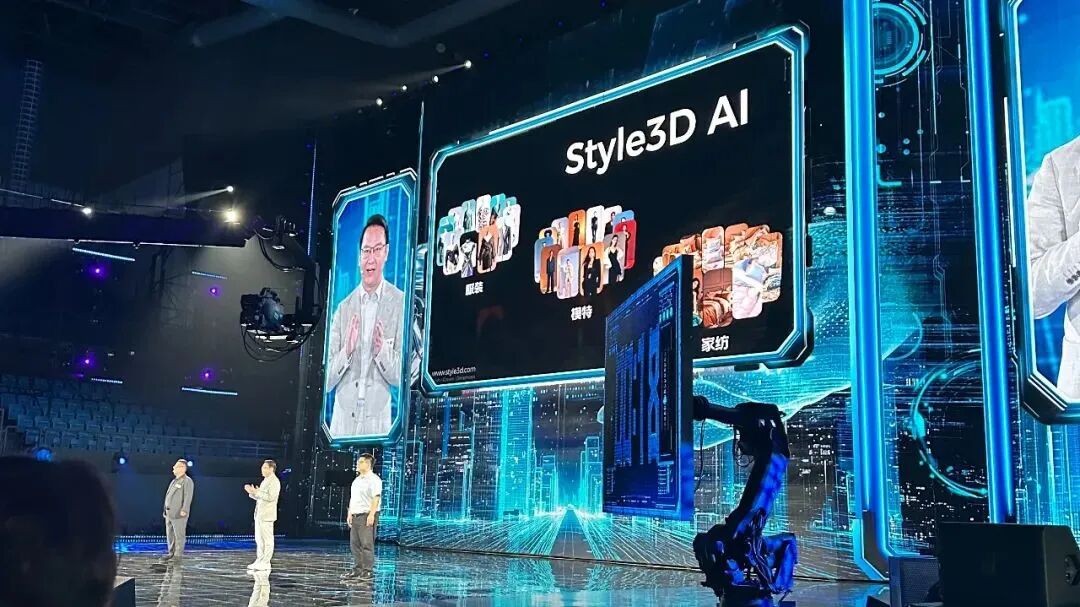
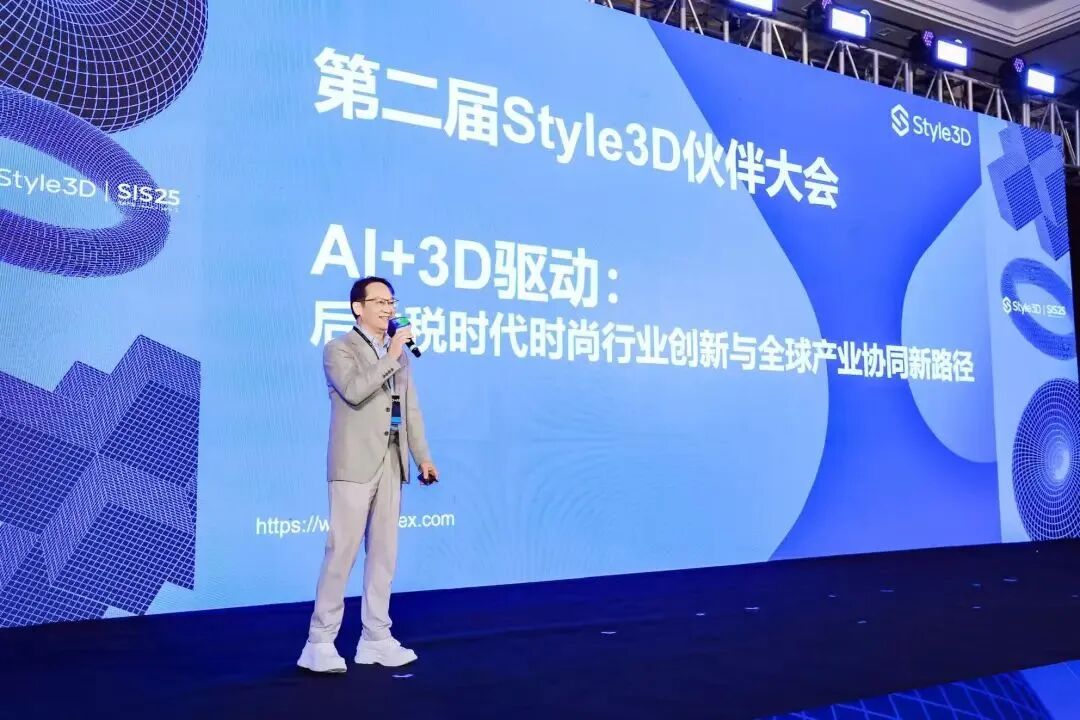
To date, over 2,000 clients globally use Style3D's core software, with the client base continuing to expand. Notable brands include Li-Ning, ANTA Group, Bosideng, JNBY, UR, Peacebird, and Mercury Home Textile. As Style3D penetrates deeper into the industry chain and expands its global footprint, its clients span brand customers, manufacturing clients, and fabric/accessory suppliers, with overseas clients accounting for half of company revenue. At the second Style3D Partner Conference held June 19-20, over 600 leading fashion industry guests from home and abroad gathered.
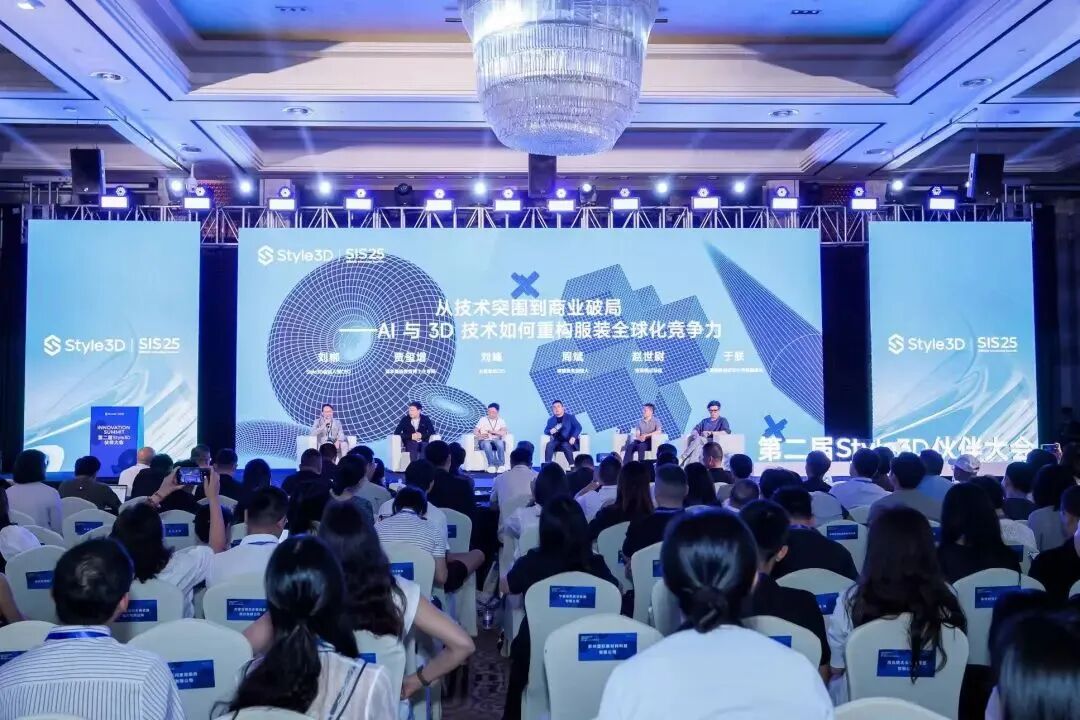
Recently, we sat down in Hangzhou with Style3D founder and CEO Bin Liu, and Chief Scientist Dr. Huamin Wang, a world-renowned graphics expert, to discuss how this traditional trillion-dollar industry is moving toward an AI and Agent-first era.
Style3D's sustained investment in cutting-edge AI technology allows it to rapidly deploy AI features amid this wave. Meanwhile, its combination of professional tool software, accumulated industry data, and deep industry understanding makes it a team that can truly deliver results with AI.


At the Style3D Partner Conference, Style3D's core product Studio previewed its 9.0 release. The new version can automatically generate 3D garments by having large AI models learn industry knowledge, enabling rapid conversion from design to 3D model.

Several clients showcased at the conference how they leverage Style3D for efficiency gains. For example, after partnering with Style3D, Peacebird achieved a final sample replication rate of approximately 10% for 3D-modeled styles, compared to nearly 50% for styles without 3D modeling. Additionally, Peacebird has deeply integrated Style3D technology into product promotion scenarios, using AI to refine model expressions for more authentic and immersive marketing videos.
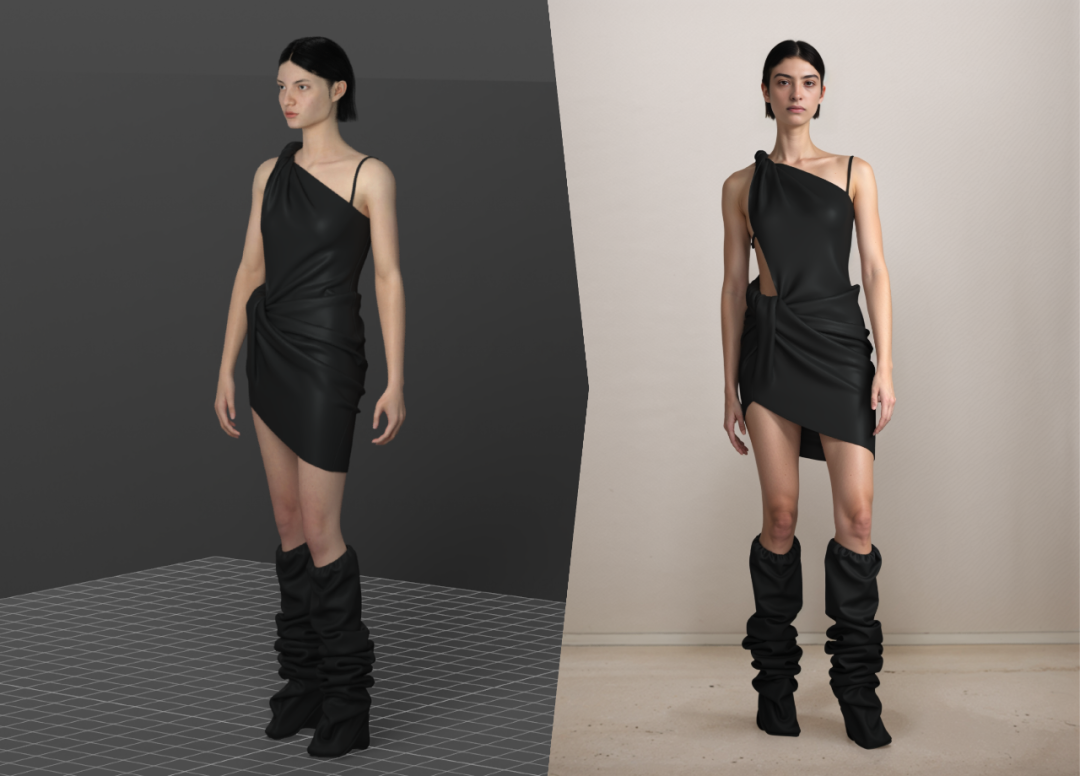
Behind client adoption lies Style3D's decade-long accumulation of 3D simulation technology and AI capabilities.
In 3D simulation, Style3D's self-developed GPU-based 3D simulation and ray-traced rendering core technologies are globally leading.
At the intersection of 3D and AI, "From the earliest GANs, to Transformers, Stable Diffusion, and today's large language models and Agents, we've been continuously exploring."
Liu explains that the reason for unwavering AI investment is that "we're in the early stages of a disruptive technology. At this stage, the technology's own development is crucial. We must seize the key variables and build our moat to gain first-mover advantage in future industry transformation. When technology reaches a stable or bottleneck period, business model innovation becomes relatively more important."
In 2021, Huamin Wang returned to China from Ohio State University to serve as Style3D's Chief Scientist and Dean of the Research Institute, leading R&D of the soft-body simulation engine and AI technology. He has guided his team through continuous technical breakthroughs, with multiple papers accepted at top computer graphics and AI conferences. More importantly, "technology must ultimately serve the industry and truly solve pain points."
Wang notes that the Style3D Research Institute is currently tackling AIGP (AI Generate Pattern) — a world-first technology for AI-generated pattern pieces.
Pattern pieces are the critical structural element linking design and production in apparel, essentially the blueprint before a garment is manufactured. Traditional pattern-making is a highly experience-dependent craft, and due to assembly-line division of labor, many designers never touch the pattern-making process. Wang says, "If we can validate AI pattern-making, the apparel industry can break down barriers between divisions and accelerate the pipeline from creativity and design to pattern-making and production."
AIGP essentially achieves structured AI 3D generation, involving numerous底层技术和算法层面的创新. Wang explains that AI directly generating 3D models produces unstructured data that loses significant information — for instance, data from two garments becomes difficult to separate once mixed. Style3D's approach is to first have AI generate structured 2D data, then obtain 3D models through automated modeling.
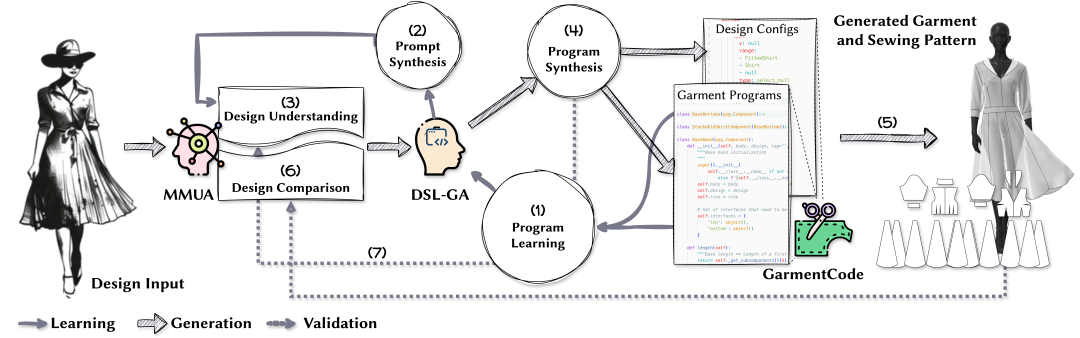
Based on AIGP technology, precise pattern pieces can be automatically generated with real-time modification and optimization capabilities, identifying key production elements to dramatically shorten the design-to-production cycle. "This capability will be productized in the near future."

As large models' reasoning capabilities and chain-of-thought improve, Agents have moved from research to reality, prompting Style3D to consider — is Agent the right approach? By building an end-to-end model framework and all-in-one solution covering the complete chain of design, marketing, and production, apparel industry users can more smoothly adopt advanced tools.
After this year's Spring Festival, Wang led his team to begin work, ultimately completing the self-developed AI Agent system in just over two months, naming it DeepModa.
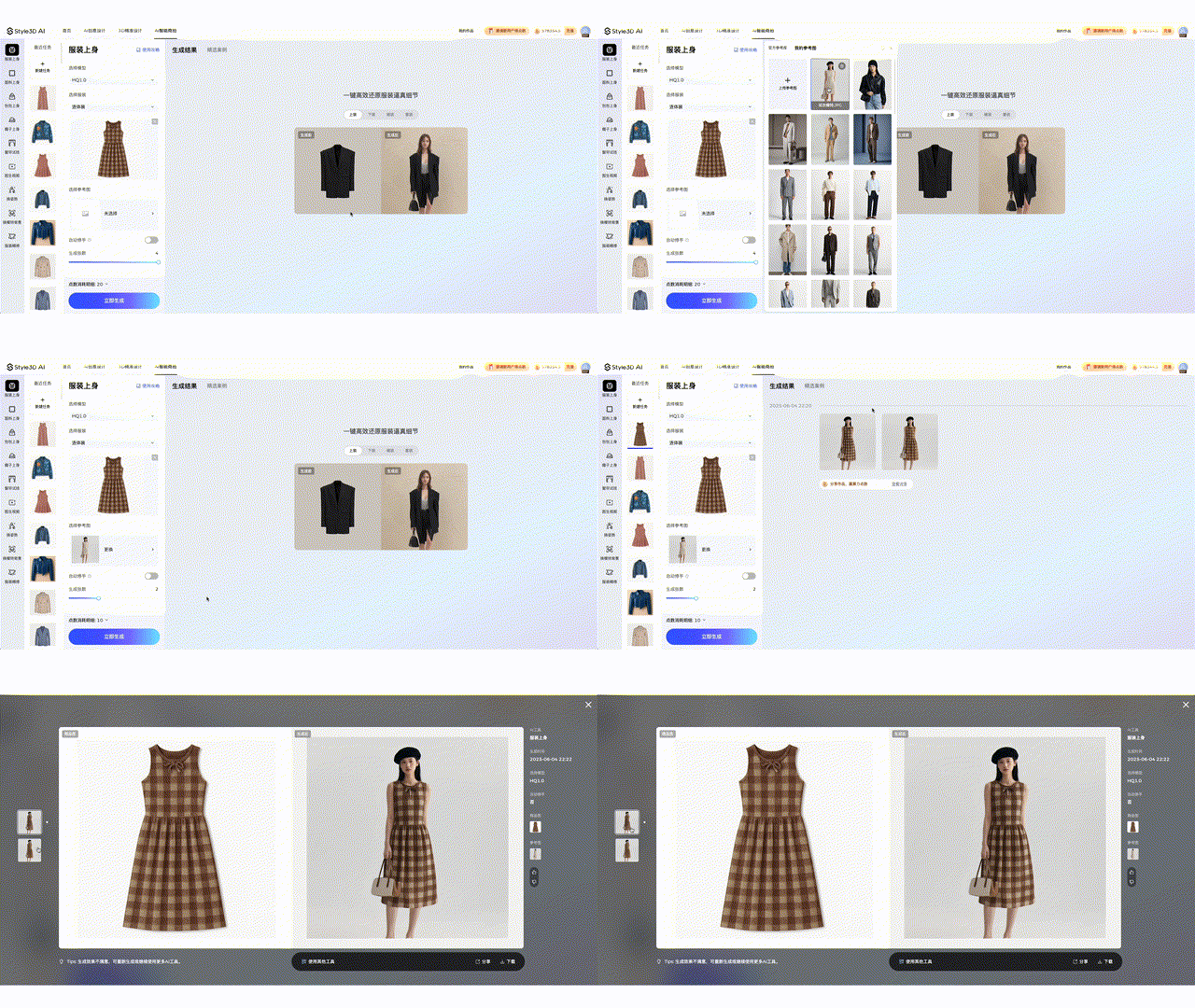
Wang points out that the apparel industry has a long value chain, traditionally requiring different roles and division of labor, with practitioners needing to learn numerous specialized software programs. Even with large models, "to generate a 3D garment, you need to learn prompting, then use models to generate images. With Agents, you can use natural language dialogue — the AI automatically generates prompts and scripts, calling models to output images. The essence is making the entire workflow easier and simpler."
-
Design phase: AI inspiration, AI design Through natural interaction with DeepModa, users gain real-time trend analysis, intelligent style generation, style editing, and print design capabilities.
-
Production phase: AI-assisted pattern-making, generating tech packs In the interactive interface, the Agent can parse styles based on user input and requirements, generate patterns and 3D samples, and support automatic generation of standardized tech packs from structured garment data for production handoff.
-
Sales phase: AI-generated renderings and marketing assets Supports automatic copy generation, as well as e-commerce images, posters, model styling shots, and marketing short videos suitable for multiple scenarios.
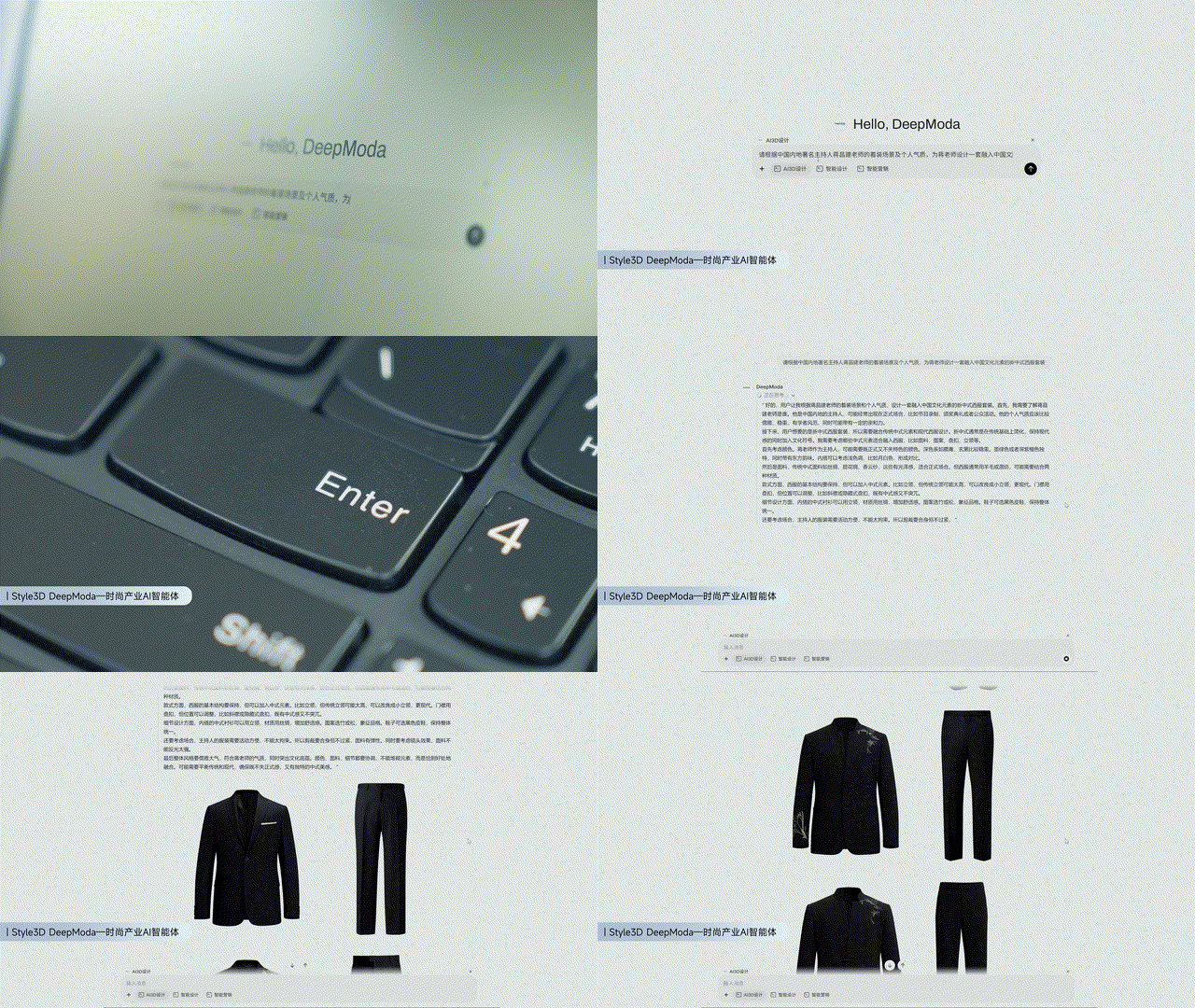
As Agents truly deliver results and solve problems, DeepModa transcends being a mere apparel design tool, marking AI's transformation in the apparel domain from assistive tool to intelligent productivity partner.
"Our vision for the future is that whether you're a designer, manufacturer, or fabric supplier, through a single Agent entry point, you can more efficiently solve your actual problems. The Agent can both understand human language and automatically execute tasks based on your intent."
Liu emphasizes that DeepModa, as an industry model foundation, aims to empower every client to build their own intelligent agent. He states: "AI won't replace employees, but employees who excel at using AI will replace those who don't. The way for companies to overcome AI anxiety is to embrace it — achieving organization-wide AI adoption, mastering AI usage capabilities, and forming an organizational culture that recognizes AI as part of the intelligent era." Style3D is already collaborating with multiple clients to help them locally deploy their own Agents, with many clients expected to have their own Agents by year-end.

In Liu's view, an Agent essentially uses large language models to call upon various specialized models and tools — these models or tools are suited for specific, point tasks, while the Agent orchestrates these point models and tool APIs into a complete workflow.
Tailored to industry characteristics, DeepModa adopts a Multi-Agent System (MAS) architecture, building five core components: capability pool, data pool, memory pool, response pool, and quality evaluation pool.
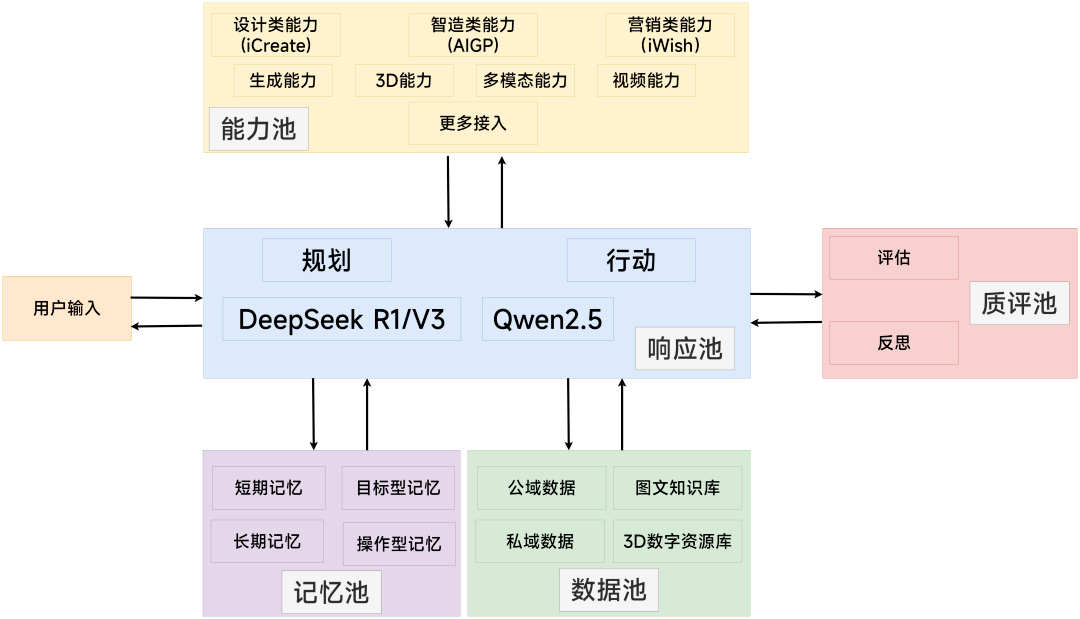
Wang explains that the apparel industry has a long chain with many role divisions, so DeepModa orchestrates multiple sub-Agents, each corresponding to different specialized tasks. "For example, in the pattern generation环节, DeepModa calls the AIGP model; for generating 3D digital garments, it calls the Studio tool's API. It's like we first solve smaller problems, then DeepModa strings them together."
In developing DeepModa and co-creating with clients, the Style3D team has also been continuously reflecting on how vertical Agent development differs from general-purpose Agents.
Wang shares that Agents have self-learning capabilities — "like hiring a new person to your company, you constantly cultivate them, helping them grow from intern to outstanding employee. The same applies to fashion industry Agents — initially capabilities may be more general, but through reinforcement learning, as the Agent continuously engages with business and receives feedback, capabilities grow stronger. Therefore, we believe vertical domain Agents require specialization and local deployment."
Addressing industry voices that dismiss Agents as "wrappers," Wang emphasizes, "especially for vertical Agents, deep understanding of client needs, underlying capabilities of called tools, exclusive data, and created user experiences all constitute core competitive advantages. Style3D's past accumulations gain further prominence in the Agent era."
First, the apparel industry has a complex industrial structure with massive data volumes, and Style3D's past service to thousands of clients has accumulated extensive industry knowledge; second, for Agents to truly solve industry client problems, they need to call numerous industry model and industry tool APIs, which are proprietary to the company; third, Style3D established a content department at company founding, and has since accumulated the industry's largest digital fabric, digital style, and pattern data.
Style3D consistently returns to an industrial mindset when evaluating Agents. Liu emphasizes that in the fashion industry, AI alone is difficult to make work in actual business — industrial software is the bridge connecting industry clients' business scenarios with new AI technologies. "In other words, however powerful AI becomes, it must combine with industrial software to help clients fulfill specific business needs."
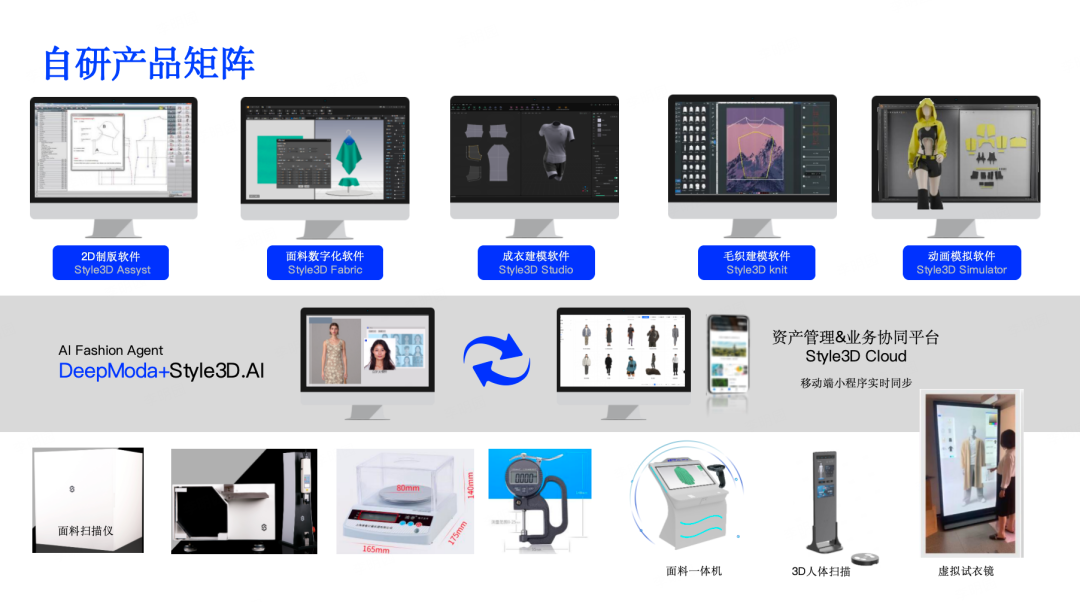
Of course, "all CAD software will become AI-ified in the future, achieving a complete upgrade in the AI era."
Wang emphasizes that Agents' greater value lies in changing industry work methods. "Perhaps in the future it won't necessarily be Agent technology per se, but rather a relatively intelligent or automated workflow — the core is solving business problems."

Through client interactions, Liu and his team increasingly recognize that "in the fashion industry, companies that deeply integrate technology and industry are not too many — they're too few. Technology iterates too fast, while industry's understanding and recognition of technology is relatively slow."
Against a backdrop of homogenized competition, trade wars, and more, Style3D observes two increasingly urgent client needs — externally, winning business by expanding into global markets; internally, building strength through cost reduction and efficiency gains.
From a market expansion perspective, Liu notes that "apparel and fashion companies' demand for global supply chain layout is already extremely urgent" — often with clients proactively approaching Style3D, hoping to use its tools to equip overseas factories with the same design and R&D capabilities as headquarters. Style3D is also actively expanding overseas, following its globalizing clients' footsteps.
On the efficiency front, using Style3D, clients' time from creative concept to marketing materials is dramatically compressed to hours, thereby achieving a growth flywheel of faster product design, faster style testing, faster feedback acquisition, and more orders. "Take cross-border fast fashion brands like Shein and Halara — they need extremely rapid product design, validation, and iteration, creating urgent demand for new technologies and tools."
As the apparel industry enters the Agent-first era, Liu looks ahead: "The opportunity window has opened. Industrial software plus AI capabilities position Style3D to迎来 a major inflection point in client growth, and to gradually develop into the industry's foundational operating system."
Industry in one hand, technology in the other. Style3D not only realizes the vision of vertical Agents, but also nurtures unique competitive moats on the value chain by connecting real demand with innovative technology.