Tech-Driven: The Landscape, Rules, and Opportunities of the New Battery Era | Ronghui Carbon Neutrality Series

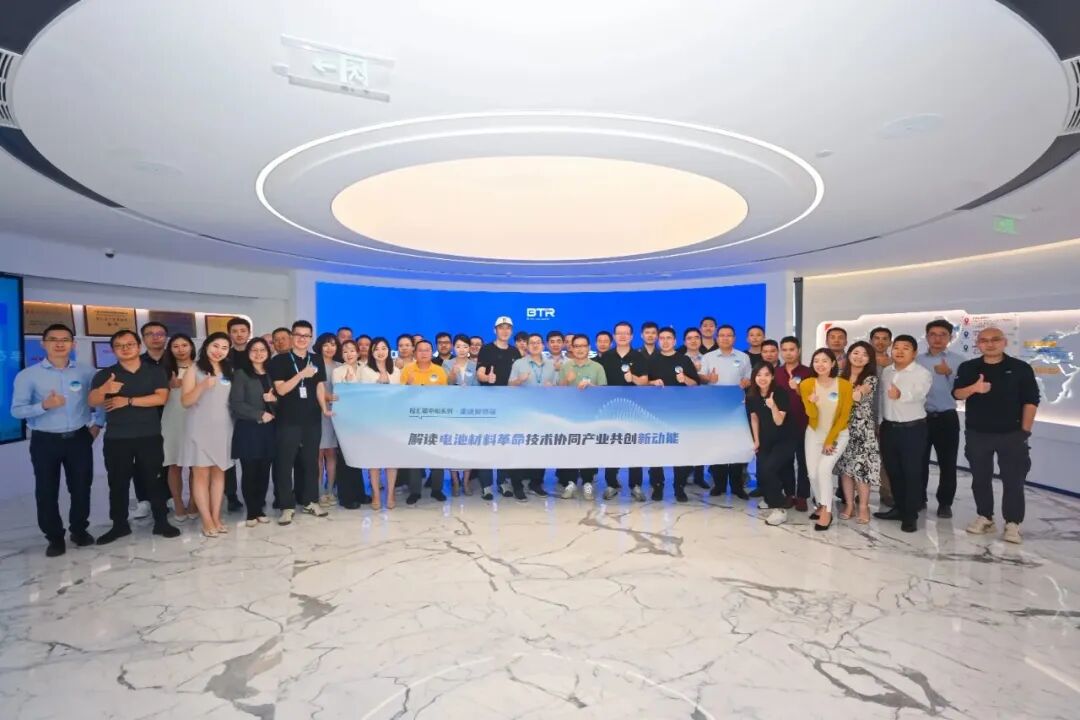
Ronghui visited BTR, the global leader in lithium-ion battery anode materials, for an industry-academia-research collaboration exploring new opportunities in battery technology.
For more than a century, the fossil fuel era was also an era of resource competition. The new energy revolution reduces dependence on finite natural resources, grounding itself instead in manufacturing and technology. Batteries are the "new oil" of this era, and the bulk of global battery and materials production capacity sits in China. In this revolution, China is becoming a primary driver and leader. Industry and academia alike are exploring how to combine cutting-edge technology with China's massive new energy and battery industries to seize the moment and ride the wave.
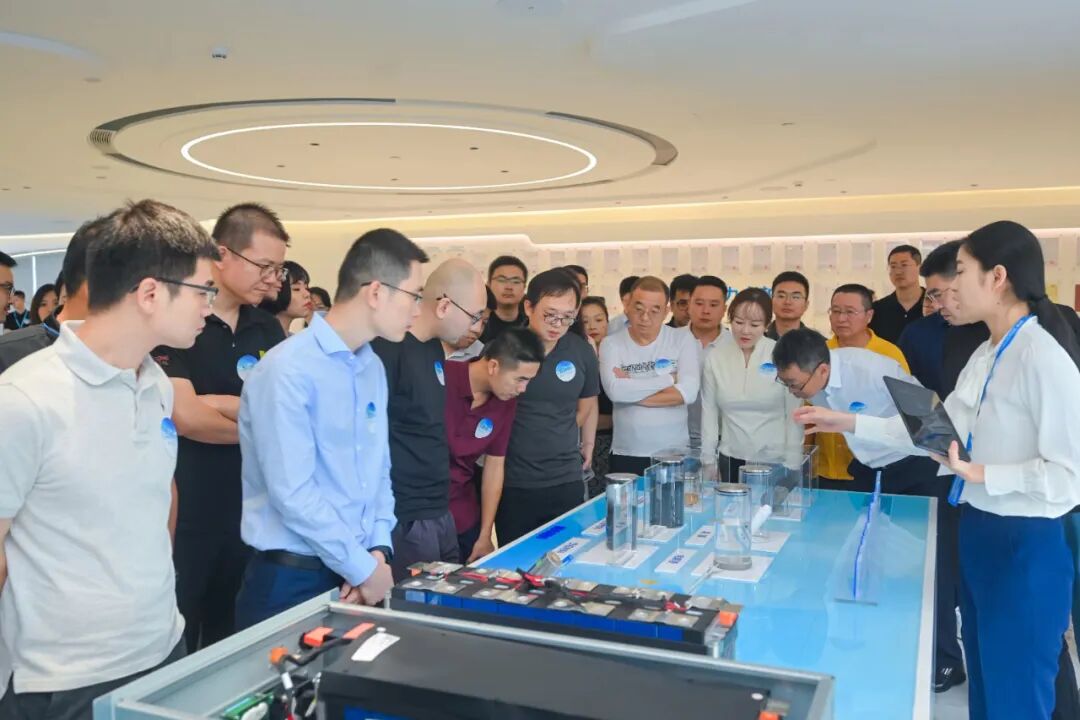
Recently, Gaorong Ventures' Ronghui program, together with the Qianhai Equity Exchange, The University of Hong Kong Beijing Center, and EqualOcean Auto, joined battery industry technology companies on a visit to BTR New Materials Group, the world's leading lithium-ion battery anode materials supplier. The initiative aims to help companies better capture growth opportunities in the new energy and battery sectors, and explore innovative scenarios where technology converges with industry. As Xin Wang, Managing Director at Gaorong Ventures, shared during the event, "Many directions within the new energy sector represent trillion-yuan markets with several-fold growth still ahead." "Any small change or innovation could hatch a new company or create new opportunities."
BTR, the anchor company visited, has ranked first globally in anode material shipments for 13 consecutive years, and its high-nickel ternary cathode materials have ranked among China's top three in recent years. Technology companies from batteries, automotive, materials, and precision manufacturing gained deep insight into how a battery materials leader navigates cycles with resilience, focus, and forward-looking strategy. Experts from industry, academia, and investment circles shared perspectives and engaged in cross-disciplinary dialogue on topics including new energy industry trends and the application of quantum chemistry in battery materials.
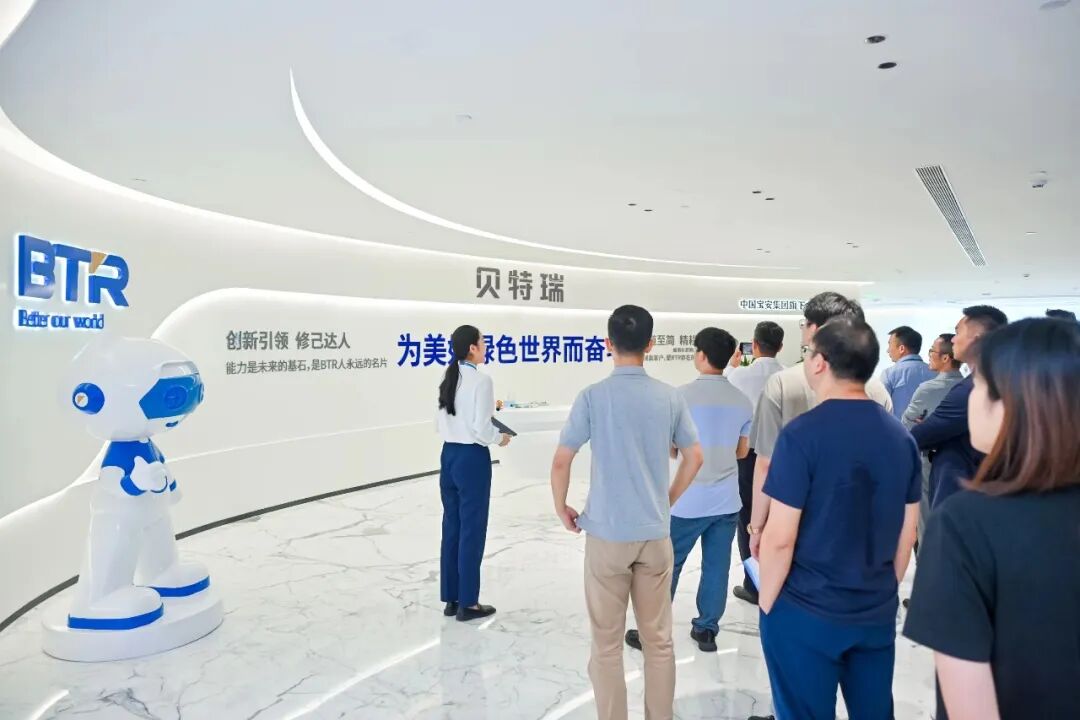
Cultivate Yourself, Benefit Others; The Greatest Path Is Simplicity
From Obscurity to Global Anode Materials Leader
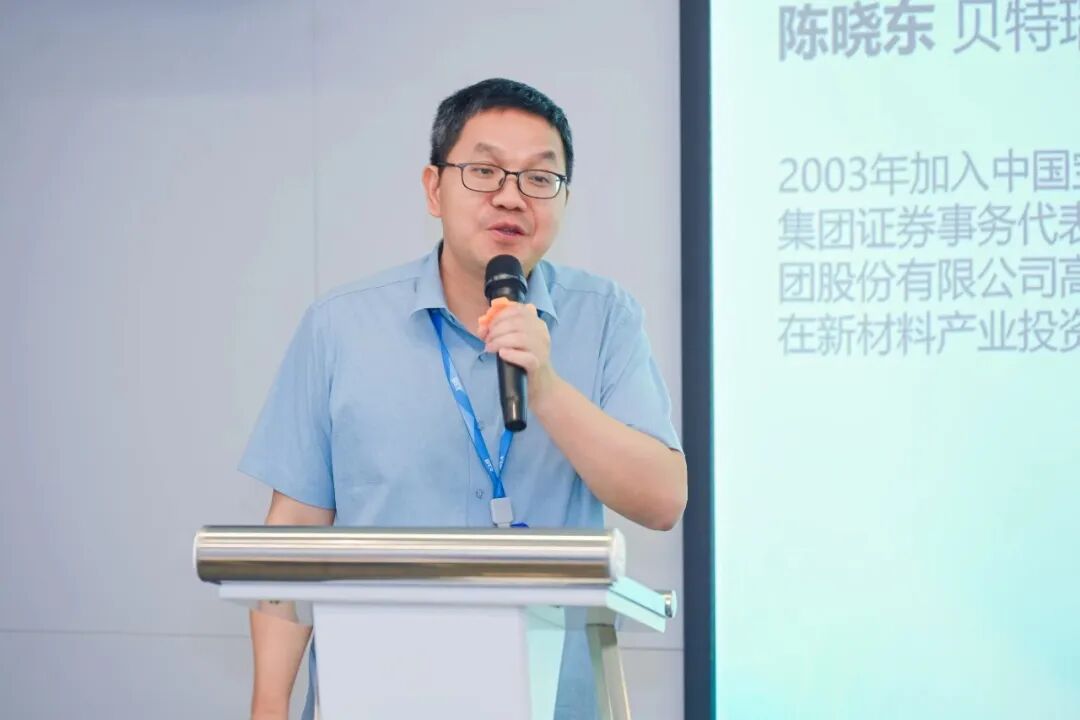
BTR was founded in 2000, initially focusing on lithium manganese oxide. But due to unsatisfactory progress in technology, product development, and market expansion, the company stumbled in its early years. Market research led it to discover demand for anode materials. "We built many models at the time, but the market was too nascent and application scenarios hadn't fully opened up, so we couldn't accurately estimate market size," recalled Xiaodong Chen, Senior Vice President of BTR Group. "But we identified market demand. After team discussion, we felt the potential was enormous, so we decided to go all in." With that, BTR made its first major strategic pivot — focusing exclusively on anode materials.
In 2004, BTR launched high-capacity natural graphite composite materials, achieving industrialization and breaking Japan's monopoly on anode materials. At the time, anode materials mainly followed two routes: natural graphite and artificial graphite. Natural graphite, with its cost and specific capacity advantages, was widely used in 3C battery applications. BTR leveraged this technology to become China's anode materials leader in 2006. Yet, unexpectedly, BTR "suddenly" acquired an artificial graphite technology company two years later — before its advantages had become apparent. Artificial graphite was more expensive, but offered balanced performance and excellent cycle life, with significant advantages in rate charge-discharge efficiency and electrolyte compatibility that would later make it essential for automotive power batteries and mid-to-high-end electronics. This pivotal move would lie dormant for a full decade before artificial graphite's technology route shone in new energy applications. Thus, BTR filled its technological gap while maintaining its natural graphite leadership, and has held the global anode materials top position since 2010. "Building a company is a near-death experience; entrepreneurs need foresight and judgment about the industry and future trends. Second, you need sufficient confidence to lead your team forward against the odds," shared Xiaodong Chen. BTR's downstream customers include Panasonic, Samsung SDI, CATL, and BYD. BTR's ability to partner with global leaders is inseparable from its strategy of industry leadership and its long-term commitment to R&D and innovation. BTR established its own technology research institute in 2010, with initial hardware investment approaching 100 million yuan. "In 2013, we launched a legendary product. Starting in 2014, our revenue broke the 1 billion yuan mark," Chen shared. That legendary product was the world's first-generation silicon-based anode material — silicon-carbon composite. BTR had begun silicon-based anode R&D as early as 2006, finally achieving industrialization and mass sales in 2013. With roughly double the specific capacity of graphite anodes, BTR's silicon-based material quickly gained favor with major global battery manufacturers. "BTR's revenue broke 1 billion in 2014, and 4 billion in 2018. From 2019, we tripled for three consecutive years, mainly driven by rising EV penetration in China," Chen summarized. "Now, EV penetration in Europe and the US is under 10%, with severely insufficient production capacity — there's still massive room for growth." In 2022, BTR's annual revenue exceeded 25.6 billion yuan, also becoming the first anode materials company to expand overseas. "Think of rain when it's sunny, and sun when it's raining — that's how you stay optimistic forever."
"Quantum Chemistry + AI"
Accelerating Battery Materials Innovation
"Advances in quantum mechanics and artificial intelligence both hold tremendous significance for future technological development," shared Guanhua Chen, Chair Professor of Chemistry at The University of Hong Kong and Director of the Hong Kong Quantum AI Lab, on the frontier exploration of quantum chemistry and AI applications in new energy.
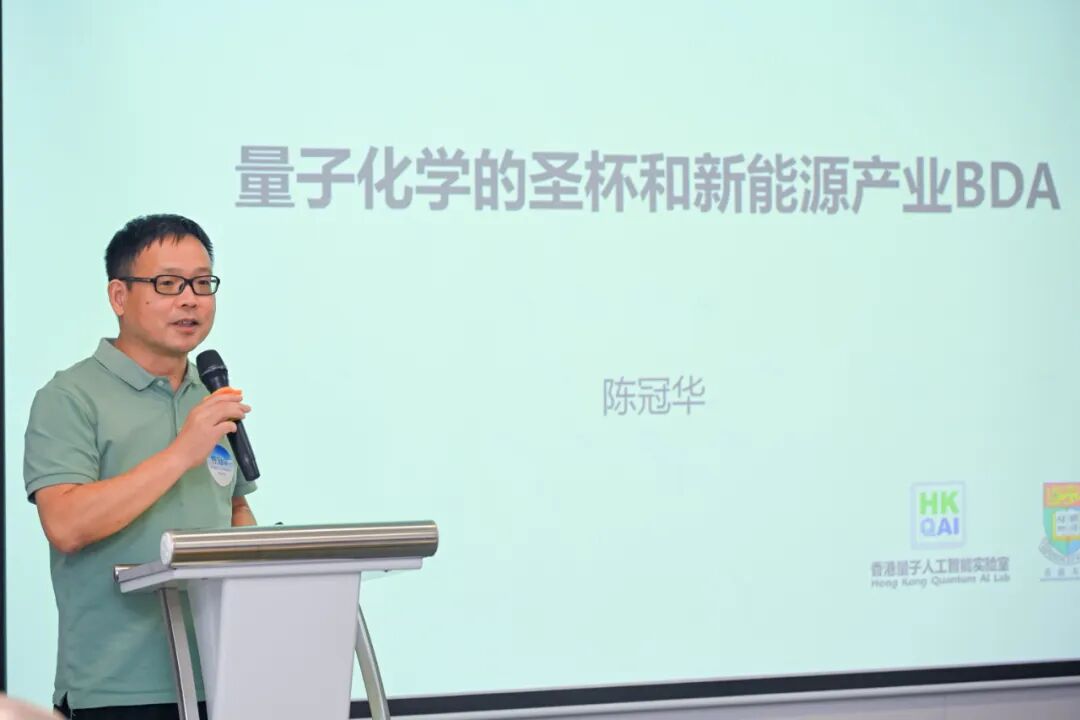
Professor Chen explained, "With quantum mechanics, we can simulate various materials and devices, including solar cells and organic light-emitting materials. Through simulation, we can obtain critical information about device performance."
Previously, Professor Chen and his team had applied quantum mechanics in the semiconductor field, independently developing world-leading EDA (Electronic Design Automation) process and device simulation (TCAD) software tools with atomic-scale simulation capabilities. He believes the new energy industry similarly needs a "new energy BDA platform" analogous to EDA's role in semiconductors.
"Materials R&D, device simulation, and battery performance design are particularly critical. As the complexity of new energy equipment continues to increase, technical support similar to EDA becomes essential," Professor Chen explained. "We are attempting to use quantum mechanics and AI models to rapidly simulate and analyze various material properties, thereby accelerating the development of new materials for faster application in the new energy industry."
Professor Chen concluded, "We are in an era of rapid technological development spanning renewable energy, artificial intelligence, and robotics. These advances are transforming industry and society, just as past revolutions in electricity, oil, and information technology did. We hope that at this exciting moment, combining AI and quantum chemistry can drive rapid innovation in new technologies."
The First Year of the Ultra-Fast Charging EV Market
By 2025, new energy vehicle ownership will surpass 50 million, yet high-power charging stations will remain scarce social resources. Peng Cheng, head of EqualOcean Auto's new energy module, noted that 2023 marks the first year of the ultra-fast charging EV market, with the entire charging infrastructure evolving toward 800V or higher voltage platforms. Compared to the old fast-charging + slow-charging + 400V platform, the 800V ultra-fast charging ecosystem remains in the stage of inflating user expectations.
"In the pure electric path, 450V BEVs were mainstream in 2023. But with 800V platform breakthroughs, ultra-fast charging-led infrastructure will enable low-cost, full-scenario pure electric travel in urban areas and along highways. Solid-state batteries and kilovolt-level high-voltage platforms will drive the next wave of technological innovation and product iteration," Peng predicted.
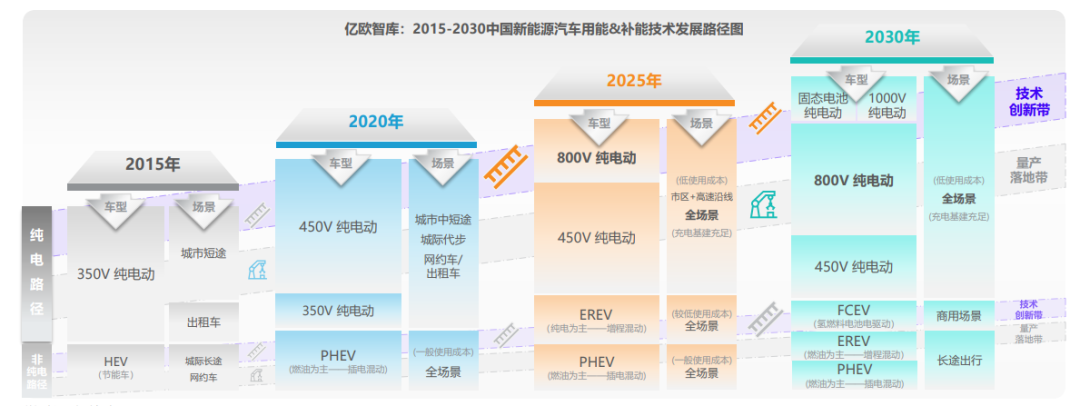
Peng further noted that dispersed individual charging stations will gradually evolve into more centralized supercharging stations, with new business opportunities shifting toward charging station operational efficiency and overall economies of scale. "The future won't focus on usage time or frequency of individual chargers, but on improving efficiency through the entire station's service capacity, integrating site quantity and scale. After a land-grab phase, a new batch of super service providers will emerge."
Exploring New Trends in Battery Materials
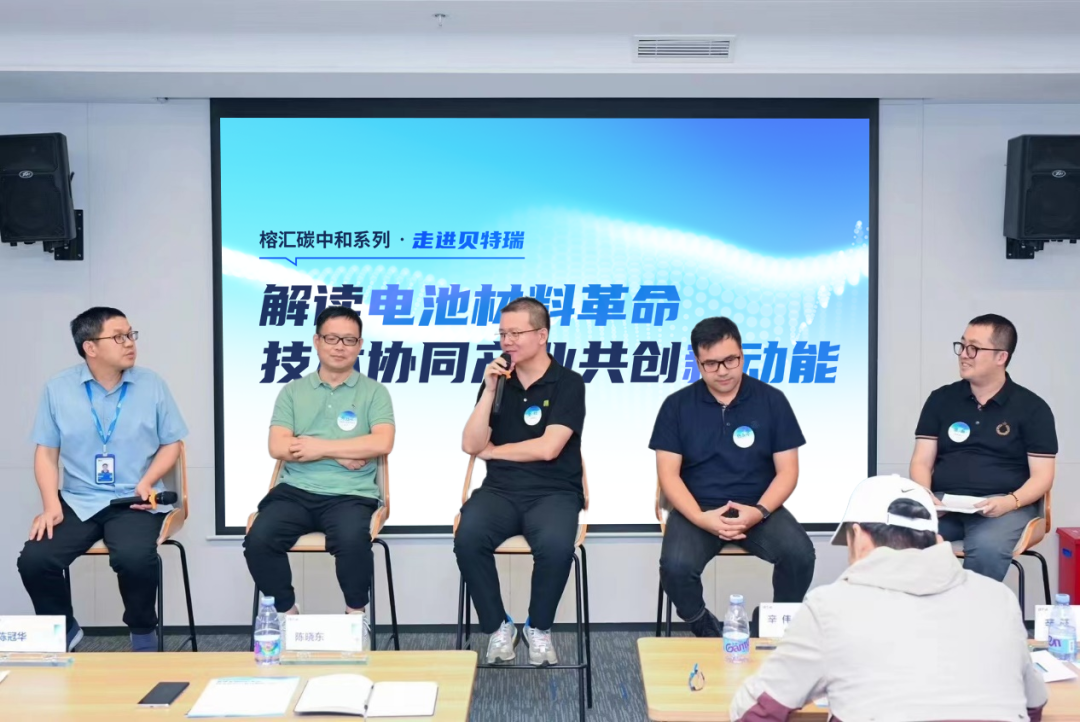
In the dialogue session, Xiaodong Chen (Senior VP, BTR Group), Guanhua Chen (Chair Professor of Chemistry, The University of Hong Kong; Director, Hong Kong Quantum AI Lab), Xin Wang (Managing Director, Gaorong Ventures), Yongping Yang (Executive GM, EqualOcean; President, EqualOcean Auto), and Jing Su (Head of Equity, Shenzhen Qianhai Equity Exchange) engaged in discussion and sharing on new energy industry trends, frontier technology commercialization, and building competitive enterprise capabilities.
As the "ultimate energy of the 21st century," hydrogen's future development commands significant attention. Xin Wang believes hydrogen energy and electrochemical storage like lithium batteries suit different scenarios: "For short-to-medium distance passenger vehicles, lithium batteries have clear advantages in energy conversion efficiency, while hydrogen holds greater potential in long-haul transportation, chemicals, and hydrogen metallurgy."
On industry trends, Xiaodong Chen analyzed potential opportunities and risks from a global perspective. "China's NEV penetration is 30%, while Europe and the US are at just 10% — several-fold growth remains. Most battery and materials capacity is in China. Despite increasing demand for local supply chains in Europe and the US, market competitiveness remains a critical decision factor. Long-term, Chinese companies going global must strengthen their own competitiveness."
Yongping Yang analyzed user needs and supply changes from passenger and commercial vehicle perspectives. "In passenger vehicles, consumers prioritize cost, range, and reliability. So we pay particular attention to emerging battery technologies, including semi-solid and solid-state batteries, plus new materials and thermal management systems. In the growing new energy heavy-duty truck market, hydrogen fuel cells offer enormous development potential and imagination, especially for long-haul logistics scenarios."
On frontier technology commercialization, Professor Chen elaborated on AI and quantum mechanics applications in materials. "Currently, our technology can rapidly screen materials by calculating voltage, current, energy, and other factors; and using quantum mechanics, predict material properties, structures, and stability." Looking ahead, Professor Chen hopes to collaborate with industry R&D departments in the coming years to truly realize the vision of using frontier technology to predict new materials.
On building enterprise competitiveness, Xiaodong Chen noted that China's industrial efficiency is typically high, with supply-demand relationships shifting rapidly, placing higher demands on companies' ability to adapt to market fluctuations. "Companies need to build their own supply chain systems. To compete in the new energy vehicle industry, companies must focus not just on cost and performance, but on improving overall value."
From a practical perspective, Jing Su shared common problems and solutions when tech startups communicate with upstream and downstream industry players. Su advised, "Tech startups can try in their early stages to collaborate with industry players on lab results, conducting supply chain strengthening exercises and continuously seeking solutions."
In the demo session, BTR's graphene subsidiary, the Hong Kong Quantum AI Lab's battery BDA platform, a catalyst materials company, and a complex precision manufacturing company from Gaorong Ventures' portfolio presented their innovations, exchanging views with industry leaders and investors on commercialization paths. Industrial innovation requires coordinated multi-party collaboration. Standing at the intersection of a new wave of technological innovation and new energy industry transformation, we look forward to all sectors leveraging technological innovation and China's new energy manufacturing advantages to accelerate the arrival of the carbon-neutral era.