The "Brain" Behind Starbucks' Rapid Delivery Launch | A Gaorong Ventures Enterprise Services Case Study

The "Mastermind" Behind Starbucks' "Lightning Speed" Online Business
As the internet continues to reshape the restaurant industry, the bar for food and beverage businesses keeps rising. Today, success demands mastery of online channels, offline operations, supply chain, marketing, and design — no single element can be neglected. That's why restaurants increasingly need specialized service providers to help them compete.
Shiheng, a food delivery operations agency, has built an operational system and proprietary data platform designed to help restaurant brands navigate market uncertainty through more granular, data-driven operations.
Gaorong Ventures co-led Shiheng's Series A round in February 2018 and doubled down again in the company's B1 round. Below, we're sharing a TMTpost feature on Shiheng that breaks down how this leading food delivery operator helped Starbucks bring 2,000 stores onto delivery platforms in just four months.
The "Brain" Behind Starbucks' Rapid Delivery Rollout
Source: TMTpost
Author: Zhang Yuan
At Alibaba's One Business Conference this past January, Starbucks announced that its delivery service had expanded to 2,000 stores across 30 cities in just four months since launch. This "lightning speed" was made possible by Starbucks' comprehensive strategic partnership with Alibaba — the full integration of Starbucks into Alibaba's commercial and membership ecosystems, plus Ele.me's end-to-end support spanning platform access, marketing, and logistics. But that alone wasn't enough.
Starbucks had been relatively slow to enter food delivery precisely because it worried about protecting the customer experience and product quality it had spent nearly 50 years cultivating.
In China's food delivery market, which had already entered its "second half," the operational challenges are formidable. How do you achieve precise delivery zone segmentation by commercial district? How do you develop differentiated menus for different online scenarios? How do you manage reviews across self-operated, proxy-ordering, and other channels? How do you design promotions like spend-and-save deals and red envelope campaigns? How do you adjust strategy in real time based on sales data? Mastering this full playbook of online store operations — even for a company with nearly five decades of rich offline retail experience like Starbucks — was far from trivial.
It needed an operator that truly understood the digital playbook to accelerate its online transformation. So it turned to Shiheng — the most scaled and systematized food delivery operations provider in China — leveraging Shiheng's deep delivery expertise and self-built big data platform to rapidly roll out stores nationwide and then maintain granular ongoing operations.

The "Starbucks speed" of 2,000 stores in four months was enabled by a big data platform that Shiheng's engineering team developed to match real operational needs. The platform uses distributed data collection to aggregate information from four channels.
At the computation and processing layer, the platform separates real-time and offline computing into two distinct technical paths, enabling millisecond-level queries on tens of millions of historical records while also supporting alert-driven business requirements.
Beyond that, Shiheng's online data is deeply intertwined with delivery platform algorithms, models, traffic buying, digital menus, campaigns, and promotions — all adjusted and responded to in real time as platform rules evolve.
As Shiheng's Senior VP Huang Nian said at the 2018 China Catering Brand Power Summit: "How do you help delivery merchants find their break-even point? How do you ensure GMV growth without eroding margins? These are top concerns. My answer is this: data-driven granular operations require delivery strategies segmented by region, by commercial district, by time slot, and by tier."
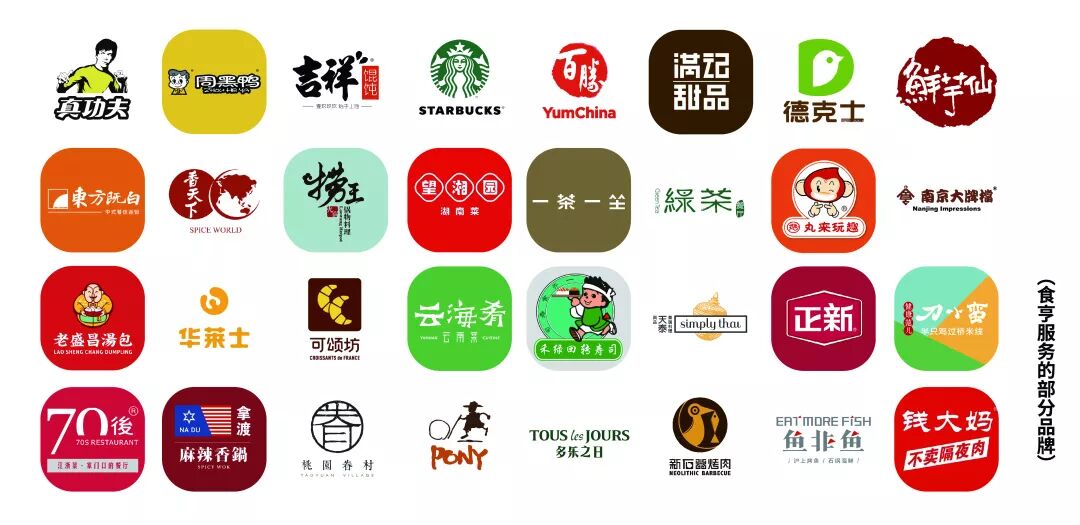
Some of the brands Shiheng serves
Currently, Shiheng works with over 300 domestic restaurant chains — including Zhou Hei Ya, Yum China, and Honeymoon Dessert — covering tens of thousands of stores across more than 100 cities, with nearly 20 local branch offices. It has helped numerous large, medium, and small restaurant brands and individual stores achieve 6–10x delivery growth, with GMV reaching 400 million yuan, putting it far ahead of competitors. In the premium segment, Shiheng has already captured more than half of the top 100 brands.
Four months to launch 2,000 stores might give the impression that Shiheng runs a "light" model. In reality, beyond its online big data platform, Shiheng maintains human operations teams in every city it serves.
"When a particular store has an issue on a given day, the system can only show that transaction volume dropped. To actually diagnose where the problem lies, you still need people to talk to the merchant and the platform," Shiheng founder and CEO Fang Shihun told TMTpost.
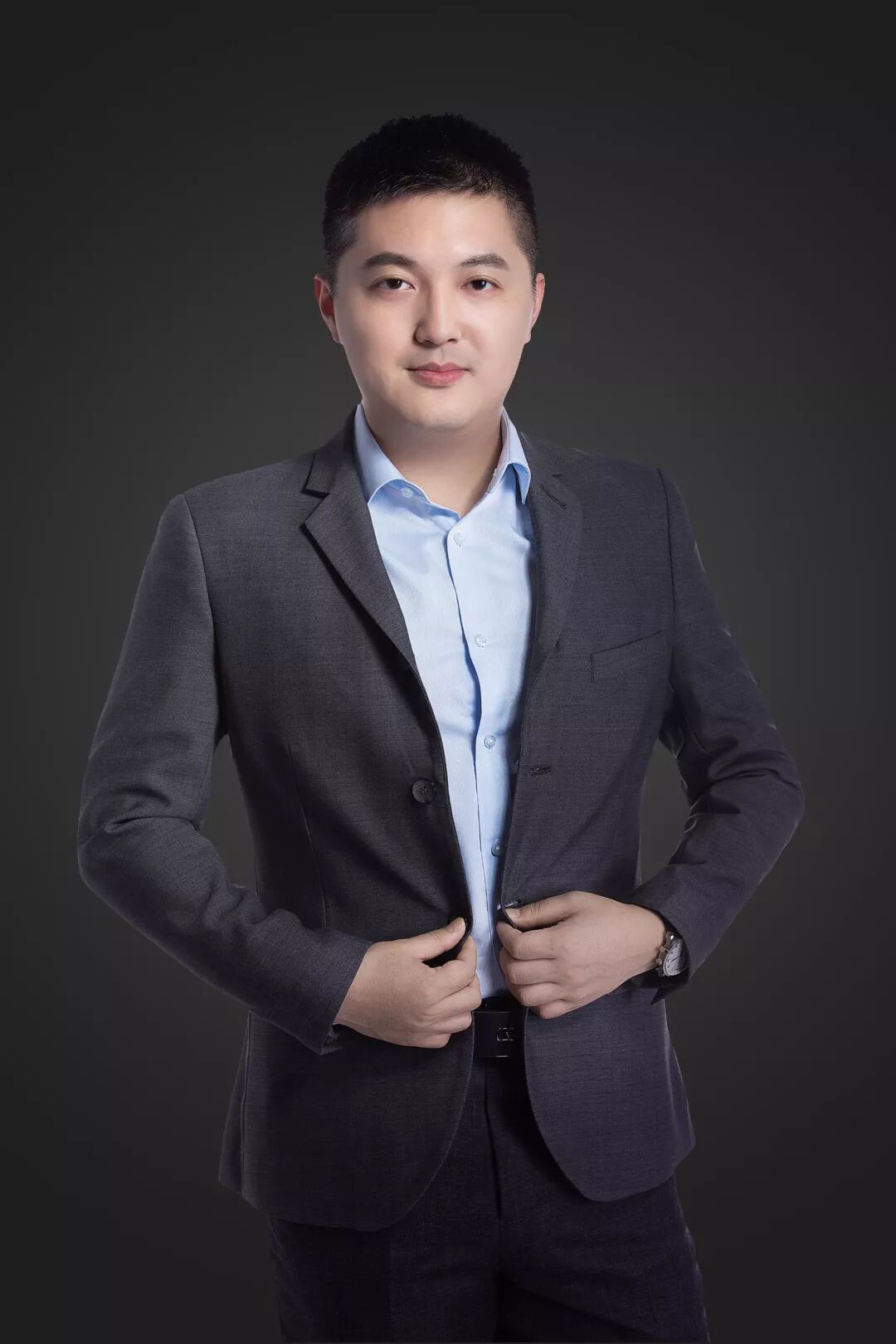
Shiheng founder and CEO Fang Shihun
Some competing delivery operators have chosen a lighter path — using store service apps, data management platforms, and intelligent merchant backend assistants to help merchants achieve data transparency and self-management, self-optimization.
This productized approach reduces customized operational investment and helps scale quickly, especially at a time when the delivery operations market is seeing frequent funding rounds and racing to capture territory.
But Fang believes this "light operations" model struggles to create real value for merchants. "We could go light too — give merchants a portal to log into, show them some metrics. That's not hard. But many merchants, even with the data in hand, don't understand what it means or how to adjust based on it."
In Fang's view, most merchants aren't just missing data — they're missing professional operational capability. "They came to us precisely because their own operations teams aren't sophisticated enough. So ultimately we have to actually deliver the service, actually grow their business. That's our core value."
Because it genuinely creates value for merchants, even in markets that have already been rapidly "scouted" by competitors, Shiheng still wins merchants over when it enters. As Fang put it, "Our expansion speed actually isn't slow at all."
Moreover, as service efficiency keeps improving, Shiheng's human operations teams haven't become a drag on rapid scaling. "Per-capita operational efficiency increases every month. Previously one operations team managed three brands; now they can handle four, five, or more," Fang told TMTpost.
While its food delivery operations business was surging, Shiheng quietly expanded into retail delivery operations. "We're seeing retail going onto delivery platforms at an accelerating rate, so we felt we had to help retail businesses too — and their pain points are acute," Fang said.
"Retail demands even more granular operations, with tighter management of inventory and SKUs. A restaurant might have a few dozen dishes; a convenience store could have several hundred SKUs." This places even higher demands on the granularity of Shiheng's operational data systems.
Looking at Shiheng's priorities for 2019, Fang outlined two directions: first, going deeper and more thoroughly into food delivery operations, including exploring more offline services. While the team can't cook or source ingredients for merchants, they can provide guidance. Second, addressing merchants' supply chain pain points by partnering with raw material suppliers to reduce costs through centralized procurement, while integrating online and offline to deliver more refined services.
In 2018, as multiple hot sectors lost momentum, food delivery operations was one of the few where the tailwinds kept blowing. And Shiheng was the fastest in both funding pace and amount raised. In February 2019, Shiheng closed a tens-of-millions-of-dollars B2 round led by a joint venture fund established by two leading global investment firms, TPG and SoftBank Asia Ventures.
This marked Shiheng's third hundred-million-yuan-level round within a year. In 2018, the company had completed a hundred-million-yuan Series A and an over-hundred-million-yuan B1 round, with investors including HSG, Gaorong Ventures, and Yuanjing Capital.
"We built up our capital reserves before the funding winter hit, precisely to get through it. Getting through winter is what lets great companies emerge," Fang concluded.
Recommended Reading

- Gaorong Ventures manages approximately RMB 15 billion across its USD and RMB funds, focused on early- and growth-stage TMT investments.
- Its limited partners include top-tier global institutional investors as well as Chinese leaders in finance, retail, and advertising.
- Dozens of successful entrepreneurs — founders of Tencent, Baidu, Taobao, Xiaomi, Meituan, Dianping, 360, 002027, Weibo, Sohu, JD.com, Vipshop, Tudou, Autohome, Ganji, and others — are also LPs in Gaorong funds.
- The founding partners previously led investments in numerous outstanding companies including Xiaomi, Razer, Baofeng Technology, G-bits, Tudou, Wondershare, Archermind, 91 Assistant, 3G.cn, Mogujie, Dota Legend, Yuanfudao, and others.
- Since its founding, Gaorong has backed multiple companies that have grown into national or global leaders in their sectors, including: Pinduoduo (NASDAQ: PDD), HUYA Inc. (NYSE: HUYA), Huami (NYSE: HMI), Mogujie (NYSE: MOGU), Lifesense (300562.SZ), Meituan (03690.HK), Ping An Good Doctor (01833.HK), Zhongrongjin (acquired by Homa Appliances), DeePhi Tech (acquired by Xilinx), Qian Dai Bao (acquired by Meituan), Ufintech, Beibei, Leqi E-commerce, DotC, Nuro, YITU, Roborock, Tiangong Intelligence, Zhuiyi Technology, Tigerobo, Oasis Labs, Beitai Haoche, QuantGroup, Shuidihuzhu, Testin, Doumi, BIGO LIVE, Danke Apartments, Qiandama, Perfect Diary, and Ucommune.
- Gaorong Ventures maintains investment teams in Beijing, Shanghai, Guangzhou, Shenzhen, and Hangzhou.
Scan the QR code to follow Gaorong Ventures

Thank you, friends of Gaorong