The Gaorong Ventures Way: Know What to Do, Know What Not to Do

A matter of resolve.
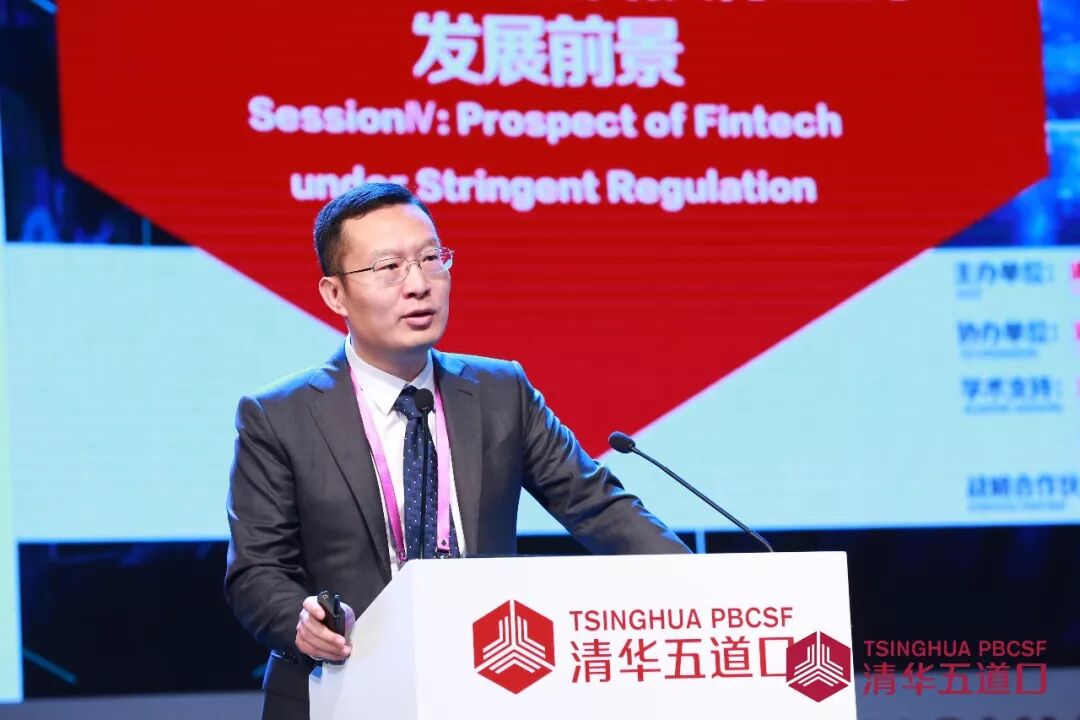
Chang Chen, Founding Partner of Gaorong Ventures

In 1998, Chengsiwei, widely regarded as the "father of China's venture capital," submitted a proposal on behalf of the China Democratic National Construction Association titled Proposal on Drawing from International Experience to Accelerate the Development of China's Venture Capital Industry. This became known as the "No. 1 Proposal," which is credited with sparking a new wave of growth in China's high-tech industry and marking the beginning of VC's rapid expansion in the country.
As part of its "China Venture Capital 1998–2018: Investor Interview Series," Beijing News's "Searching for China's Makers" documented Chang Chen and the rise of Gaorong Ventures within this turbulent history. Today, we share that interview.
Beijing News: Searching for China's Makers
Zhang Shuxin, Liu Suhong
Unless he has special arrangements, Chang Chen usually arrives at the office around 8 a.m. to start his day.
By 9:30 a.m., when the reporter met him at Gaorong Ventures' Beijing office, he had already finished meeting with one group of visitors. After more than a decade in VC, he has long grown accustomed to an intense work rhythm.
"How can an excellent investment firm continue to back outstanding companies amid constantly emerging waves of new investment?" This is one of the questions he has been actively discussing with leaders of major institutions — Yuri Milner of DST, Ray Dalio of Bridgewater, Lei Zhang of Hillhouse, and Neil Shen of HSG.
In just over four years since its founding, Gaorong has led or co-invested in numerous star projects including Pinduoduo, HUYA Inc., HMI, Meituan, Ping An Good Doctor, DeePhi Tech, Nuro, YITU, and MOGU. In early December 2018, Gaorong Ventures successfully closed its fourth USD fund at $500 million.
Chang Chen's focus has expanded beyond fundraising and investment strategy. How to build an institution that lasts, and how to achieve high-quality team succession, have risen to the top of his strategic agenda.
All three founding partners of Gaorong share a vision: the firm should not bear any single individual's label. Instead, it should achieve institutional longevity through robust team building and succession systems.
The "Top Student": Information Iteration on a Monthly Cycle
Born in a military compound, Chang Chen carries something of a "chivalrous" spirit — he believes that "the greatest chivalry serves the country and its people."
His entry into venture capital was tied to this conviction. He believed capital could drive technological and commercial innovation. Starting in 2002, venture capital became his first and only job — a path that was both accidental and inevitable.
During graduate school, he had co-founded an internet company with his advisor and encountered venture capital during the fundraising process.
At that time, America's VC industry was already mature and had powered decades of rapid growth in technology. In China, the industry was just on the eve of takeoff. IDG Capital, founded in 1992, had spent a decade working quietly in the background; its investments in Baidu and Tencent were just getting started. Yan Yan's SAIF Partners had been established less than a year earlier. HSG and Matrix Partners China did not yet exist.
But Chang Chen was already convinced that the technological and commercial innovation driven by VC, which had happened in America, would inevitably replay in China. IDG Capital happened to be hiring investment managers. He decided to give it a try — and was hired that same day.
"I sometimes joke that many young people joining Gaorong now graduate from world-class universities like Yale, Oxford, UC Berkeley, Columbia, and Cornell. By that hiring standard, I probably wouldn't get in," Chang Chen said with a laugh.
He described himself as driven by a desire to "build something great," joining the internet boom in hopes of backing companies that could dramatically improve business efficiency and consumers' quality of life. At IDG Capital, he met Zhou Quan, the "boss" who would profoundly shape his investment career, and the other two members of what would become the "Gaorong Three Musketeers": Gao Xiang and Yue Bin.
To invest, one must first judge industry trends. After the 2000 internet bubble, new investment themes emerged every two or three years: from vertical portals and online games to search engines, SP services, Web 2.0, mobile internet, and AI.
This placed enormous demands on investors' learning ability. "You can't say you're good at investing in online games but not search engines — that shows insufficient self-learning ability and motivation," Chang Chen said.
Entering the investment world, the holder of three degrees from Tsinghua University — in engineering, law, and business — felt both challenged and deeply curious. He didn't yet know that this very combination of "challenge and curiosity" would cultivate in him the ability and habit of rapidly iterating his understanding.
Feng Xin, founder of Baofeng and an old friend who knew Chang Chen before either had made their names, observed that Chang Chen's progress was remarkably swift — his grasp of industries could truly be described as "transformed after just three days apart."
The two first met at a tea gathering hosted by Cai Wensheng, then chairman of 265 Technology. Baofeng was just getting started, and Chang Chen was fascinated by the "traffic" business Baofeng was building. The next day, he pulled Feng Xin out for lunch to continue the conversation. They maintained a rhythm of meeting several times a month, and at every gathering, Chang Chen would bring new industry developments to discuss.
"He has that classic Tsinghua trait of getting to the bottom of things. When he has a question, he immediately finds people to verify it, then exchanges and cross-checks information everywhere. So his information iteration in any given field happens on a monthly cycle — upgrading every two to three months," Feng Xin said.
Chang Chen said: "The VC industry is brutally unforgiving. One decision, small or large, involves millions or even hundreds of millions of dollars — sums some people may never see in their lifetime. One wrong investment, or a project that underperforms, can break an investor. There are many such examples."
The "Three Musketeers": Leaving Your Back to Each Other
Chang Chen, Gao Xiang, and Yue Bin are known as Gaorong's "Three Musketeers" — brothers who have known each other for many years.
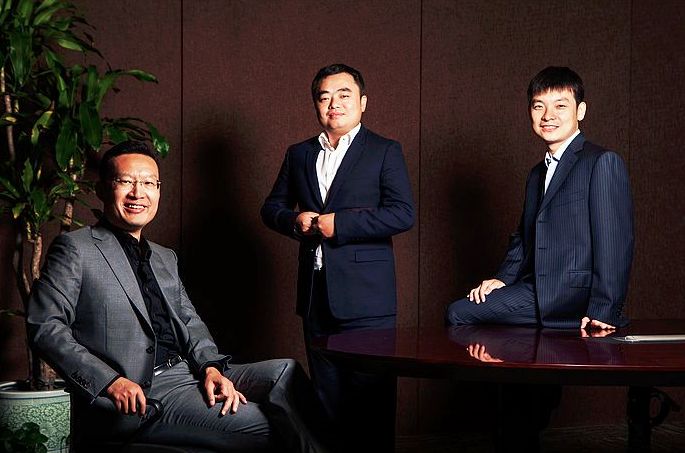
Chang Chen, Gao Xiang, and Yue Bin (from left to right)
Chang Chen and Gao Xiang were particularly fated: on Chang Chen's first business trip after joining IDG, his roommate was Gao Xiang, who had joined the same year.
Unlike the decisive Chang Chen, Gao Xiang is notably gentle. Liu Chang, daughter of Liu Yonghao, met Gao Xiang at a startup camp and came to see him as a warm-hearted "Baymax."
The "one hard, one soft" pairing proved surprisingly harmonious. During their more than ten years working together at IDG Capital — Chang Chen in Beijing, Gao Xiang based in Guangzhou — they rarely met in person yet built an extraordinarily solid trust. Chang Chen described their relationship as being able to "leave your back to each other." Whichever of them sourced a project, the other would execute it as if it were their own. This came from years of mutual recognition and磨合.
At one point both were looking at online video projects. Gao Xiang insisted on investing in newly launched Tudou, while Chang Chen preferred another company. Neither could convince the other, so they agreed to visit each other's recommended companies together. Tudou's founder Wang Wei came to meet them in slippers, but after careful discussion, Chang Chen was greatly impressed by Wang Wei's capabilities and came to believe Tudou's prospects were more promising, firmly supporting Gao Xiang's investment in Tudou.
"There are many such cases between us," Chang Chen said. In 2007, both were promoted to partners and jointly took charge of IDG Capital's TMT investment business.
By then, the venture capital market was growing increasingly prosperous with the IPOs of BAT and other companies. TMT was a key sector that every institution was betting on, and the two did not disappoint — together they backed Tudou, 91 Assistant, G-bits, Razer, Wondershare, and other notable projects.
Chang Chen and Yue Bin, meanwhile, were "fated by fighting."
When they first met, Yue Bin was still working at China Renaissance and had recommended a project to Chang Chen. "My first impression of this young man was: why is he so 'merciless'!" Chang Chen laughed, recalling Yue Bin's incisive, to-the-point style.
After talking for over an hour, the "sharpness" in Yue Bin — his ability to make precise judgments amid complex and tangled information — greatly impressed Chang Chen. This was a trait he had observed in outstanding practitioners like Neil Shen, Lei Zhang, and Xing Wang. At the end of 2009, Chang Chen strongly invited Yue Bin to join IDG Capital.
Yue Bin's 2010 lead investment in Xiaomi later brought IDG Capital nearly $1 billion in returns, making him famous throughout the VC industry.
The process of investing in Xiaomi was like a Sherlock Holmes case: Yue Bin discovered on a forum called miui.com that a company called Xiaomi had launched the Android OS MIUI and the messaging tool Miliao. The product updated weekly based on user feedback, and with each iteration, user reviews improved.
Meanwhile, he found across various job sites that Xiaomi was recruiting hardware engineers specializing in chips, communications technology, and more.
At the time, Lei Jun's public identity was still angel investor. Through connections, Yue Bin learned that Lei Jun was going to Xiaomi's offices daily and staying until late at night. Xiaomi had just completed a secret funding round, so Lei Jun wasn't particularly eager to meet unfamiliar investors.
Yue Bin told Lei Jun: "Please give me half an hour. I'll present my understanding of Xiaomi to you through a PPT." It was rare in the industry for an investor to present to a founder, and this piqued Lei Jun's interest.
In that PPT, Yue Bin deduced that Xiaomi aimed to build an ecosystem around smartphones, seeking to capture the mobile internet entry point, and made predictions about the development landscape of China's smartphone industry.
At that time, 4G普及 and the mobile internet explosion were still three years away. Yue Bin's early grasp of Xiaomi's strategy moved Lei Jun, who评价 him as "the first person outside Xiaomi to truly understand Xiaomi," and gave Yue Bin the opportunity to invest.
This process of persuading Lei Jun showed Chang Chen the most valuable capability Yue Bin possessed — replicable, "systematic investment ability": that is, integrating, analyzing, and reasoning through large amounts of information to deeply understand a细分领域, discover excellent projects from within it, and move founders through genuine "understanding."
Regardless of where the风口 was, Chang Chen believed this ability could be replicated to other promising domains and continue to produce good investments. "I saw in Yue Bin the glow of someone who could grow into an outstanding investor," Chang Chen said.
The "Successor": Establishing a Research Center, Newcomers Learning Through Practice
By late 2013, the VC industry was on the verge of a major裂变.
A wave of core figures from established funds were planning to strike out on their own, leading to the later emergence of prominent new institutions including Gaorong Ventures, Joy Capital, and Source Code Capital.
Chang Chen said Gaorong's founding was actually an "accident."
In mid-2013, Chang Chen and Gao Xiang had the idea of building something entrepreneurial within IDG Capital. The internet wave had created a new class of阳光新富. The two wanted to pool their resources and capital, inviting these individuals to serve as LPs (limited partners) for a sub-fund within IDG Capital, managed by the three young partners.
Zhou Quan was highly supportive, personally helping them revise fundraising materials. But after several months of discussion, the proposal was rejected by the LP advisory committee.
With the internal sub-fund route blocked, going independent became their only option. IDG Capital placed no obstacles in their way; in fact, Zhou Quan, Hugo Shong, and all other senior partners became LPs in Gaorong Ventures' first fund. In the years since, Gaorong and IDG Capital have frequently co-invested in projects.
Leaving a major platform meant truly walking independently for the first time — far beyond the difficulty of simply making investments. This presented greater challenges to the three brothers, but also filled them with excitement.
Lei Jun sent the newly independent Gaorong Three Musketeers a message: "When a person is unknown, they can focus on sword practice." Starting from scratch, they laid out their vision creatively.
Positioning itself as "China's Founders Fund" from birth, Gaorong's LPs included not only top-tier institutional investors but also dozens of entrepreneurs from leading internet companies. Founders from Tencent, Baidu, Taobao, Xiaomi, Meituan, Dianping, 360, 002027, Weibo, Sohu, JD.com, Vipshop, Tudou, Autohome, Ganji.com, and others all became important LPs of Gaorong Ventures.
These entrepreneur LPs provided not just capital, but more importantly, shared entrepreneurial management experience and industry resources with Gaorong's portfolio companies.
The market proved their strategy right. On January 8, 2014, Gaorong completed its first fund raise of over $200 million, with阳光新富 capital and institutional capital each comprising roughly half. As its market position became established, increasingly top-tier institutions also became Gaorong Ventures' LPs, including globally renowned sovereign wealth funds, university endowments, pension funds, family offices, and fund-of-funds.
In early December 2018, Gaorong Ventures successfully completed the raise of its fourth USD fund at $500 million. Institutional investors and individual LPs have continued to bring positive value to Gaorong and its portfolio companies.
In 2014, China's mobile internet entered a phase of vigorous growth. As traffic migrated from PC to mobile, the流量红利 fully exploded and the entire market was reshuffled. Many "established" internet company founders or executives also threw themselves into entrepreneurship, bringing experience and resources.
The question before Chang Chen was: in a dramatically fluctuating environment, how can an investment firm continue to back outstanding startups? How can it develop systematic methods?
"The key is that an institution's investment strategy and methodology must be replicable," Chang Chen said. Gaorong Ventures' DNA believes in "systematic approaches": researching industry development from the top down, discovering good projects through "sharp" judgment, and helping founders through deep understanding of their domains.
To this end, Gaorong established an internal research center, managed by Gao Xiang, who had been the TMT research lead at IDG Capital. Young graduates joining Gaorong spend their first one to two years in the research center, starting with industry research and analysis before transitioning to investment manager roles. The research center both empowers the institution and serves as a method for cultivating new talent.
"The research center doesn't just develop professional ability — it teaches you how to grow through challenges," Chang Chen said. Wu Ge, a young investor who emerged from the research center, said: "At Gaorong, I learned how to develop my挫折商 — that is, to grow through constant setbacks. The courage to self-correct makes it more possible to build systematic competitiveness."
For investment managers, Gaorong demands hands-on practice. Rui Han, Gaorong's current consumer investment lead, once rode in a big rig from Guangzhou to Chongjiang to evaluate a logistics project, eating, living, and sleeping with truck drivers to understand industry pain points. When researching the bike-sharing industry, several researchers went to multiple tier-2 and tier-3 cities, standing in wind and rain at subway entrances and intersections counting bicycles.
Rui Han said: "Honestly facing yourself amid distractions, thinking slowly but acting quickly, persisting in doing the right thing, and further strengthening the construction of systematic methodology while iterating on it — these are the important improvements I've gained at Gaorong."
"Understanding facts is the foundation of judgment. Industry research cultivates systematic learning ability and judgment, so that new colleagues have the opportunity to grow into outstanding investors," Chang Chen said.
Under the guidance of systematic methodology, Gaorong has led or co-invested in numerous star projects including Pinduoduo, HUYA Inc., HMI, Meituan, Ping An Good Doctor, DeePhi Tech, Nuro, YITU, and MOGU — no longer "unknown" in the industry.
Speaking of research-driven approaches, Chang Chen mentioned a recent lead investment by Gaorong in an American blockchain security project, Oasis Labs, founded by renowned UC Berkeley computer science professor Dawn Song.
Dawn Song's paper Dynamic Taint Analysis ranks first in citations in the world computer security field, and she is also a successful serial entrepreneur.
The investor roster was impressive, including top global institutions like A16Z and Accel. Securing allocation was not easy.
Before Dawn Song started the company, Gaorong's investment team proactively traveled to the US to visit her. Before the meeting, the team had already read and analyzed her published papers and other important papers in the field.
The efficient, in-depth communication during their meeting with Dawn Song left a strong impression. When Oasis Labs raised funding, she notified Gaorong at the first opportunity, making Gaorong the only Chinese VC institution to serve as a lead investor in this Silicon Valley star project.
The "Way" Without Confusion: Doing, and Not Doing
Thanks to the Three Musketeers' years of investment experience, Gaorong has carved out its own path in the "technique" of investing. Yet from investor to head of a multi-billion-dollar fund, Chang Chen says he still often finds himself puzzled by the "Way."
Whenever Chang Chen encounters a mental impasse, he often chooses to speak with Sun Tongyu. The founder of Taobao is a "mentor" figure to Chang Chen — Sun Tongyu to him is what Duan Yongping is to Pinduoduo founder Zheng Huang.
Their conversations sometimes don't require many words; a sentence or two of guidance can bring clarity. Just as Duan Yongping gave Zheng Huang the two characters "本分" (integrity/keeping to one's role), Sun Tongyu's message to Chang Chen was similarly concise: "有所为,有所不为" (do, and do not do) — which Chang Chen regards as a profound summary of the "Way" of investing.
The markets of 2015 and 2016 appeared booming. The privatization of Chinese concept stocks gave many tech companies the opportunity to list domestically, and institutional fundraising and investment reached a阶段性高潮.
To participate or not? In which opportunities? This caused Chang Chen considerable anxiety. At the time, numerous privatization projects approached Gaorong, claiming that "domestic P/E ratios are far higher than overseas, and short-term returns upon relisting domestically could reach 3 to 5x."
As the head of a new institution, his pressure was no longer about missing individual projects, but about how to choose when faced with systematic, massive temptation. This required not just wisdom, but定力.
The phrase "do, and do not do" ultimately helped Chang Chen decide: Gaorong would not participate in any Chinese concept stock privatization. In his view, participating in such projects would be pursuing short-term arbitrage, while Gaorong's初心 as an early-stage VC was to realize long-term value creation. "We're not a professional hedge fund. If you want to make quick money, someday you'll have to pay it back."
Opportunity cost always exists. Such choices are the norm in Chang Chen's life. The transition from investor to institution head has made him more adept at把握 the degree between "doing" and "not doing."
Early in his career, if a founder requested additional options beyond what was stipulated in the investment agreement, Chang Chen would see this as violating契约精神. Now he is more inclined to stand in the founder's shoes and consider their needs — additional options may be essential resources for attracting outstanding talent. After all, "no contract is perfect; there are always things that need adjustment due to changed circumstances."
More than four years into entrepreneurship, Chang Chen still feels that Gaorong Ventures is a startup, with a long road ahead in exploring and把握 the Way and the technique.
Recommended Reading
Gaorong Ventures Completes $500 Million New Fund Raise, Building Long-Term Value with Entrepreneurs

-
Gaorong Ventures manages USD and RMB funds totaling approximately RMB 15 billion, focused on early-stage and growth-stage investments in the TMT sector.
-
LPs include both top-tier global institutional investors and corporate giants from China's financial, retail, and advertising industries.
-
Additionally, dozens of successful entrepreneurs, including founders from Tencent, Baidu, Taobao, Xiaomi, Meituan, Dianping, 360, 002027, Weibo, Sohu, JD.com, Vipshop, Tudou, Autohome, and Ganji.com, are LPs of Gaorong Ventures.
-
The founding partners previously led investments in numerous outstanding companies, including Xiaomi, Razer, Baofeng Technology, G-bits, Tudou, Wondershare, ArcherMind Technology, 91 Assistant, 3G.cn, MOGU, 刀塔传奇, Yuanfudao, and others.
-
Since Gaorong's founding, many of its invested or equity-held companies have grown into national or global leaders in their respective industries, including: Pinduoduo (NASDAQ: PDD), HUYA Inc. (NYSE: HUYA), HMI (NYSE: HMI), MOGU (NYSE: MOGU), Lifesense (SZSE: 300562), Meituan (HKEX: 03690), Ping An Good Doctor (HKEX: 01833), Zhongrongjin (acquired by Homa Appliances), DeePhi Tech (acquired by Xilinx), Qian Dai Bao (acquired by Meituan), Fanpu Jinke, Beibei, Leqi E-commerce, DotC, Nuro, YITU, Roborock, Tiangong Intelligence, Zhuiyi Technology, Hubo Technology, Oasis Labs, Beitai Haoche, QuantGroup, Shuidi Mutual Aid, Testin, Doumi, BIGO LIVE, Danke Apartment, Qian Damai, Perfect Diary, and Ucommune.
-
Gaorong Ventures maintains investment teams in Beijing, Shanghai, Guangzhou, Shenzhen, and Hangzhou.
Scan the QR code to follow Gaorong Ventures

Thank you, good friends of Gaorong