The Tipping Point for Compressed Air Energy Storage: A Conversation with Technology and Industry Pioneer Chen Haisheng | Gaorong Ventures

Eighteen years of perseverance, turning research breakthroughs into one energy storage station after another.
As the energy revolution accelerates — with new energy sources displacing traditional fossil fuels — energy storage is poised for massive growth. Among the various technologies, compressed air energy storage (CAES) has reached an inflection point. With advantages including low cost, large scale, long lifespan, and environmental friendliness, CAES is steadily moving into the mainstream.
China Energy Storage (中储国能, CES) is a pioneer and leader in China's CAES sector, as well as an internationally leading provider of advanced CAES system solutions. Its technology originates from the Institute of Engineering Thermophysics at the Chinese Academy of Sciences (CAS). According to CNESA's "2021 Newly Commissioned Domestic Energy Storage Technology Provider Rankings," CES ranked second nationally in new energy storage and first in the CAES category. Gaorong Ventures invested in CES's Pre-A+ round in 2022.
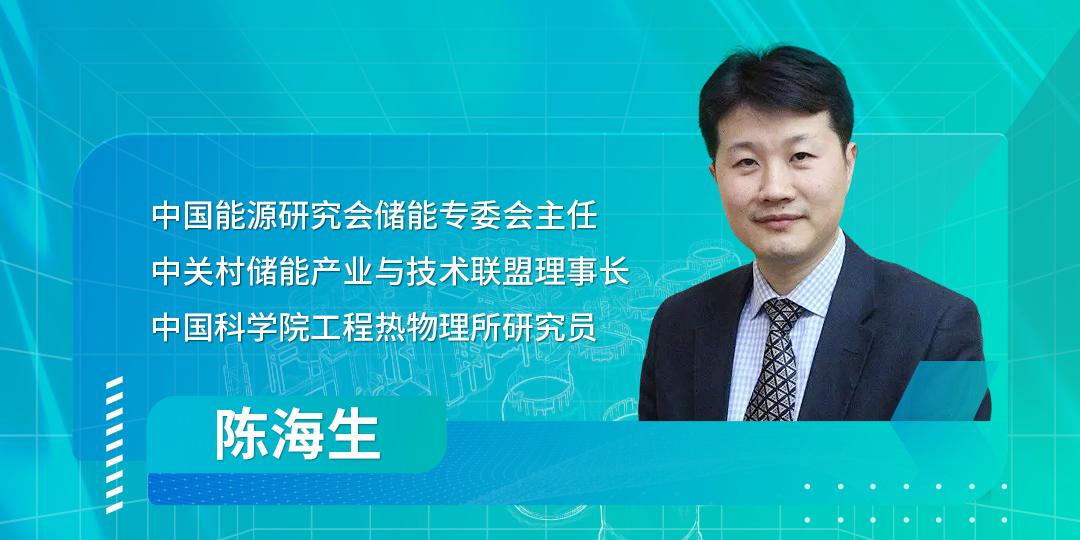
Recently, we spoke with Chen Haisheng, Director of the Energy Storage Committee at the China Energy Research Society, Chairman of the China Energy Storage Alliance (CNESA), and Research Professor at the CAS Institute of Engineering Thermophysics. We discussed the strategic significance of energy storage, the history and evolution of advanced CAES technology, and how he led his team in bringing cutting-edge technology from the laboratory to industrialization.

Q: China is experiencing the largest energy storage investment and construction cycle in its history, entering a "golden age" for the industry. Why does energy storage hold such strategic importance today?
Chen Haisheng: Energy storage is intimately connected with the evolution of energy itself. Energy is the foundation of human economic and social development, and every energy revolution has been accompanied by an industrial revolution. The widespread use of coal brought humanity into the steam age; oil, gas, and electricity propelled us into the electrical age; today we are in the era of electronic information. Throughout this process, the energy structure gradually shifts from fossil fuels as the mainstay to renewable energy as the dominant source.
Today's third industrial revolution and energy revolution create significant demand for energy storage in at least three dimensions.
First, the arrival of the mobile internet era requires not only the mobile interconnection of information, but also places major demands on mobile power — portable energy storage.
The second major demand comes from the development of transportation electrification. Electrifying transportation is both an industry trend and a matter of national energy security, since China imports roughly 70% of its oil, with about 50% of that going to the transportation sector. In recent years, the growth of electric vehicles and related industries has created demand for energy storage that is dozens of times larger.
Third, the large-scale development of renewable energy has created major demand for scalable energy storage. This year, China's total installed renewable energy capacity has approached 1.2 billion kilowatts. Under the dual carbon goals, renewable energy's share needs to rise from 15% in 2020 to 80% by 2060. We know that one characteristic of renewable energy is its uncontrollability — often described as three properties: intermittency, instability, and periodicity. Intermittency means sometimes it's available, sometimes not. Instability means the energy state fluctuates. Periodicity means solar power is available during the day but not at night, while hydropower is low in dry seasons and high in wet seasons. For a country of 1.4 billion people, ensuring energy security requires solving the uncontrollability of renewable energy, and fundamentally this balance must be achieved through energy storage.
Q: In a new-type power system with new energy as the mainstay, what position will energy storage occupy?
Chen Haisheng: As renewable energy shifts from a supplementary source to the main energy source, the power system itself is undergoing a revolution. The direction of China's electricity market reform is clear: moving from government-set pricing toward a spot electricity market. In the future, the spot electricity market may function like today's stock market, with prices fluctuating flexibly based on supply and demand. Peak-to-valley price ratios could rise from today's 1:3 to as high as 1:10, with negative prices even possible.
In this context, the power system is transforming from its previous three-sector structure of generation, grid, and load into a four-sector structure of generation, grid, load, and storage. Energy storage has become one of the four main pillars of the power system and will occupy 10-15% of the market scale going forward. Storage companies will be able to serve the other three sectors individually or simultaneously — providing services for power generators to connect to the grid, for grid security and power quality, and for user-side power quality management and peak-valley arbitrage. The stacking of multiple revenue streams will significantly improve the economic viability of energy storage.
Existing energy storage technologies internationally can be broadly divided into two categories: physical storage, including pumped hydro storage, compressed air energy storage, and short-duration high-frequency technologies like flywheels; and chemical storage, mainly comprising various batteries such as lead-acid, lithium-ion, sodium-ion, and flow batteries.
China began national-level energy storage development plans during the 12th Five-Year Plan period. Having passed through technology R&D, technology demonstration, and early industrialization stages, it is expected that after 2025, relatively mature business models and stable market and policy environments will take shape, entering a phase of scaled, healthy development.

Q: What is the principle and implementation of compressed air energy storage technology, and what scenarios is it best suited for?
Chen Haisheng: The basic principle of CAES is that during off-peak electricity periods, air is compressed to high pressure and stored; during peak demand periods, this high-pressure air is released to drive an expander, which turns a generator to feed power into the grid. We've used an analogy: CAES is like installing a giant air "power bank" for the grid.
CAES technology has several characteristics. First, system scale is large — single-unit capacity can reach 100 megawatts or even 300 megawatts, comparable to pumped hydro storage. Second, because there is no self-discharge, storage duration is unlimited. Third, system lifespan is very long — since it consists mainly of mechanical equipment, with proper maintenance, a CAES plant can operate for 30-50 years. Fourth, unit cost is relatively low. Fifth, safety is relatively high. Therefore, CAES is well-suited for large-scale, long-duration energy storage applications.
Of course, compared to batteries, CAES also has shortcomings: relatively slower response time and less flexibility. Different energy storage technologies suit different application scenarios — just as you wouldn't expect a sprinter to run a marathon. Or consider how computers have both hard drives and memory: memory is fast in and out, while hard drives are slower but have large capacity. So CAES is like a hard drive, suitable for high-capacity, long-duration storage.
Q: In what respects is the advanced compressed air energy storage system you lead in developing technologically leading?
Chen Haisheng: The world's first truly commercially operational modern CAES plant was Germany's Huntorf station, built in 1978. Using conventional CAES technology, it compressed air into underground caverns during off-peak periods; during peak periods, the high-pressure air was released and combined with fuel combustion to produce high-temperature, high-pressure air that drove turbines to generate electricity.
In 1991, the McIntosh plant in the United States began operation, incorporating regenerative equipment and utilizing the latest compressor and expander technologies of the time, achieving certain efficiency improvements.
However, these conventional CAES systems had several problems for large-scale application. First, the system was derived from gas turbine technology and required combustion of fossil fuels. Second, it relied on underground caverns, limiting deployment based on geographical conditions. Additionally, because the system was adapted from gas turbines and did not recover the compression heat generated during air compression, overall system efficiency was not high.
Starting in 2004, the CAS Institute of Engineering Thermophysics team dedicated itself to developing an advanced CAES system to overcome these three bottlenecks. The overall approach includes three directions:
First, using heat exchangers to recover the compression heat generated during air compression, storing it in thermal accumulators; during power generation, the expander recovers heat from the thermal accumulators, thereby eliminating dependence on fossil fuels.
Second, through artificial storage caverns, gaseous pressure vessels, or liquid Dewar flasks and other storage devices, eliminating geographical constraints on storage plants while substantially increasing air energy density.
Third, optimizing system matching through efficient compression and expansion, heat release and recovery, to improve overall system efficiency.

Q: What industrial applications and deployments has this advanced CAES technology achieved so far, and what have been the important milestones along the way?
Chen Haisheng: From 2004 to today, we have traveled 18 years — a difficult yet fruitful journey. We started with fundamental theoretical research on system and component coupling mechanisms, thermodynamic characteristics, and so on; moved to breakthroughs in key technologies and equipment including compressors, expanders, and thermal accumulator heat exchangers; and progressed to integrated demonstration and industrial application.
To mitigate technical risks, in 2011 we began with a 1-kilowatt-scale system for proof of principle; then progressively scaled up and steadily advanced, from 15 kilowatts to 1.5 megawatts, 10 megawatts, up to 100 megawatts, and eventually 300 megawatts in the future. Throughout this process, the technology continuously matured, efficiency continuously improved, and costs continuously declined, ensuring we moved from one success to the next.
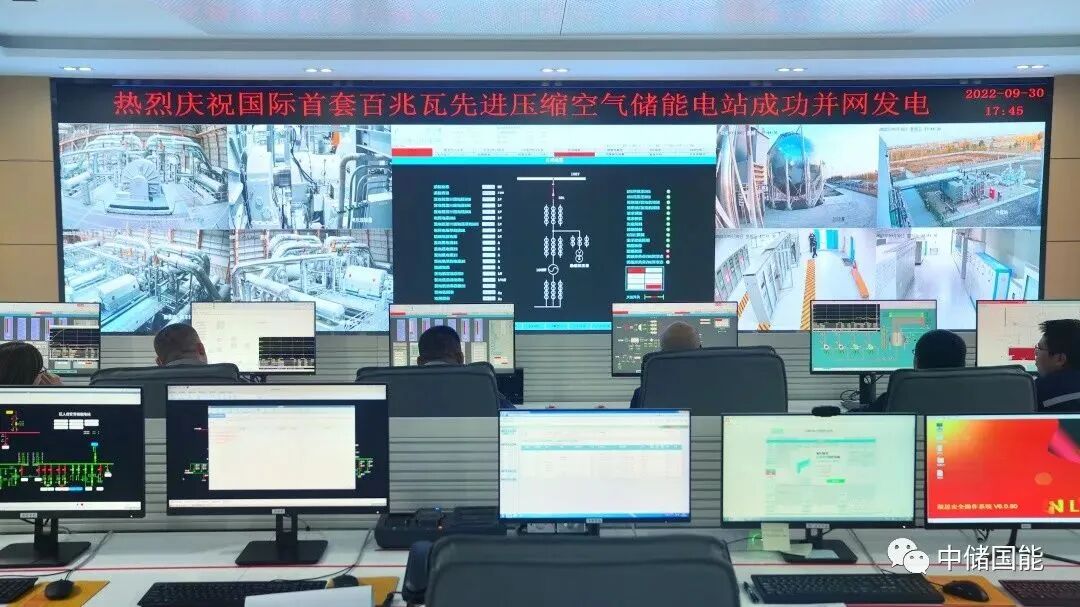
At the end of 2016, we commissioned our first 10-megawatt advanced CAES demonstration project in Bijie, Guizhou. In August 2021, in Feicheng, Shandong, we connected China's first commercial CAES plant to the grid, at 10-megawatt scale. Just this past September, the world's first 100-megawatt advanced CAES national demonstration project, for which we provided the technology and construction, successfully began grid-connected power generation operation in Zhangjiakou, Hebei. Recently, we also announced the official groundbreaking of a 300-megawatt advanced CAES plant in Feicheng, Shandong.
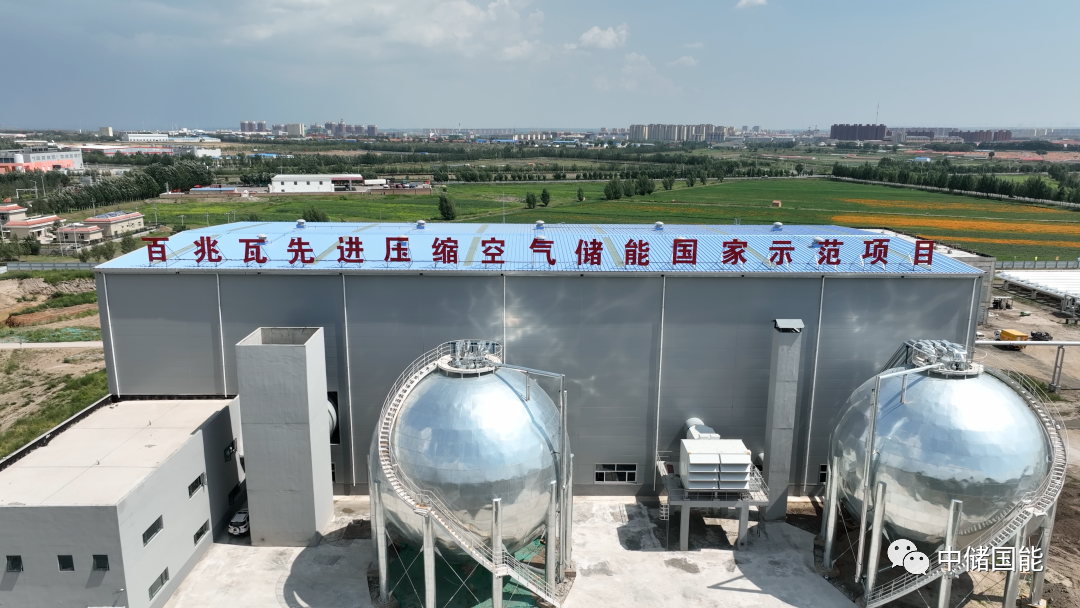
Overall, China started relatively late in the CAES field but has developed rapidly, progressing from following to running alongside to leading. From the 1.5-megawatt scale onward, we were basically in step with international progress. By the 10-megawatt and 100-megawatt scales, our construction timeline had already surpassed international peers, with performance metrics exceeding foreign systems by 8-10%, and our patent and publication output in related research areas ranking first globally.
Q: Only when renewable energy plus energy storage achieves grid parity will the renewable energy era truly arrive. What is the unit economic model and levelized cost of electricity (LCOE) for CAES today? What cost thresholds must be reached for this new technology to drive widespread transformation?
Chen Haisheng: Currently, our advanced CAES projects have a unit installed cost of 4,000–6,000 yuan per kilowatt, and a per-kilowatt-hour cost of 1,000–1,500 yuan, translating to an LCOE of approximately 0.2–0.25 yuan per kilowatt-hour. As long as the peak-to-valley price spread exceeds 0.25 yuan per kilowatt-hour, CAES can be profitable. Within the next five years, we are confident that costs can be reduced by another 30%, bringing LCOE down to 0.15–0.2 yuan per kilowatt-hour, which would make it highly competitive.
How to reduce costs further? We will pursue three approaches. First, continuously develop new key technologies and accelerate technological iteration and revolution to further improve system performance. Second, through standardized and engineered product deployment, further reduce system construction costs. Third, scaling — developing larger-scale advanced CAES systems to reduce marginal costs. For example, through independent innovation, our 300-megawatt-class advanced CAES system can flexibly accommodate 250–400 megawatt scales.
In the future, when renewable energy's LCOE declines further, combined with energy storage applications, the overall cost will be lower than fossil fuel power generation. At that point, without relying on government subsidies, renewable energy will be widely adopted, thereby supporting and driving the nation's entire energy transition.

Q: What hurdles must be crossed between laboratory research and true industrialization, and what lessons can you share with technically-minded entrepreneurs?
Chen Haisheng: There are several differences between research and industrialization. First, research pursues the ultimate improvement of performance metrics, while industrialization must consider both performance and economics. Research has relatively high tolerance for risk and failure, but industrialization requires every startup to succeed — reliability requirements are high. Third, research faces the "theory arena," while industrialization faces the market.
Therefore, the demands on scientific and technical workers doing basic research versus those making products are different. My fundamental view is "let professionals do professional work." In the industrialization process, research-background teams need to make proactive shifts in mindset and role, while simultaneously strengthening specialized engineering, market, and capital operations teams.
Taking our advanced CAES project as an example, how did we cross the "valley of death" from research to industrialization?
Most important is talent and team — building a professional team, developing internally what we can develop ourselves, and bringing in specialized talent where we need to strengthen. Second, we must respect the laws of temporal development, starting from minimum viable validation to mitigate risk while accumulating experience. Third, we need platform thinking — "to do a good job, one must first sharpen one's tools." Along the way, we have progressively built basic research testbeds, key technology testbeds, and integrated demonstration testbeds, continuously operating, testing, and optimizing on these platforms. Finally, we must secure resources — CAES technology is typical hard tech, requiring long-term, high-intensity, large-scale investment. We initially applied for National Natural Science Foundation funding, then for the Ministry of Science and Technology's 863 Program and 973 Program, and later received support from government industrial funds, enterprises, and venture capital institutions. This entire process has been consistent with our research and industrialization trajectory.
Q: Good scenery is found not only at peaks but also in valleys. Over years of R&D, have there been moments that felt particularly challenging or like bottlenecks? How did you lead the team through them?
Chen Haisheng: We encountered numerous challenges and difficulties, including technical breakthroughs and funding constraints. We even faced a situation where, without incoming funds, we wouldn't be able to operate the following month — fortunately, we pulled through. Another example: at the industrialization stage, unlike in the laboratory, there are many uncontrollable factors in the field. Several years ago during construction in Zhangjiakou, that winter was exceptionally cold, reaching minus 25 degrees Celsius with a felt temperature of minus 40 degrees, creating enormous construction difficulties. Fortunately, everyone overcame them one by one.
Our team promotes eight characters — idealism, focus, persistence, innovation. Idealism means being clear about doing great things, doing the right things. Focus means concentrating limited time and resources on limited objectives, like needing to break through a wall: if charging directly at it would only result in a bloodied head, you need to drive nails into it first, and eventually connect them to "break through" the wall. This is why over 18 years, more than 100 of us have focused on one thing. Persistence means that as pioneers and leaders in the CAES field, being out front brings many unpredictable challenges, so you need to persist — "be a pioneer, not a martyr." As for innovation, the mission given to us by the nation is innovation — "innovate or perish."
General Secretary Xi has said that the vast number of scientific and technical workers should write their papers on the land of the motherland. In the future, when our research achievements become energy storage plants spread across the nation and the world, I believe the sense of happiness, accomplishment, and fulfillment will be different. So going forward, we will continue aiming toward application, toward industrialization, toward creating productive forces.