The Smart Chassis Wave Rises, and an Auto Parts Veteran Decides to Dive In | Gaorong Ventures

Kicking off the journey to localize electronic controlled shock absorbers.
As new energy vehicles charge into the "intelligentization second half," smart chassis has become the next battleground after intelligent driving and smart cockpits — a new foundation for OEMs to build differentiated, peak experiences.
NIO's flagship sedan, the ET9, features a full steer-by-wire intelligent chassis that keeps a champagne tower perfectly steady on the hood even as the car rolls over uneven obstacles.

BYD's pure-electric supercar, the Yangwang U9, is equipped with the fully active body control system Yunian-X, enabling seemingly magical feats like three-wheel driving and jumping in place.

Xiaomi's SU7 also counts smart chassis technology among its key assets. The Max variant comes with CDC dampers and air suspension, blending handling and comfort.
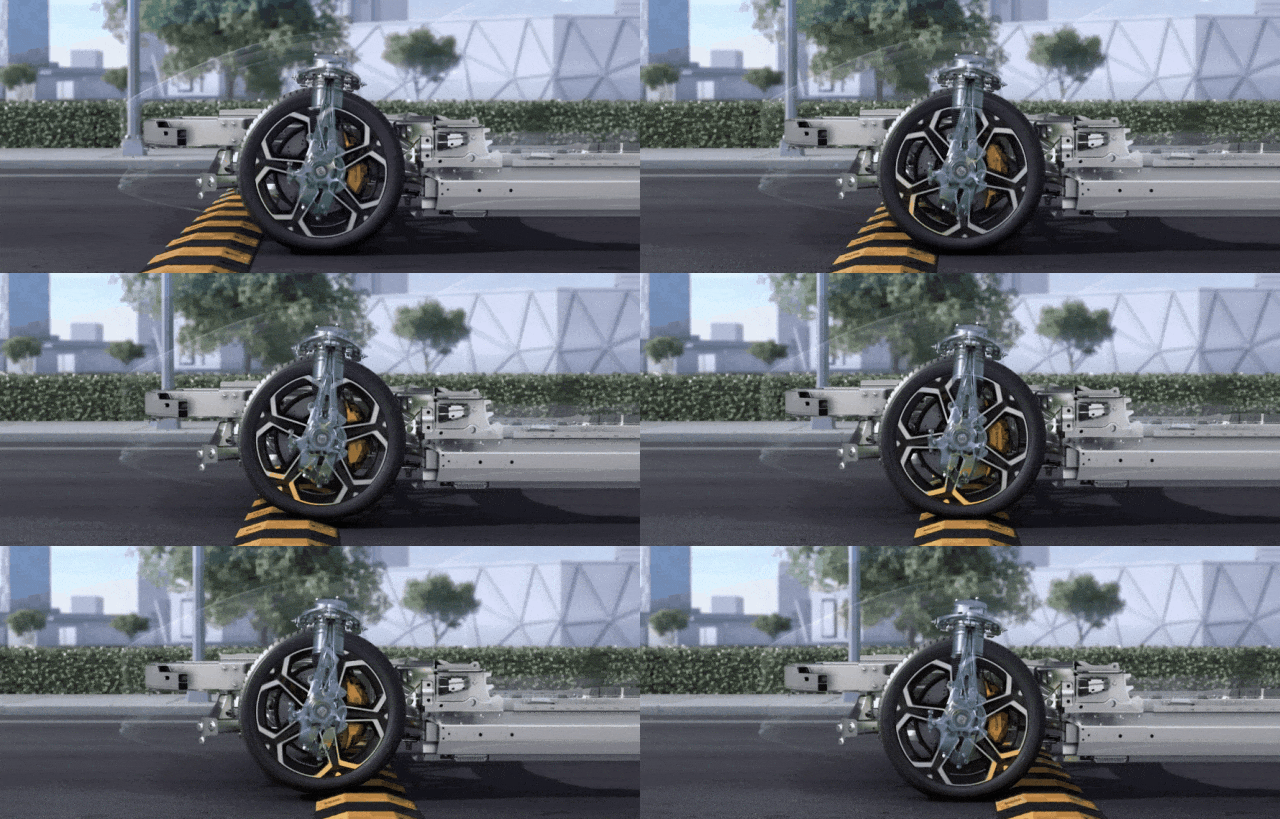
So what exactly is a smart chassis? It uses sensors, control units, and actuators to dynamically adjust suspension, braking, steering, and other systems in real time — allowing new energy vehicles to deliver both driving performance and ride comfort, adapting to road conditions and driving scenarios on the fly. Smart chassis is the inevitable path to true "man-machine unity," and an era where everyone has a personalized chassis is arriving.
Recently, electronically controlled dampers, also known as CDC dampers (Continuous Damping Control), have been appearing in public view with growing frequency. As one of the key actuating components in smart chassis and suspension systems, CDC damper development and manufacturing remain almost entirely dominated by overseas suppliers, with domestic production still in its early stages.
Dr. Guohong Ye, who has spent decades in the automotive industry, saw his opening. He wanted to develop and manufacture domestically produced electronically controlled dampers right in China — on this fiercely competitive yet innovation-rich new energy vehicle battlefield. Formerly president of China operations at ZF, one of the world's top three auto parts suppliers, Ye was instrumental in bringing modern damper technology to China.

In July 2023, Ye founded Linton Automotive Chassis Components. Within six months, the company completed two funding rounds: a seed round led by Gaorong Ventures in 2023, and a recently completed RMB 30 million Pre-A round with continued participation from Gaorong Ventures. The funds will accelerate product development and fully automated production line construction.
We sat down with Ye for a conversation about the value of smart chassis, how CDC dampers evolved from automotive luxury goods to must-have standard equipment for new energy vehicles, and why a veteran of the industry is resolutely starting over. His entrepreneurial story is not just a personal leap back into the fray — it's also a snapshot of China's automotive industry development.

Ye studied and worked in Germany for many years, earning his PhD in mechanical engineering from RWTH Aachen University and working at companies including IBM Germany. In 1994, he returned to China to help German firm Sachs (Mannesmann Sachs) open up the Chinese market. When Sachs was acquired by ZF at the end of 2001, Ye began leading ZF's China operations from 2003 onward, successfully applying powertrain, chassis, and other technologies to passenger vehicles, commercial vehicles, construction machinery, rail, and even helicopters.
Along the way, he witnessed the explosive growth of China's auto industry firsthand. "In 1994, China's annual vehicle production was just over one million units, mostly trucks. Thirty years later, it has surpassed 30 million."
The rapid rise of China's new energy vehicle sector in recent years has been especially exhilarating. "Technology, capital, and talent are all extremely active. I see this as a once-in-a-lifetime opportunity, and it's why I decided to become an entrepreneur."
On the technology front, the rise of China's new energy vehicles — especially the new wave of EV startups — has dramatically shortened vehicle development cycles. "Today we've compressed the automotive manufacturing cycle from an average of 5-6 years down to 2-3 years. That means after three iterations, some of our technologies could leap ahead of overseas competitors by a decade."
On talent: while individual EV brands may rise and fall, the new forces have cultivated a new generation of Chinese automotive engineers. "Every single one of them can hold their own." "Maybe 20 years ago we still had to learn from the US, Germany, and Japan. But today, the innovative spirit and practical capabilities of this new cohort of engineers have already surpassed the 'old masters.' Companies that can survive in China's intense competitive environment will possess teams with global competitiveness."
This is why Ye chose to jump back in. "In a market like China that leads global technology and is richest in innovation, we see this as a new battlefield. We have the capability, and we want to develop our own products to catch up with and surpass international brands."

How did the smart chassis wind start blowing? Ye points out that the rise of electric vehicles drove chassis upgrades. "Under Tesla's leadership, OEMs have increased chassis costs by an average of RMB 10,000 per vehicle — unprecedented in the industry. Tesla wanted to redefine perceptions of EVs with high power performance, and a steer-by-wire chassis with variable damping and variable suspension characteristics became standard equipment. Otherwise, only race car drivers could drive EVs — the jolting, rolling, and leaning would scare ordinary passengers away."
One major benefit of smart chassis is that users can enjoy flexible, personalized driving and riding experiences. "People used to say drive a BMW, ride in a Mercedes. With smart chassis, a simple button press or voice command lets the vehicle switch instantly from comfort mode to sport mode — you can experience BMW and Mercedes freely switching back and forth, whenever you want."
Looking further ahead, cars will become fully autonomous, intelligent mobile spaces, with autonomous driving as the industry's ultimate goal. When driving autonomously, people's eyes aren't on the road — they might be in meetings or watching videos — making them highly sensitive to vibration and braking. This elevated demand for comfort is also calling for smart chassis to come onboard.

As smart chassis upgrades, intelligent XYZ three-axis coordinated chassis control is gradually becoming industry consensus. The electronically controlled damper is the core actuating component of the Z-axis suspension system, controlling vertical (up-down) chassis movement while also influencing power delivery and braking effectiveness.
Here's how an electronically controlled damper works:
When the vehicle motion controller senses changes in vehicle state, road conditions, and driving conditions, it issues different commands to the four dampers based on various algorithms and strategies. The dampers adjust internal oil flow resistance to achieve real-time damping coefficient changes, thereby providing optimal dynamic performance for the vehicle.
By contrast, traditional dampers are passive mechanical devices that cannot adapt in real time to road conditions or driving style. "The replacement of traditional dampers by electronically controlled ones is like the upgrade in semiconductors — an irreversible trend."
In fact, electronically controlled dampers aren't new technology. They trace back to around the 1990s, when they were introduced mainly by premium brands like the Mercedes S-Class, BMW 7 Series, and Audi A8.
The rise of new energy vehicles has popularized electronically controlled dampers, gradually making them standard equipment on mid-to-high-end models. Ye offers some figures: in 2022, vehicles equipped with CDC dampers in China grew rapidly from near zero to about 700,000 units; by 2023, this reached nearly 1.2 million; and as costs decrease and technology spreads, more models are expected to adopt this technology. Industry forecasts suggest installations will approach 3 million by 2025, representing massive market growth potential.
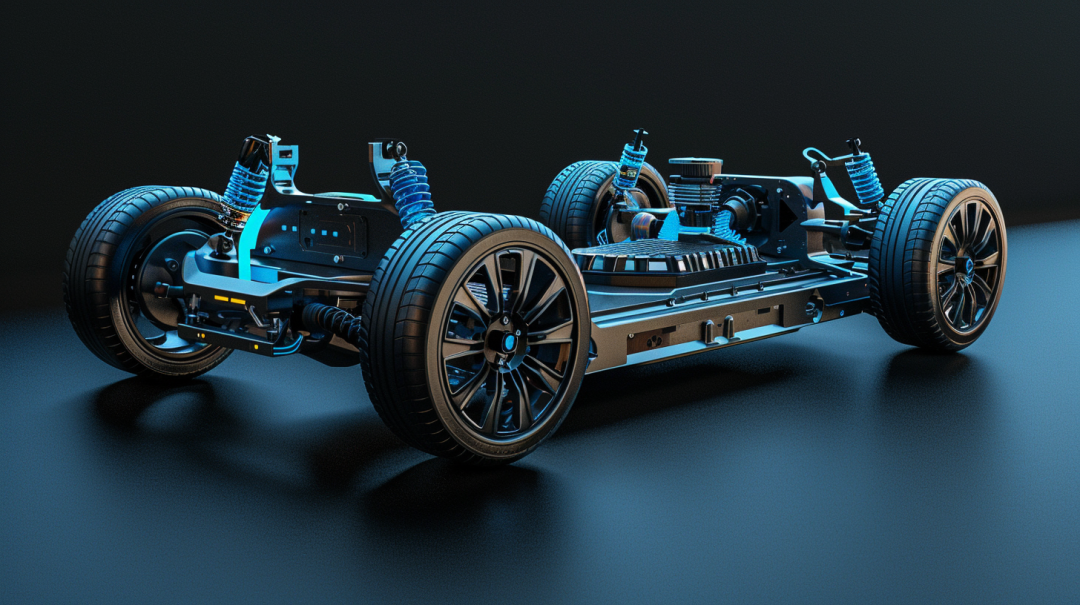
Image generated by AI

Ye conducted extensive market research before choosing automotive chassis components as his entrepreneurial赛道. There's no question that electric drive systems and autonomous driving are treated by OEMs as the heart and brain of the vehicle, while the chassis domain offers more opportunities for suppliers — especially on the hardware side, provided the products are reliable and responsively delivered.
"Linton's competitive advantages lie in our team, experience, and creativity. Compared to overseas suppliers, we have advantages in response speed and industry understanding, helping OEMs achieve faster and more complete new vehicle development. Going forward, we also need to win on cost."
Currently, Linton is simultaneously developing two assembly products: externally mounted single-valve electronically controlled dampers and externally mounted dual-valve electronically controlled dampers. Both are equipped with Linton's self-developed next-generation solenoid valves — the heart of the electronically controlled damper, so to speak. Ye notes, "At this stage our performance data meets forward-development design requirements. Our products can compete head-to-head with foreign brands, with particular advantages in reaction speed and calibration support."
Linton is also taking on the more challenging development of dual-valve electronically controlled dampers, which offer greater performance. Currently, luxury models from BMW, Mercedes, and Porsche are equipped with dual-valve CDC dampers, and forecasts suggest Chinese mid-to-high-end models will gradually adopt dual-valve electronically controlled dampers starting from 2025. Compared to single-valve systems, dual-valve can independently control compression and rebound damping for more precise damping characteristics. "This technology represents a new milestone on the path from semi-active to fully active suspension, an entirely new赛道 for the industry."

After CDC dampers are installed in vehicles, matching and calibration are still required. "It's like buying a piano — you still need to tune it after moving it home."
Ye points out, "Introducing CDC dampers makes chassis calibration both more complex and simpler. More complex because there are more adjustable parameters; simpler because the calibration process becomes software-controlled." Drawing on extensive experience, along with advanced computational models and simulation, the Linton team can predict optimal calibration curves under different weight and acceleration conditions, helping OEMs calibrate and test rapidly.
The company is also accelerating automated production line construction to lay groundwork for future capacity and cost control. "We're urgently designing and building production lines for solenoid valves and dampers. Both lines will be operational by the end of June 2024." Linton's first-phase fully automated production line is expected to achieve annual capacity of one million electronically controlled dampers and solenoid valves.
Speaking of Linton's vision to become a world-class automotive smart chassis components company, Ye has ample patience. "Our goal is to first become the best in the chassis direction. If we can establish a solid position in this field, there are many technologies we can deepen — suspension technology alone can span multiple product generations, and chassis also includes braking, steering, and anti-roll directions."
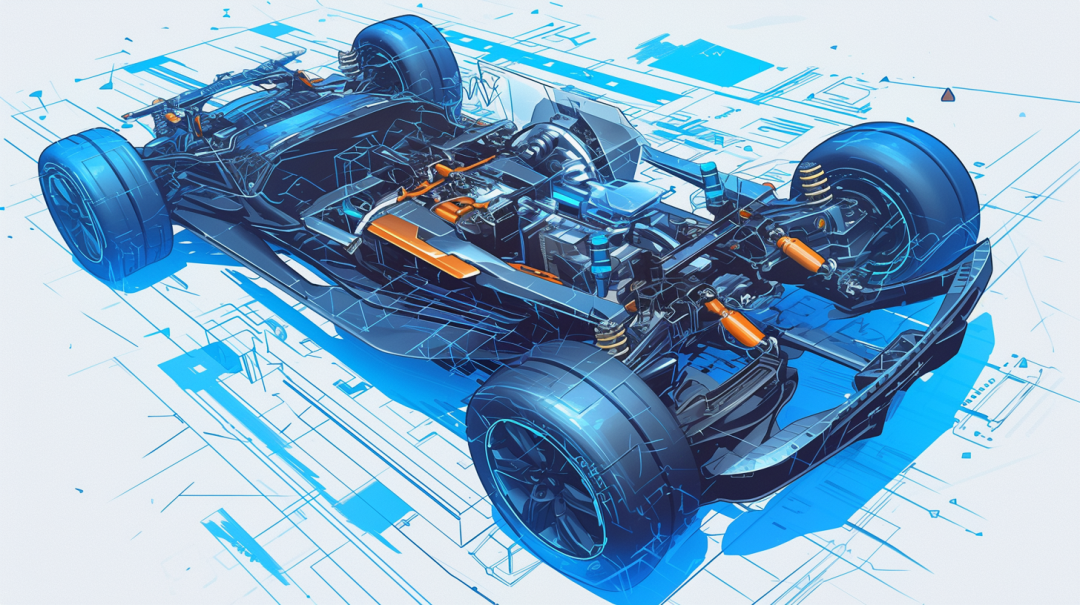
Image generated by AI
"Where there's a will, there's a way" — Ye has adopted this as the company's values. As China's domestic auto brands drive toward more distant shores and higher peaks, local entrepreneurs in the auto parts sector may be entering a golden era for弯道超车.