Gan Jiawei: To B Sales Must Return to Fundamentals, Stop the "Mystery Power Dependency" | Ronghui

"A lot of methods aren't things others don't know — it's just that you're more persistent and more deliberate than they are."

This article is based on an internal sharing session by Gan Jiawei at Gaorong Ventures' "Ronghui" community.
To B sales faces greater challenges today: fiercer competition, more demanding customers, harder-won consensus, more difficult team management... How do you forge a battle-ready To B sales force? How do you find a growth path and replicate it at scale? How do you build a sales organization? Self-operated or channel? External hires or internal cultivation?
Gan Jiawei is widely considered one of the foremost experts on To B sales in China. As Alibaba's 67th employee, he was a representative figure of the legendary "China Supply" sales force, and later joined Meituan as COO, where he personally built the company's offline ground sales army.
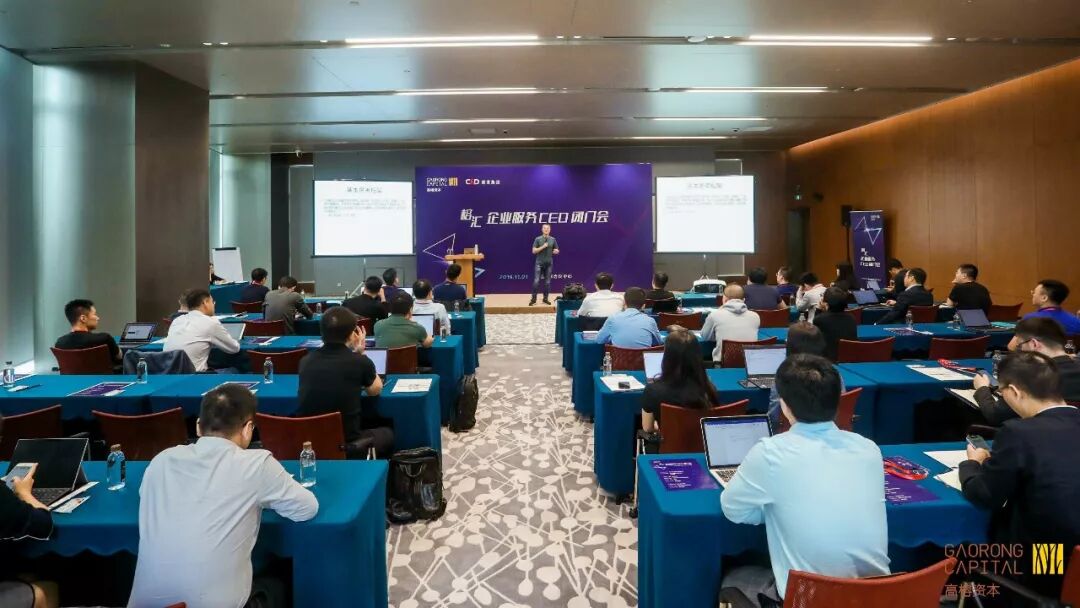
On November 1, at the Ronghui Enterprise Services CEO Closed-Door Meeting, Gan Jiawei — operating partner at Hillhouse and former Meituan COO — delivered an in-depth sharing session on organizational building and team management for To B sales, grounded in a fundamental framework for thinking about To B business. His remarks combined reflections on the essence of business and human nature with highly practical, concrete operational guidance.
In Gan's view, "Most methods aren't things others don't know — it's just that you persist more and care more than they do." For instance, the "morning kickoff, evening debrief" routine he repeatedly emphasized was a foundational practice he insisted on while leading Meituan's 10,000-person sales team. It became one of the key takeaways that CEOs from Gaorong Ventures' portfolio companies immediately resolved to implement in their daily management.
The following is his sharing:

Frankly, this Ronghui session took me the longest to prepare for of any talk I've given. First, there was an enthusiastic response to the pre-event questions. Second, while everything centered on To B business, the approaches for large B and small B customers are actually quite different. So I spent considerable time thinking about how to share my perspectives as effectively as possible within limited time, and how to make it more targeted.
A Basic Framework for Thinking About To B Business
When we talk about To B business, we first need a basic analytical framework. The three most core, most fundamental elements are: total addressable customer count, customer distribution, and pricing. Conversely, simply talking about "large customers" versus "small and medium customers" isn't very meaningful, because everyone's definition of size differs. What you consider a large customer might be small to someone else.
1. Total Addressable Customer Count
When doing To B business, you must first consider how many potential customers exist in your target market. If your potential customer count is in the hundreds or barely reaches four digits, the market size is self-evident. Assume 1,000 potential customers with annual revenue of 1 million RMB per customer — that's generous — and you're looking at a maximum 1 billion RMB market. And annual revenue of 1 million per customer implies significant uncertainty.
By contrast, Meituan's customer count was conservatively 10 million, with annual revenue of 10,000 RMB per customer — that's a 100 billion RMB market, with much greater customer controllability.
Potential customer count is a critical factor in determining whether your business has standing, security, and controllability.
2. Customer Distribution
This refers to how densely your customers are distributed. Compare Alibaba and Meituan's customer distribution patterns. At Alibaba, many of my customers were manufacturing enterprises in industrial parks, with an average distance of 2-3 kilometers between customers. A mature Alibaba salesperson could cover and serve 50-70 customers. At Meituan in 2016, each salesperson could cover 250 customers.
Alibaba and Meituan had comparable IT systems and management capabilities — so what caused the efficiency difference? Customer distribution. Because Meituan's business was local services, customers were concentrated within cities; a single mall might contain 20 customers.
So your customer distribution pattern — whether there's obvious clustering, whether it's evenly distributed nationally or strongly regional — determines your operating model and sales organization design.
China developed the ground sales profession because the absolute number of potential customers is large and distribution density is high, allowing the ground sales model to maximize effective selling time. The core value of direct sales lies in time spent in effective contact with customers.
3. Pricing
Pricing is extremely important, and must be viewed from multiple angles. On one hand, higher pricing isn't always better, because premium pricing creates challenges for hiring, training, standardization, scaled expansion, and customer payment cycles. Pricing certainly shouldn't be too low either — for some products, charging 10,000 RMB may not close faster than charging 40,000 RMB, and higher pricing enables better service and greater customer satisfaction.
To B pricing actually can't be analyzed through traditional economic lenses. It's not cost-based pricing, nor competition-based pricing. To B pricing must align with your potential customer count and customer distribution. It must ensure reasonable sales velocity while providing sufficient profit flow to sales channels.
Annual revenue of 1 million RMB per salesperson is a good benchmark. Allocate roughly 250,000 RMB to the salesperson, leaving 750,000 RMB for product R&D, customer service, and company profit — that's the To B business model.
To summarize, the basic logic for thinking about To B business is: what market are you entering, and how large is it; customer distribution determines sales efficiency and how many customers one salesperson can cover; pricing must ensure reasonable sales velocity while providing sufficient profit for sales channels.

How to Find a Scalable Growth Path
In To B business, people often ask: what do I do when growth hits a bottleneck? What if the headquarters city grows fast but other cities lag? I believe these questions stem from not having found a scalable growth path.
In November 2011, when I first joined Meituan during the height of the "Thousand Group Buying Wars," as COO I was responsible for supply chain, sales, and growth. But for the first several months, I didn't do any specific management work. Instead, I went around asking frontline staff and mid-to-senior managers: how do you become a top salesperson at Meituan?
My logic was: if I could find a replicable path to becoming a top salesperson, I could use management to replicate that in others. Meituan had over a thousand people at the time; there had to be stars. Find that person, have everyone else learn from them — that's management.
So how do you become a top salesperson? I collected various answers. Some said hard work. Some said thick skin. The most common answer was having "good consumer sense" — meaning the ability to craft a group buying package that would sell well. But consumer sense is hard to quantify and define, impossible to replicate at scale. How would I train employees? I couldn't have them eat out at restaurants every day — unrealistic.
What we ultimately found had the highest correlation with performance? Supply count — essentially, the number of group buying deals listed.
At Meituan's 2012 annual meeting, I told my colleagues: in 2012, we're doing one thing — "visit like crazy, list like crazy."
For large-scale sales teams, you need extreme simplicity. No detours. Those six characters — "visit like crazy, list like crazy" — are crystal clear: key action (visiting) and result metric (listing) are both there, and so is the attitude: "crazy." The word "crazy" is vividly evocative. "Work yourself to death," "go all out," "go hard" — none of them match "crazy."
Within a year, Meituan had left competitors far behind.
During my time at Meituan, I also didn't organize salespeople by industry. Instead, I required "enter every door you see," because the true professionalism of direct sales lies in visit volume; industry differences aren't barriers.
To summarize: Meituan first identified the metric with the highest correlation to final performance — supply — then increased supply through "visit like crazy, list like crazy," thereby finding a scalable growth path.

Two Critical Questions in To B Sales Organization
1. Self-Operated vs. Channel?
- Self-operated piloting in early stages
Many startups ask: should sales be self-operated or channel-based? My advice to startups: honestly do self-operated piloting in the early stage. Truly understand your sales efficiency, and learn your customers' real needs in the process.
Don't harbor unrealistic fantasies about channel partners. Don't waste enormous energy on contract terms and wishful thinking, only to find that channel partners aren't seriously selling for you. The reason is simple: channels exist to make money. They won't "weather the storm together" with you just because you're a promising startup.
- Be cautious with channels during product refinement, with non-standardized products, and with low-margin products
During product refinement, when you haven't fully understood real market demand and the product requires frequent adjustments, handing it to channel partners creates significant risk for both sides.
Non-standardized means products and services that haven't existed in the market before. Don't expect agents to blaze a trail for you.
Low-margin products require high management sophistication and efficiency to be viable. If the channel partner loses money, you lose even more.
All of these actually happened during the "Thousand Group Buying Wars." At the time, group buying wasn't profitable. Some group buying companies thought: expanding on our own requires quickly hiring salespeople, training them, and they might not even become profitable — so why not use agents? But agents don't actually help you blaze trails; rights and obligations are reciprocal. So in 2011 and 2012, my greatest value at Meituan was telling Xing Wang: let's not do anything else, just build self-operated sales.
2. How to Design Commission Structures
For To B sales commission structure design, there are three basic framework elements.
- Target compensation
What is target compensation? It has nothing to do with your company's specific situation. Look at the median income for equivalent positions in the same country, region, city, and industry — closely tied to local housing prices, cost of living, and job nature.
The first question in setting target compensation: in a given location, doing a certain job, what salary level is competitive? That's target compensation.
- Fixed-to-variable ratio
Fixed-to-variable ratio refers to the proportion of base salary versus commission. For startups, lower ratios mean lower costs; but too low and you can't hire anyone — it must be set at a reasonable level. Lower ratios widen the gap between high and low performers, creating management leverage.
Looking back, what is management and organizational leverage? If you can take an organization averaging 50 points and rapidly lift it to 80 points through management, system improvements, and product packaging, that 30-point gap is the value your company creates — where you can make money.
- Expense ratio
Expense ratio refers to sales and channel costs as a percentage of total revenue. There's no such thing as a "reasonable" expense ratio — only continuous improvement, an endless pursuit. From losing money, to profitability, to massive profits, with excess funds invested in traffic, technology, brand, and so on.
Meituan wasn't profitable at first. In 2012, with "visit like crazy, list like crazy," we lowered sales commissions four times in one year. The team complained bitterly, but reducing the expense ratio freed up money to buy traffic. More traffic meant higher sales volume, which brought greater market influence, better supply, and higher margin requirements. As sales volume increased, even though commissions dropped, the two factors multiplied together meant salespeople's total income rose — a virtuous cycle.
For startups, the "354" principle is meaningful: 3 people do the work of 5, for the pay of 4. It requires more effort than competitors, but if you meet the standard, you earn income with real dignity. And through this training, your market value going forward will be different.


Breaking Through the To B Sales Management Ceiling
1. How to Break Through Sales Management Bottlenecks
Many people ask about sales managers: hire externally or cultivate internally? What characterizes excellent sales management? How do you train sales managers?
- Difficulty and scale determine average management sophistication
First, be clear: the difficulty and scale of sales management determine the average management level.
What is sales management difficulty? Compare telemarketing and direct sales (ground sales). Telemarketing is easier to manage. Call centers are relatively standardized, performance variance is smaller, with a spindle-shaped distribution. Direct salespeople are out visiting clients all day — harder to manage, and performance variance is enormous, with a pyramid-shaped distribution.
Sales management scale also determines management level. Just as good engineers are forged in high-data, high-concurrency environments, the same applies to sales. Most salespeople in the market face potential customer counts in the double or triple digits; four digits is rare. Their activity radius is typically within one city or province, rarely nationwide. But when customer counts reach five or six digits, the game changes completely. Scale differences create fundamental differences in operating models and management sophistication.
- Core organizational capabilities must be built in-house
Regarding external hiring versus internal cultivation for sales managers: you need both, but with prioritization.
If your potential customer count is five or six digits, 99% of salespeople on the market can't meet your needs, and internal cultivation is difficult too — you must hire externally. Where from? Currently, three companies have the most proven and recognized To B sales in China: for large enterprises, Huawei is unquestionably number one; for SMEs, Alibaba and Meituan.
Moreover, talent should be brought in from the top down, not from the middle, so methodologies apply across the entire company without conflict. And such people usually have former colleagues they can bring in as comrades-in-arms.
Beyond external hiring, building core organizational capabilities in-house is crucial. What methods?
The following points are simple but highly effective. Meituan's in-store dining business had up to 15,000 ground salespeople at its peak, and just did these things. Done properly, Meituan's 80-point standard was definitely achieved.
A. Mentor-mentee system
How do you cultivate potential managers? The mentor-mentee system works well. New hires get both a supervisor and a mentor. First, it helps new hires "survive." Second, you can observe whether the mentor has management potential through their ability to develop mentees.
B. M0 (prospective managers)
If a mentor successfully "keeps alive" two mentees, it indicates potential — they become prospective managers, what we call M0. They can participate in some management work, so when they actually transition to management, they won't be caught off guard. Simple logic.
C. Morning kickoff, evening debrief
This is extremely important. If sales management spends all day thinking about training or finding an amazing training director, that's "mysterious force dependency syndrome." The county magistrate is less powerful than the local manager. "Morning kickoff, evening debrief" is the truly reliable training.
Every day before leaving, the manager gathers everyone. Each person shares one highlight and one area for improvement. This method surpasses any training. In 2015 at Meituan, I required seeing daily highlight summaries from city managers. This pressure cascaded down. This practice goes against human nature; you must insist on it.
2. Basic Sales Team Management Issues
- Sales team cultivation and building
Today when discussing sales team management, some say Gen Z and post-00s teams are hard to lead. But every era has its problems; the key is that while times change, human nature doesn't. Against Maslow's five levels of human needs, perhaps Gen Z's physiological and safety needs are met, but self-actualization needs remain — that doesn't change.
Management shouldn't be like marking the boat to find the sword. Management is dealing with people; you must understand human nature. Then use systems to restrain the dark side of human nature and inspire the good.
- Veteran salesperson complacency
Some CEOs ask: what about veteran salespeople who become complacent after working a long time? Here's a basic direction: per-capita customer count will always reach a dynamic equilibrium. A salesperson develops new customers while serving and maintaining existing ones; when some existing customers churn, they must invest energy in developing new ones, eventually reaching a number.
This dynamic equilibrium depends on customer count scale, customer distribution, and IT and management sophistication. If a company's equilibrium point is 100 customers and a veteran salesperson already serves 110, don't mess with it. If it's only 50 — not reaching equilibrium, "aging before their time" — then you need to push from both management and commission design. For example, lower commissions on existing customer orders.
- Sales training
Sales training should primarily rely on direct managers, not training teams. Think back to war movies — routine ideological work is always done by squad leaders and veterans.
Similar to over-relying on training, when sales management underperforms and business suffers, some companies over-rely on marketing, government relations, or corporate culture. These are all "mysterious force dependency syndrome."
What is To B sales? A good salesperson at the client site represents the company, represents the CEO. They're sales, customer service, marketing, and a brand ambassador all in one.
How do you get salespeople to achieve this? Through what I just described: "morning kickoff, evening debrief" and the mentor-mentee system. Most methods aren't things others don't know — it's just that you persist more and care more than they do.
- Matrix management
Some To B companies use matrix management — establishing business divisions at headquarters while setting up regional branches. My advice: startups shouldn't casually play with matrix management. Internally, you'll face human nature's tendency toward self-interest, causing different lines to optimize for their own benefit. Externally, you'll face competitive pressure, potentially dispersing to face different competitors in different arenas.
Matrix management requires mature companies to operate, with good systems, management culture, and coordination mechanisms. Startups should first build end-to-end closed loops. You may sacrifice some synergy in the present, but "capture the market first, wring out the towel later."



Congratulations to Seeyon Technology on Successful STAR Market Listing! | Gaorong News