Leading VCSEL company Vertilite secures strategic investment from Hesai and RoboSense

Accelerating VCSEL chips' transition from consumer-grade to automotive-grade standards.
Recently, RoboSense, Hesai, and other top-tier lidar companies have made strategic investments in Vertilite, while EV giant BYD has added to its existing stake. Gaorong Ventures first invested in Vertilite's Series B round in 2018 and has continued to participate in multiple subsequent funding rounds.

Deep expertise in VCSEL laser chips with extensive mass production experience
Founded in 2015, Vertilite has spent years developing and manufacturing vertical-cavity surface-emitting laser (VCSEL) chips and epitaxial wafers. It was among the earliest Chinese companies to work on 3D sensing applications using VCSEL laser chips, with in-house epitaxial and packaging/testing production lines. The company provides R&D, manufacturing, and services for VCSEL laser chips, modules, and epitaxial wafers, with core products including VCSEL chips for 3D sensing and high-power VCSEL solutions for lidar.
Since its founding, Vertilite has consistently attracted investment from leading funds and strategic investors. In 2020, it raised over 100 million yuan from Huawei's Hubble Investment and Xiaomi's industrial investment arm. In September 2021, it closed a funding round of several hundred million yuan led by WY Capital, with participation from BYD, CPE, Gaorong Ventures, Yizhu Capital, and Yaotu Capital, accelerating product development and its push into automotive electronics.
To date, Vertilite has shipped over 50 million units, building substantial mass production experience that puts it well ahead domestically. Its in-house epitaxial and packaging/testing lines in China, combined with broad partnerships with local foundries, ensure fast R&D iteration and continuous mass production supply.
Accelerating VCSEL chips from consumer-grade to automotive-grade
VCSEL chips, as core components of 3D imaging and sensing systems, are moving from consumer electronics into automotive applications. According to Yole, the global VCSEL market is expected to reach $2.4 billion by 2026, with consumer electronics representing the largest segment and automotive lidar growing the fastest.
In consumer electronics, Vertilite's products are widely used by major smartphone brands. In 2021, its products captured the vast majority of the Android phone array VCSEL market, and it remains the only domestic supplier shipping array VCSELs at scale for smartphones.
This year, Vertilite has pushed into the robotic vacuum market, winning bids from several top domestic robotic vacuum OEMs and solution providers, with projected shipments of millions of VCSEL modules over the next three years. The company is also expanding into European and North American markets — currently qualifying with a European benchmark customer and expecting to begin large-scale shipments to North American AR/VR customers in 2024.
Vertilite has also entered the drone VCSEL market, with projected shipments of tens of millions of chips and modules over the next five years.
In automotive electronics, Vertilite has been investing in R&D since 2019. In 2020, its VCSEL products passed AEC-Q102 certification, becoming the first VCSEL chips in the industry to do so, and are now in mass production for driver monitoring systems (DMS) at leading domestic EV manufacturers.
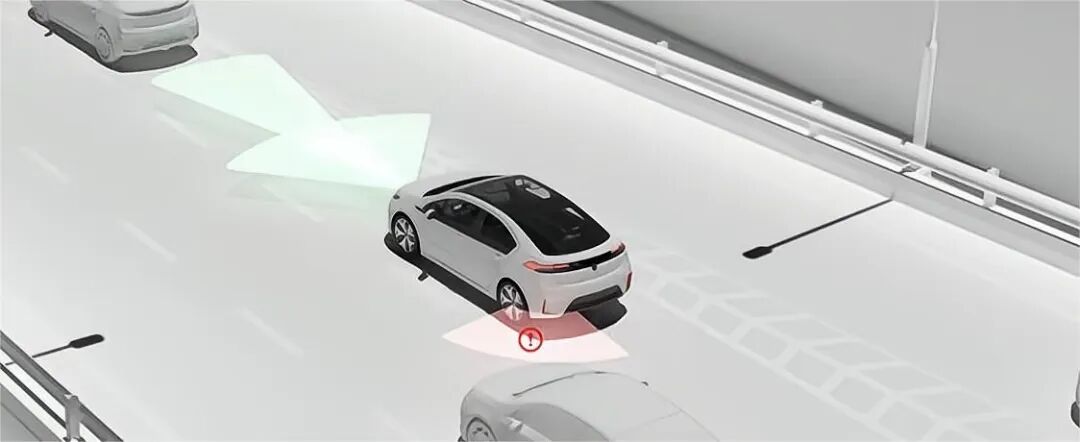
VCSELs offer clear advantages in cost, reliability, temperature stability, packaging flexibility, and scanning methods. Major automotive lidar manufacturers are increasing R&D investment in VCSEL lidar, making it a critical development direction for automotive lidar.
Vertilite has engaged in deep custom development with major lidar manufacturers in China, Europe, South Korea, and North America, and has already won a bid for a front-loading mass production project with a top-tier lidar customer, with shipments potentially beginning as early as year-end.
These partnerships with international first-tier companies will further strengthen Vertilite's technical foundation in lidar. Meanwhile, its valuable mass production experience in automotive electronics will accelerate the adoption of VCSEL technology in automotive radar.
Xiaochi Chen, co-founder and general manager of Vertilite, said: "Over the past five years, Vertilite has demonstrated strong R&D and mass production capabilities in consumer electronics, earning market recognition and laying solid groundwork for our automotive electronics push that began three years ago. We firmly believe that VCSEL, with its superior performance, reliability, and flexible form factors, can completely transform current lidar light source solutions and become the preferred light source for next-generation truly mass-producible hybrid solid-state and pure solid-state lidar. We are fortunate to have earned the recognition of industry-leading companies, and their support will accelerate the adoption of VCSELs in vehicles."
Going forward, Vertilite plans to deepen its presence in optical communications, moving closer to becoming a world-leading optoelectronic semiconductor company.