Congratulations to Dingdong Maicai on its successful NYSE listing! | Gaorong Ventures News

Make fresh, quality ingredients as accessible as running water — within everyone's reach, for the benefit of all.
On June 29 Beijing time, Dingdong Maicai — one of China's largest and fastest-growing instant e-commerce platforms — officially listed on the New York Stock Exchange under the ticker symbol "DDL." The company priced its IPO at $23.50 per ADS.
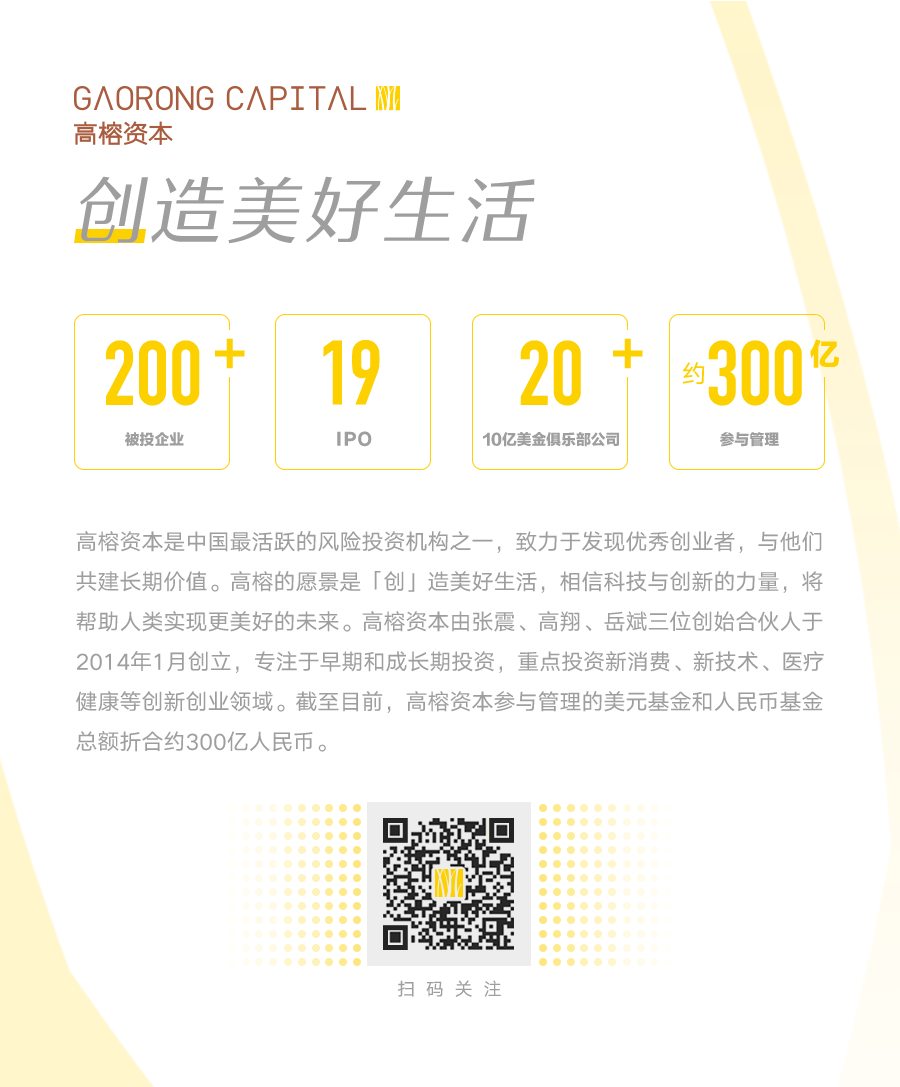
Gaorong Ventures invested in Dingdong Maicai in May 2018, becoming the company's earliest investor, the sole investor in its first two funding rounds, and a continued participant in subsequent rounds. From first meeting the team to wiring the money took just 13 days.
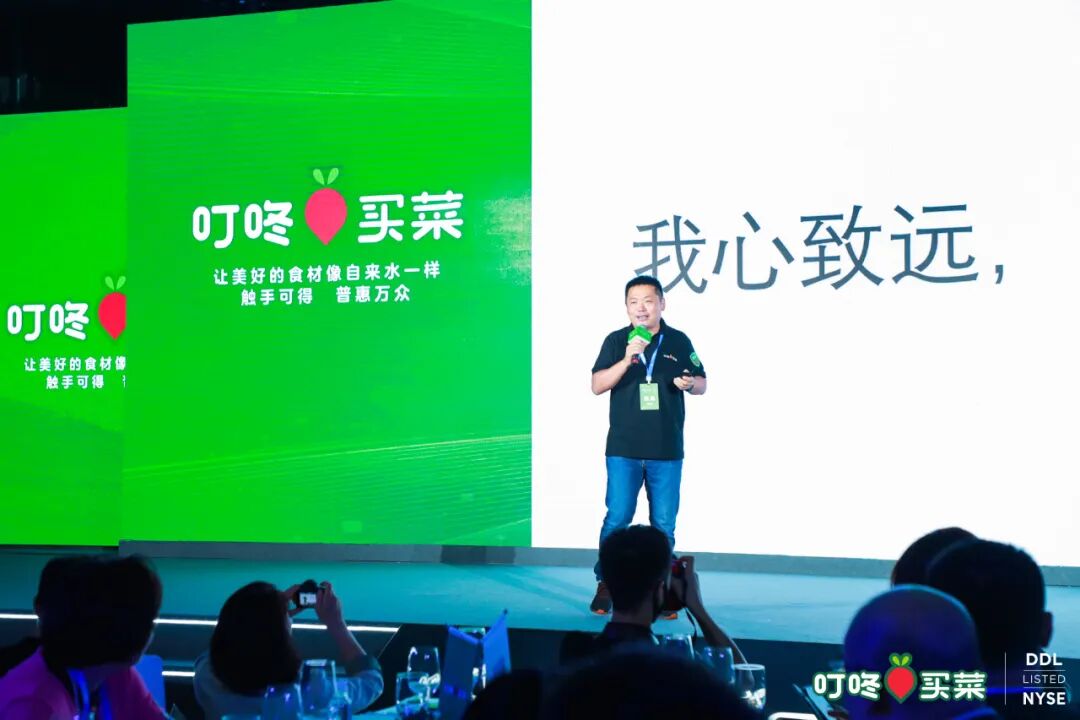
At the listing ceremony, Dingdong Maicai founder and CEO Changlin Liang said, "Our goal of letting everyone enjoy quality ingredients is like a very tall mountain. Today, we're still at the foot of that mountain, just getting started, with a long road ahead. It's our sense of mission that keeps us committed to this. At the same time, we must stay grounded in the details, doing ten thousand small things right, and staying close to our users — that's the only way we won't be abandoned by them."
Rui Han, partner at Gaorong Ventures, commented: "Warm congratulations to Dingdong Maicai on its successful NYSE listing! Over three years of partnering with Dingdong, we've been thrilled to watch it grow from a new industry entrant to China's fastest-growing instant fresh grocery e-commerce platform. Along the way, we've been deeply moved by the founding team's resilience and exceptional execution. Their focus and conviction on what matters most has been unwavering — constantly pushing toward the ultimate user experience through every means available. Dingdong's current scale and growth rate are merely outcomes; what lies beneath is their steadfast investment in the important but not urgent."

Direct-from-source procurement + front-warehouse fulfillment + delivery in as fast as 29 minutes: China's fastest-growing instant e-commerce platform
Founded in May 2017, Dingdong Maicai is dedicated to upgrading the supply chain through technology, using a model of direct sourcing, front-warehouse fulfillment, and delivery in as fast as 29 minutes to provide consumers with quality, speed, and selection in fresh grocery shopping. As of Q1 2021, the company served 29 cities including Shanghai, Beijing, Shenzhen, Guangzhou, and Hangzhou, operating 40 city-level sorting centers and 950 front warehouses.
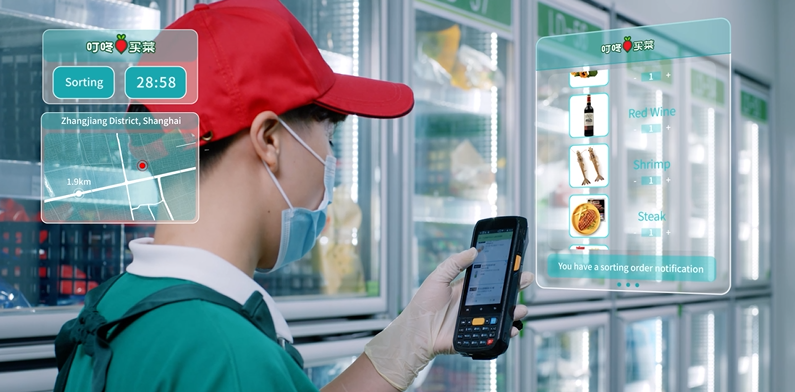
The instant e-commerce market where Dingdong Maicai operates has substantial room for growth. According to CIC data, China's instant e-commerce market grew at a 146.7% CAGR from 2016 to 2020, and is projected to reach 511.8 billion RMB by 2025 at a 31.8% CAGR. Additionally, China's fresh food and daily necessities retail market grew from 8.4 trillion RMB in 2016 to 11.1 trillion RMB in 2020, a 7.2% CAGR, and is expected to reach 15.2 trillion RMB by 2025 at a 6.5% CAGR.
The prospectus shows that Dingdong Maicai's full-year 2020 revenue reached 11.336 billion RMB, up 192.15% year-over-year. From 2018 to 2020, Dingdong's GMV grew from 742 million RMB to 13.032 billion RMB, representing a 319.2% CAGR. According to CIC, this growth rate ranked first among China's top five instant e-commerce platforms, far exceeding the industry average of 114.6% over the same period.
On the user front, average monthly transacting users in Q1 2021 increased to 6.9 million from 3.6 million in the same period of 2020; full-year 2020 average monthly transacting users were 4.6 million.
User experience optimization and operational optimization moving in the same direction: Gaorong's early conviction and continued partnership
Regarding investments in the fresh grocery sector, Han noted: "Consumer demands are extremely diverse, varying across scenarios, stages, and contexts. Faced with consumers' needs for 'more, faster, better, cheaper,' from the supply side, the more you satisfy one demand, the harder it becomes to satisfy its contradictory counterpart (in the long run, extreme selection and extreme speed conflict; extreme quality and extreme savings conflict). That's why the fresh grocery sector will see multiple business models coexist. By late 2017, based on research and analysis, we established three investment directions for the sector: 1) in tier-one and tier-two cities, find companies that deliver extreme speed — trading money for time; 2) in lower-tier cities, find companies that deliver extreme savings — trading time for money; 3) in scenarios where what you see is what you get, pursue extreme convenience."
"On the extreme speed dimension, we found Dingdong Maicai and discovered its data perfectly matched our key criteria. First, quantitatively: its repurchase and retention rates were far above competitors'. Second, qualitatively: the coverage area per warehouse kept shrinking with operational maturity, meaning order density kept increasing. This meant user experience optimization and operational optimization were moving in the same direction. Combined, these factors gave Dingdong a better chance of making the front-warehouse model work." This led to Gaorong's early and firm investment in the company.
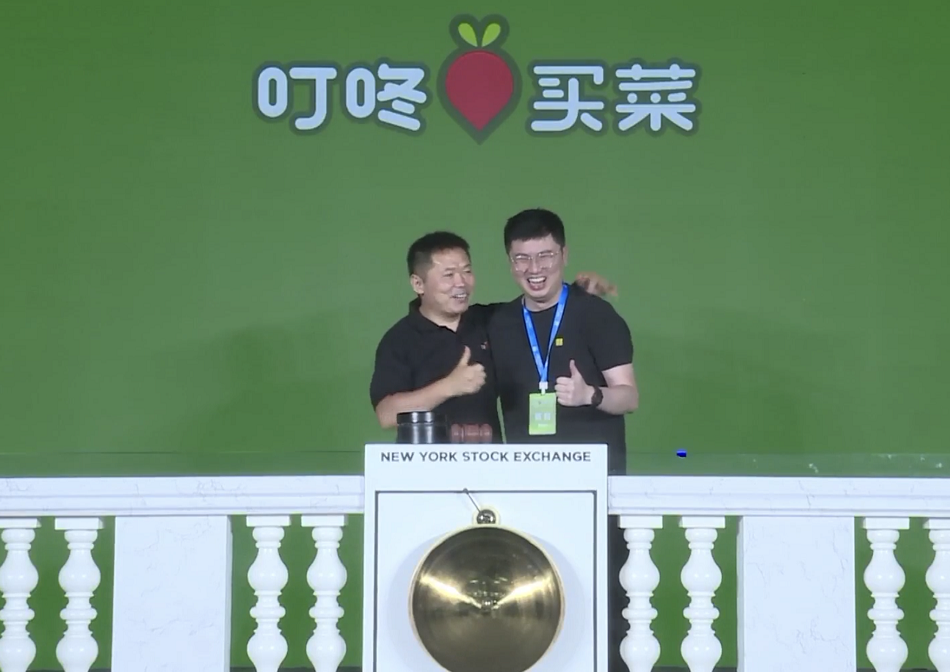
Left: Dingdong Maicai founder and CEO Changlin Liang; Right: Rui Han, partner at Gaorong Ventures
On the team, Han pointed out that Liang is a military veteran with tremendous resilience; when the team pivoted, not a single core member left, demonstrating extraordinary cohesion. These qualities made them exceptionally suited for the immense complexity of fresh grocery e-commerce — the business model and organizational capability were highly matched. "Even in the difficult early days, when we talked about what Dingdong would look like in 5-10 years, how many people they wanted to serve, you could clearly see the light in Laoliang's eyes. I think this is perhaps the kind of heroism we seek — someone who, having seen all the hardships and challenges, remains so passionately committed to what they set out to do."
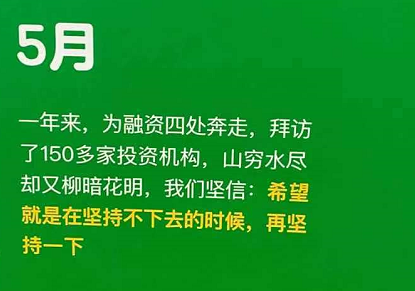
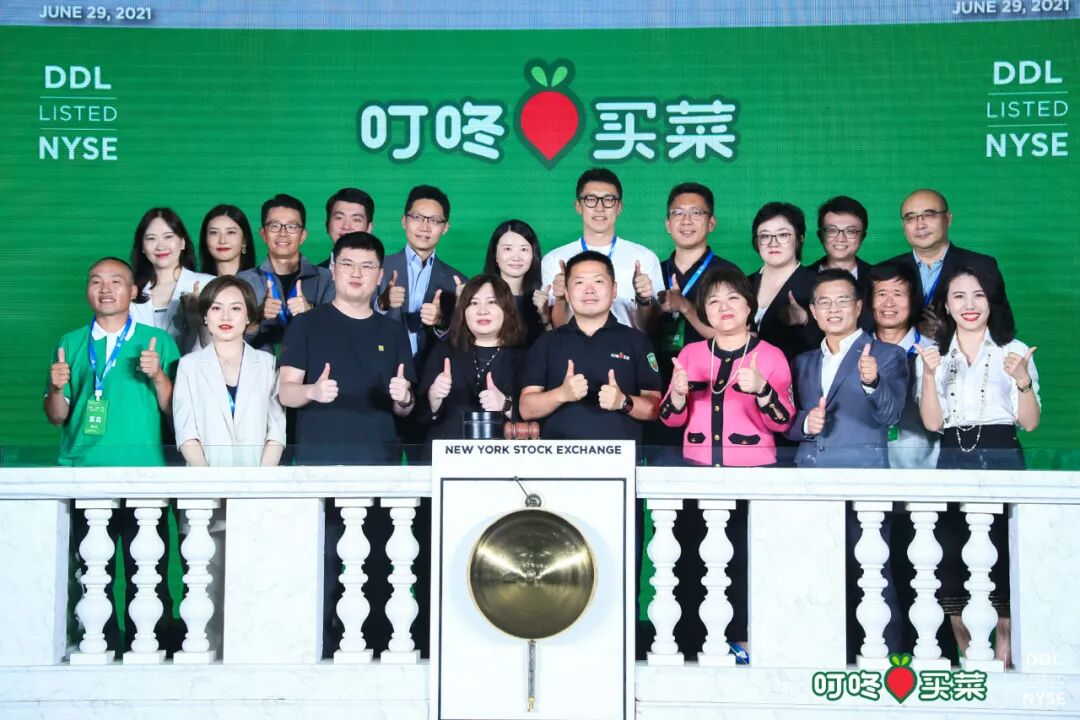
Photo from Dingdong Maicai's listing ceremony
Deep cultivation of supply chain and technology innovation, growing for users
Dingdong Maicai has continued to attract support from both new and existing shareholders during its rapid growth. In April 2021, the company announced the completion of a $700 million Series D round; in May, it announced a $330 million D+ round, bringing total funding in the two rounds to $1.03 billion.
The prospectus indicates that IPO proceeds will primarily fund market expansion, upstream supply chain development, and technology R&D. While maintaining product quality, delivery speed, and brand warmth, Dingdong Maicai is striving toward its vision of becoming "the world's largest and most trusted operator and seller of ingredients and food."
The company will continue developing direct-from-source procurement, continuously optimizing intelligent supply chain capabilities, combining consumer operations and big data analytics to rapidly improve supply chain and consumer-facing service experiences alongside scale expansion, achieving certainty in quality, timing, and selection.
In this process, Dingdong Maicai will export practical planting and breeding standards to upstream agriculture, helping farmers produce better, more abundant, and more market-suited products, while simultaneously building a solid supply chain ecosystem foundation.
On the other hand, Dingdong will continue investing in technology R&D, applying algorithm-based demand forecasting, intelligent allocation, and front-end recommendation systems flexibly across front-warehouse site selection, product selection, procurement, logistics, sales, and other segments to reduce procurement costs, improve procurement and sales efficiency, and deliver fresh products to consumers' hands as quickly as possible.
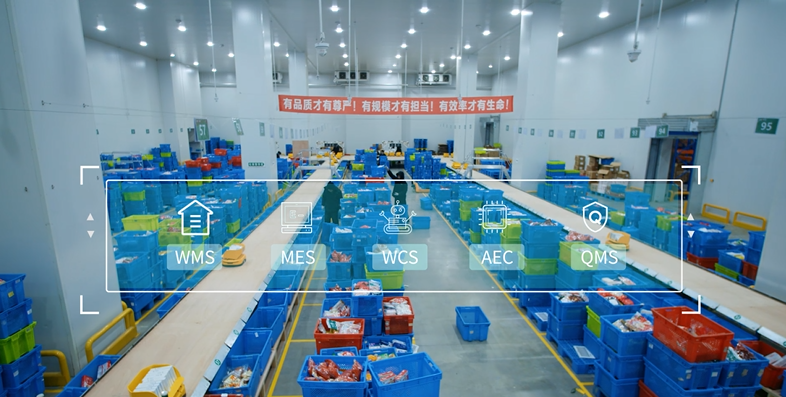
Founder Changlin Liang has consistently adhered to his "seed theory" — that Dingdong Maicai should be like a seed: inwardly firm, outwardly growing, obsessively focused on users, growing for users, standing closest to users' homes, maintaining a service consciousness, and through steady supply chain cultivation and technology innovation, "making quality ingredients as accessible as tap water, benefiting all."
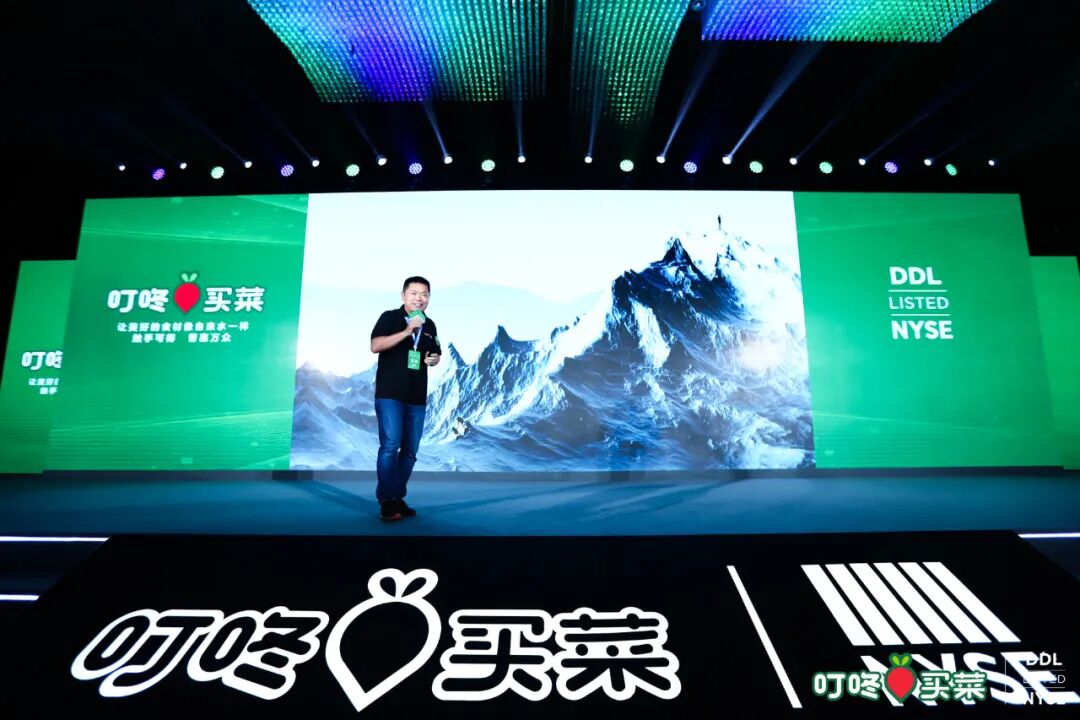
On Dingdong Maicai's future development, Han said: "In the market serving tier-one and tier-two cities' instant demand, 'speed' will become an increasingly important and mainstream factor. Dingdong's continuous improvement in extreme speed is determined by infrastructure capabilities like supply chain and IT. And Dingdong has already built solid foundations in fresh grocery digitization, direct sourcing and contract farming, intelligent supply chain systems, and the industry's strictest quality control. We sincerely wish Dingdong continued steadfast progress toward its mission; and we wish Laoliang, this not-so-young idealist, to keep making his ideals reality through day-after-day action."
Ahead of the listing, Liang also spoke with us about Dingdong Maicai's business model, seed theory, organizational capability, and vision.
Q: What factors enabled Dingdong Maicai to achieve today's growth rate and market scale?
Changlin Liang: We often say that competitiveness in fresh groceries can be abstracted as an iceberg model — above sea level are scale and revenue; the middle is supply chain capability; the bottom is organizational capability, data and algorithm capability, agricultural technology capability, and financial capability. What people usually see is just the tip of the iceberg, not the internal strength beneath. And scale is determined by what's below sea level — it's a company's real strength, and strength determines efficiency.
So we need to improve efficiency at every underlying level to achieve genuine growth.
On supply chain, we emphasize "borrowing the false to cultivate the real." Front warehouses are merely a form; what we're really cultivating is supply chain capability. Dingdong has consistently developed direct-from-source procurement, with teams permanently based in places like Yunnan, Guizhou, and Shandong, working with farmers to discuss how to grow products better suited to the market.
We also firmly believe in technology's leverage effect. Today Dingdong has a technology team of over a thousand people developing systems and algorithms for warehouse allocation, demand forecasting, loss control, quality assurance, and source tracing.
Q: Dingdong Maicai has summarized its business model as "dual flywheels." How should we understand this?
Changlin Liang: We're the only one among our peers that grew without major traffic inflows, building everything ourselves from scratch. Our first flywheel explains how scale builds — it doesn't depend on traffic, but on existing users; not on new users, but on existing users' repurchase rates. Good user experience attracts repurchase, scale expands accordingly. The key gear is small regions, high density. Based on data, this helps us optimize model details, and under economies of scale and network effects, marginal costs decrease and operational efficiency improves.
The second focus is improving supply chain capability from the agricultural supply side, further enhancing the three certainties (quality certainty, timing certainty, selection certainty), continuously earning user trust, forming the second flywheel.
The hardest part is the driving force — starting from zero, entering from a single point, and pushing with full force. Before the flywheel turns, it's extremely difficult; the push is very slow. Once it's spinning, everything becomes much easier. And entrepreneurship is about going all in, persisting until that flywheel can turn on its own.
Of course, the prerequisite is forming a positive cycle — that's our business logic.
Q: Dingdong Maicai believes in the "seed theory." How does this guide the company's development?
Changlin Liang: What is the "seed theory"? Look at the pines on Huangshan — years ago, a single seed landed on a cliff face, weathering wind and rain, enjoying calm and sunshine, eventually growing into a towering tree. We've summarized that the power of a seed has five characteristics: small seed, big future; a seed's growth comes from internal force; seeds can withstand storms and blows; natural growth; one is everything.
A startup must be like a seed — growing upward regardless of environment, regardless of whether resources are favorable. Today enterprises face dramatic external changes; you must grow outward, but your heart must remain firm, your roots must go deep. This is the "seed theory" we've always championed.
The "seed theory" guides Dingdong Maicai's development. Because of seed thinking, since 2020, the word we've emphasized isn't growth, but growing. In goal-setting, what we care about most is user repurchase rate. If repurchase is done well, everything else follows naturally.
In business, we sometimes see large companies quickly mobilize people and pour massive resources into something, often failing precisely because they lack the vitality of a seed. The vitality of a business model lies more in its DNA and growth capability — many things are determined on the day the seed is planted. People often ask us how we decide to enter a new city. In fact, we usually only enter when we can no longer control the impulse to expand. The "seed theory" has also allowed Dingdong Maicai to organically grow many new businesses from the bottom up, such as our flowers business and ready-to-cook dishes business.
Q: What kind of team is Dingdong Maicai?
Changlin Liang: We've always emphasized that headquarters is like a band, the front line is like an army.
So you'll find our company has a particularly integrated culture. Army and band are like two sides of a coin — their management methods are quite different. Bands emphasize cooperation and coordination, creativity and innovation, bottom-up achievement and results, and employees' internal drive for growth; armies emphasize following orders, requiring top-down execution.
We hope to pursue "both/and" organizationally, with unity from top to bottom — both creativity, flexibility, and synergy, and the execution capability to dig in and fight tough, methodical battles.
Q: What higher peaks does Dingdong Maicai still need to climb?
Changlin Liang: Entrepreneurship is "sowing in spring, harvesting in autumn" — sowing in spring is the only opportunity. We're willing to work hard in spring, seeing futures others can't see, then leaving the results to time.
We see the fresh grocery market as massive, but online penetration remains low; fresh grocery brands of various models all have substantial room for development. Going forward, we'll continue focusing on doing our own business well, steadily and solidly, honestly doing the "small thing" of "selling vegetables."
Our eyes aren't fixed on the very top of the pyramid, the most profitable demand; rather, we see the entire pyramid and people's universal needs, then change the agricultural supply chain, replace backward productivity with advanced productivity, change supply and meet demand through higher efficiency, and finally make this work. Only then can we gain a small return from change and efficiency improvement.
In the future, we'll continue steadfastly deepening our cultivation of the upstream supply chain, working to provide users with cost-effective, high-quality ingredients and service that exceeds expectations, building social infrastructure as accessible as tap water. This is what we're looking at, what we can do and are doing, and what we must go all out to do well.