WeLing Medical Completes Angel Plus Round to Advance Fully Implantable Medical-Grade Brain-Computer Interface System

Accelerating the clinical translation of brain-computer interface technology.

Neuralink, a brain-computer interface (BCI) company based in Shenzhen, recently announced the completion of a tens-of-millions-of-yuan angel-plus funding round. The round was led by Gaorong Ventures, with participation from Zhongfa Lingchuang Life Science Park Venture Fund and Qiji Investment, while existing shareholder CDH Investments made a follow-on investment. The company had previously closed a tens-of-millions-of-yuan angel round earlier this year.
This round of funding will primarily advance the development of a fully implantable medical-grade BCI system, including clinical research on implantable ultra-compliant high-density electrode arrays, clinical validation of a thousand-channel medical-grade neural signal acquisition and processing system, finalization of a hundred-channel neural electronic chip, as well as validation of bidirectional BCI precision neural modulation technology and wireless broadband neural signal communication.

Implantable BCIs Enter Accelerated Clinical Translation
Implantable brain-computer interfaces enable direct information exchange between the brain and computers through neural interface technology. Leveraging the brain's neural plasticity and functional distribution, they allow the brain to learn to control external electronic devices, achieving direct brain-machine communication.
In recent years, implantable BCI technology has achieved numerous milestones and gradual validation. From brain-controlled robotic arms and speech reconstruction to restoring upper and lower limb control and treating severe depression and other psychiatric disorders, BCIs are no longer science fiction. They now have real-world applications and are entering a phase of accelerated clinical translation. This technology promises better solutions for treating various brain-related diseases.
In current medical applications, one approach combines implantable BCI systems with rehabilitation training to replace damaged neural organs in patients with sensory or motor disabilities. Through prosthetic limbs and digital terminals, patients can achieve self-care and social interaction, helping the nervous system rebuild and recover function — potentially enabling rehabilitation in both physiological and social terms.

Advancing Full-Stack BCI R&D, Developing Brain-Computer Therapies
2023 marked the 50th anniversary of the "brain-computer interface" concept and was a pivotal year for commercialization and industrialization. Internationally, leading BCI companies including Neuralink, Synchron, Paradromics, and Precision Neuroscience have secured funding rounds, with multiple companies and research teams making significant clinical progress. Meanwhile, Chinese BCI companies are rapidly seizing frontier industrial opportunities.
Founded in 2019, Neuralink is a startup targeting full-stack development of medical-grade implantable wireless BCIs. Its R&D team consists largely of senior researchers from leading international BCI research institutions, with deep collaborations with domestic universities, research institutes, and hospitals including the Shenzhen Institute of Advanced Technology, Chinese Academy of Sciences. The founding team brings over two decades of international research experience in fundamental research, engineering practice, and clinical medicine related to implantable BCIs, with profound understanding of BCI principles and clinical applications.
Neuralink is currently the only domestic team capable of independently developing brain-computer therapies and completing targeted solutions. Its R&D team was the first in China to propose an implantable BCI solution based on high-density flexible electrode arrays on the brain's cortical surface, introducing high-density mesh ultra-compliant neural electrode arrays. Using MEMS processes, micron-scale ultra-thin structures, and composite nanotechnology to enhance neural biocompatibility and conductivity, these arrays obtain high spatiotemporal precision neural signals by adhering to the cortical surface. This solves the technical bottleneck of conventional penetrating electrodes causing brain damage that limits implant targets to a single use.
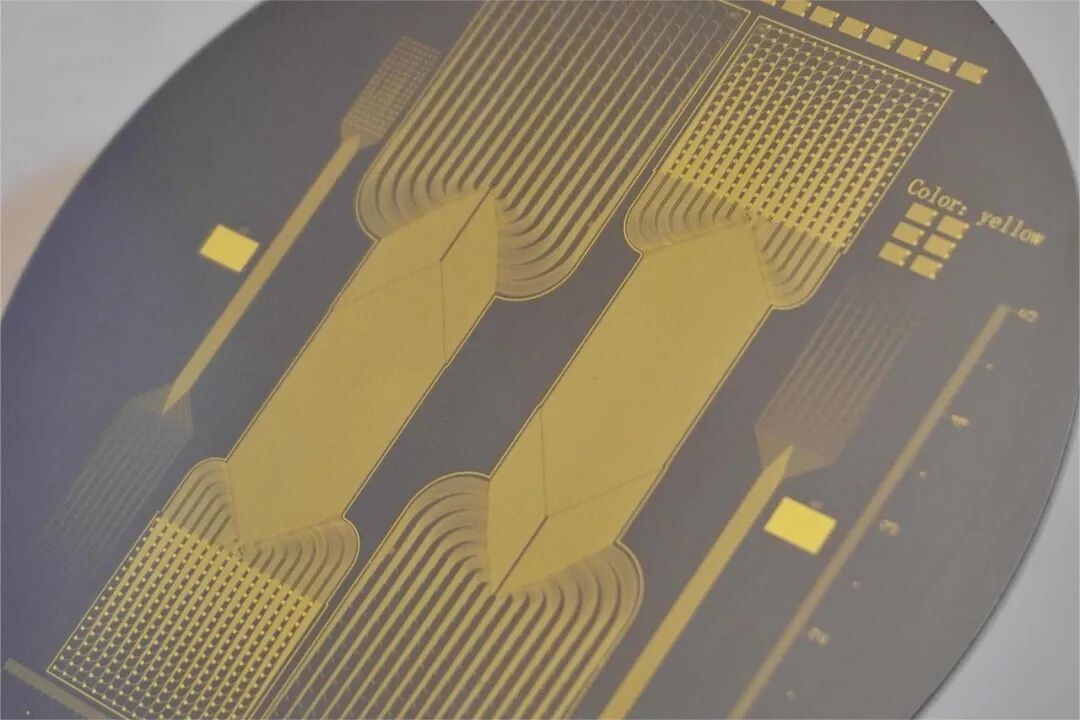
Neuralink's high-density flexible micro-cortical electrode array
Neuralink has now substantially completed foundational hardware and software system R&D for full-stack BCIs. On the hardware side, key core components include high-density ultra-compliant neural sensor arrays, acquisition-and-stimulation integrated closed-loop neural electronic chips, thousand-channel miniaturized brain-machine information interaction devices, and wireless brain information transceivers. On the software side, this includes preprocessing algorithms, decoding analysis algorithms, and brain-inspired control algorithms. For commercialization, Neuralink is targeting multiple specific research and clinical application scenarios, with several BCI products nearing systematic completion of development and planned market launch in the near term.
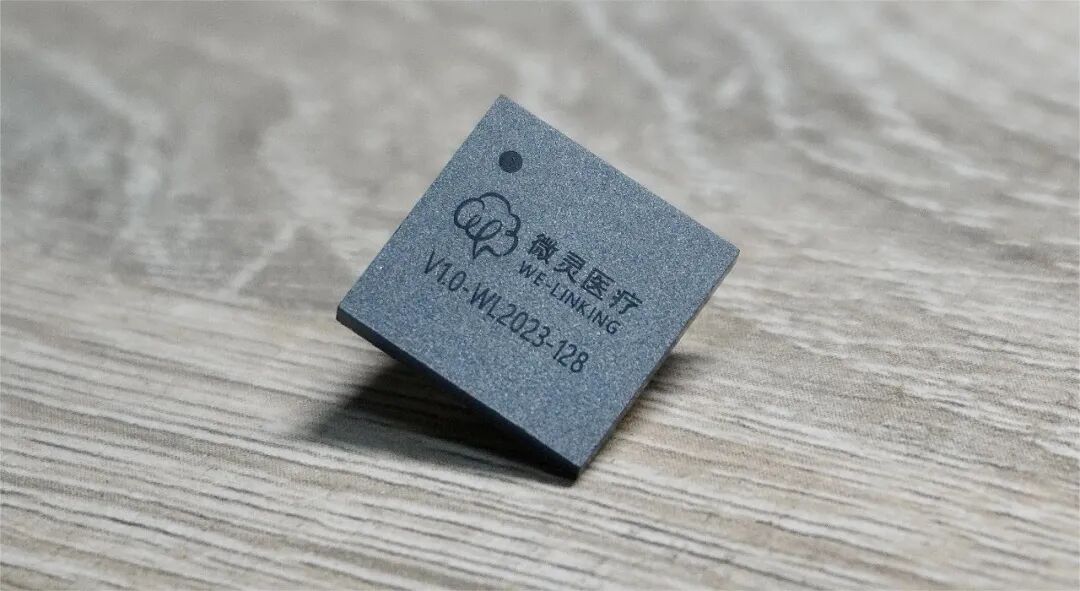
Neuralink's acquisition-and-stimulation integrated closed-loop neural electronic chip
Professor Xiaojian Li, founder of Neuralink, explained: "'Micro' refers to micro-sensing technology and miniaturized large-scale integrated circuit technology; 'Ling' refers to brain intelligence. We hope to use tiny yet high-performance implantable devices as our BCI solution, achieving the next leap in brain-computer interfaces by simultaneously advancing both engineering hardware/software and our understanding of the brain."
A project lead at Gaorong Ventures commented: "The practical application of BCI technology requires a team with global vision and breakthrough innovation capabilities. Neuralink's team is senior and multidisciplinary, with extensive research and work experience, solid technical foundations, and clear, pragmatic product pipeline planning. This will help better drive the R&D and clinicalization of implantable BCI technology, bringing new hope to patients sooner."
Neuralink will continue to orient its design toward medical device requirements, using clinical needs to guide specific BCI system design. Its core mission is to reliably deliver system-level products to clinical application endpoints within several years, with the guiding principle of enabling patients to benefit as quickly as possible — driving clinical translation of BCI technology with emphasis on real-world application deployment.