When Going Global Enters the "Born Global" Era: 10 Trends Worth Watching | Ronghui Practical Insights

How to "Ride the Momentum" on the Path to Global Growth?
In the post-pandemic era, global markets have seen numerous shifts — accelerated e-commerce penetration, increased remote collaboration, evolving supply chain dynamics, and new compliance requirements. At the same time, the underlying infrastructure for globalization, including cloud-native technologies and cross-border logistics, has become increasingly mature.
Markets change, but the entrepreneurial spirit of ambition, grit, and sharp commercial instincts remains constant. Centered on global opportunities and the Chinese entrepreneurial spirit, Gaorong Ventures has in recent years invested in a portfolio of outstanding companies deeply rooted in global markets, spanning global brands, global SaaS, and B2B cross-border services — including Advance Intelligence Group, OPay, Y.O.U, Aventon, Nothing, Dianxiaomi, XTransfer, and Geekplus.
Today's competitive landscape demands more from a new generation of global entrepreneurs. They need to adopt a "born global" mindset, allocating resources globally across teams and supply chains to capture scale advantages and comparative benefits.
Recently, Ronghui — Gaorong's founder community — organized a "Globalization" growth series, partnering with TikTok Shop, Amazon Web Services, Anker, Huawei, and Brunswick Group to share insights with entrepreneurs on emerging opportunities, platform ecosystems, global compliance, brand building, and global team collaboration. The goal: help companies see global opportunities clearly while solidifying the fundamentals for growth.

At the first online session, Xinhua Liu, Gaorong Ventures Investment Partner and former Chief Growth Officer at Kuaishou, shared five macro trends and five micro trends for the "born global" era. The macro trends will shape the next five to ten years, though they have become especially clear this year; the micro trends focus on industry and entrepreneurship specifically.

Trend 1: Entrepreneurs Must Evolve from an "Going Out" Mindset to a "Born Global" Mindset
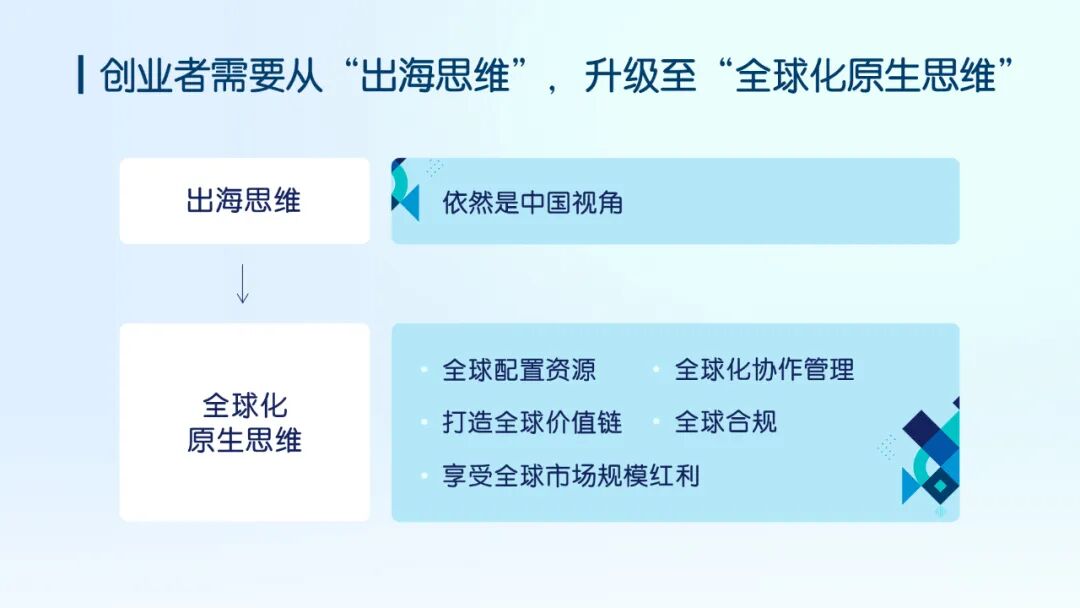
Faced with external changes, a new generation of entrepreneurs needs to develop a fundamentally different cognitive model — evolving from an "going out" mindset to a "born global" mindset. This shift enables them to better leverage globalization's comparative advantages and network effects, and to more fully capture the benefits of global market scale.
The "going out" mindset remains China-centric: exporting China's supply chain advantages, engineer dividend, and efficiency gains to the world. The "born global" mindset means thinking about global resource allocation from day one. It encompasses several key elements:
1) Global resource allocation. This includes human capital and financial capital.
2) Global collaborative management. Especially post-pandemic, many companies have undergone organizational evolution to become "built for remote." Multi-hub or decentralized global organizations are becoming the new management standard. How teams collaborate efficiently across borders is now a core competency for entrepreneurs.
3) Building global value chains. This includes supply chains, service chains, value-added channels, and other networks — networks that avoid excessive centralization and can seamlessly integrate with local value networks in each market.
4) Meeting global compliance requirements. This has become increasingly critical today.
Trend 2: Global Compliance Is a New Source of Competitive Advantage — and RegTech a New Growth Engine
Global compliance has become urgent and ubiquitous. For this generation of entrepreneurs, it may feel like a constraint, but breaking through that constraint creates new competitive moats.
Compliance spans many domains. First, as more companies become "built for remote," team dispersion increases dramatically. Meeting payroll and tax compliance requirements across multiple regions becomes a significant challenge.
Additionally, with the growth of cross-border e-commerce and global carbon reduction imperatives, supply chain compliance requirements have become more prominent.
The accelerated penetration of digitalization globally has also forged new consensus around data compliance. Major economies worldwide have introduced important legislation and regulatory frameworks around data security — including China's Cybersecurity Law, Personal Information Protection Law, and Data Security Law, as well as the EU's GDPR.
Meanwhile, the proliferation of digital banking and digital payments has driven financial institutions to require businesses to conduct online, real-time KYC (Know Your Customer), KYB (Know Your Business), and KYT (Know Your Transaction).
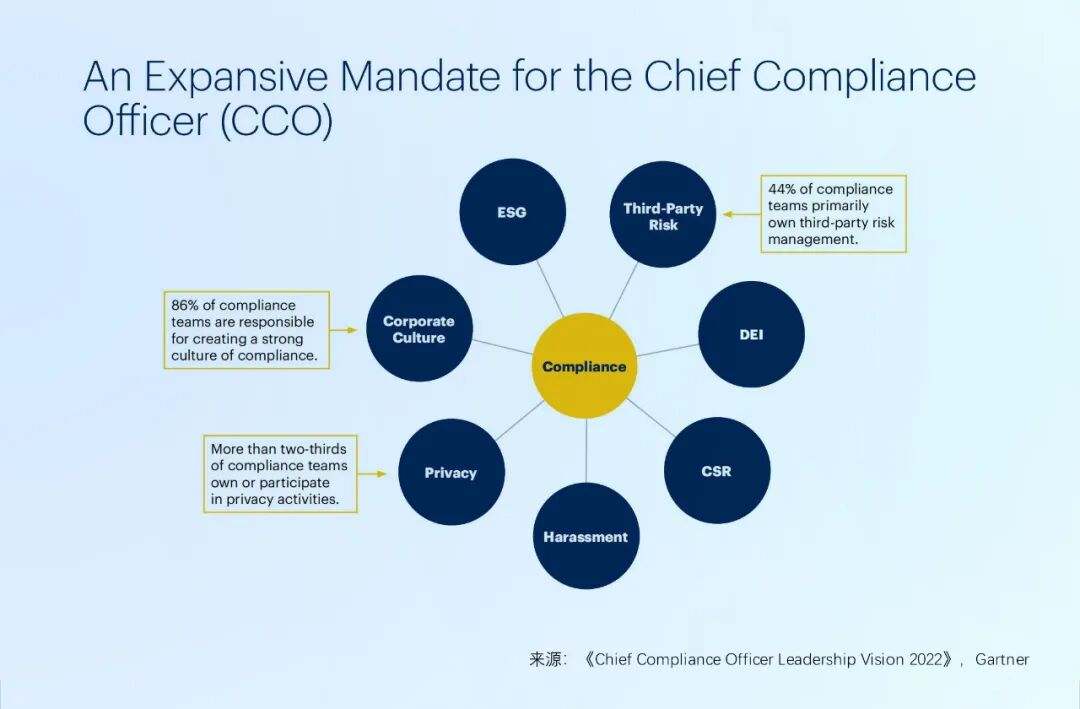
As a result, the Chief Compliance Officer (CCO) role has become standard at more companies. According to a recent Gartner white paper, CCO responsibilities continue to expand: beyond core legal and risk compliance, they now encompass ESG (Environmental, Social, and Governance), CSR (Corporate Social Responsibility), and DEI (Diversity, Equity, and Inclusion).
Strong demand for compliance has also made compliance and regulatory technology (RegTech) a new growth engine — an entrepreneurial track that may be overlooked but is full of surprises. The past year has seen dense M&A and financing activity in the compliance sector, including several high-growth star companies. OneTrust, for example, provides privacy management programs and automation tools through a SaaS model to help companies comply with regulations like GDPR, with a valuation exceeding $5 billion in its last round — considered one of the "fastest-growing SaaS startups in the US" over the past two years. In recent years, compliance tech unicorns have also emerged densely, including Deel, Remote, Socure, Forter, Signifyd, Chainalysis, and BigID.
Trend 3: Entrepreneurs Need to Build Proximate, Local, Flexible, Agile, and Intelligent Supply Chains
China's supply chain strength is undisputed. But global supply chains are currently undergoing "repositioning," and entrepreneurial companies need to proactively adapt rather than simply remain optimistic.
Our recommendation: Chinese suppliers must move closer to customers, providing proximate, on-the-ground service; at the same time, supply chain solutions need to be flexible, agile, and intelligent.
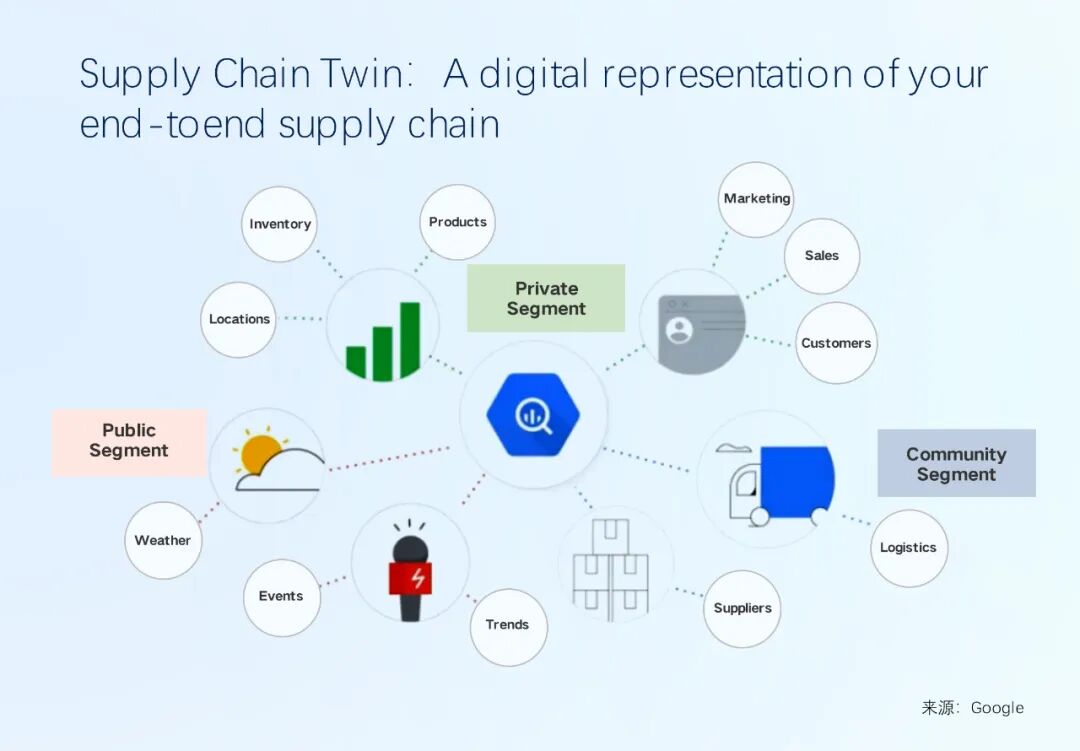
We are particularly bullish on the combination of digital twin, 3D printing, and industrial robotics technologies. This emerging capability could become the most promising supply chain solution. Innovative companies are already building next-generation supply chain digital twins — for example, mapping factories, machine tools, warehouses, and other manufacturing scenarios from one location, along with design, engineering, simulation, and optimization processes, to other regions through digital twins. They then rapidly replicate these through 3D printing and other methods to quickly form distributed supply chains. Where skilled local workers are scarce, industrial robots can fill the gap. These new processes may also accelerate the deployment of new types of global digital factories, reducing the fragility of centralized supply chains.
Digital twin technology may eventually help bridge the physical and digital worlds — or rather, the world of bits has the potential to better serve the world of atoms. These technologies remain in early stages today, but they could reshape global supply chain dynamics in the future.
Trend 4: Climate Tech Is a New Growth Engine for Chinese Globalization
In climate tech, countries worldwide are actively embracing globalization, because carbon reduction is a shared global challenge and mission — this is a point of consensus.
Climate tech represents a massive structural opportunity, spanning renewable energy, energy storage, carbon capture, alternative proteins, vertical farming, electric vehicles, smart buildings, and more. These sectors have seen active investment and financing in recent periods. For example, in December, nuclear fusion company Commonwealth Fusion Systems completed a Series B round exceeding $1.8 billion.
China holds leadership positions across global battery manufacturing, energy storage, solar PV, and electric vehicle supply chains. China controls approximately 70% of global lithium battery supply, and will become one of the most important suppliers to the global EV market. Thus climate tech has the potential to become a new growth engine for Chinese globalization.
Trend 5: Web3 Is Already Here — Reshaping the Future Internet
With the development of Web3 and metaverse technologies, fragmented entities in the physical world may achieve "re-connection" in Web3.
Web3 drives the shift from an information internet to a value internet, with more equitable value capture, making the world relatively more balanced. Web3 properties include composability, value transferability, operability, and decentralization. The values, new consensus, and entirely new business opportunities behind it merit our attention.
Micro Trend 1: Global Brands Must Embrace Universal Values and Co-Build Networks with Users
The globalization of Chinese brands is steadily shifting from a "distribution logic" to a "brand logic," with more DTC brands emerging to establish direct connections with users. While pursuing GMV and sales volume, entrepreneurs must prioritize brand building — otherwise brand premium and extensibility will inevitably be constrained.
How to build a brand? Several key points:
First, emphasize narrative (Brand Storytelling) and embrace universal values. A brand cannot be purely transactional, cannot simply "appeal to reason"; it must "appeal to emotion," establishing emotional connections with users; and even "give them dreams," becoming a "dream enabler" for users. Furthermore, when building global brands, embrace more universal values — equality, environmental protection, human-centricity, youthfulness, support for innovation. Only under the guidance of these values can effective communication with global consumers and teams be achieved.
Second, brands must participate in and even lead social discourse. Communications theory often discusses Agenda Setting. Brands that truly carry social value meaning can proactively lead consumer lifestyles and cultural trends — for example, Tesla and lululemon's leadership in environmental protection and athletic lifestyles.
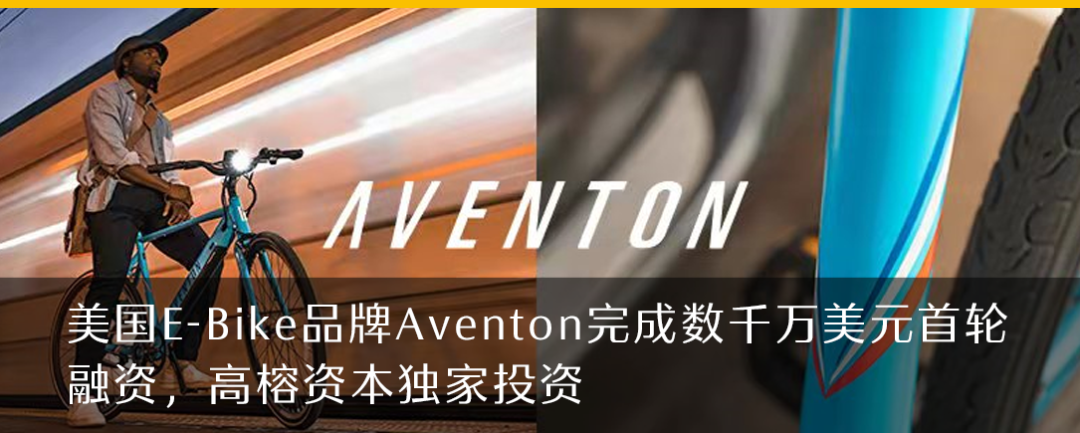
Third, aggregate and serve user networks. A brand, at its essence, is a network established between the brand and its users. Only by aggregating and serving this user network well can a brand build mental dependency, drive repurchase and stickiness, and turn users into brand ambassadors. For example, Gaorong-backed e-bike brand Aventon, beyond creating differentiated products with clear user perception, supports users in connecting with other riders through its app's community forum, building an active e-bike culture hub.
Finally, listen to the Voice of Customer. Systematically collect and analyze consumer voices, understand the "unsaid" beneath their words, and use this to guide product roadmaps. In SaaS companies, data-driven customer success philosophy is already deeply established; "customer success" in consumer sectors is equally critical — understanding consumer profiles, segmenting consumers, and listening to their authentic thoughts. How to effectively manage consumer voice using the right tools also presents new SaaS entrepreneurial opportunities.
On the distribution side, transaction networks and models are also evolving. Traditional consumer brands going global reached consumers through shelf-based e-commerce (EC) on Amazon and local e-commerce platforms; today, brands need to build transaction networks better suited to younger consumers' habits, capable of emotionalizing, meaning-making, and content-ifying the brand.
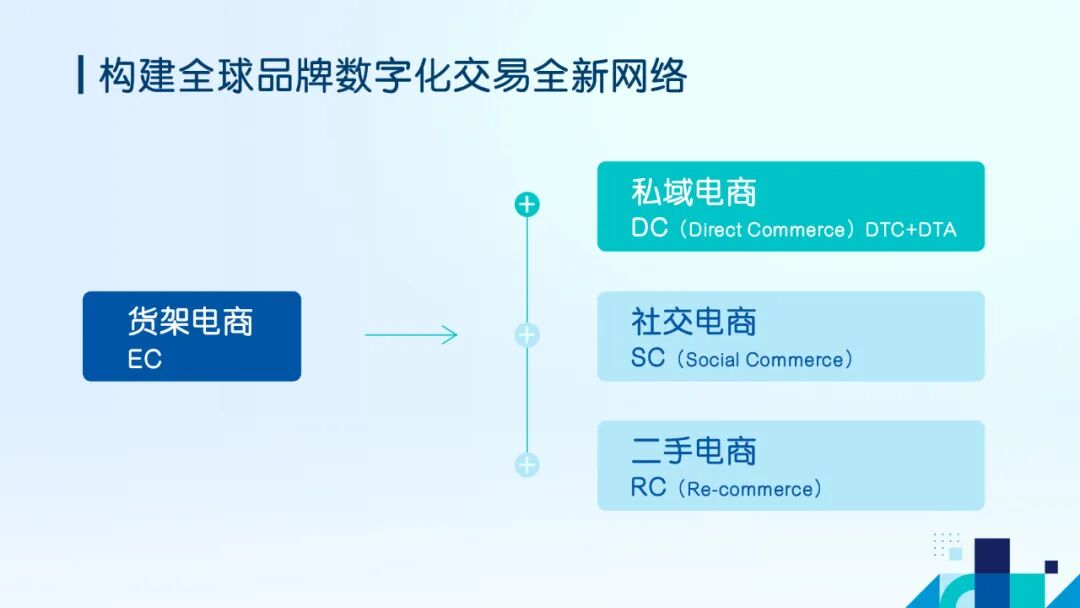
First is Direct Commerce (including DTC + DTA). Direct commerce is not limited to DTC; it means building your own user community and communicating directly with users. As virtual worlds develop, DTA (Direct to Avatar) will also gain traction — how to effectively market and interact with digital avatars in virtual worlds will become important.
Additionally, Social Commerce is critical to engage with. TikTok is unquestionably the fastest-growing social network globally in recent years; but looking at Europe and America, social networks are highly fragmented — Facebook, Instagram, Twitter, Pinterest, Discord, Twitch, Telegram, Reddit, OnlyFans, Line, and more. Brands need to think more about how to use social networks for effective listening and interaction, combining content seeding with sales conversion.
Finally, Re-commerce. Second-hand e-commerce remains in early stages in China, but is rising in Europe and America. This stems from new generations' emphasis on environmental protection, as well as shifts in consumer psychology and behavior amid economic downturns and supply chain challenges. Some brands deliberately build second-hand circulation networks — for example, launching "limited edition" or "scarce edition" products, or even rental services. The development of these financially-tinged second-hand transaction networks can in turn stimulate sales of new products.
Micro Trend 2: Global SaaS Remains a Massive Opportunity for Chinese Entrepreneurs
As cloud-native technologies level the playing field for global enterprise infrastructure, major public cloud marketplaces mature, and remote work becomes ubiquitous, more global SaaS companies are being born and growing rapidly outside Silicon Valley — such as Australia's Atlassian and Canva, Israel's Monday.com and Wix, and Romania's UiPath. For Chinese entrepreneurs, there are abundant opportunities to build global SaaS, including Gaorong-backed companies like Dianxiaomi and Wiz.Ai.
In the cloud-native era, SaaS companies with Product-Led Growth (PLG) and Community-Led Growth (CLG) models can grow rapidly with low friction — PLG and CLG remain the most important growth models for SaaS startups. According to Wing Venture Capital's 2022 "Enterprise Tech 40," 32 of the 40 listed companies were PLG companies.
Of course, in early product validation and refinement, Sales-Led Growth (SLG) can help validate POC (Proof of Concept); for products targeting mid-to-large enterprise markets, it's also an important path to achieving PMF (Product-Market Fit). But if a SaaS product subsequently cannot achieve modular standardization and still relies heavily on customized services, with PLG remaining a small proportion of overall customer growth, such SaaS products will struggle to achieve scalable growth in a global context.
This is actually a massive opportunity for Chinese entrepreneurs. PLG's product orientation and rapid iteration can precisely leverage China's engineer dividend, while compensating for weaknesses in cross-cultural and cross-market sales management capabilities — helping Chinese entrepreneurs amplify their strengths and mitigate weaknesses, further magnifying their inherent advantages.
Micro Trend 3: NFTs and the Metaverse Open New Possibilities for Brand Membership Network Building
It seems every day now, global top-tier brands are launching NFT projects — including Nike, Vans, Off-White, Louis Vuitton, Gucci, Tiffany, and others. International brands are also participating in metaverse communities like Sandbox and Decentraland — the DTA model mentioned earlier, directly interacting with and even selling products to users' digital avatars.
NFTs can enable proof of unique rights — including proof of presence, proof of contribution, proof of achievement, proof of financial rights, proof of governance rights, and more. The broad use cases of NFTs bring entirely new thinking to membership programs and user network building, issues that have long troubled brands.
Brands can identify consumer value and contribution, dynamically optimize membership benefits, and enhance loyalty; simultaneously, through member DAOs or brand DAO membership communities, let members participate in product development and market governance. These approaches greatly enhance members' and users' sense of belonging, participation, and reward. NFTs also make brand co-branding and cross-marketing easier — for example, conducting "airdrops" to NFT holders of co-branding partners, enabling both brands to achieve user growth.
NFTs have the potential to become the "ultimate tool" for global brands' private domain operations, helping brands establish more direct and effective connections with consumers.
Micro Trend 4: ESG Is Reshaping Global Brand Supply Chains and Becoming an Important Foundation for Brand Credibility
For brand entrepreneurs, we often say: short-term depends on demand, long-term depends on supply chain. Today, supply chain considerations cannot be limited to cost and production efficiency; brands must also trace whether raw material suppliers, factory manufacturing, and other elements across the supply chain meet ESG standards. Because ESG is gradually becoming one of the important evaluation factors for brands entering mature overseas markets. As a new variable, ESG demands attention from brand entrepreneurs.
Moreover, when ESG is done well, it becomes a competitive advantage and an important foundation for brand credibility. Brands like Allbirds, for example, have made environmental philosophy a key part of their identity.
Micro Trend 5: Global Remote Distributed Work Becomes the New Paradigm for Global Management — Both Challenge and Opportunity
Having fully experienced two years of pandemic, Europe and America have made global remote distributed work a new paradigm. Chinese entrepreneurs operating overseas must adapt to this new reality, which brings many management challenges. Interviewing, performance evaluation, compensation planning, data security, employer branding — all require rethinking.
But this new paradigm also brings opportunities. Once the above challenges are overcome, resources can be configured more flexibly on a global scale, creating anti-fragility — the ability to avoid having a single event disrupt the entire operation.
For SaaS entrepreneurs, helping global enterprises solve these problems represents significant opportunity. More "GaaS" (Globalization as a Service) offerings will emerge as new infrastructure. Remote and Deel, for example, provide solutions for payroll, compliance, recruitment, and employee benefits for remote distributed teams.
Amid so much change, we wish entrepreneurs success in building anti-fragile global organizations and growth systems — observing the winds and steering forward on the great voyage of globalization.