When Will We Achieve "Genomic Sequencing Freedom"? | Gaorong Ventures "Future"

A Conversation with the Creator of China's First Mass-Produced Nanopore Gene Sequencer
Genes are the "codebook" of life, hidden in a world measured in billionths of a meter. Humanity has long strived to explore this nanoscale microscopic realm. In 1953, the discovery of DNA's double-helix structure revealed the specific pairing and replication mechanisms of A, T, C, and G in biological DNA, proving that DNA, as life's genetic material, contains all hereditary codes and the secrets of aging, illness, and death. Since then, DNA sequencing has become the foundation for decoding life's genetic information and studying the life sciences.
At the beginning of this century, the first personal whole-genome sequencing took 13 years and cost $3 billion. To achieve sufficient depth and precision in our understanding of life's laws, we need massive amounts of genetic data to build vast biological information databases. Therefore, the gene sequencer is the most fundamental tool in gene sequencing and the most critical upstream link in the industry chain. Only by driving substantial progress in sequencing speed, cost, and accuracy—making gene sequencing "within reach"—can genetic technology benefit everyone. The technical barriers for gene sequencers are extraordinarily high; a single instrument must integrate cutting-edge advances in biochemistry, biochips, electronic circuits, and artificial intelligence. Dr. Baijing Wei, co-founder and chief scientist of Qitan Technology, is one of China's leading figures in nanopore single-molecule gene sequencing, and his academic and industry experience has unfolded precisely along these directions. Today, Qitan Technology announced the release of China's first fully self-developed and soon-to-be-mass-produced nanopore gene sequencer, the QNome-3841, along with its accompanying chips and reagents. The company also announced the completion of its production base in Chengdu Tianfu International Bio-Town, ushering in an era of domestic nanopore gene sequencing.
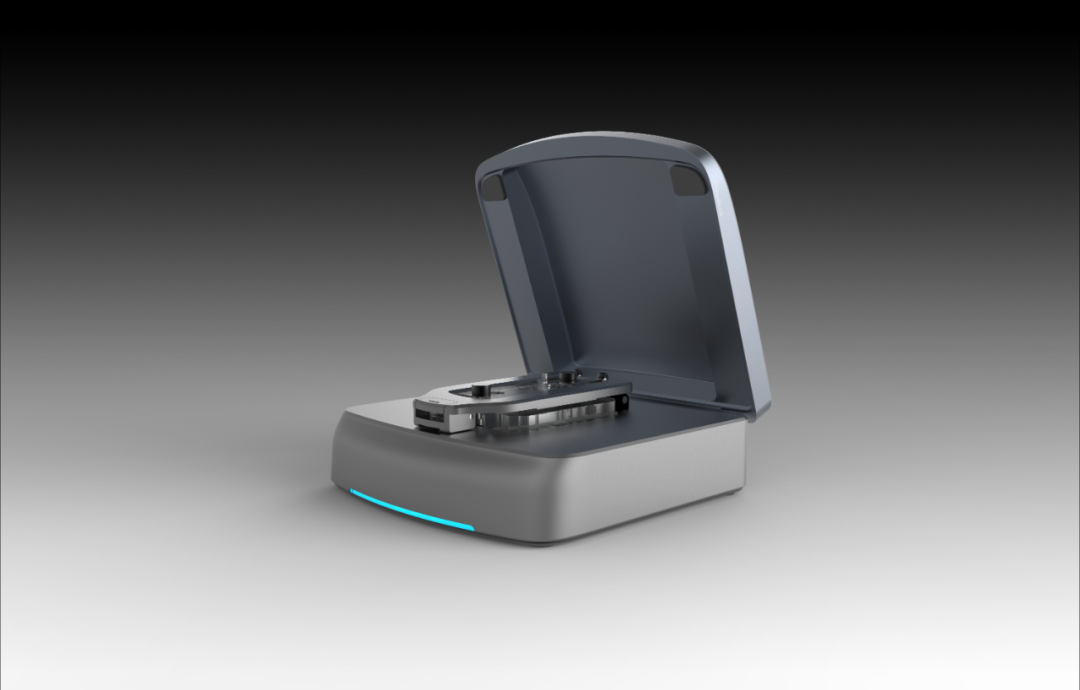
The first installment of Gaorong's "Future" series — let us follow Dr. Baijing Wei's account as we trace the exploratory journey of gene sequencers in their continuous search for optimal solutions.
The following is a conversation with Dr. Baijing Wei:

Q: What experiences in academia and industry have you accumulated, and how did they lead you into the field of nanopore gene sequencers?
Baijing Wei: Over the past two decades, genetic technology has advanced by leaps and bounds. I have been fortunate to accumulate experience through my studies and work, eventually entering the field of nanopore gene sequencers. In 2002, I entered Peking University's College of Chemistry as an undergraduate. In my second semester, I joined a laboratory under Professor Li-Min Qi to study the fabrication and characterization of nanomaterials. From then on, I developed a passion for nanoscience. Nano is a concept of scale; at this scale, materials exhibit many subtle changes and wonderful properties. Research at the nanoscale is fascinating—it often requires imagination. Of course, this imagination isn't wild speculation in a sci-fi world, but rather reasoning based on reality, constructing models in your mind while accounting for uncertainty and randomness. In 2006, I went to UCLA's Materials Science and Engineering department, where I was fortunate to receive careful guidance and training from professors Yu Huang and Xiangfeng Duan, learning about nanomaterials, characterization, and devices. The two professors, who are married, are known as the "Condor Heroes" of the nanoworld, having published numerous research papers in Science and Nature. At that time, we conducted extensive device research based on two-dimensional graphene nanomaterials and fabricated what was then the highest operating frequency graphene nanodevice. After completing my PhD in 2011, I joined IBM's Thomas J. Watson Research Center in the Materials Research Laboratory (MRL), where I designed cutting-edge nanodevices based on scaled semiconductor processes, one application being solid-state nanopore sequencers. My time at IBM was my first experience doing research in industry, and I came to understand what a product is, particularly what scaled production demands. In 2013, I joined Illumina's research team. To achieve the goal of improving sequencer performance, I expanded technically into molecular biology, nucleic acid biochemistry, protein engineering, and gained some understanding of optical instruments. I also developed a profound realization: when you have a defined goal, whatever technologies lie behind it can be researched, adopted, and produced. This influences my approach to entrepreneurship today—you can't limit yourself to breakthroughs at a single point, but must always consider whether you're heading toward the ultimate goal of sequencing, integrating technologies from a higher dimensional perspective. Returning to China to co-found Qitan Technology in 2016, I focused on the independent R&D of nanopore single-molecule gene sequencers. On one hand, I saw technological progress; on the other, I saw market demand, talent foundations, and other conditions becoming increasingly mature.

Q: Looking back at the entire development history of gene sequencing technology, what iterations and advances has it undergone?
Baijing Wei: In the early 2000s, the mainstream gene sequencing method was Sanger sequencing, which gradually evolved into what we call first-generation sequencing. For example, Applied Biosystems (ABI) launched automated capillary electrophoresis sequencers. First-generation sequencing offered relatively long read lengths and high accuracy, but low throughput and high costs. Today it is mainly used in paternity testing, genetic pathology detection, and similar applications. 2006 is considered the inaugural year of second-generation sequencing. At that time, players in the gene sequencing field (such as Illumina, Roche's 454, Complete Genomics, etc.) achieved amplification of individual molecules into base clusters on a chip through several different strategies. When people think of gene sequencing, their intuition is that a single strand of DNA is being read—but this signal is extremely weak, requiring a qualitative leap in sensor capability. Second-generation sequencing transforms the signal of one molecule into an aggregated signal of many molecules, fixed on a chip for detection. Thus, the first breakthrough of second-generation sequencing was achieving high throughput. Another breakthrough was that as biochemical reaction efficiency continuously improved—including optimization at the molecular and enzymatic levels—it became possible to support ten thousand molecules simultaneously giving the signal of the same base. Additionally, instrument optimization and adoption of new technologies in optical assembly helped continuously improve sequencing accuracy. From 2006 to 2014, second-generation sequencing technology continued to advance, while sequencing prices kept falling. By 2014, Illumina first achieved the "$1,000 genome"—that is, $1,000 to sequence a person's genome, producing roughly 90 to 100 gigabases of data. This was a true milestone, marking the arrival of the personal genomics era. Consider that in the first-generation sequencing era, sequencing a person cost tens of millions of dollars—ordinary people simply had no opportunity for this. Even today, we haven't fully explored the mysteries of genes, such as whether intelligence and personality are related to genes. The reason is that gene sequencing hasn't yet become truly "cabbage-priced." Only when gene sequencing costs are low enough will people sequence genes and analyze data at massive scale. Around 2018, third-generation sequencing began entering clinical use. In fact, as early as around 2010, third-generation sequencing represented by single-molecule, long-read sequencing had emerged. But it didn't receive much attention at first because it had significant shortcomings in throughput, accuracy, and cost. However, from its very appearance, it solved a problem that second-generation sequencing couldn't address—structural genomics. A single strand of DNA, when stretched out, is nearly 2 meters long. Second-generation sequencing doesn't read it from end to end like a thread, but rather cuts it into numerous small fragments, reads each fragment repeatedly, then pieces them together through complex bioinformatic methods. But this approach has many omissions—for example, when large segments are missing, the locus can't be found; or when there are repetitive segments, precise judgment is impossible. Second-generation sequencing also can't accurately measure telomeres, and information about many complex structures is extremely difficult to obtain. In plant genomes, such as polyploid high-yield crops like wheat, corn, and potatoes, genome complexity is very high, and long-read sequencing can more efficiently complete genome assembly. So when third-generation sequencing first appeared, its pain points were obvious, but there was also demand. It wasn't until around 2018 that third-generation sequencing began to spread. Like many technologies, it didn't explode in growth from the start, but rather developed from a seedling until reaching a threshold, then broke through the soil and received widespread attention. Nanopore sequencing is also called fourth-generation sequencing; actually, the distinction between third and fourth generation is somewhat blurry. Both nanopore sequencing and single-molecule real-time fluorescent sequencing were originally called third-generation sequencing, because both involve single-molecule continuous sequencing. Later, to distinguish electrical sequencing from optical sequencing, and to distinguish the nanopore platform from the optical platform, nanopore sequencing was termed fourth-generation sequencing. Nanopore single-molecule gene sequencing technology has notable characteristics of longer read lengths, faster speed, lower cost, and portability, enabling more precise and rapid DNA decoding. Sequencers can even be made palm-sized, thereby opening up everyone's expectations for the sequencing field and bringing gene sequencing into the mobile era.

Q: Where does Qitan's gene sequencing technology currently stand globally?
Baijing Wei: After more than four years of dedicated R&D, we successfully released China's first nanopore gene sequencer, the QNome-9604, last year, filling the technological gap in independently developed fourth-generation sequencers in our country. Today we have released China's first fully self-developed and soon-to-be-mass-produced nanopore gene sequencer, the QNome-3841, which can produce 1-1.5 Gb of data per hour, with single-read accuracy of 90% and consensus accuracy (50x) of 99.9%. We have also used this device to complete sequencing experiments with read lengths greater than 300 Kb. From a global perspective, in the single-molecule gene sequencer field, the first tier consists of Oxford Nanopore and Pacific Biosciences, which already have products on the market. Qitan Technology's products are already market-ready; compared to other companies still at the proof-of-concept or engineering prototype stage, we can say we are in a relatively leading position.
Q: What are the technical difficulties of nanopore gene sequencing?
Baijing Wei: Let me first introduce the technical principle of Qitan's nanopore gene sequencer. Through electric field force, single-stranded nucleic acid molecules are driven through a nanoscale protein pore. Because different bases produce different degrees of current blockage and blockage durations when passing through the nanopore, the base information on each nucleic acid molecule can be identified based on current signals, achieving sequencing of single-stranded nucleic acid molecules.
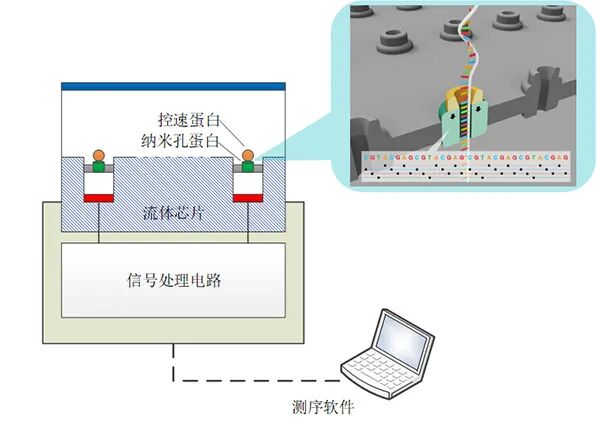
You can imagine that if a linear molecule is viewed as a tape, segments with different bases have different colors. But this molecule is extremely small, with a diameter of less than 1 nanometer; when stretched, the interval between adjacent bases is only 0.7-0.9 nanometers, and only 0.3 nanometers in double-stranded form. So continuously capturing information changes is extraordinarily difficult. To make another analogy: if a cell were Earth, then a molecule would be a small stone on Earth. Faced with such a tiny tape, the reading head must be extremely precise, which is very difficult from a fabrication perspective. What human technology can currently achieve is through protein self-assembly, so we need to find suitable protein structures. Benefiting from the development of structural biology over the past two to three decades, we can find suitable proteins from massive databases, or even design such proteins ourselves. Furthermore, the molecules we sequence absolutely do not stay obediently in fixed positions. Above absolute zero, all molecules are in vigorous thermal motion, bringing enormous uncertainty, error, and even mistakes. How "disobedient" is this molecule? It's equivalent to a small stone running around Beijing at very high speed. We need to control the molecule and precisely manipulate, monitor, and accurately measure its movement, so the difficulty is extremely high. This means that behind every measurement, substantial investment in biochemistry, chip design, and engineering implementation is required.
Q: Over the past five years, what challenges has Qitan overcome in developing nanopore gene sequencers?
Baijing Wei: The first breakthrough from zero to one was in our first year, when we obtained sequencing signals from a single pore—this was truly the first time nanopore single-molecule sequencing was achieved on Chinese soil. Not resolution at the macromolecular level, but truly achieving resolution of bases on DNA sequences.
The second breakthrough was our advance from single-pore to chip-based sequencing. Being able to sequence on a chip means sequencing already exists based on devices, and through chip process optimization, larger-scale sequencing can be achieved.
The third breakthrough was our progression from proof-of-concept machine to engineering prototype to product machine. Every single-point technical breakthrough must be integrated and compatible within the overall system in product form to be meaningful.
Q: In what directions will Qitan make further breakthroughs in the future?
Baijing Wei: The nanopore sequencer platform still has several key issues that need to be tackled, which we are committed to solving over the next five years. First, stability; second, further improvement in accuracy and throughput to match or even surpass second-generation sequencers, competing on key metrics; third, from the user perspective, how to improve platform usability so that point-of-care gene sequencing technology can enter millions of households.
Currently all medical devices are developing toward POCT (point-of-care testing), entering grassroots facilities, family hospitals, bedside, outpatient clinics, and so on. We believe nanopore gene sequencers have this potential, so we need to further integrate products to create automated, miniaturized products. We hope that in the future, a gene sequencer will be a box: put a sample in, press one button, and get results. At that time, gene sequencing applications will break through B-end scenarios such as clinical medicine, forensic security, scientific research, and environmental monitoring, and may truly enter every household, real-time safeguarding personal health.
Over the past five years, our focus has been on technical breakthroughs; today we are transforming from being technology-centered to being product-centered. Going further, we hope to be user-centered, using underlying technology as a foundation to reconstruct our product development thinking.

Q: How do you manage an interdisciplinary team?
Baijing Wei: The Qitan team includes experts from many different disciplinary backgrounds. In such a team, we have summarized several experiences for making the team operate more efficiently. First, the core founding team needs comprehensive thinking and knowledge spanning at least two to three interdisciplinary fields, enabling people from different backgrounds to understand each other and allowing different disciplines to gradually mesh.
The second point is very important: the people we find must have conviction—belief in nanopore gene sequencers and a strong desire to make this happen. With this premise, all conflicts can be reconciled.
Of course, as Qitan has grown, we have continuously learned and adapted to change. When we were first founded, the team had only a few people; everyone had to hold up their own sky, and management at this individual-combat stage was relatively crude and simple. Today we have more than 200 people and have entered a team-combat stage. We need to mobilize everyone's enthusiasm, so systematic management and transparent systems are more effective than rule-by-person. In academia, management often relies more on personal rule; in enterprise management, especially when a company reaches a certain scale, effort must be invested in systems and culture.
Q: What is the underlying motivation for moving from scientific research into industry?
Baijing Wei: I genuinely enjoy scientific research work; currently I mainly focus on how to assist scientists in doing science. Many scientists have clear research directions, but once they hit technical difficulties, how to break through is a major problem. And in many cases, real-world needs drive technological development. So my motivation is to help scientists find multiple paths to technical breakthroughs by deconstructing product and market demands. For example, recent single-cell sequencing technology has been of great help to clinical medicine.