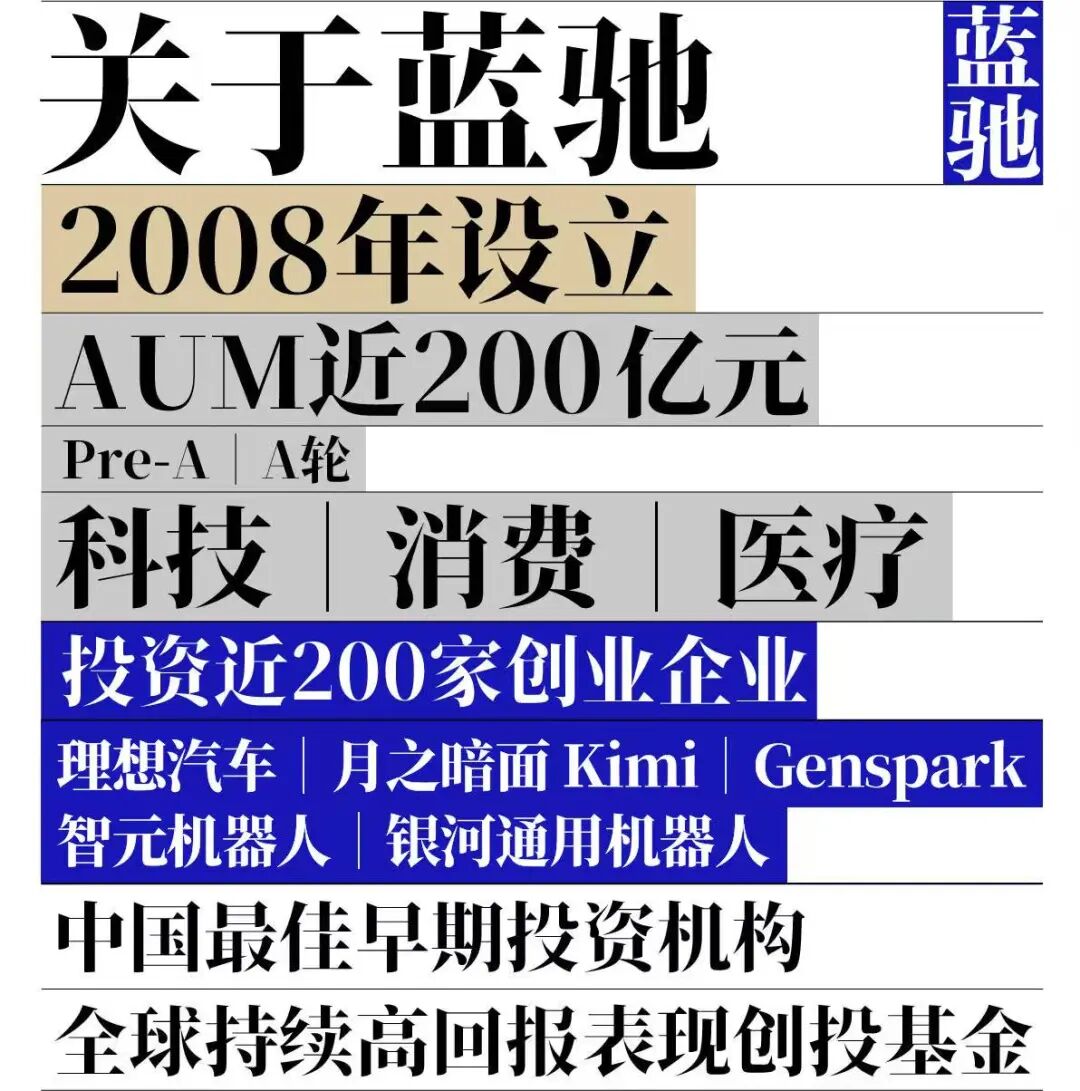
At AdventureX, we answered the 8 questions young founders most wanted to know

From Demo to Deal: To the Builders Creating Right Now

"How do I get BlueRun's money?"
That was the first thing many young founders asked when they walked up to the BlueRun Ventures booth during AdventureX.
Questions that seem routine in the investment world often have no clear answers for someone who just built their first demo and is trying entrepreneurship for the first time. They can whip up a product prototype in no time, but they don't necessarily know what comes after the demo, how investors actually evaluate a project, or how a funding round even gets started.
And these are exactly the things they most want to know on their entrepreneurial journey.
This is also why BlueRun has supported AdventureX for two consecutive years. We believe investing doesn't only happen once a project is already mature — we want to help creators at earlier stages understand: how an idea becomes a product, how a product creates value, and how a company gradually takes shape from those initial judgments.
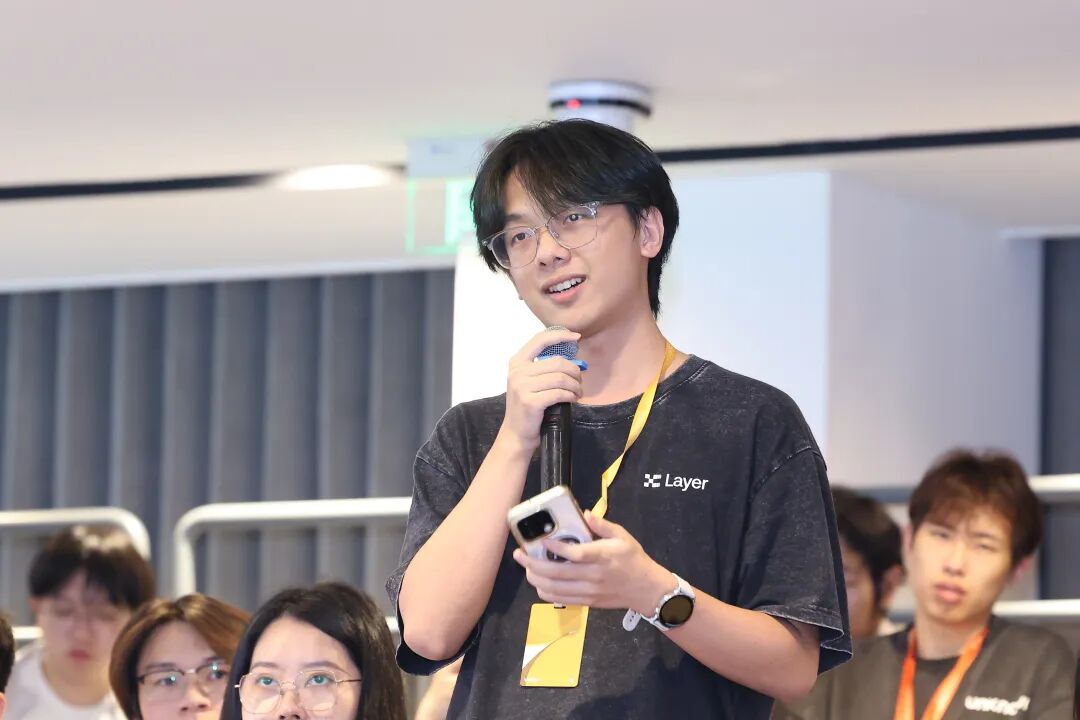
So Fu Qiang, Investment Partner at BlueRun Ventures, held an open AMA at AdventureX 2026 titled "From Demo to Deal," with all content driven by real questions from participants. Over the course of half an hour, the conversation ranged from fundraising and commercialization to how VCs evaluate people, AI trends, and investment taste. When the packed workshop ended, hands were still raised throughout the audience.
Here are selected highlights from that AMA.
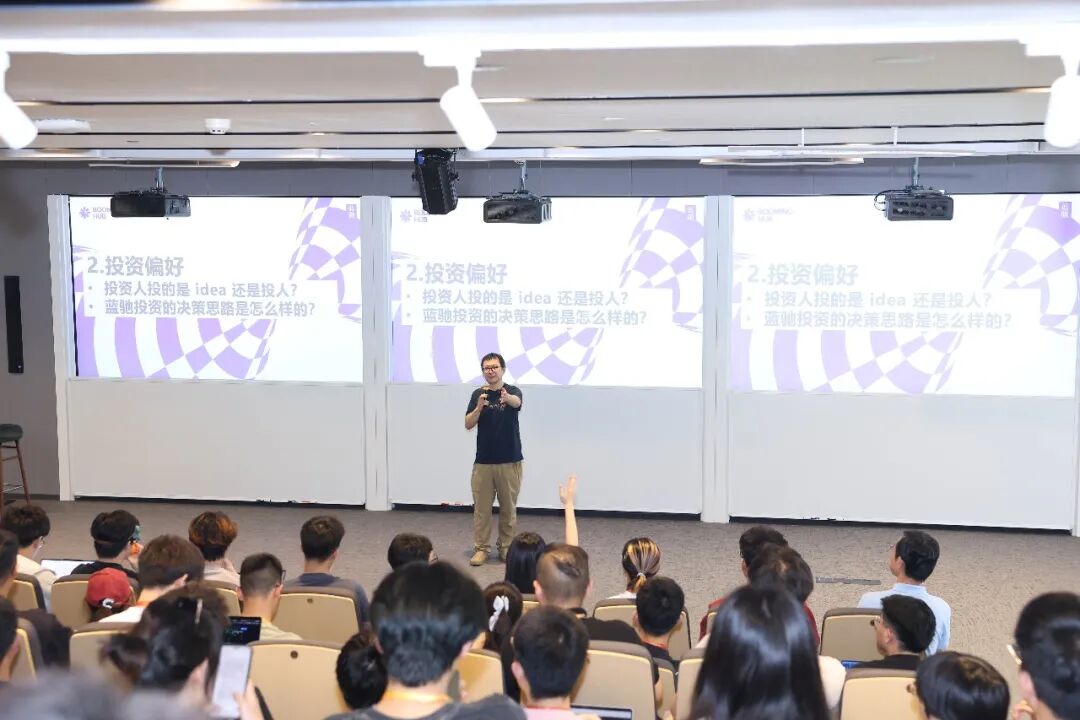

Q1: How do you know if a hackathon demo is worth pushing forward?
Fu Qiang: For the vast majority of participants, a hackathon is first and foremost a chance to challenge yourself: collaborating with others, building something in a very short time, and continuously refining your thinking through that process. All of that matters.
As for whether a demo can be "pushed forward" — it depends on what you mean by that.
If I were the entrepreneur, my understanding of "pushing forward" would be finding real users and getting them to actually use it; establishing a real business loop and starting to make money. Beyond that, it's finding more users, refining the product further, and making more money. Fundraising can be one part of that, but it's not the whole thing.
If the goal is fundraising, you can go to Demo Day and pitch to VCs, or you can directly reach out to investors, connect on WeChat, and walk them through your project. The more direct the communication, the better it is for them to understand you — but the success rate for any of these paths isn't high.
I generally believe that most investors probably aren't complete fools. More and more users, some validation of the business model — get that loop working first, and that will drive the fundraising loop.

Q2: Are there relatively quantifiable metrics for judging whether a product has a future?
Fu Qiang: Every project is very different. Some projects receive investment when the founder hasn't even quit their job yet — there's no product, no metrics.
If I had to give a reference point, for consumer products look at retention or renewal rates; for enterprise products, look at renewal rates. They're all validating the same thing: whether users are willing to use your product consistently over time, or keep paying for it.
These metrics don't necessarily point directly to investment, but they help you judge whether what you're doing is continuously creating value for customers.
Q3: Will VCs invest if a company is still losing money? What valuation models do early-stage projects use?
Fu Qiang: Nearly all venture capital firms invest in unprofitable companies. Losing money is not a problem for venture capital.
To some extent, VC is about supporting a startup, or supporting a founder in making what they want to do a reality. In the beginning, many things are naturally unprofitable.
As for valuation models, early-stage VCs typically don't make decisions based on a formula. Even for public market investors or late-stage PE, models are just a reference.
If I had to abstract it to the most important factors, I look at two things: whether this person could potentially build something significant; and whether the direction they've chosen could become an important direction for this era or the next.
Competitive advantages, moats, and policy environment matter too, but at a very early stage, they usually don't rank at the top.


Q4: VCs always say they "bet on people" — what exactly are they looking at in a founder?
Fu Qiang: "Betting on people" is the most elusive topic in investing; there are no fixed rules. Any abstraction will necessarily be incomplete and not necessarily accurate. I can only try to share my own preferences.
First, is he genuinely solving a problem he cares about?
Is this problem truly important to him? Would he feel pain if it went unsolved? Or does he just see it as a hot赛道 where he can make money, become famous, or raise funding? What I look at first is how deeply he feels the problem.
Second, has he personally done enough on this thing.
Someone starting a company for the first time may not already have a company, but he can go talk to people who actually face this problem, experience it himself, research how others have solved it. He needs to think about, refine, and practice this repeatedly. Having spent thousands of hours on it, even ten thousand hours, is what it takes to call it real passion.
Third, can he seize the new variables that this era presents?
Sometimes this variable is technology, sometimes not. Today, I pay particular attention to how deeply an entrepreneur understands AI. Being able to use tools to write a program is just the starting point — you probably also need to understand how models work, have trained models, modified models, and gotten others to actually use them.
I didn't graduate with a computer science degree, but I've trained models, modified models, and deployed my own models. It's not that hard. Understanding of AI can't stop at superficial dabbling.
Market size and competitive moats matter too: can this become something significant, and why him rather than a hundred other companies. But for very early-stage entrepreneurs, the first three points matter more.
Q5: Very few projects actually get funded. How can entrepreneurs first get noticed by investors?
Fu Qiang: This is a tactical question, so I'll give a tactical answer.
Investors typically find projects through circles they already know. Big tech companies, top startups, and referrals between founders are one source; incubators, hackathons, and startup camps are also places where investors encounter projects.
If you don't know these people now, go make friends with them. Find where they show up, attend events, and get to know a few investors each time. Gradually, you'll eventually meet someone you click with who's willing to seriously understand your project.
But don't mistake "getting noticed" for some guaranteed playbook. No one can fully see through another person in an hour or two. Investment judgment always has margin for error. What entrepreneurs can do is keep accumulating evidence that makes their project worth noticing.


Q6: Which AI sub-directions are getting the most attention now? Should entrepreneurs follow where investor hype is going?
Fu Qiang: The investment industry is largely driven by FOMO. Everyone's afraid of missing the next era, so the hottest directions right now are usually where institutions are most concentrated.
Today people are refocusing on models, and also looking at world models, cutting-edge new architectures, as well as embodied intelligence, AI applications, and hardware. Almost every AI-related area will have investors covering it.
But market heat shifts fast. Three months ago we may not have been looking at these things, and three months from now, I can't guarantee we still will be.
Entrepreneurs aren't building three-month projects though. They might be building for three years; a truly long-term entrepreneur might even build for thirty years.
In 2020 and 2021, SaaS and consumer were also at the center of the market. Investors chase hotspots because they believe the current theme will become the most important thing in the future — it's just that when everyone judges this way simultaneously, capital and attention rapidly concentrate, and may also shift together months later.
So entrepreneurs shouldn't do whatever investors currently think is hot. You should start from the problems you genuinely want to solve. The themes investors chase will rotate, but you're the one bearing a long entrepreneurial journey.
Q7: Models are improving fast — gaps that applications fill today might be eaten tomorrow. How do you think about the choice between models and applications?
Fu Qiang: We usually start from specific people and problems, rather than top-down mandating "this round we only invest in X." Does this entrepreneur truly believe in the problem they want to solve? Is their proposed approach potentially capable of solving it? If we believe in this person and their judgment, we're willing to support them in trying.
Which projects ultimately break out certainly involves luck. What investors can do is support people they genuinely believe in.


Q8: Investors often talk about "taste" — what exactly is it?
Fu Qiang: "Taste" translates to 品味, which is actually quite accurate. To each their own — you like this type, don't like that type, that's just preference.
If you like tomato and egg stir-fry, and you keep eating it, keep studying it. In the end, you can pick out the best plate from ten thousand tomato and egg stir-fries, and it later proves to actually be the best — that's taste.
Investing works the same way. Having taste means you can't catch every opportunity. You'll have domains you follow long-term and ponder repeatedly, and gradually develop the ability to discern subtle differences.
For BlueRun, this choice ultimately comes down to one type of person: entrepreneurs who defy definition and dare to go first.

For young creators, many questions are hard to answer with a standard solution from a single event. But real entrepreneurship never moves forward by relying on standard answers either.
For BlueRun, what makes early-stage investing truly meaningful often happens precisely when the business prototype hasn't yet matured and the team is still finding its entry point.
Judging a company at this stage isn't just about how many users it has today or how much money it's making — it's also about how the entrepreneur understands needs, absorbs user feedback, adjusts the product, and builds a sustainable operating method within limited resources.
Funding isn't a diploma for your demo. What truly matters is whether a problem worth solving can, through repeated action, feedback, and adjustment, gradually become something that creates long-term value.
BlueRun is willing to provide candid, long-term support at this stage — working with entrepreneurs to see opportunities and risks clearly, and accompanying those yet-to-be-defined possibilities from the earliest ideas toward the real world.

 BlueRun's Terry Zhu in Conversation with OriginFlow's Shentao Qin: I'm Not the Pianist on the Ocean, I Choose to Walk onto Land

BlueRun's Jui Chan in Conversation with BAAI's Zhongyuan Wang, Galaxy Universal's He Wang, and ModelBest's Dahai Li: Long-Term Value in the Large Model Era and the Next Curve 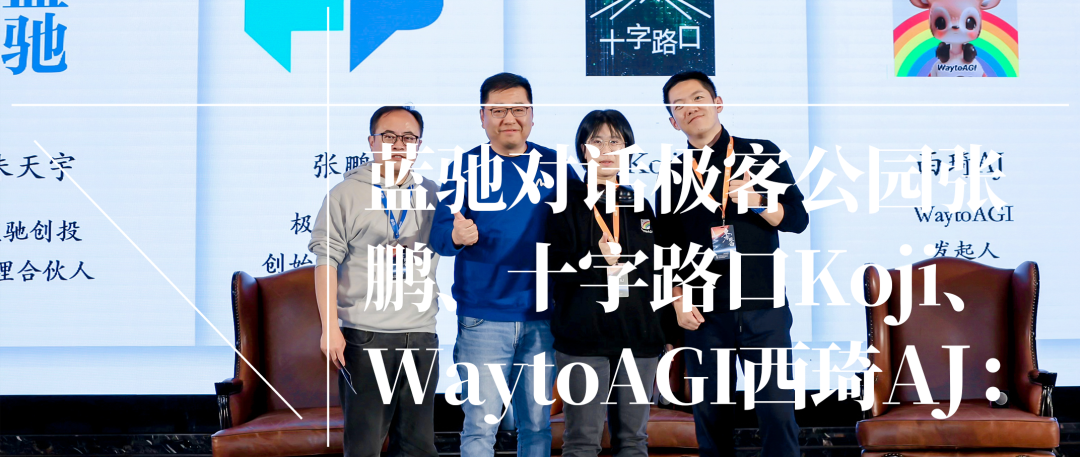 BlueRun in Conversation with GeekPark's Peng Zhang, Crossing's Koji, and WaytoAGI's Xiqi AJ: "New Species" and "New Ecosystems" Under the AI Wave