BlueRun Ventures Leads Violoop's Hundreds-of-Millions-Yuan Funding Round to Build Personal Full-Context Platform and Self-Evolving System

Integrating a Desktop Agent with Existing Computers
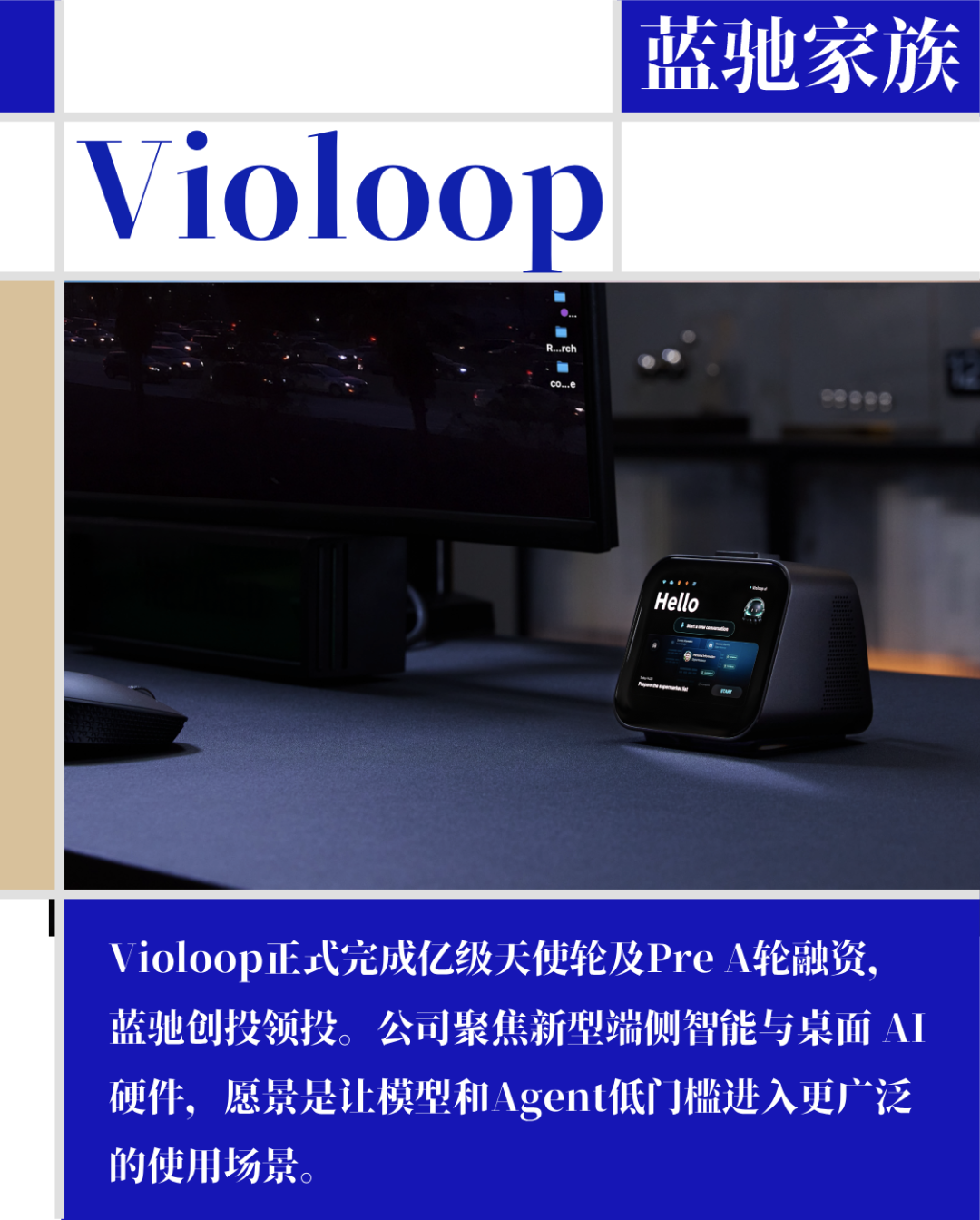
Violoop recently completed a nine-figure angel and Pre-A funding round. BlueRun Ventures led the round, with participation from other prominent industry investors and strategic backers. Across the company's five funding rounds to date, BlueRun Ventures is the largest cumulative investor.
Founded by a team of serial entrepreneurs born in the 1990s, Violoop is led by CEO Jialin He, who brings extensive overseas startup and team management experience alongside technical expertise and commercial acumen. CTO King Zhu previously led consumer-grade circuit design at Microsoft in the United States. The company focuses on novel edge-side intelligence and desktop AI hardware, with a core technical architecture built around edge model deployment, efficient inference, and system self-evolution, Proactive Harness Engineering, and Computer Use. Its vision is to lower the barrier for models and agents to enter broader usage scenarios.
The company's first product is a lightweight intelligent desktop device, set to launch soon on Kickstarter and domestic platforms. The device captures computer visuals via HDMI and performs keyboard and mouse operations through USB, plugging into users' existing computers for zero-cost adoption. It features an edge computing system and automotive-grade security chip, creating a continuously self-evolving personal intelligent assistant that prioritizes privacy and security.

BlueRun Ventures has been closely tracking the synergistic development of foundation models and downstream applications. 2026 is widely regarded as "the year of Harness Engineering" — deep collaboration between base models and harness frameworks has significantly lowered barriers to user adoption, while personalized context and system self-evolution capabilities deliver more efficient and refined user experiences.
The Violoop team combines expertise in edge-side model deployment and training, with substantial iteration and innovation at the system level. Both founders are serial entrepreneurs who have partnered for years, bringing rich experience in complex project management and global product operations. We believe Violoop, through its unique insights and AI-native rapid iteration methodology, can become the defining company for a new category of AI products.

Violoop is tackling the question of how AI continues to grow after it's delivered to users. The company's thesis is that foundation models are becoming an ever-strengthening form of public intelligence; what's truly scarce in the next phase isn't merely larger models, but the longitudinal experience that forms around a specific individual — what this person cares about, how they judge, how they get work done, and which approaches have proven effective through real outcomes. "Foundation models have learned the world, but they haven't learned a person yet. What Violoop aims to do is let the agent grow through working alongside you," said founder Jialin He.

Violoop's first product is a $399 desktop device. It captures computer output via HDMI and performs keyboard and mouse operations through USB, working with existing computers without requiring users to switch operating systems or waiting for individual software applications to open new interfaces.
Behind this lies a deceptively simple but critically important choice.
Fifty years of personal computing have left millions of software applications, interfaces, and workflows, all designed for human eyes and hands. The common industry path for getting AI into this software is to wait for applications to open APIs, then adapt and integrate one by one. But the software world keeps changing, and vast amounts of specialized software, internal systems, and long-tail tools were never built with agent interfaces in mind.
Violoop chose to have AI learn the human interface first: seeing what users can see, using the keyboards and mice that people use, and completing authorized work across existing software.
Thus, Violoop isn't another computer that requires migrating work onto it, but rather a second user for the computer you already have. When you're at your desk, it can understand the work happening; when you step away, it can continue preparing and executing tasks you've authorized.
The value of this continuous presence goes beyond "remote control" or "auto-clicking." Only when a system can see how work happens across applications, sessions, and time can it obtain the complete context needed for a personal agent to keep growing: where a task started, what judgments were made along the way, where it failed, and how the user ultimately corrected it.

In academic research, recursive self-improvement, continual learning, and AI for AI are receiving growing attention. Much work attempts to have AI automatically generate code, improve algorithms, design experiments, and even optimize next-generation AI systems.
Violoop doesn't try to solve architecture-level self-evolution on a desktop device, nor does it describe "self-evolution" as a black-box process that can expand indefinitely divorced from human goals.
What it pursues is a clearly scoped, personalized path: around a user's real work, letting the agent remember experiences, correct execution, and gradually sediment repeatedly validated practices into more stable personal capabilities.
This path unfolds across three continuous stages.
Stage One: First Remember Facts About You
The first layer of capability Violoop has delivered is multimodal long-term memory.
After user authorization, the device can extract work-relevant information from daily screen activity, building a text-and-image personal knowledge base. It doesn't merely save screenshots or conversation logs; it periodically reorganizes memory: merging duplicates, correcting outdated information, and re-establishing connections between people, projects, files, and events.
More importantly, this layer of growth is visible to users. They can open the memory vault to see how the system currently understands them, correct errors, and delete content they no longer wish to retain.
In internal testing by Violoop's founding team, the system once gradually built understanding of product launch timelines, project progress, and multiple company metrics through long-term observation, without being explicitly told.
Unlike simply calling general models in the cloud, Violoop has trained and deployed specialized models for memory extraction and reorganization, enabling personal memory formation and management in a more controllable environment.
But remembering a person doesn't mean knowing how to work for them. Memory answers "what happened"; a true personal agent must also learn "how this work should be done."
Stage Two: Begin Learning Your Work Methods
Violoop's second layer of growth occurs in the execution framework — the agent's harness.
Traditional automation typically saves a fixed script: open this page, click this button, fill in this field. Once software interfaces change, task conditions shift, or exceptions occur, scripts easily break.
Violoop seeks to accumulate not a recording of clicks for one task, but reusable methods for completing this type of work: where users typically get information, how content moves between multiple applications, what to trust when conflicts arise, which steps can be completed early, and which decisions must wait for user confirmation.
These experiences are saved as workflow memory, skills, and execution paths. When encountering similar tasks next time, the system no longer plans entirely from scratch, but calls upon formed capabilities and adjusts according to new task conditions.
Currently, Violoop's workflow memory and skill accumulation are already operational; the closed loop where the system automatically modifies execution methods based on task success/failure and user corrections is being continuously engineered.
This layer determines whether Violoop can move from "knowing many things about the user" to "genuinely getting better at working for the user."
Stage Three: Turn Validated Experience into Work Instinct
The third layer of growth occurs in model weights.
An agent can save experience in external memory, retrieving and reasoning each time a task arises. But if certain judgments have been repeatedly adopted, validated, and corrected by a user, the system needn't forever reason from scratch at the same high cost.
Violoop is using real work trajectories accumulated in the memory vault — including operation sequences, decision processes, task outcomes, and user corrections — for personalized post-training, letting a portion of stable experience migrate from external memory into model parameters.
This can be understood as a personalized "slow thinking distilled into fast thinking": judgments that initially required extended reasoning gradually become faster, more natural responses after repeated validation.
Violoop has already completed the full pipeline from capturing work trajectories, building personal memory, to using experience for personalized training and incorporating it into model weights, and is now engineering this capability into production systems. 26 TOPS of edge-side compute provides the foundation for continuous perception, memory, local inference, and personalized computation; more complex reasoning tasks are routed to cloud-based large models. Edge and cloud don't replace each other: the cloud provides the capability ceiling of general intelligence, while the edge is responsible for sedimenting longitudinal experience around a person. As engineering progresses, more personalized capabilities will be completed directly on device, so that the model not only understands the user when calling memory, but also begins forming this person's judgment preferences and work habits at the parameter level.
This is the most critical leap in Violoop's self-evolution roadmap: from "external memory understands you better" to "the model itself becomes more like you." The company first focuses on personal domains with the greatest user value and commercial viability, stably distilling a person's repeatedly validated real-work experience into a personal model. It isn't retraining a general foundation model on the edge, but building a personal experience layer atop the foundation model that no public model can naturally possess.

When memory, workflow, and personalized model connect, an important shift occurs in agent behavior: it begins preparing work before the user speaks.
This proactivity isn't sending a few more reminders, nor setting fixed rules based on calendar entries. Truly valuable proactive behavior requires the system to simultaneously know what's happening now, how this person handled similar situations in the past, which preparatory steps are reversible, and what timing of intervention won't cause disruption.
Violoop calls this capability artificial intuition.
Human intuition isn't a mysterious gift, but rapid judgment compressed from vast experience. The same applies to agents: only after experiencing enough real tasks, understanding a person's preferences and boundaries, and continuously receiving task outcomes and corrections, can it possibly prepare the right things at the right time in advance.
For example, when a new work request arrives, Violoop can organize relevant information, draft responses, update spreadsheets, or complete other reversible steps based on the user's past project materials and handling patterns, with the user only needing to review and decide at the end.
Proactivity should also be measurable. Violoop plans to validate whether the system has genuinely formed more accurate personal judgment — rather than merely accumulated more data — through metrics including adoption rate of proactive preparation results, number of manual modifications, completion time for repeated tasks, and depth of tasks users are willing to delegate.

An increasingly proactive agent capable of operating real software also raises an unavoidable question: if the system misunderstands, who has final authority?
Violoop believes capability boundaries and trust boundaries must grow in tandem.
The device uses an independent security chip to manage the execution side, isolating key authorization mechanisms from perception and reasoning systems. For irreversible operations such as sending, paying, deleting, and submitting, the product is designed to require final confirmation through a physical button. The system can understand, organize, and prepare in advance, but the last irreversible decision remains with the human.
This isn't to limit the agent, but to enable a more proactive agent to be trusted over the long term.
Permission prompts in pure software interfaces can be updated, hidden, or accidentally triggered; a visible, touchable physical confirmation action establishes a more stable mental model for users: the system can keep learning, but permissions don't automatically expand alongside capabilities.
"Understanding grows; authority never moves," said founder Jialin He. This is Violoop's fundamental product philosophy for personal agents, and another layer of value for hardware beyond perception and compute.

Traditional consumer hardware typically reaches peak capability at delivery to users, with functionality added mainly through manufacturer updates thereafter. Violoop wants to invert this relationship: product delivery isn't the endpoint of capability growth, but when personalization truly begins.
Commercially, this also means Violoop doesn't want to be merely a company that sells desktop devices.
The device is the first node for a personal agent to enter real work environments. Upon it can continuously grow personalized services, reusable skills, workflow ecosystems, and deeper partnerships with PC manufacturers and enterprise environments. Hardware sales prove users are willing to pay for a defined product; long-term value comes from whether the system can keep improving with use and gradually become an irreplaceable layer in the user's work.
Violoop's moat isn't ownership of users' private screen data. Raw personal data should belong to users. What the company truly needs to accumulate long-term is the learning system that turns experience into capability, the mechanism for evaluating real tasks, the cross-software execution framework, edge-side personalization efficiency, hardware-level permission architecture, and a skill ecosystem that expands under explicit user authorization.
As foundation model capabilities grow stronger and calling prices drop, all companies can access better public intelligence; but they won't automatically gain a person's history, feedback, work methods, and trust. Foundation models provide public intelligence; Violoop seeks to build personal experience. The stronger and cheaper models become, the more valuable the personal experience layer becomes.

Today, when the industry discusses self-evolution, it often points to code generation, model optimization, and automated research in laboratories. This work may change how AI creates next-generation AI, but remains distant from ordinary users.
Violoop has chosen another path: not debating the ultimate academic boundaries of self-evolution, but first turning it into a product experience that users can see every day.
Users can open the memory vault and see how the system understands them; observe how a skill forms from multiple tasks; compare whether similar work is completed faster and more accurately on day 1 versus day 30; and correct, delete, or reject at any time. Growth isn't a slogan happening backstage, but a process that should be observable, evaluable, and intervenable.
This is also the sufficiently difficult and sufficiently rewarding problem Violoop seeks to solve: letting AI keep growing through real work, while keeping ultimate authority in human hands at every step of capability growth.
If this direction proves valid, every computer in the future may have a second user.
It doesn't become smarter because manufacturers release new versions, but by growing through working alongside you; what it preserves isn't merely what you've done, but gradually forms a work model of how you would do things.
Foundation models have learned the world. Violoop lets AI begin learning a person.
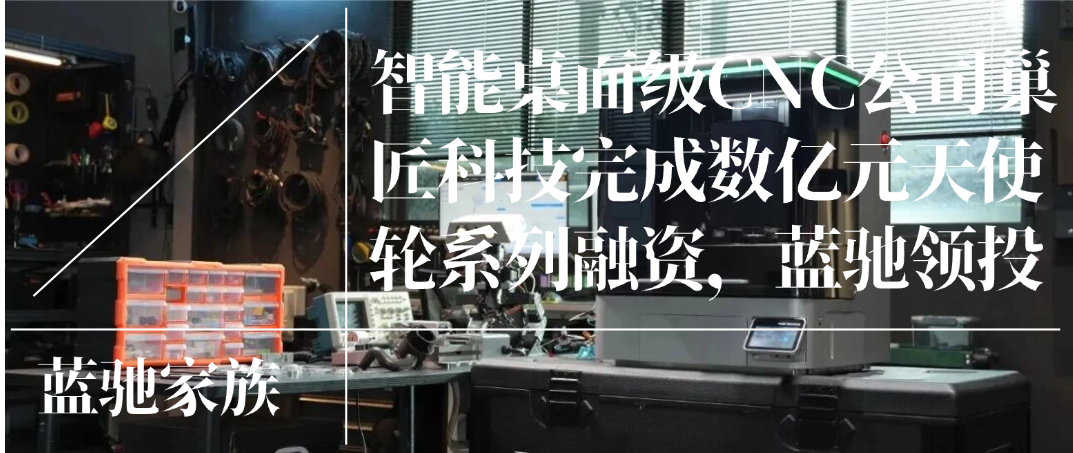
BlueRun Ventures Leads Nine-Figure Angel Round Series for NestCraft, Desktop CNC Enters Era of AI-Popularization | BlueRun Ventures
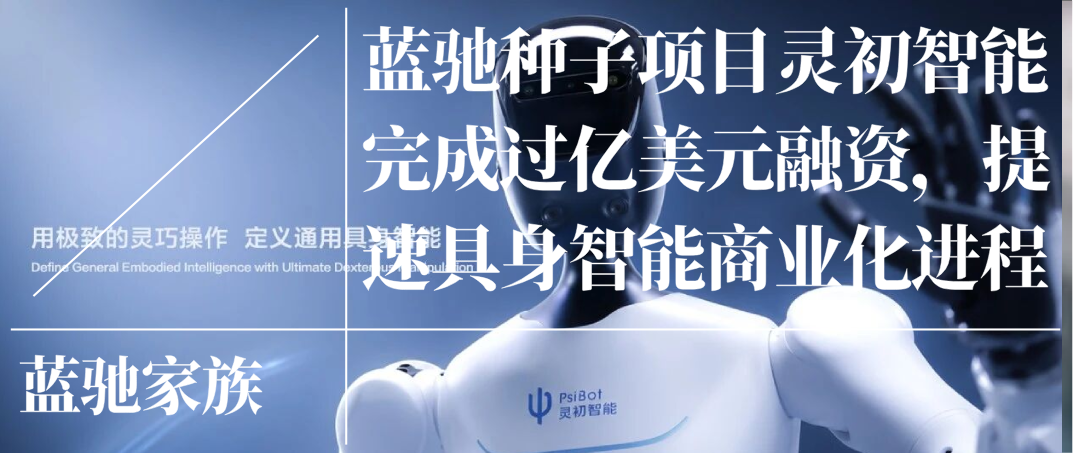
BlueRun Seed Project Proto-Sentient Intelligence Completes Over $100 Million Funding Round, Accelerating Embodied Artificial Intelligence Commercialization | BlueRun Ventures

Stepping Into Reality, Robots' New Odyssey | BlueRun WRC Observations