White Rhino Closes $100 Million Series C, Extending Lead in Autonomous Freight | Linear Portfolio
Accelerating the world's transition to the era of driverless vehicles.
y'x

Recently, L4 autonomous driving company White Rhino announced the completion of its Series C2 funding round, bringing the total Series C raise to $100 million.
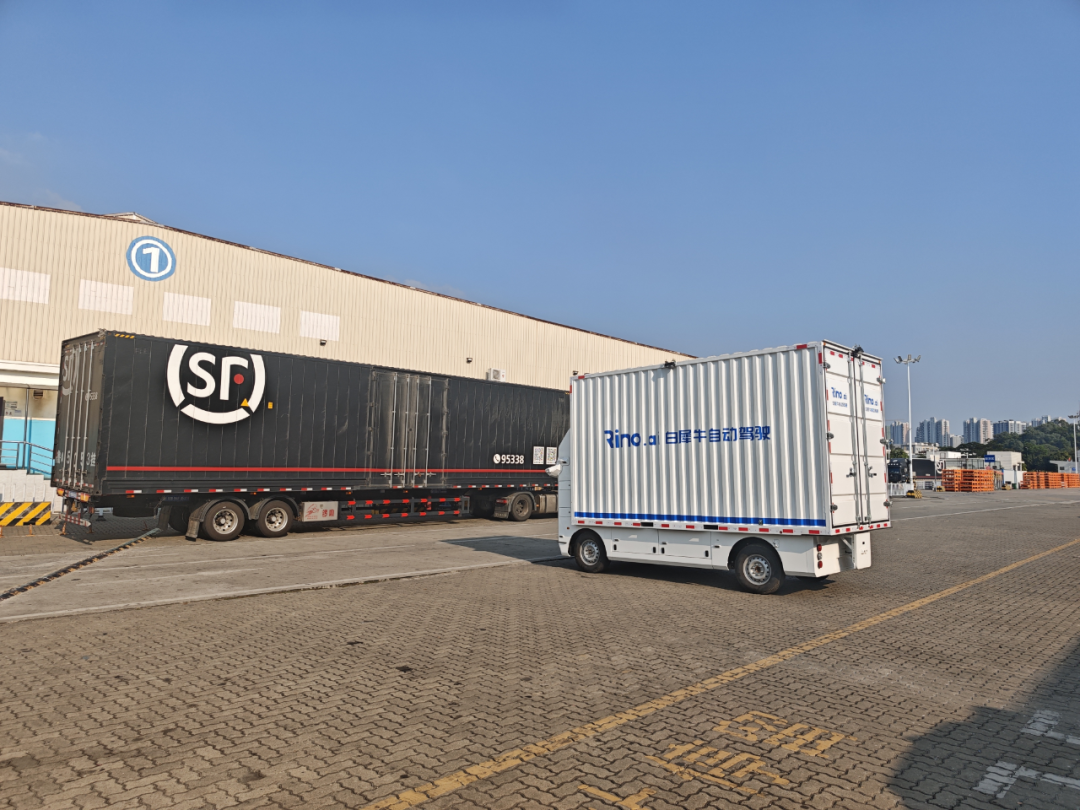
To date, White Rhino has cumulatively delivered over 5,000 unmanned logistics vehicles and operates in more than 200 cities nationwide, with partnerships established with SF Express, China Post, JD.com, SF Same City, Lalamove, Taobao Instashopping, and other enterprises.
Linear Capital led White Rhino's Pre-A round and has continued to follow on across multiple subsequent rounds.
Recently, global leading L4 autonomous driving company White Rhino (Rino.ai) officially announced the completion of its Series C2 funding round, bringing the total Series C raise to $100 million.
The Series C2 round was led by Hidden Hill Capital, with follow-on investments from Xiangtan State-owned Assets, Hunan Chasing Capital, South Korea's Woori Financial Group, and Bozheng Capital. Proceeds from this round will focus on advancing L4 end-to-end technology and physical AI capabilities, expanding the urban operations network, and deepening ecosystem collaboration with industry partners — running the full closed loop of technology, product, operations, and ecosystem to solidify long-term competitiveness.

White Rhino's successive funding rounds have seen continued participation from technology investment institutions and industrial capital, with collaboration gradually extending from the capital level to product R&D, business operations, and industrial ecosystems.
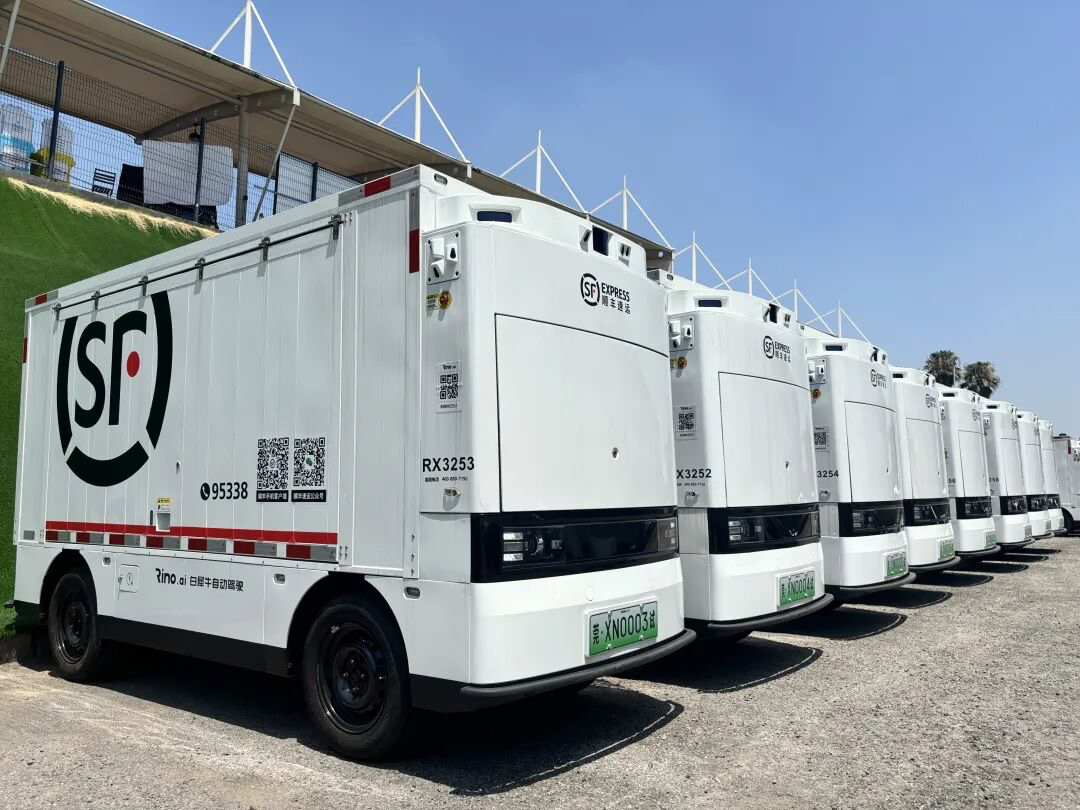
White Rhino's Series B round was led by SF Express. Since then, White Rhino's unmanned vehicles have progressively entered SF Express's delivery network and transfer hub system, validating trunk-line connections, operational efficiency, and cost structures against real business orders. Since its initial investment, SF Express has made three consecutive follow-on investments.
The dual-cage self-unloading vehicle jointly developed by both parties is now operational in SF Express transfer scenarios, capable of automatically completing transfer cage loading and unloading. As a result, their collaboration has expanded from unmanned transportation to transfer operations, validating the practical application of physical AI in logistics scenarios.
Series C lead investor Hidden Hill Capital comes from the Prologis ecosystem, with a long-term focus on logistics real estate, smart logistics, and modern supply chains. Leveraging Prologis's logistics infrastructure, warehousing parks, and industrial resources, White Rhino and Prologis Group are collaborating on scenarios including park unmanned delivery and in-facility logistics, advancing commercial validation through actual operations and exploring cooperation opportunities across regions and overseas markets.
In this round, Hidden Hill Capital, Xiangtan State-owned Assets, Hunan Chasing Capital, Woori Financial Group, and Bozheng Capital joined as investors, encompassing industrial capital, local state-owned assets, overseas financial institutions, and financial investment institutions. The participation of these diverse investor types provides White Rhino with additional resources for subsequent technology R&D, regional operations, and industrial partnerships.

The premise for capital's willingness to make heavy bets is that the technology and products have been validated. In the L4 autonomous driving track, White Rhino has simultaneously cracked three links: algorithms, product definition, and fleet delivery.
At the algorithm layer, the main thread is mapless and physical AI. The mapless solution eliminates reliance on high-definition maps, enabling city-wide deployment with standard navigation maps. In 2026, White Rhino's RX mapless solution has already launched operations across multiple provinces and cities including Shandong, effectively reducing per-vehicle costs and accelerating the pace of city deployment. The value of mapless isn't showmanship — it's scalability: without waiting for an HD map to be drawn, vehicles can enter any city.
Physical AI represents the extension of capability boundaries from autonomous driving to Embodied Artificial Intelligence. Single-vehicle intelligence enables all-weather stable driving; fleet intelligence enables cross-scenario peak shaving and valley filling through cloud-based dispatch; Embodied Artificial Intelligence enables vehicles not just to run, but to work. White Rhino's dual-cage self-unloading vehicle, first deployed in SF Express transfer scenarios, is precisely the manifestation of this already-landed capability.
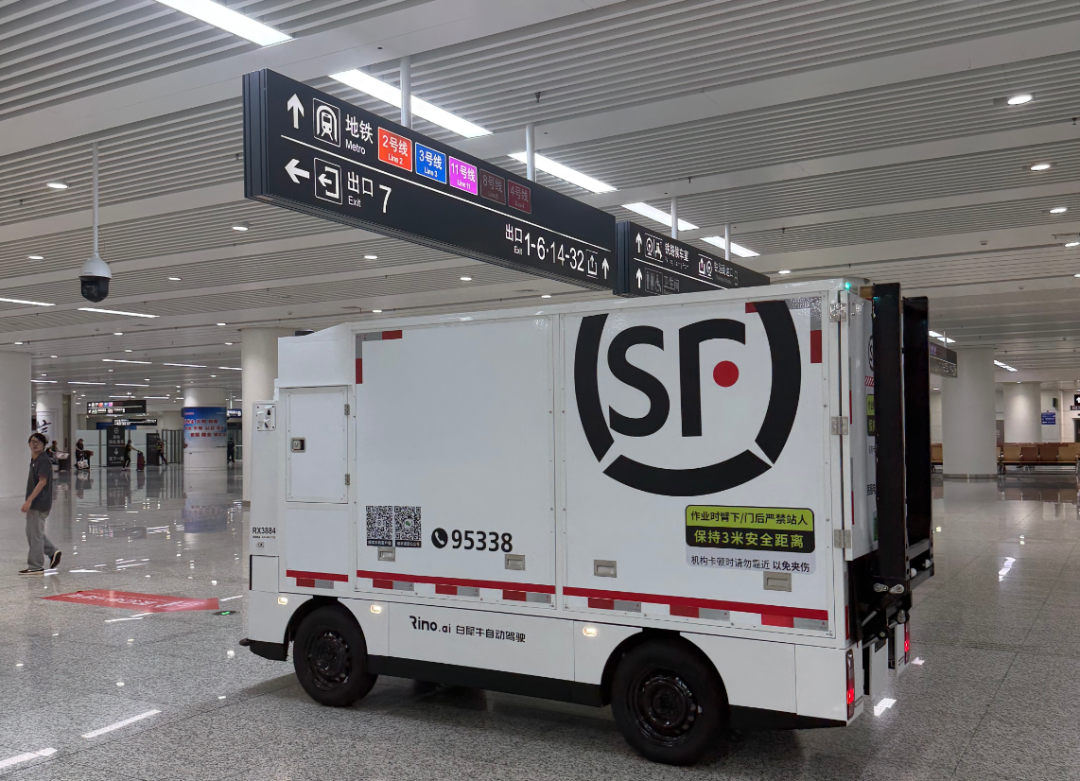
At the product layer, it's a complete matrix covering all urban delivery scenarios. White Rhino RX, the industry's first fully automotive-grade RoboVan: developed in 18 months, with an 8-year, 300,000-kilometer design life, 100% automotive-grade components, meeting thousands of component and vehicle-level standards, and validated through rigorous environments including extreme heat and extreme cold. Since its launch in April 2026, RX has delivered thousands of units, confirming White Rhino's stable mass production and delivery capability.
White Rhino R24, one of the industry's first 24-cubic-meter large-capacity light-duty unmanned trucks, benchmarks against small and medium-sized box trucks. It has been progressively delivered to customers for operations and is undergoing public road testing in select cities, filling the market gap for large-item transfer within parks, warehouse-to-store distribution, and short-haul high-capacity urban delivery. RX and R24 together form a product portfolio covering all types of urban freight delivery needs.
At the commercial layer, it's a dual-track path of "technology licensing + fleet services." Rino Inside integrates the full-stack software suite validated across tens of millions of kilometers of operations into a standardized L4 hardware-software integrated solution, open for licensing to OEMs and logistics equipment companies — this is White Rhino's upward technology export.
Rino FaaS (Fleet as a Service), meanwhile, delivers capacity directly to customers. Vehicles, dispatch, operations, and iteration are all handled by White Rhino; customers settle by actual waybill. For customers, what they get isn't a machine, but a 7×24 "unmanned capacity department." The logistics industry faces uneven capacity demand, so White Rhino partners with leading players like SF Express and Lalamove, leveraging cloud-based dispatch to enable dynamic switching of vehicles across different scenarios and customers — during low periods for express delivery, vehicles can shift to same-city freight scenarios, continuously improving per-vehicle asset utilization.
Algorithms determine whether you can get on the field; product definition determines whether you can mass-produce; fleet delivery determines whether you can generate your own cash flow. All three capability layers are indispensable, and White Rhino has connected all three into an interlocking whole — this is precisely the moat that's hardest to replicate.

Currently, White Rhino has established deep partnerships with logistics and retail leaders including SF Express, China Post, JD.com, SF Same City, Lalamove, and Taobao Instashopping, with cumulative deliveries of over 5,000 unmanned logistics vehicles, business coverage across nine application scenarios including express delivery and same-city freight, and normalized operations in more than 200 cities nationwide.
Specifically: in Heze, 6 unmanned vehicles handle urban distribution for Sanxin Supermarket's 30-plus stores on behalf of SF Express, with daily transport volume exceeding 100 cubic meters; in Linyi, 200 unmanned vehicles are connected to Lalamove's unmanned freight platform, providing on-demand unmanned delivery to C-end users and small and micro merchants; in Shenzhen, 300 unmanned vehicles extend to cross-city routes including Shenshan and Shenzhen-Dongguan; in Weifang, White Rhino and SF Same City have connected high time-sensitivity instant delivery for supermarkets and fresh produce.
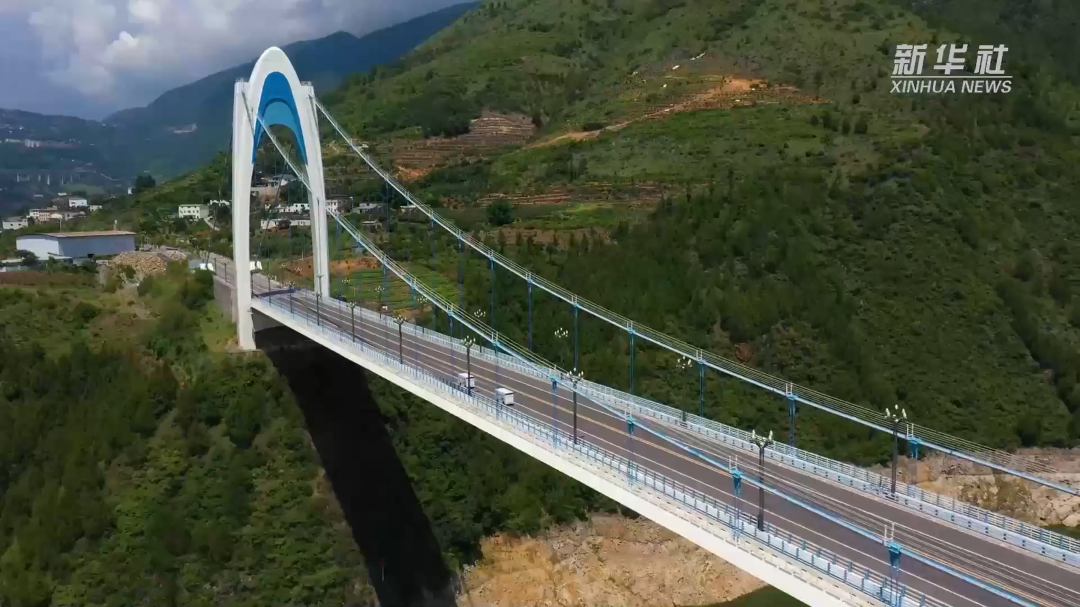
In Wushan, Chongqing, White Rhino partnered with China Post to build an air-rail intermodal corridor combining drone field collection, unmanned vehicle ground transfer, and high-speed rail express, opening up bidirectional postal routes for agricultural products going out and express delivery coming into villages, helping Wushan crisp plums and other fresh fruits reach external markets quickly.
Ecosystem building follows a clear principle: don't be a competitor to partners, only be incremental value for partners.
On the manufacturing side, it established Chongqing Xiaoxiang Zhixing Technology Co., Ltd. as a joint venture with Shineray Motors — the world's first RoboVan OEM, now in production and delivering vehicles; on the battery side, it jointly develops dedicated batteries with Guoxuan Jitai Mei (a subsidiary of Gotion High-tech Co., Ltd.); on the capacity side, it maintains deep partnerships with platforms including SF Same City, Lalamove, and Full Truck Alliance, providing 7×24 continuous capacity supply for B-end distribution and C-end instant freight.
On the regional ecosystem front, White Rhino signed an agreement with Xiangtan for a smart logistics vehicle headquarters base; jointly published the industry white paper Smart Mobility Future: Commercial Application and Scenario Reshaping of Logistics Unmanned Vehicles with SF Same City, China Transportation News, and CFLP; the "technology-scenario-policy" three-in-one landing model is being replicated in more cities.
The sustainability of the commercial closed loop is also strengthening in parallel. Through continuous technology iteration and supply chain collaboration, vehicle BOM costs are steadily declining; localized operational efficiency is continuously optimized, driving improvement in business gross margins. As deployment scale expands, economies of scale will further amortize fixed costs, with revenue quality and endogenous cash flow capability improving in tandem. External financing supports R&D investment, scenario expansion, and batch deployment, while continuously strengthening commercial operations capability progressively reduces reliance on external financing — the two form a virtuous cycle.
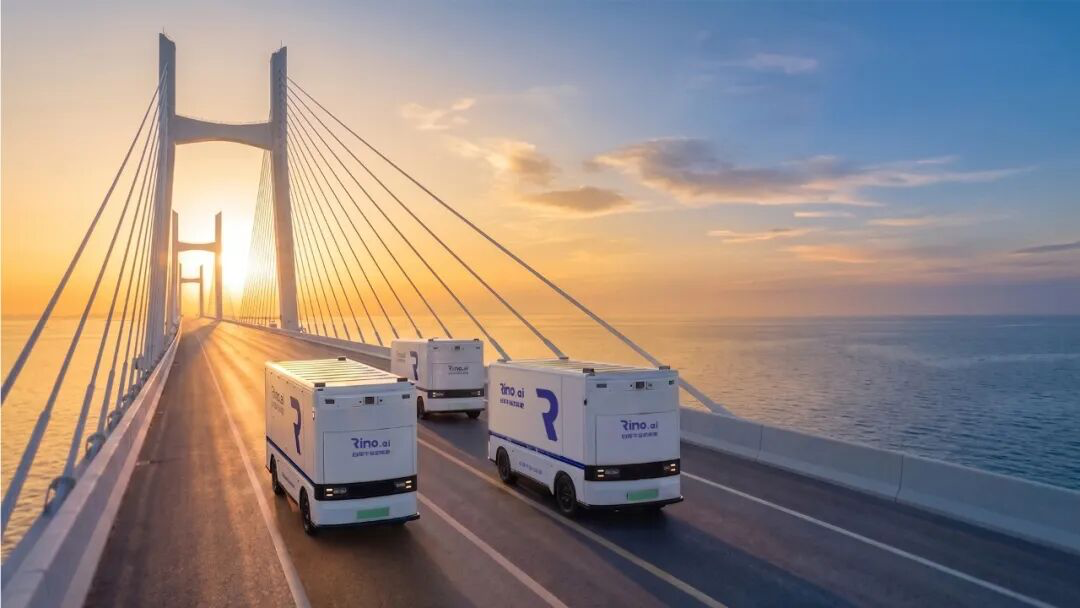
Following the completion of this funding round, White Rhino will continue advancing along three main lines: continuous iteration of L4 end-to-end technology and physical AI capabilities, enabling unmanned vehicles not just to run but to work; accelerated expansion of the urban operations network, pushing unmanned delivery from single-point pilots toward multi-city, multi-scenario, multi-customer scaled networks; and deepening ecosystem collaboration with industry partners, enabling every link in the industrial chain to maximize its respective value in this transformation.
Overseas, leveraging the cross-border resources of shareholders including Woori Financial Group, it will adapt and replicate the domestically validated and scaled autonomous driving and scenario operations system to international markets. China's unmanned vehicles should create value for the world. White Rhino will also accelerate the world's entry into the unmanned vehicle era with safe, efficient, and economical intelligent unmanned capacity.