"Yinghua Chenrui" Zhou Zhen: Solving Biomaterial Industry Bottlenecks with Unique Modification Technology and Processing Techniques | Linear Capital Portfolio Interview Series
In late December 2023, bio-based materials high-performance modification and application innovation company **Yinghua Chenrui** announced the completion of a tens of millions of RMB angel funding round.
In late December 2023, InnoBio announced it had raised tens of millions of RMB in an angel round, led by Linear Capital with follow-on investment from Bluepha. As one of Linear Capital's investments in new materials, Linear Capital recognized that bio-based materials like PLA and PHA, as single-component polymers, struggle to meet performance requirements — severely limiting downstream applications for these new plastics. PLA, currently the lowest-cost bio-based plastic with the most planned production capacity, still hasn't seen fully unlocked downstream demand due to its performance limitations. InnoBio's unique modification technology effectively addresses this bottleneck facing the bio-based materials industry. In early 2024, Linear's Portfolio Interview Series invited Dr. Zhen Zhou, founder and CEO of InnoBio, to share his experience leaving Saint-Gobain — a Fortune 500 company — to start his own business, how he accurately understands customer needs in the entrepreneurial process, and his observations and reflections on the emerging bio-based materials industry as a seasoned practitioner.
Linear's Portfolio Interview Series is Linear Capital's interview program, featuring in-depth conversations with portfolio company founders about their entrepreneurial journeys and industry perspectives, sharing stories of tech investment and tech entrepreneurship with a broader audience. For more interviews, click "Read More" at the end of this article.
Glossary of selected terms:
PLA: Polylactic acid, a novel biodegradable material made from starch derived from renewable plant resources, with good biodegradability.
PHA: Polyhydroxyalkanoates, biodegradable materials with good biocompatibility and biodegradability.
Q: Linear Capital
A: Dr. Zhen Zhou, Founder and CEO of InnoBio
Q: Dr. Zhou, please introduce yourself and tell us when you first thought about starting a company.
A: I did my bachelor's, master's, and PhD at Shanghai Jiao Tong University, all in materials science. I've always enjoyed exploring new things. My research topics covered mechanistic studies of traditional materials, synthesis and performance modification of biomaterials, and preparation and study of carbon nanotube composites. After completing my PhD, I wanted to enter industry and joined Saint-Gobain, a French Fortune 500 company. My experience there was quite comprehensive — I covered roles spanning from R&D to production management (R&D manager, product director, sales director, channel general manager). It was a good platform that gave me a thorough understanding of how a company operates.
Even while in industry, I remained very focused on the bio-based materials sector and had always wanted to start a company in this space. So after leaving Saint-Gobain, I made some attempts, and finally decided to go all-in on entrepreneurship in June 2022.
The entrepreneurial seed was planted earliest in 2002, during my master's at SJTU. My research topic then was PLA synthesis and performance modification — I was among the very first in China to work on bio-based material applications. Although PLA's performance and application development were still immature at the time, I believed that bio-based materials represented by PLA would inevitably transform the traditional petroleum-based materials industry in the future. I continued tracking the industry's development while building up relevant technical capabilities.
Real preparation for entrepreneurship began around 2021. I observed quite keenly that the industry's bottleneck had gradually shifted from upstream raw material production to high-performance material development, modification, and large-scale commercial application. Our co-founding team had substantial technical accumulation in this area — both in underlying material performance platforms and in application understanding and product development. I felt the timing was right to come out and do something meaningful, to push this industry forward.
Q: Why has bio-based materials attracted attention in recent years, and what exactly is the bottleneck you mentioned?
A: Many bio-based materials weren't developed recently — some have 20-30 years of history. But having a material without suitable application scenarios to scale it up means it stays in the lab.
2019 and 2020 were critical inflection points for this industry. Domestically, China's plastic ban aimed at eliminating white pollution was a crucial catalyst — it made everyone pay more attention to bio-based materials and think about how biodegradable materials could solve this problem.
Another major driver was global attention to dual carbon and carbon integration goals. In this direction, bio-based materials represent an excellent and important solution — primarily because many bio-based materials inherently use renewable biomass from nature as raw materials, and their entire lifecycle, from production to use, generates far lower carbon emissions than traditional petroleum-based materials. Thus, driven by policy and market demand, the bio-based materials industry has seen substantial development.
Of course, there are significant challenges in using these materials. The main issue is that current bio-based materials have very homogeneous molecular structures — whether PLA or PHA, they are linear straight-chain polyester structures, leading to very limited and constrained inherent material properties. So currently they cannot, like traditional petroleum-based materials, satisfy most application requirements on their own. Targeted modification technologies are needed to enhance bio-based material performance and enable faster downstream market adoption and scaling.
Q: What is modification technology? What are the common modification technologies for PLA and PHA currently on the market?
A: Modification technology uses physical, chemical, mechanical, and other methods to improve or add functionality to existing materials — including appearance, transparency, density, processability, mechanical properties, chemical properties, aging resistance, hardness, thermal properties, flame retardancy, barrier properties, and cost performance. It also enables modified materials to function in special electrical, magnetic, optical, or thermal environments.
The most common modification technology for PLA and PHA on the market today is physical blending — uniformly mixing two or more materials to enhance performance.
Its advantages include maintaining PLA and PHA's original excellent properties while targeted improvements address specific defects or enhancement needs. Physical blending also has relatively low processing costs, convenient processes, and easy operation. Hence it's currently the most widely used modification technology, with several sub-categories. To use an analogy: physical blending modification is like pastry-making — through recipe combinations plus simple processes, you get different flavors and varieties of pastries.
However, physical blending has limitations. For example: First, it relies on formula trial-and-error and accumulated experience. Many solutions are not optimal, leaving substantial room for improvement.
Second, most physical blending technologies don't design from underlying mechanisms and microstructural levels. This creates obvious performance ceilings — once properties are improved to a certain degree, further breakthroughs become difficult.
Third, many current physical blending methods target improvement of a single property. When customers need multiple materials with simultaneous multi-property enhancement, many traditional physical blending approaches fail.
Q: What benchmark cases exist in the industry where modification technology has successfully achieved commercialization, proving the tremendous value of bio-based materials?
A: The PLA straw is a very typical example that people are familiar with. Good-quality PLA straws are now widely available, replacing plastic straws with straws made from starch extracted from corn, wheat, cassava, and other plants — fully biodegradable. But just two years ago, PLA straw technology was immature. Lacking good modification technology, PLA straws placed in hot beverages would quickly deform and become unusable. Through considerable technical improvements and the development of appropriate modification technologies and processing techniques, we now have high-quality, environmentally friendly PLA straws. In the industry's early stages, very few companies could achieve this modification technology.
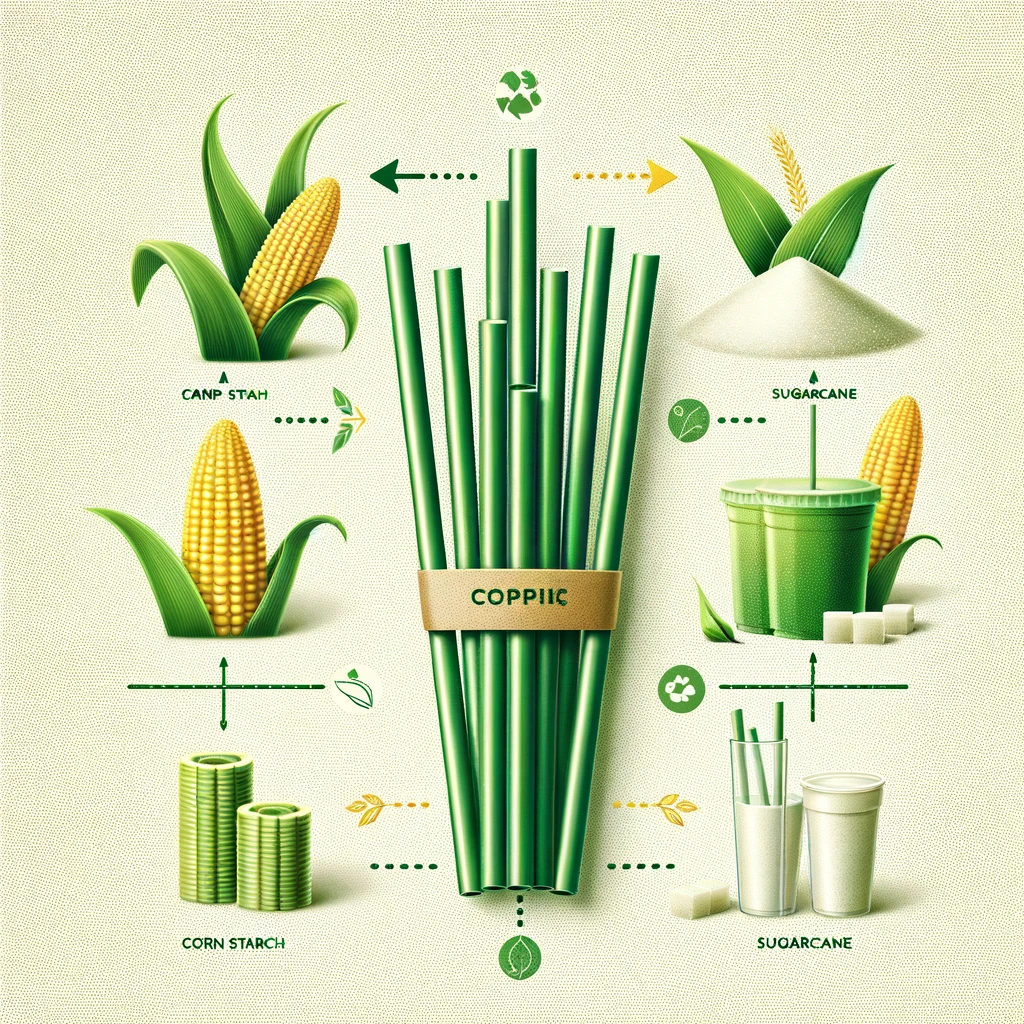 (PLA straw composition analysis, AI-generated image)**
Q: What is InnoBio's technical advantage?
A: Relatively speaking, InnoBio's technical development approach absorbs the strengths of physical blending modification. Based on systematic foundational mechanism research into multiple bio-based materials including PLA and PHA — covering both single-property mechanisms and multi-property interaction mechanisms — we can effectively control microcrystalline structures and interfacial reactions. This enables greater performance improvement space and more precise multi-property control.
Additionally, InnoBio's technology has another distinctive feature: we excel at combining multiple bio-based materials through our unique modification methods and processing techniques, achieving excellent compatibility between different bio-based materials. Along with controllable microstructures and interfacial reactions, we obtain solutions that combine multiple bio-based materials' characteristics while matching customers' specific needs.
Q: Are there many companies on the market capable of similar technical levels?
A: Not many. From the perspective of deep foundational mechanism research, some university teams are doing related research, but much of their technology remains in the lab — they currently lack mature capabilities for scaling up to production and final products. Established bio-based material modification companies mostly still use physical modification technologies. Deep mechanism research and customized development for specific customer needs are scarce capabilities.
Q: You decided to start your company in mid-2022, when the capital market was already cooling. Were you concerned about fundraising and similar issues?
A: We wanted to do something right, and believe that if you enter an industry at its peak, your timing often won't match the industry's development cycle. So we were confident in bio-based materials' future growth and decided to start based on seeing the industry's problems at its starting point.
When we first started, it was still during pandemic controls — the overall fundraising and talent markets were very inactive. Scheduling in-person meetings for deep conversations was quite difficult, so we did encounter many challenges in fundraising and team building. We found resources and methods to address these. For team building, through prior industry accumulation and connections, we quickly identified and attracted desired team members. My personal experience in early team building is that establishing good consensus around the mission's goals is essential — shared vision matters tremendously, especially when the market is down. Fortunately, our early technical manager and product manager joined within 1-2 weeks of initial contact, which was quite efficient. The key was rapidly building consensus on entrepreneurial goals during conversations while igniting their inner entrepreneurial passion. Transparency was also important — I communicated honestly about potential risks and difficulties. When consensus is built on these fronts, talent acquisition flows smoothly. We even had one employee confirm after just one meal.
Q: What impressed you during investor meetings, and how did you connect with Linear?
A: We really started preparing our pitch deck and reaching out to investors in late November to early December 2022, right during the first wave of infections after reopening. We'd often schedule meetings only to have the other person fall ill. But what deeply impressed me was how dedicated the investors I met were — many powered through fevers and sore throats to keep conversations going, and these discussions typically lasted several hours.
I connected with Linear through friends in the investment circle. My first conversations with Neil Zeng, partner at Linear Capital, and Zhou Tianyi, investment director, happened after the 2023 Spring Festival holiday, in a hotel lobby — we talked for an entire afternoon. That left a deep impression because previously when meeting investors, I'd typically see one or two people from the firm. That day we had three people from Linear, and we went deep on technical and business aspects very thoroughly. From first meeting to formal confirmation, my personal feeling was that Linear, as an early-stage investment institution focused on frontier technology plus industry, is very professional with strong learning capabilities. They could go from unfamiliar to conversant with specialized material modification technologies quickly, providing good thinking and suggestions, while maintaining sharp foresight on industry development. During our fundraising process, Tianyi conducted market visits and customer interviews to rapidly understand industry status and pain points, and later offered many constructive ideas when discussing business models and company development paths. After confirming investment, Linear's post-investment services helped connect me with resources — talent recruitment, legal support — and both online and offline activities greatly expanded my thinking and enabled cross-domain collaboration.
Actually, I did some research before contacting Linear, and my experience matched my expectations. What differed from my imagination: previously I'd always met investment institutions in conference rooms, relatively formal settings. But my first contact with Linear's team was in a hotel lobby — the conversation atmosphere was more relaxed and casual.
The two main factors in deciding on Linear as lead investor: first, Linear is a well-known early-stage tech investment institution with excellent market reputation. Second, through my discussions with Neil and Tianyi, we had many debates and different ideas, but we established considerable consensus on major directions including the company's business model and future development.
Q: What was Linear Capital's investment thesis for InnoBio?
Zhou Tianyi: First, it solves a materials-to-application problem — currently, this is a difficult problem with sufficient market space. Modification technology is crucial for the bio-based materials field. We also conducted interviews across sub-industries to more deeply analyze pain points in different application scenarios. Some judgments at the time — for example, that modification technology's first priority application would be 3D printing as the most rigid demand, followed by paper lamination scenarios after regulatory restrictions — have largely played out as expected.
Second, we wanted to understand whether PLA would become the cheapest, most likely mainstream bio-based plastic. Cost-effectiveness matters greatly in bio-based materials. We conducted extensive cost analysis and found that as production scale increases, costs have room to continue falling, with potential to reach levels comparable to traditional petroleum-based plastics, and future production capacity looks substantial. So we were quite confident.
Third was the involvement of strategic investor Bluepha. Bluepha has developed very rapidly in PHA mass production. While PHA is currently more expensive, it has unique application scenarios, and we saw possibilities for industrial synergy.
In summary, we did extensive research on this project. The final decision to invest really came down to understanding one point: the type of modification technology that Dr. Zhou's team represents is a comprehensive platform technology that can derive many application scenarios, but startups need to find appropriate entry points with relatively certain application scenarios — preferably solving rigid demand problems — to generate decent revenue. We felt Dr. Zhou's team had some such scenarios that could scale quickly, and after scaling, explore new, longer-term opportunities. This development path was very clear.
Q: What have been the major turning points since the company's founding?
A: One was industry changes. When we first started talking to investment institutions in 2022, attention focused on material synthesis and production. Many people hadn't yet seen modification technology's importance and value for the entire industry. But by Q2 2023, the industry realized the bottleneck had shifted from material supply to the need for professional modification technology to amplify application effects.
Internally, an important turning point came at the end of 2023. We rapidly built our R&D team and converted some laboratory technical accumulation into product solutions, enabling us to offer corresponding solutions in the market and start landing business — the process of technology becoming products, and products becoming commercialized goods.
Q: Regarding the productization process, are there specific timelines?
A: Development cycles differ across product pipelines and application solutions. We have very rapid solution development processes, of course based on already relatively mature technology platforms with some minor customization according to customer application needs. For example, one of our fastest product solutions was completed within two weeks and very quickly passed customer performance testing. Some solutions have much longer development cycles. Currently we have one or two products with defined development cycles of one to one and a half years, both because of difficult technical breakthroughs in product development and because product validation cycles at customers are relatively long.
Q: Most entrepreneurs say things turn out very differently from what they expected. Have you had similar experiences?
A: I have both successful and unsuccessful examples here.
Successful example: some customer needs expressed early differ from their actual real needs. This led to our first-generation product samples, while meeting their originally stated needs, being revised with new requirements during use or validation.
In such situations, we also carefully validate whether customer-stated needs are real. A successful case: through multiple communications with a customer, we continuously transformed their relatively fuzzy needs into more precise, quantified needs. We then developed corresponding products targeting these quantified performance parameters.
There were also unsuccessful cases. For example, based on our prior technical understanding, we believed a customer need could be quickly solved on our foundational technology platform. But during actual development, we found that material modification alone was insufficient because the entire product usage process is a complex system involving not just materials but also equipment and processes. When equipment and processes cannot be changed, material development often hits a ceiling that cannot be broken through.
Q: Could you detail one or two cases of solving customer pain points?
A: We've currently announced several products, concentrated in 3D printing and biodegradable lamination paper applications. In our 3D printing modified material product line, we have PLA high-speed 3D printing modified material (PF101) developed for functional purposes, PLA high-transparency toughened modified material (PT101), and specialized modification technology that maintains high-quality printing performance while effectively reducing printing filament costs. So for this market, we have both high-end functional products targeting the pyramid's peak and conventional printing filament products for larger volume with cost-reduction needs.
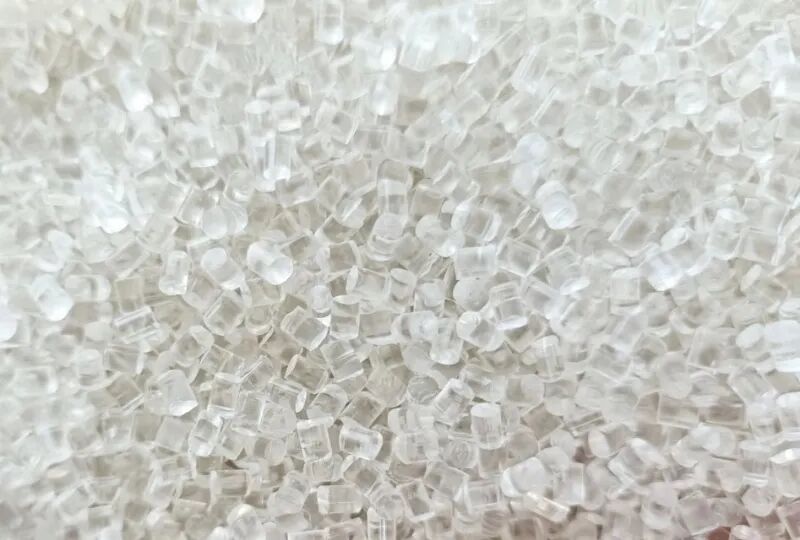 (PT101 3D printing grade PLA modified material)
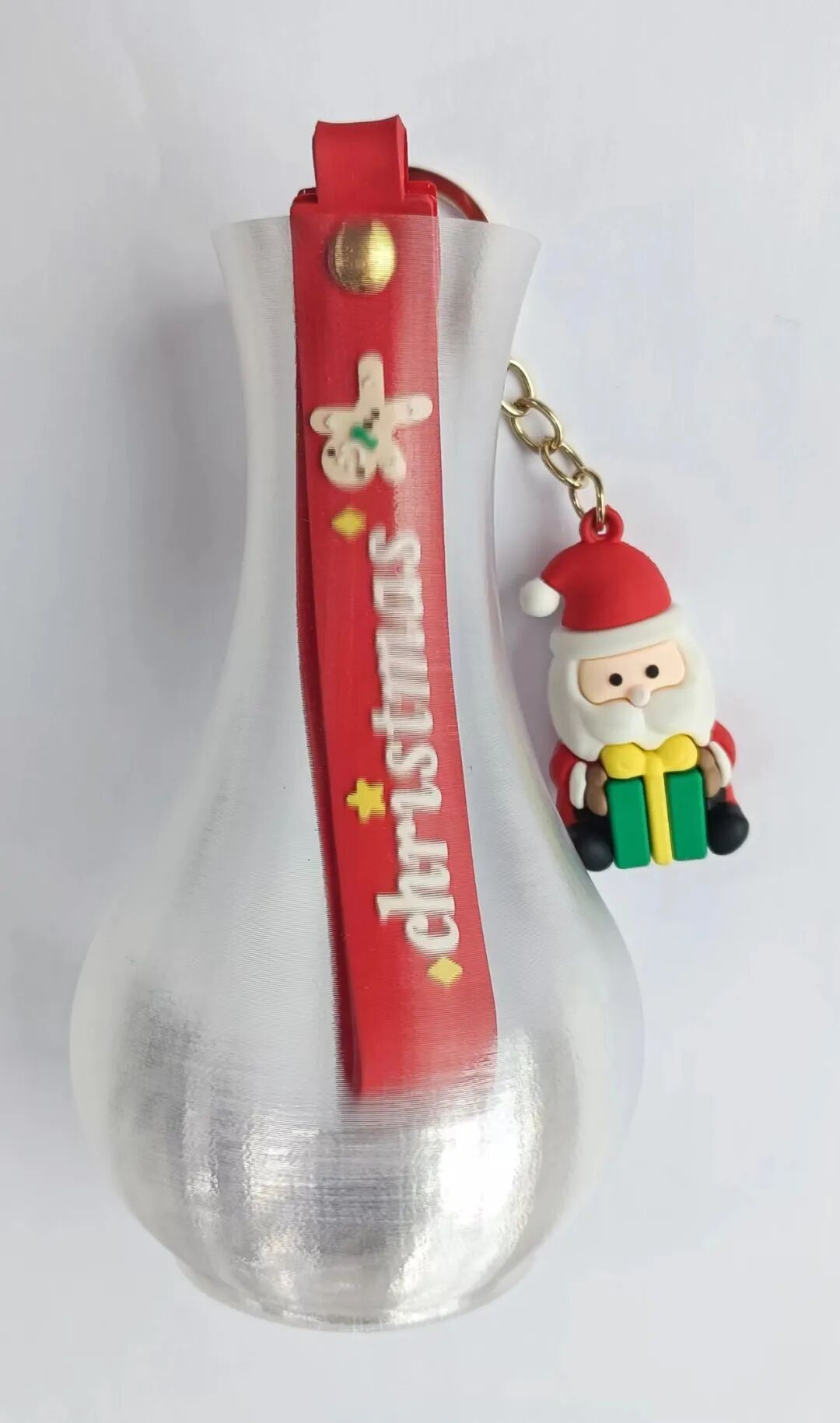 (Print result using PT101 3D printing modified material)
In biodegradable paper lamination, we recently launched CF101, a lamination-grade PLA modified material that addresses existing PLA paper lamination's low efficiency, high coating weight, and unstable lamination quality issues. It has obtained German TUV biodegradation certification and passed SGS food contact testing, with excellent biodegradation performance and food safety. It helps customers increase on-site lamination speed by 50% while reducing coating weight by 20%.
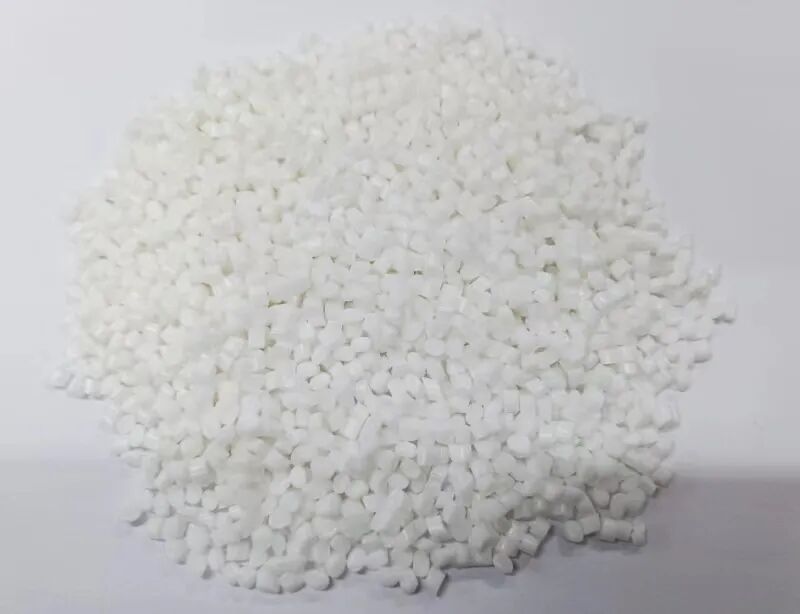 (CF101 lamination-grade PLA modified material)
Customers were quite delighted seeing such obvious effects, because they had long had this pain point and tried many other solutions without meeting their requirements. Our product worked well in their trials, even exceeding their original expectations.
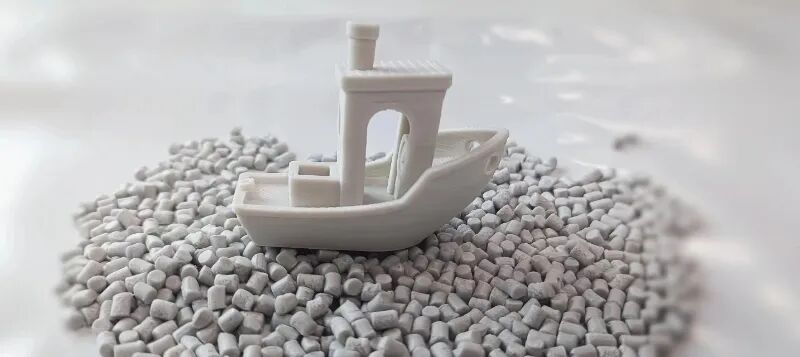 (PS101 3D printing grade PLA professional masterbatch)
Q: How do you help customers more deeply understand the value your modification technology brings them?
A: As a relatively young startup, customers sometimes approach us with skepticism — which is normal.
However, this industry has a shared advantage: because bio-based materials are relatively new, many customers struggle to find good solutions, so they often don't shut the door from the start. This gives us relatively good opportunities to try and prove ourselves.
Therefore, for us, we need to make a very good impression at the technical or service level to increase their acceptance for future collaboration and drive business realization. Our core principle is first-time customer response and developing solutions meeting customer requirements in the shortest possible time.
For example, we previously engaged with an export-oriented customer whose overseas clients had bio-based material product needs. But because his previous products and raw materials were all positioned in traditional petroleum-based materials, he didn't know much about bio-based materials. So his initial needs were relatively fuzzy.
After receiving the needs, we believed that developing toward a fuzzy target would likely produce solutions that weren't truly needed. At this point, our solution was deep involvement into the customer's most important products, understanding their export markets, standards to be met, and what their customers needed. Through this chain of analysis, we better broke down the customer's original needs into more quantified, metric-driven specifications, then delivered to the customer. The value for the customer was that he could better reach consensus with his own customers. This is what we mean by not simply meeting customer needs but systematically analyzing what they truly need, driving business to land.
After clarifying these goals, we coordinated our development resources. Because the customer's sampling timeline was very tight, we specifically did two sample runs within one week — the second sample very well met his needs. After this process, the customer's acceptance of us was very high. Including when his final products needed biodegradation certification, he invited us to provide advice.
Q: You mentioned downstream customers — what value does InnoBio bring to upstream industry players?
A: For upstream raw material manufacturers, on one hand our technical accumulation in material performance and application understanding can help manufacturers optimize existing raw material products to better meet current application needs. On the other hand, we can combine multiple materials' characteristics to bring innovative applications and achieve scale amplification — which is excellent support for upstream raw material manufacturers, helping them rapidly scale up raw material production.
Q: What are your short-term and long-term plans to drive cooperation with upstream and downstream players?
A: Bio-based materials is a relatively new industry. Currently, whether upstream raw material production, midstream modification and processing, or downstream applications, every segment is in rapid development and change. This requires us to better and more openly integrate upstream and downstream industry resources to drive healthy, rapid industry development. Precisely because of this, we've always maintained a win-win mindset. Currently we have many projects involving not just upstream raw material suppliers but also downstream customers in tripartite cooperation, jointly developing emerging application markets.
For example, we currently have a customer — an internationally renowned brand I can't name due to NDA. The specific case targets the apparel industry, where the traditional supply chain is extremely long: from materials to modification to fiber, then spinning, weaving, dyeing, and finally finished products. In this industry, promoting a new material or solution is a very long and complex system.
Many enterprises have tried pushing from upstream downward, but they often only reach one or two segments, making their promotion cycles very slow. We, together with material manufacturers and core downstream textile supply chain partners, are engaged in three- or four-party cooperation, wanting to establish bio-based materials and bio-based fibers as an emerging solution that creates new possibilities in the apparel industry.
What I particularly look forward to is that if this industry is to collaborate efficiently, there shouldn't be too many information silos. Precisely because we're an emerging industry, people are currently more willing to cooperate.
In the short term, we'll continue focusing on several major development projects underway, jointly pushing with our partners to achieve true zero-to-one breakthroughs in technology or applications. With such successful project cases, we can better drive similar cooperation.
In the long term, we'll also focus on observing the industry across all segments, identifying key points the industry needs to address. So in the future we'll also deploy in this direction — not just doing material modification, but potentially targeting industry-urgent needs in additives, tools, materials, or innovative applications, better coordinating healthy industry chain development.
Q: What markets do you currently target, and what globalization development layouts have you made since founding? What goals have you achieved, and what are your short-term and long-term plans?
A: Beyond China, our focused markets include Europe and America, as well as developed Asian countries like Japan and South Korea. From our founding, we clearly positioned ourselves as a globally developing company. The main rationale is that bio-based materials as a new industry is currently in a state of global co-development — from this perspective, if we want to become an important enterprise in this industry, we must make globalization our development direction. Since founding, we've made some globalization layouts.
First, globalized company resource allocation — whether some early company technologies or key raw materials, we select the most advanced or highest quality combining domestic and international resources.
Second, globalized application development. Beyond localized needs, many domestically produced bio-based material products ultimately reach foreign consumer markets. This requires our application development to address both domestic and foreign common needs, while considering possibilities for performance differentiation expansion in future foreign market development.
Third, globalized channel and customer development — currently for multiple applications, we're engaged in technology and product development with several globally renowned brands. Meanwhile, we're exploring and developing channels in key overseas markets.
Q: Looking back from founding to today, what reflections do you have, or what do you wish you had known earlier?
A: If I were to make a stage-by-stage summary of entrepreneurship, I actually haven't had many things exceed my original expectations. Whether resource scarcity in early stages or the time needed for technology development — I was mentally prepared for these.
What may have exceeded my expectations is how fast the market changes. As an emerging industry, it's difficult to measure development by standard annual metrics. So the requirement for us is to continuously and rapidly understand and identify application or market changes, then quickly update and evolve ourselves. This may be my most important learning from entrepreneurship to date.
Q: What methods have been effective for you in rapidly evolving and iterating, and what do you do to keep pace with market and industry developments?
A: First, expand your radar. Interact more with typical customers across different upstream and downstream segments to quickly know industry changes.
Second, have the determination to cut losses or stop losses in time — when market developments diverge from original expectations, prior investment must be stopped or adjusted; this must be done.
Third, combine external resources to better mobilize others' existing industry know-how or experience, helping the company or individual avoid detours.
To contact InnoBio, please email:
About Linear Capital
Linear Capital is an early-stage investment institution focused on "frontier technology + industry" — frontier technologies represented by data intelligence, digital new infrastructure, next-generation robotics, and new technology transformations in traditional domains (such as biomedicine, materials, energy, etc.), applied across vertical industries to substantially improve industrial efficiency, empower solutions to pain points, and complete industrial upgrading — achieving excess returns through substantial industrial value creation. It currently manages ten funds with total AUM of approximately $2 billion.
We invest primarily from angel to Series A lead, with typical investment amounts of $3-8 million or RMB equivalent per project.
To date, Linear has invested in over 120 entrepreneurial teams including Horizon Robotics, Kujiale, Sensors Data, Tezign, Rokid, Guandata, Agile Robots, and others. The combined valuation of Linear's portfolio companies is approximately $20 billion.
In the near term, Linear Capital is working to become the best "Data Intelligence Technology Fund," and in the long term, gradually build itself into the most influential "Frontier Technology Application Fund."