Synthetic biology startup **SynBioRay** (贻如生物) has raised tens of millions of RMB in funding, with **Linear Capital** leading the angel round.

Using synthetic biotechnology to cultivate 100% bio-based leather.
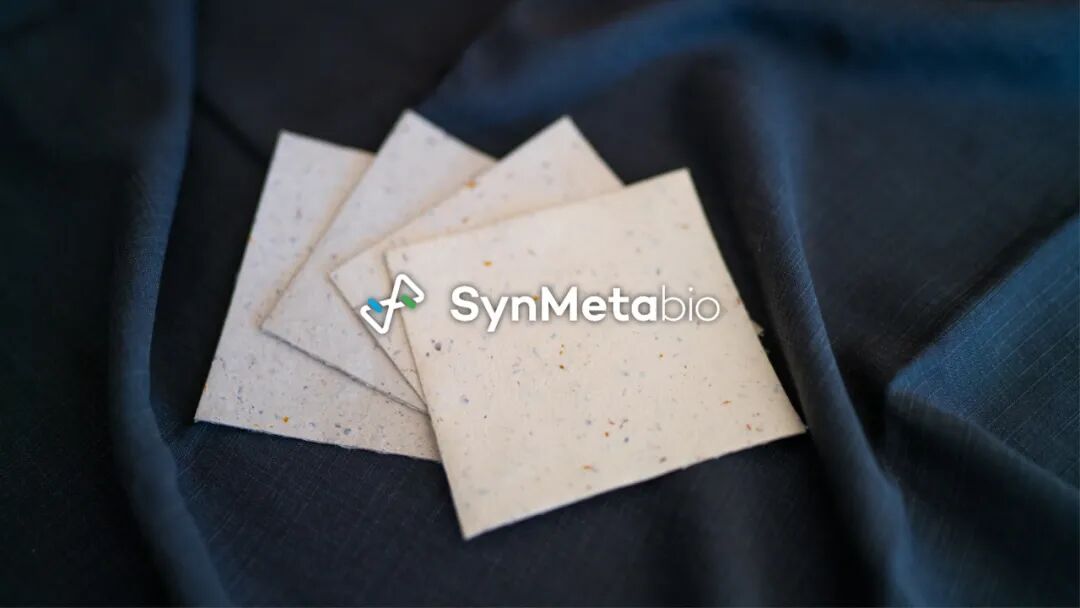
36Kr has learned that synthetic biology company SynMetabio recently completed a seed round and angel round totaling tens of millions of RMB. The seed round was led by MiraclePlus; the angel round was led by Linear Capital, with MiraclePlus Beijing, Danen Capital, and K2VC participating. The proceeds will be used to scale up production of its 100% bio-based leather material Naro and for team building.
Founded in December 2021 in Shanghai's Zhangjiang Hi-Tech Park, SynMetabio was founded by Rui Su, who previously led a team to the finalist round of iGEM (International Genetically Engineered Machine Competition). The team currently numbers around 20, mostly R&D staff. SynMetabio now operates an R&D center of nearly 2,000 square meters and has designed and built a microbial fiber-based material development and pilot-scale platform.
In its product pipeline selection, SynMetabio initially used synthetic biology to produce microbial fiber, spider silk protein, mussel adhesive protein, and other biomaterials. Among these, its bio-based material Naro leather has demonstrated excellent performance from upstream strain screening and modification through downstream material composite testing, receiving positive feedback from customers. The team's current R&D and pilot-scale efforts are focused on bio-based leather materials.
According to sources, SynMetabio has completed pilot production of its bio-based leather material Naro at the scale of hundreds of liters. "Completing pilot production means, for us, that we can produce dozens of square meters of leather fiber raw material in a single batch, with a production cycle of 7 days. Subsequent scale-up is essentially copy-pasting this same unit volume," Su told 36Kr. Naro is scheduled for trial production in Q2 2023, with annual production capacity expected to reach 2.5 million square meters by Q4.
The core concept of producing bio-based leather through synthetic biology is using microorganisms to cultivate nanofibers of varying lengths, then simulating the genuine leather tanning process through material composite methods to modify the fiber structure, giving it a range of genuine leather characteristics. Starting from the source, SynMetabio has built its Naro cultivated leather through a synthetic biology platform and materials platform that screens and modifies suitable chassis organisms, combined with its proprietary material composite methods.
Bio-based leather material Naro, company-provided image. SynMetabio's cultivated bio-based leather material Naro consists of four layers. The outermost layer is a bio-nanofiber membrane, a highly crystalline, dense, and smooth fiber network. The second layer is an elastic and texture layer composed of natural rubber and agricultural waste. The third layer's fibers resemble the disordered, interwoven fiber structure found in genuine leather. The fourth layer is a bio-based fiber fabric or an extremely thin bio-nanofiber membrane.
Su described the general process of cultivating fibers using synthetic biology to 36Kr: through strain screening, gene editing, and bio-fermentation, a transparent, gel-state fiber membrane several centimeters thick is cultivated. This membrane is then made dense and rigid through methods that increase crystallinity, with fluffy, disordered fibers inside resembling the fiber structure of genuine leather. Natural rubber and other materials are incorporated into this fiber layer to enhance elasticity. Subsequent material processing, such as adding agricultural waste, imparts the distinctive texture of leather.
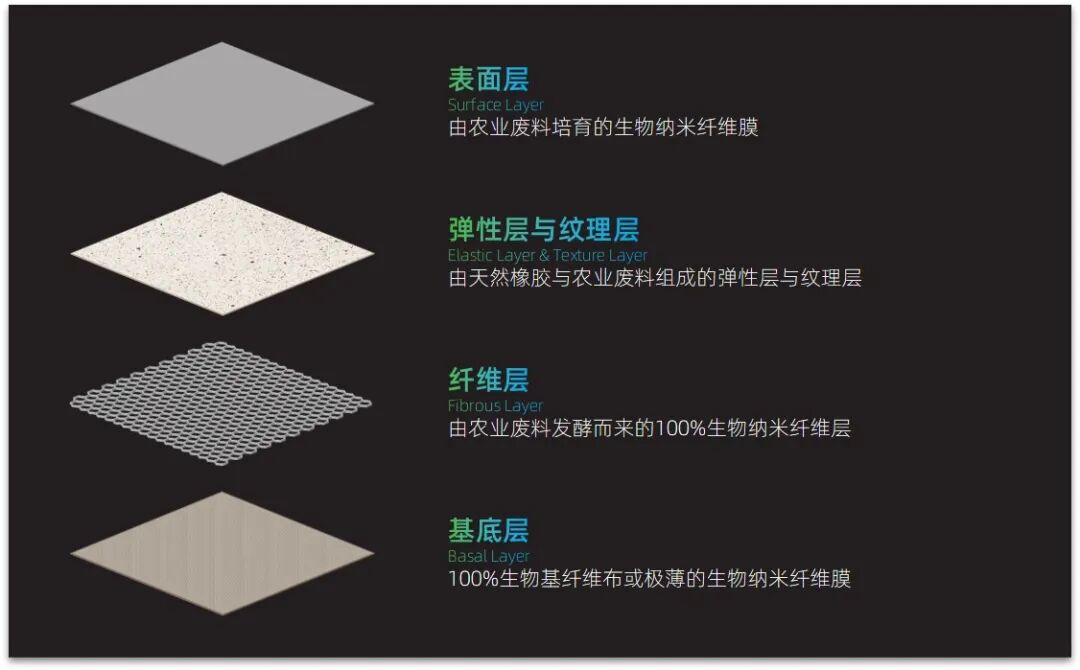
Naro material composition. Currently, SynMetabio's multi-chassis strain and cell factory construction methods are patent-pending. For bio-fermentation, the company employs a method between solid-state and liquid fermentation: cells are first directionally amplified in traditional fermentation tanks, then the amplified seed solution is transferred to static liquid culture medium, where it naturally settles and forms a film. "The characteristic of this technical approach is that it doesn't require separation and purification — the gel membrane can be directly harvested from the culture medium. The cost is relatively low, and scale-up is somewhat easier."
According to the company, in terms of appearance and feel, the bio-based leather material Naro is close to genuine leather; it has mechanical properties comparable to top-grain cowhide; and in terms of cost, at scale, Naro will be cheaper than genuine leather and is expected to come in below artificial leather.
On capacity building, "We're pursuing two tracks simultaneously. On one hand, we're leasing production lines at other factories for trial production; at the same time, we're building our own factory," Su told 36Kr. SynMetabio's production can be divided into two parts: the front-end biological side for fiber membrane cultivation, and the back-end material processing and preparation line, which can be adapted by retrofitting traditional leather processing lines.
The bio-based leather material Naro produced through the above technology consumes only 36 liters of water per square meter — 2% of what genuine leather production requires. China's leather industry discharges approximately 138 million tons of wastewater annually, containing nearly 40,000 tons of chemical substances, and the filtration and processing of this wastewater generates additional carbon emissions. Based on sustainability principles, numerous well-known domestic and international brands are seeking more environmentally friendly, green bio-based materials.
Currently, the bio-based leather material Naro has attracted downstream customers from packaging materials, sportswear brands, and automotive OEMs: multiple well-known consumer brands have extended cooperation invitations, and a prominent automotive OEM is nearing a technical procurement agreement. As a synthetic biology materials company, SynMetabio's short- and medium-term product selection focuses primarily on the textile sector, with bio-based leather and functional fabrics as the main categories.
In Europe and America, the plant-based leather industry started earlier and has already developed environmentally friendly materials such as mushroom leather, pineapple leather, and barley leather, though all are priced at several multiples of genuine leather. Representative companies in the plant leather sector include Bolt Threads, Natural Fiber Welding, and Pinatex. Companies using prokaryotic organisms to cultivate leather are currently relatively rare, and the novel materials emerging from this approach are attracting attention from capital markets and downstream manufacturers.
Yingzhe Zeng, Partner at Linear Capital, stated: "Leather is an enduring component of the fabric industry, yet its production process is inseparable from heavy pollution. Sustainable leather alternatives — vegan leather — have been a focal point of bio-fashion in recent years, and a solution that balances high quality, scalable production, and low cost is urgently needed. The SynMetabio team has found a breakthrough at the intersection of synthetic biology and materials science, constructing 100% bio-based Naro vegan leather that not only matches genuine leather in texture and performance, but can also compete with artificial leather in cost as production scales, while imbuing leather with powerful programmability. The SynMetabio team comprises young people with tremendous entrepreneurial passion and technical ambition. Throughout our engagement, we've witnessed their rapid growth and been continually surprised. We're delighted to support this team at an early stage and will continue to back SynMetabio's exploration of sustainable materials over the long term."
About Linear Capital
We are hiring for our investment team. Multiple positions are currently open. For details, please click here.
Linear Capital is an early-stage investment institution focused on "frontier technology + industry," that is, frontier technologies represented by data intelligence, digital new infrastructure, next-generation robotics technology, and new technological transformations in traditional sectors (such as biomedicine, materials, energy, etc.), applied across vertical industries to substantially improve industrial efficiency, empower solutions to pain points, and complete industrial upgrading — achieving outsized commercial returns through substantial increases in industrial value. The firm currently manages ten funds with total assets under management of approximately $2 billion.
Our investment stage focuses primarily on leading seed to Series A rounds, with typical investment amounts of $3-8 million or RMB equivalent per project.
To date, we have invested in over 120 early-stage teams including Horizon Robotics, Kujiale, Sensors Data, Tezign, Rokid, Guandata, and Agile Robots. The combined valuation of Linear Capital's portfolio companies is approximately $20 billion.
In the near term, Linear Capital is working to become the best "Data Intelligence Technology Fund," and in the long term, to gradually build itself into the most influential "Frontier Technology Application Fund."