"Yimu Technology" Ma Zhifen: From Serving Individual Ranches to Serving the Entire Livestock Industry, Built on Data Intelligence and Network Effects

"Yimu Technology" is a provider of digital and intelligent ranch solutions. In July 2023, [it announced an angel round exclusively funded by Linear Capital](http://mp.weixin.qq.com/s?__biz=MzAwNTAyMDAyNQ==&mid=2652305116&idx=1&sn=e9a1a987a3100a0ba18f8b35
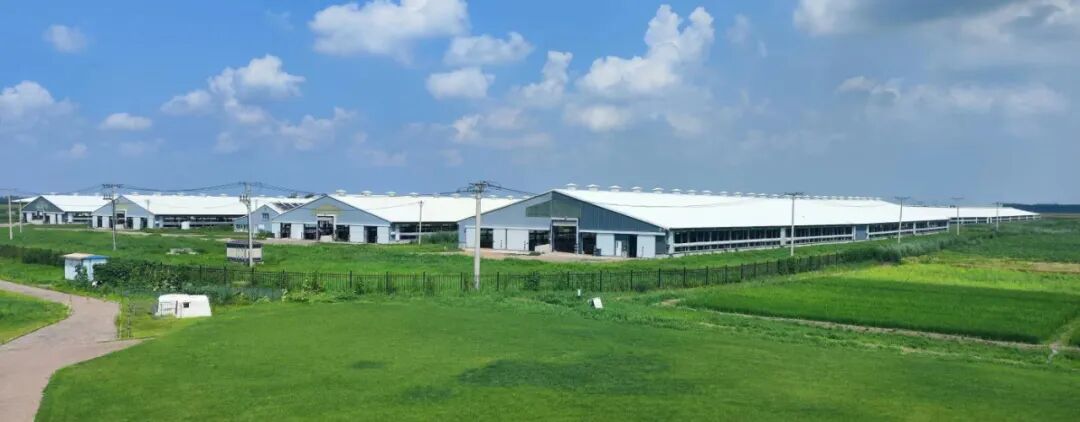
Yimu Technology is a provider of digital and intelligent ranch solutions. In July 2023, it announced an angel round exclusively led by Linear Capital, and its products have since expanded into the North American market. Its self-developed Yimu Cloud comprehensive digital ranch solution has been deployed for over 60 dairy farming groups and more than 500 individual ranches. In the second half of 2023, building on its ranch services, Yimu Technology launched "Yimu Tong," a platform that uses data intelligence and network coordination to connect ranches, solution providers, material suppliers, and research institutions across the dairy industry value chain — precisely matching ranch needs with solutions. Recently, we invited Dr. Ma Zhifen, founder and CEO of Yimu Technology, and Bai Zeren, VP at Linear Capital, to share the story behind Linear's investment in Yimu, their thinking on using frontier technology to solve industry pain points, as well as Yimu's product evolution, commercialization path, and overseas expansion experience.
Financing
Q: Dr. Ma, could you briefly introduce Yimu Technology — when was it founded, and what is its main business?
Ma Zhifen: Yimu Technology was founded in September 2015 and is a leading provider of specialized digital and intelligent ranch solutions. Our self-developed Yimu Cloud comprehensive digital ranch solution consists of 12 standard modules that can be freely combined to match different ranch needs. The most fundamental module is a ranch production management system running on a SaaS model — essentially the "intelligent operating system" for a digital ranch. The other 11 modules combine software and hardware to address specific production scenarios, such as intelligent cattle identification and management, precision feeding, and smart weighing. To date, we have deployed our digital systems for 60+ dairy farming groups including Modern Farming, Ningxia State Farms, Wondersun, and Qianjin Dairy, covering 500+ ranches and serving 1.4719 million head of cattle — 1.331 million dairy cows and 140,900 beef cattle.
Q: Yimu has been around for quite a while. Why did you choose to raise funding only in the last year or two?
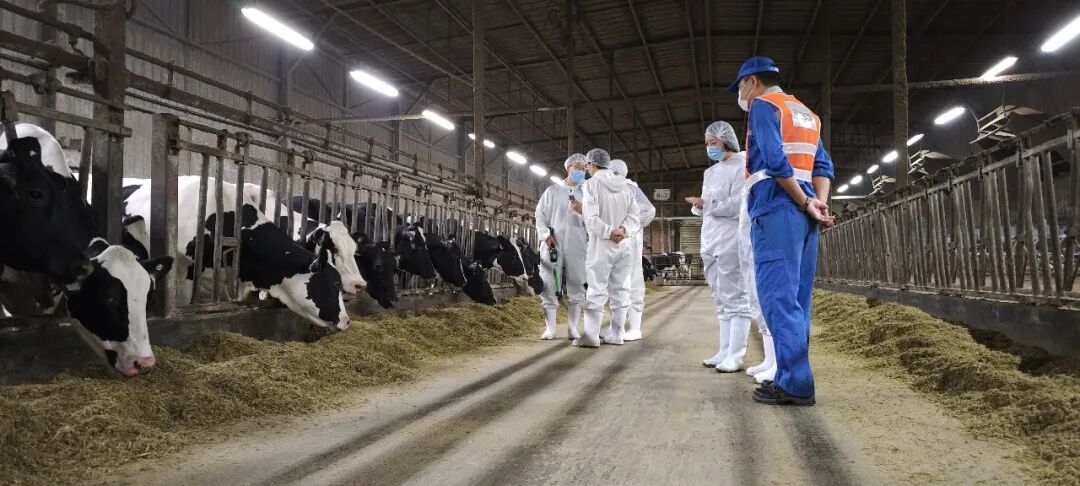
Ma Zhifen: We didn't plan to raise funding when we started. We used our own capital to fund R&D and push commercialization, and we were generating revenue and sustaining operations fairly quickly. At that time, capital paid relatively little attention to agtech projects, and the digital transformation of ranches requires considerable time — funding's ability to accelerate that process was limited. So we wanted to achieve commercial viability and build a solid foundation first, then use financing to accelerate growth. Later, through a friend's introduction, I met Dr. Guo of AIC (an Agri-Intelligence Company, a Linear Pre-A portfolio company). They work on smart crop farming; we work on smart animal husbandry — both broadly fall under smart agriculture. Through Dr. Guo's referral and another friend's help, I connected with Dr. Huang and Zeren at Linear Capital. Perhaps because we all have technical backgrounds, I found Linear's investment team to be very professional and pragmatic, with considerable alignment with our team. Beyond business model questions, they dug deep into mechanistic models and specific technical assessments — "how does digitalization actually help ranches solve real problems, what concrete value does it deliver?" Dr. Guo once told me that after COVID restrictions lifted, Linear immediately visited their test fields in Xinjiang. He said something that really struck me: "Linear is very professional and rigorous in their evaluation. If Linear passes you on the technical side, other institutions won't question you on technology — it can accelerate your project." I came to deeply appreciate this myself. For Yimu's project, Dr. Huang and Zeren visited large-scale ranches we serve with us — these are in relatively remote suburban areas, truly "going to the mountains and countryside." Their willingness to get into the field for thorough due diligence ultimately led to the investment. Additionally, Linear's post-investment services are excellent — they've helped us connect with resources and organized many online and offline events that have significantly expanded my own perspective.
Q: That fits well with Linear's emphasis on investors needing to "go to the mountains and countryside." Zeren, what did you observe at the ranches?
Bai Zeren: This left a deep impression on me. For us, visiting the ranches was a decisive confidence booster. When we invested in AIC previously, we spent a lot of time understanding agriculture, so I already had some affinity for this sector.
First, the market is massive. China is the world's most populous country — food security, food safety, and agricultural upgrading represent enormous opportunities.
Second, the founders we've met in agriculture all have a certain idealism that's quite moving. Dr. Guo at AIC is like this, and so is Dr. Ma. I remember first meeting Dr. Ma — refined in appearance, speaking fluent English with foreign experts. Looking at his background, you can tell he could have lived quite comfortably without starting a company. Yet he chose this path. Entrepreneurship is already tough; what they're doing requires even deeper immersion in the field, personally getting their hands dirty.
Third, being at the ranches showed me how different real industry is from what you read in books and reports. The scale, automation, and data maturity in dairy farming exceeded our expectations — the foundation for digitalization already existed. And these were highly intensive, very advanced large-scale ranches. Yet despite this, numerous operational challenges remained. What Yimu does is use technology to solve the difficulties of large-scale scientific farming. Dr. Ma also shared some cost reduction and efficiency improvement data with us. Later, talking with Yimu's customers, we could feel the value their technical solutions delivered. Using technology to solve industry problems fits Linear's investment logic very well.
 *
*
Products and Solutions
Q: What was the original motivation for starting Yimu, and what industry pain points were you trying to solve?
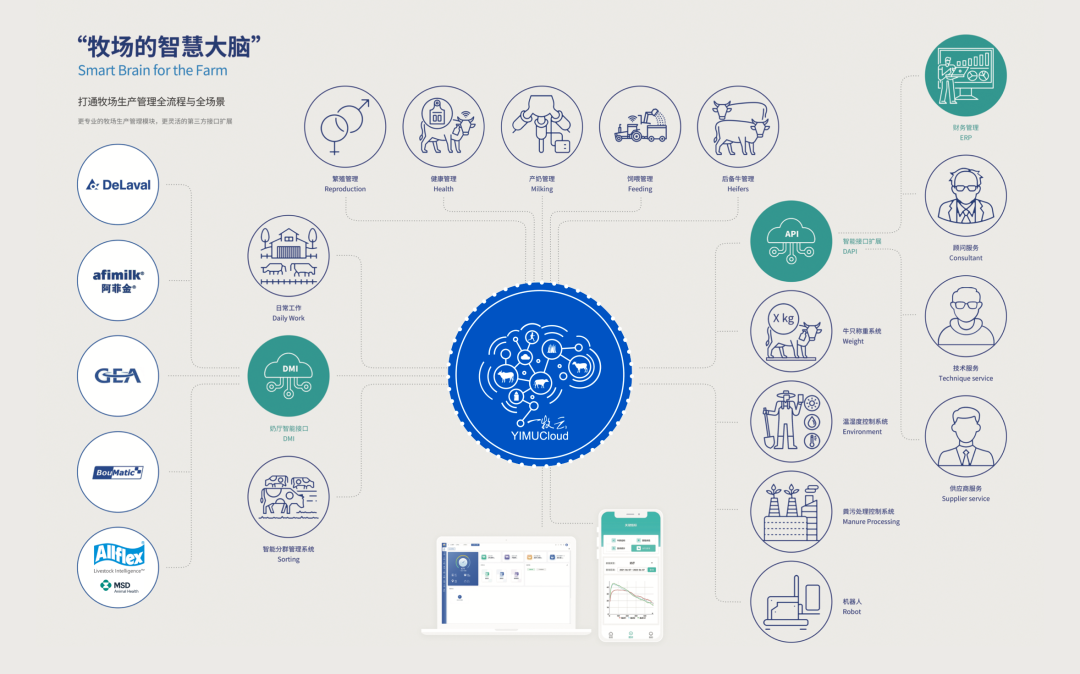
Ma Zhifen: Simply put, as economic development improves living standards, consumption of animal protein foods (meat, eggs, milk) keeps rising. Given our population base, total demand is enormous. Traditional production models can't meet this demand, creating supply-demand imbalances. Combined with relative feed shortages, many problems emerge — production costs are high. For example, since 2000, as dairy consumption surged dramatically, severe supply-demand imbalances developed, compounded by various factors leading to safety incidents that hugely impacted the dairy industry's development. The government responded with a series of policies to ensure food safety and improve quality, accelerating the shift toward intensive and large-scale ranch development. Currently, large-scale dairy farming in China already exceeds 80% of total production. These large-scale ranches are essentially commercial operations — to be profitable, they must achieve refined management, continuously reducing costs and improving both efficiency and quality to survive and thrive amid intensifying competition. This is virtually impossible without digitalization's help. When we started developing Yimu Cloud in 2015, ranches had basically completed informatization — they had many isolated, standalone software systems. What they universally faced was "no shortage of software, but a shortage of systems." Yimu Cloud was positioned as the "smart brain of the ranch," connecting all information nodes into an integrated system. It quickly gained recognition and adoption from major domestic ranches, continuously promoting lean management and cost-efficiency improvements. With systematic foundations and accumulated data, the value of ranch data could gradually be realized, enabling evolution toward intelligence and wisdom — ultimately solving problems of efficient industry coordination, profitability, and sustainable development, promoting grassland agriculture, and "giving more of our people access to quality milk and meat, continuously improving national nutrition."
Q: What achievements has Yimu reached at this stage, what development phases has it gone through, and what are your future plans?
Ma Zhifen: We've planned four development stages.
The first stage was the large-scale ranch production management system. It functioned more as a tool. Our milestone was to serve 1 million head of cattle in the shortest possible time, thereby accumulating massive amounts of real ranch production data for more data modeling and algorithm optimization. We've completed this first stage, and continue growing rapidly. Our latest data shows we now serve over 1.3 million dairy cows — China's official figure is roughly 12 million dairy cows, so we hold about 10% market share. For beef cattle, the national herd is 89 million; we launched our beef cattle digital solution last year, and beef cattle numbers are now growing relatively quickly, currently around 140,000 head.
The second stage, building on our accumulated large-sample ranch production data — since 2020, we've published an annual Status of Key Production Performance in China's Large-Scale Dairy Farms — we gradually established China's evaluation system and benchmarking standards for key production performance in large-scale ranches, gaining recognition and adoption from ranches, research institutions, and government.
We're now advancing to the third stage: using our accumulated data for further modeling, evaluation, and analysis to warn ranches about urgently needed improvements. Through our "Benchmarking Improvement Program," we collaborate with specialized industry companies — in breeding, nutrition, health, and other areas — to provide ranches with comprehensive solutions combining software, hardware, and corresponding product support.
The fourth stage is achieving the "smart ranch" — completing digital simulation of the ranch's physical world. In many scenarios, we need to find optimal solutions through simulation, then apply them to actual production. For example, ranch breeding selection already works this way: choosing genetic resources based on data simulation to find optimal genetics, then implementing according to that breeding plan. This approach helps ranches further reduce costs, improve efficiency and quality, continuously enhance profitability, achieve efficient sustainable development, and promote grassland agriculture.
Q: Why don't ranches build these digital solutions themselves?
Ma Zhifen: First, taking dairy ranches as an example, after several industry cycles, the ranches that have survived generally already have very high production standards. Their requirements for digital solutions have long surpassed "CRUD" operations and work dispatching. To support lean production, the demands on data quality and model precision are now extremely high. We know model accuracy requires massive precise datasets for continuous training and optimization. Currently, many Yimu Cloud models are optimized and validated based on real production data from over 1.2 million head of cattle — this data scale is far beyond what any single ranch could achieve alone. It requires participation and joint effort across many ranches in the industry; an individual ranch simply cannot do it. Here I must express deep gratitude to all Yimu Cloud customers for their trust and tremendous support!
Second, system R&D and upgrading require professional personnel and sustained substantial capital investment. The input-output ratio for ranches doing this themselves is too low to be sustainable. Of course, some large domestic ranches have tried building their own digital solutions — developing systems for internal use only. Without ability to benchmark against the industry or serve third parties, these become essentially large "islands," and are ultimately abandoned.
Q: Regarding Yimu's 12 standard modules for digital ranch solutions, what was the product development and design process like, what particularly memorable challenges did you encounter, and how were they resolved?
Ma Zhifen: We currently have 12 modules, but started with just one foundational module. Our strategy was to design an integrated system but release it modularly, charging based on needs during promotion and sales — letting customers start at low cost, helping ranches gradually upgrade from their previous standalone ranch management software. For domestic ranches, our system is more secure than previous standalone software, where data loss often occurred due to computer system failures without timely backups. From the outset of R&D, we made security our first principle, targeting the security needs of large domestic ranches. But this created a new problem: sometimes security, professionalism, and ease-of-use come into conflict. After weighing these, we established a principle: when conflicts arise, the priority is security first, then professionalism, then ease-of-use. For ranches, switching systems involves significant risk, so they conduct extensive evaluation before deciding. What stands out most vividly was implementing our system at Modern Farming's Bengbu Ranch — China's largest single-site ranch. Many issues simply cannot surface until Yimu Cloud has been tested at such scale. I must again express deep gratitude to Modern Farming for their trust and tremendous support — they volunteered their largest ranch as the first in their group to run "Yimu Cloud YIMUCloud." For large-scale ranches, switching production management systems carries enormous risk: any system failure immediately impacts frontline production or even halts operations entirely. For a ranch of this scale, that means massive economic losses. The days and nights our teams fought together remain vividly etched in memory.
 *
*
Yimu Cloud — "The Smart Brain of the Ranch"
Commercialization
Q: How did you get customers to accept this subscription-based service model? What are the revenue drivers?
Ma Zhifen: Ranches were indeed initially resistant to paying annual fees, because many had been capitalizing software as fixed assets with one-time purchases. Our model challenged and changed this entire paradigm. During sales, we explained: first, what you're buying appears to be software, but is essentially service. Second, this model enables better service — our goal is to provide the best possible service through our product. If service is poor, they simply don't renew the next year — ranches have more主动权 (bargaining power), and their renewal decisions strongly motivate us to optimize our product. This isn't like the old model where an informatization project simply ended upon delivery. This was a time-consuming communication process; they needed time to gradually change long-established, mature practices.
Q: Taking large groups like Modern Farming as benchmark clients, what does your cooperation process look like? If divided into phases, what happens in each, and what are some concrete cost-reduction and efficiency stories with data?
Ma Zhifen: We call these large KA (key account) clients. We generally divide cooperation into three phases. First is initial validation. They're cautious about switching management systems — usually only when facing severe problems. They won't switch immediately; they need to see what others are using. So the first major client is always hardest. Before approaching these large groups, we first implement at relatively smaller ranches — say, 10,000-head operations — for initial validation. When large KA clients seek reference cases, they can see verified examples. Additionally, large KA clients typically have many ranches; they'll pilot at a few first. We were fortunate to get Modern Farming's largest ranch, Bengbu, as an early order — a rare opportunity but also enormous challenge, as any single day of downtime means millions in losses. We couldn't afford any mistakes.
Second is implementation. We needed to respond quickly to challenges at greater scale. A system running well at a 20,000-head ranch encounters areas needing upgrade at Bengbu's 40,000-head single-site scale, requiring rapid team response. Only after achieving their desired overall upgrade would they consider full data migration. Full migration is also challenging because different ranches previously had independent systems and data; now everything must be unified, standardized, and normalized. This requires not just group leadership approval, but frontline staff buy-in — we had to consider their feelings and needs.
Third is optimization. For large groups, this follows implementation, improving their system satisfaction. It also involves purchasing additional new modules. Helping traditional large-scale ranches upgrade digitally dramatically improves production efficiency and reduces costs. Traditional ranch production has many human-dependent scenarios — daily operations dispatched by ranch managers or production supervisors. With our digital solutions, the system essentially dispatches work automatically, driving ranch coordination. Production efficiency improves dramatically: many frontline workers' efficiency roughly triples. For example, synchronization procedures that previously took three hours now take one. Additionally, our precision feeding solution achieves average feed cost savings of 9.7% through more precise batching and delivery. Through comprehensive solutions, ranches see overall annual milk production increase of about 10% — roughly 900 kg per cow annually — making a clear impact on industry development.
Q: Dr. Ma mentioned Yimu's evolution from serving ranches to serving the broader dairy industry. What's the difference?
Ma Zhifen: In serving ranches, the more Yimu Cloud modules a ranch uses, the more data is collected, and from certain perspectives, the more problems are exposed. The benefit is we know where problems lie; the challenge is that if we can't solve them, this digital analysis becomes "more anxiety, added frustration" for ranches — identifying problems isn't enough, we must solve them. For example, system data analysis might reveal rising disease incidence, but improving these issues is often a "systematic project" involving more specialized domains. Take mastitis in dairy cows: environmental factors, milking operation errors, and other influences all play a role. We need to quickly identify main causes while matching relevant resources to solve problems, requiring collaboration with upstream and downstream specialized companies to provide more precise and efficient service to ranches. This is our new "Yimu Tong" project launched this year at Yimu Digital Hangzhou. Yimu Tong APP V1.0 is now available on major app stores, aiming to better serve ranches through "data intelligence + network coordination" — achieving the extension and upgrade from "serving ranches to serving the dairy industry."
Q: Looking back from Yimu's founding in 2015 to now, how would you divide your entrepreneurial journey into phases? Dr. Ma, like many founders in Linear's portfolio, you've spent many years deeply rooted in an industry with a technical background. Looking back, what reflections do you have, and what advice would you give to similarly positioned entrepreneurs?
Ma Zhifen: The challenges differ at each stage. Our team all came from this industry. Initially, customer acquisition wasn't our biggest challenge — the core question was whether we could build good products and keep service quality up. The first stage, there's a concept called "low-risk entrepreneurship." Our risk was relatively low, perhaps a natural outcome of our previous experience — when you're very familiar with industry-standard products and see them increasingly failing to meet industry needs, and you happen to have accumulated resources to support building something new. Early on, many customers told us: "If you can build it, we're willing to try." So our initial focus was getting Yimu Cloud's first version developed.
The second stage, once customers started using it, actual challenges often exceeded expectations — the ability to respond and upgrade amid constant change. More importantly, we provide a product; if we do poorly, they won't renew or purchase add-ons. So we had to deliver excellent implementation no matter what, driving continuous rapid iteration. The more challenging problems we solved during implementation also brought greater team fulfillment.
The third stage, with well-validated products, we needed to expand to more small and medium ranches. Relative to large KA clients, using our original promotion model would mean higher customer acquisition and delivery costs per head of cattle. We needed model upgrades — thinking about partnering with government and regional service providers. We realized capital support could accelerate this, which led to our story with Linear.
In summary, the entire entrepreneurial journey is like a "roller coaster" — many challenges, requiring constant mindset adjustment to experience and overcome, with great fulfillment in reaching goals. For technically-minded entrepreneurs, like the question you must answer in a doctoral thesis about your research's innovation: "Researchers tend to easily get immersed in the research itself," easily overcomplicating problems. The most important question for technical entrepreneurs is whether your team's technology can effectively solve industry problems, and whether you can commercialize it and continuously iterate.
Overseas Expansion
Q: We heard Yimu's solutions are already serving overseas clients. Dr. Ma, please share your experience entering the North American market.
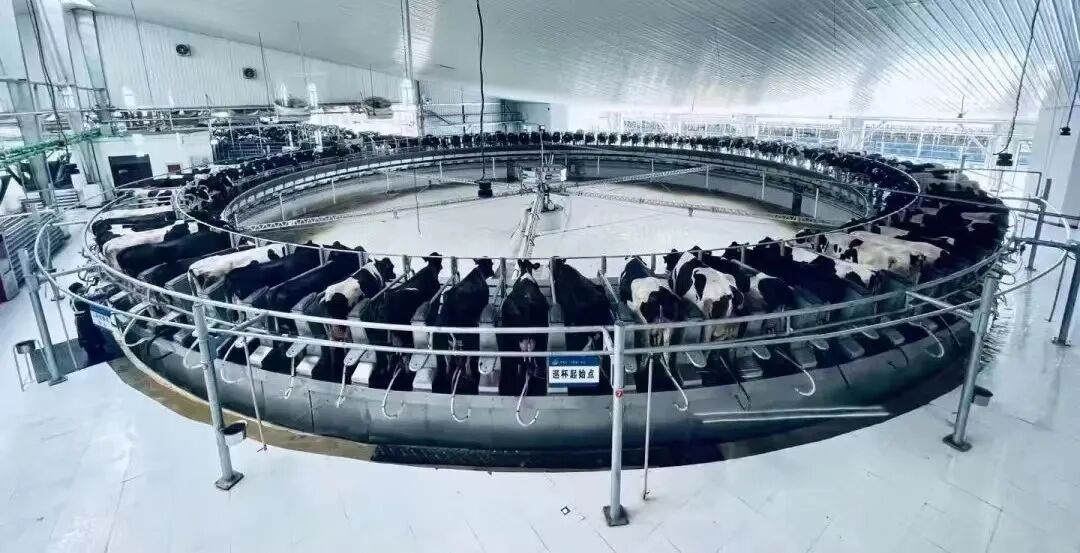
Ma Zhifen: First, most of our dairy farming uses the Holstein breed, commonly called "black and white," originally imported from abroad. China's large-scale dairy ranch development early on borrowed heavily from developed dairy nations' experiences. We had previously accompanied ranch owners and technical staff on multiple study trips to the US. So our large-scale ranch production models share many similarities with the US, laying good groundwork for our US market entry — much of our system functionality translates directly.
Second, China's large-scale ranches have developed extremely rapidly in recent years, especially with the emergence of large and mega-ranches. These ranches have higher and more complex digitalization demands and requirements. Plus, large ranches' procurement patterns mean greater diversity in hardware and software brands and models, posing greater challenges for developing integrated systems. But once achieved, this brings significant advantages: higher data precision and greater data volume, greatly benefiting model training. Many US ranches still use standalone software; cloud-based solutions like Yimu Cloud show clear advantages in security, professionalism, and ease-of-use.
Third, domestic large ranches had previously hired many US professional consultants. These consultants learned about Yimu Cloud from ranches and brought their impressions back to the US market. Ranches there naturally have improvement needs too, but self-development costs are high and require extensive iteration. With appropriate channels, solutions like Yimu Cloud can find application there. Of course, entering the US market involved many extremely challenging difficulties, which we worked through together with our US partners to ultimately achieve.
About Linear Capital
Linear Capital is an early-stage investment firm focused on the "frontier technology + industry" direction — that is, frontier technologies represented by data intelligence, digital new infrastructure, next-generation robotics, and technological transformation in traditional domains (such as biomedicine, materials, energy, etc.), applied across vertical industries to substantially improve industrial efficiency, empower solutions to pain points, and complete industrial upgrading — achieving excess commercial returns through substantial increases in industrial value. It currently manages ten funds with total AUM of approximately $2 billion.
Our investment stage focuses on leading angel to Series A rounds, with typical investment sizes of $3-8 million or RMB equivalent per project.
To date, we have made early-stage investments in over 120 entrepreneurial teams including Horizon Robotics, Kujiale, Sensors Data, Tezign, Rokid, Guandata, Agile Robots, and others. The combined valuation of Linear's portfolio companies is approximately $20 billion.
In the near term, Linear Capital is working to become the best "Data Intelligence Technology Fund." In the long term, it aims to gradually build the most influential "Frontier Technology Application Fund."