Linear News | SynBio Startup "Biosys" Secures Two Funding Rounds in Six Months, Linear Capital Leads Angel Round

"Besheng Bio's" long-term goal is to build a complete biotech ecosystem based on the ArchiCel architecture — in essence, to create the Windows + x86 equivalent for the biotechnology industry.
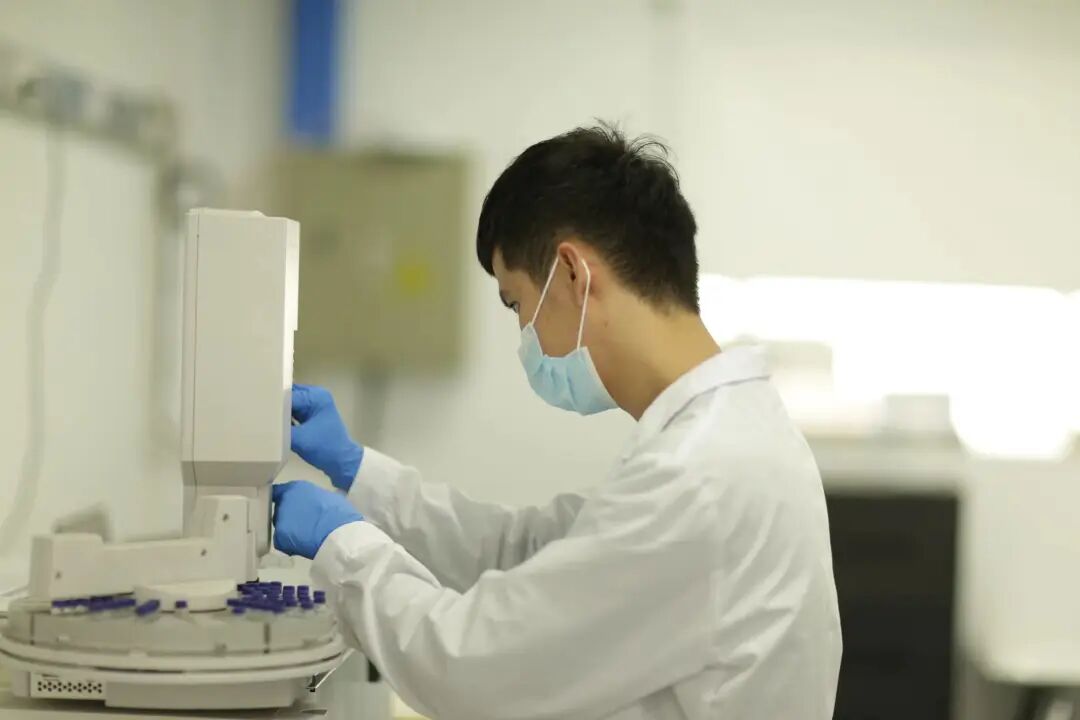
Biosysen's long-term goal is to build a complete biotech ecosystem based on the ArchiCel architecture — the equivalent of a Windows + x86 platform for biotechnology.
By Yao Lan | Cover image courtesy of the company
36Kr has learned exclusively that Biosysen, a synthetic biology company focused on species design and application, completed two consecutive funding rounds within six months. The seed round was led by HSG, with MiraclePlus (a Spring 2021 cohort alumnus) and Sky9 Capital as co-investors. The angel round was jointly invested by HSG, Oasis Capital, and Linear Capital, with seed-round investors MiraclePlus and Sky9 Capital increasing their stakes. The two rounds combined raised over RMB 100 million.
Founded in 2019, Biosysen specializes in applying software engineering principles to the global rational design of industrial microorganisms, using ArchiCel® to fully unlock biomanufacturing productivity. "ArchiCel®" stands for "Material Processing CELl with ARCHItected Genome" — an architected-genome material processing unit. Dr. Kang Kang, co-founder and Chief Information Scientist at Biosysen, told 36Kr that Biosysen's products are ArchiCel® strain libraries and related pipelines designed for specific industrial purposes, with a focus on food, consumer goods, and biomedicine. Building a complete biotech ecosystem based on the ArchiCel® architecture is the company's long-term goal.
Simply put, strain engineering is something every synthetic biology manufacturing company does. But Kang emphasizes that Biosysen's core differentiation lies in the rational design of "Architected Genomes" — a potential foundational technology solution that could usher humanity into an era of bioengineering civilization and realize the vision of "engineering life for practical use."
Currently, most mature biomanufacturing companies use natural strains as production tools: yeast for brewing, Corynebacterium glutamicum for MSG production, acetic acid bacteria for vinegar, and so on. In recent years, emerging synthetic biology companies have mainly engineered model strains (typically E. coli and Saccharomyces cerevisiae) with artificial metabolic pathways to achieve production goals.
Natural strains have two prominent problems: they are difficult to edit and modify for greater value, and humanity has nearly exhausted their industrial potential. Model strains, meanwhile, have limited metabolic network plasticity — for specific products, the R&D path is long, and the lab-to-fab success rate is low. No microbe exists in nature that combines the metabolic diversity of hundreds of millions of natural strains with the genetic tractability of model strains. Therefore, humanity needs an entirely new, rationally designed production tool to serve as infrastructure for the future bioeconomy.
"Just as the hardware and software of the IT industry transformed human civilization, the organisms that will serve as future production tools should also be highly architected. The genome and cellular structure of organisms themselves constitute an integrated hardware-software architecture. We want to create a bioengineering architecture closer to IT industry principles — one that allows the entire life process to be designed, built, and tested. That's how ArchiCel® was born."
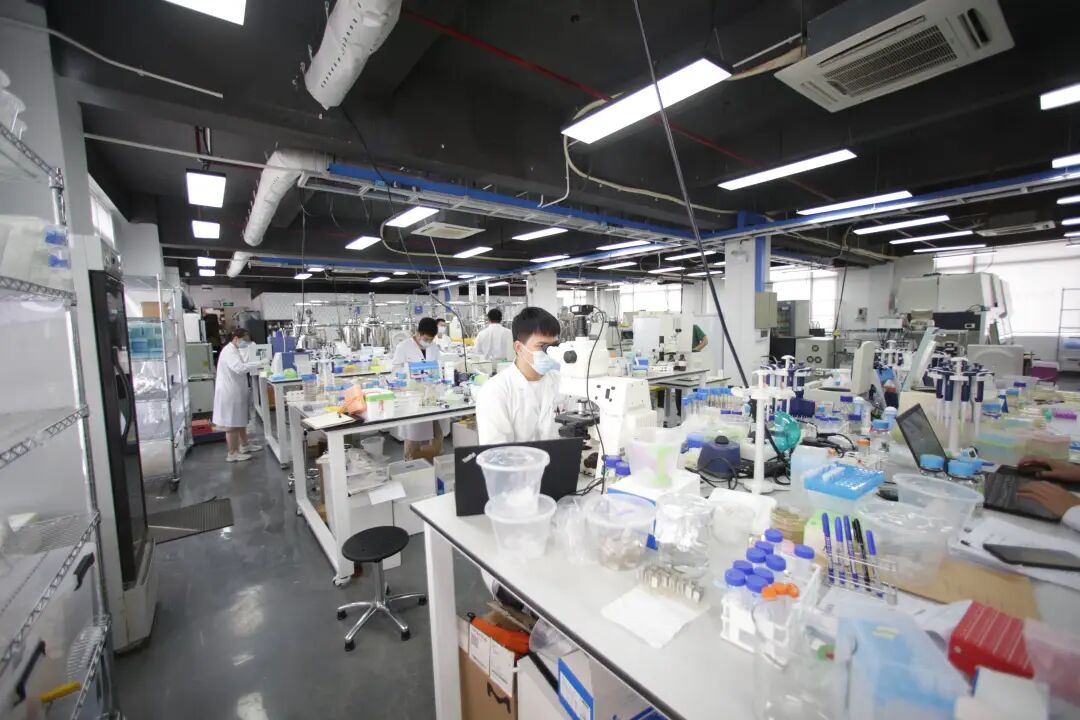 Laboratory
In Kang's view, to balance the longer R&D cycle required for foundational technologies like ArchiCel® while validating industrial capabilities in a shorter timeframe, most synthetic biology companies with core technologies may adopt a "platform + pipeline" model to balance investment and output. Therefore, Biosysen's main business lines are divided into three directions: platform technology commercialization, proprietary pipeline incubation, and strain licensing.
Platform technology commercialization is what Kang calls "laying eggs along the way." Biosysen's four core technology platforms — high-throughput synthetic biology platform (Wet-lab), information and data platform (Dry-lab), omics analysis platform (OMICs-lab), and refined fermentation pilot base (Ferm-Foundry) — each contain multiple core technologies that can be spun off as products. Wet-lab and OMICs-lab have already achieved 80%–95% cost reduction in R&D reagents for synthetic biology construction and testing. Dry-lab has developed engineering databases (REFERENCED), experimental assistance systems (CASPAR), ArchiCel® design systems (CODONS), and automation and IoT hardware-software systems (BIOTA), all of which can be commercialized as general tools for R&D institutions. Ferm-Foundry's proprietary fermentation systems, central control systems, and IoT tools also have revenue potential.
Proprietary pipelines, particularly in food and beverage and consumer chemicals, represent Biosysen's primary early-stage industrialization focus.
Early on, Biosysen was often misunderstood as "a craft beer company." Asked why they initially chose to make craft beer and soda, Kang laughed and said, "Because we love drinking them" — both Dr. Chen Yu, Biosysen's founder and CEO, and Dr. Kang Kang had lived in Germany, where people are famously fond of beer and sparkling water. "Rather than plunging headfirst into medical and chemical fields where we have less understanding of the industry chain and are further from downstream demand, we believe choosing a manufacturing sector where we have more expertise, and which is more suitable for biological production from the perspective of billions of years of biological evolution, is a more prudent option that allows us to validate and iterate our technology more quickly."
Biosysen believes that compared to the chemical and medical fields that dominate synthetic biology discussions, industries like food and agriculture have been notably slower to embrace technological innovation. The food sector, however, offers advantages: shorter industry chains, lower R&D failure rates, high product diversity, formulas and SKUs suitable for quantitative R&D, and fast product iteration — making it an excellent early opportunity for technology-driven companies like Biosysen. "Rather than saying our product in this pipeline is alcohol, it's more accurate to say it's mass-producible fermented food flavor systems, nutrition systems, digitized formulas, and production solutions," Kang described.
36Kr learned that beyond fermented beverages and flavor systems, Biosysen is also building capabilities in formulated fermented foods, functional liquid and solid fermented foods, and alternative proteins.
Compared to food and beverage, technological innovation trends have emerged earlier in the personal care and beauty industries. The rise of "ingredient-savvy" consumers is forcing brands to increase R&D investment and launch products with genuine efficacy. Kang believes the term "ingredients" will inevitably undergo a process of separating substance from hype, with new-generation consumers increasingly favoring beauty and personal care products backed by scientific evidence. Biosysen's accumulated capabilities in ingredient system design and testing, batch R&D for multiple SKUs, and refined fermentation can be directly transferred to the personal care sector to meet real market demands.
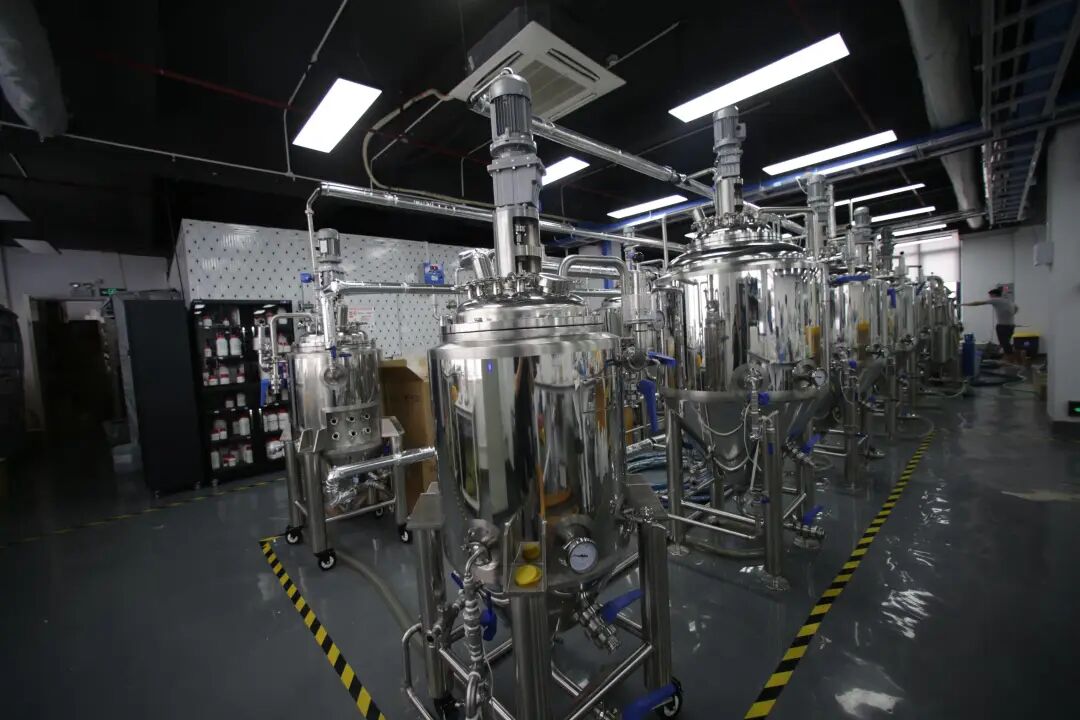 R&D testing fermentation system
Once Biosysen completes multi-version replacement and testing of ArchiCel®'s core metabolic modules, it will obtain thousands of ArchiCel® strains with different metabolic network topologies and material-energy flow patterns. These ArchiCel® strains will serve as engineering starting points for various industrial applications. The omics data from these thousands of ArchiCel® strains will then drive Biosysen's incubation of biomanufacturing product pipelines — including important compound molecules and their derivatives, pharmaceutical intermediates, and biopolymer materials.
Biosysen's long-term goal is to build a complete biotech ecosystem based on the ArchiCel® architecture — the equivalent of a Windows + x86 platform for biotechnology. Kang candidly admits that as a single company, Biosysen's R&D capabilities are ultimately limited, and it cannot alone fully exploit the immense industrial value of ArchiCel®'s extraordinary metabolic diversity. Therefore, Biosysen hopes to incubate broader applications of ArchiCel® through strain licensing, joint development, and other means. Its main partners will be biomanufacturing enterprises, bulk chemical suppliers, and pharmaceutical companies.
From basic research to industrial application, synthetic biology remains in an early stage of development both in China and globally. Biosysen aims to enhance its capabilities in the global rational design of strains, pipelines, and products to bring more possibilities to humanity. "Microbes capable of transforming Martian soil and atmosphere definitely couldn't have evolved naturally on Earth. Perhaps only ArchiCel® could achieve such a goal." In closing, when asked about the ultimate vision of synthetic biology, Kang said half-jokingly to 36Kr.