Journey to the West — Middle East Edition
From June to July 2023, I set off on a round-the-world trip. I started in Shanghai, headed to Beijing first, then on to the Middle East, Europe, the US, Singapore, and Hong Kong, before finally returning to Shanghai. The whole journey took roughly 70 days — the longest trip I've ever taken.
Between June and July 2023, I embarked on a round-the-world trip, starting from Shanghai, then to Beijing, the Middle East, Europe, the US, Singapore, Hong Kong, and finally back to Shanghai. The journey took roughly 70 days — the longest trip I've ever taken.
Each stop had a different focus. The 10 or so days in the Middle East were mainly for meeting sovereign wealth funds and major local corporations. During the two weeks in Europe, besides seeing some LPs, the emphasis was on connecting with local talent, research labs, and promising startups, exploring how they might dovetail with industrialization opportunities in China.
In the US, I mainly visited existing LPs of Linear Capital and some long-standing LP relationships, plus many old friends and classmates — after all, I'd spent nearly a decade there previously, and this was my first time back in three and a half years. Especially since we weren't in fundraising mode and wouldn't be anytime soon, the conversations felt more relaxed and natural, and people were more willing to speak candidly. Then Singapore and Hong Kong, again mostly for LPs and old friends.
I'll probably share my impressions from this tour in a few articles.
Middle East
Saudi Arabia
People and Culture
This was my first time in Saudi Arabia. When a friend first mentioned Riyadh, I was somewhat hesitant — my impression was still shaped by news of explosions here and there. But Saudi Arabia is very different now, remarkably safe. Right out of the airport, I quickly got an Uber and chatted with a local Saudi driver the whole way. The scenery reminded me of China as I remembered it from two or three decades ago in my childhood. Much of it still felt desolate, yet construction projects were everywhere, in full swing. Several Chinese people I met in Riyadh told me the city felt like Shenzhen 30 years ago, though I never saw that Shenzhen myself.
But in the eyes of young people on Riyadh's streets, filled with anticipation for the future, I did see genuine vitality. Saudi Arabia is a youth-dominated country with a median age of 29; 63% of the population is under 30. Young people here, regardless of background, harbor tremendous hope and confidence in the future. I hope they're right — that Riyadh is indeed like Shenzhen 30 years ago, brimming with life. Saudi youth have an almost fervent admiration for the new Crown Prince, Mohammed bin Salman, for daring to challenge tradition, for pushing reforms that the older generation of vested interests (essentially his various relatives) couldn't imagine. In today's Saudi Arabia, whoever wins the youth wins the kingdom. MBS apparently sees Deng Xiaoping as his historical benchmark for his own role in Saudi Arabia's reform and opening. For instance, he allowed women to drive, allowed women to go out without headscarves. Saudis told me that in Riyadh today, roughly 50% of women still voluntarily wear the niqab, about 30% wear the veil but not the headscarf, and 10-20% wear neither. It's their personal choice, not dictated by religious police interpreting doctrine as they please (think of the barbaric Iranian religious police arresting and beating to death women for not wearing veils).
Traffic jams are common in Riyadh, and the construction quality of existing buildings looks mediocre. But the ubiquitous construction sites convey a sense of vigorous, headlong development. The shopping malls have a strong rustic flavor reminiscent of Chinese supermarkets in the 1990s — though there are some upscale ones, they can't compare with Beijing, Shanghai, or Guangzhou.
Saudis are generally quite well-off, given the world's second-largest oil reserves. Yet as the Gulf's most populous country with 32 million people, poverty does exist, though not extensively — perhaps others simply define poverty differently. As the saying goes, with oil and gas in your backyard, you needn't take guff from anyone. But wealth inequality is severe, with most concentrated among a few, especially the royal family and state-owned enterprises or major families connected to them.
Business Opportunities
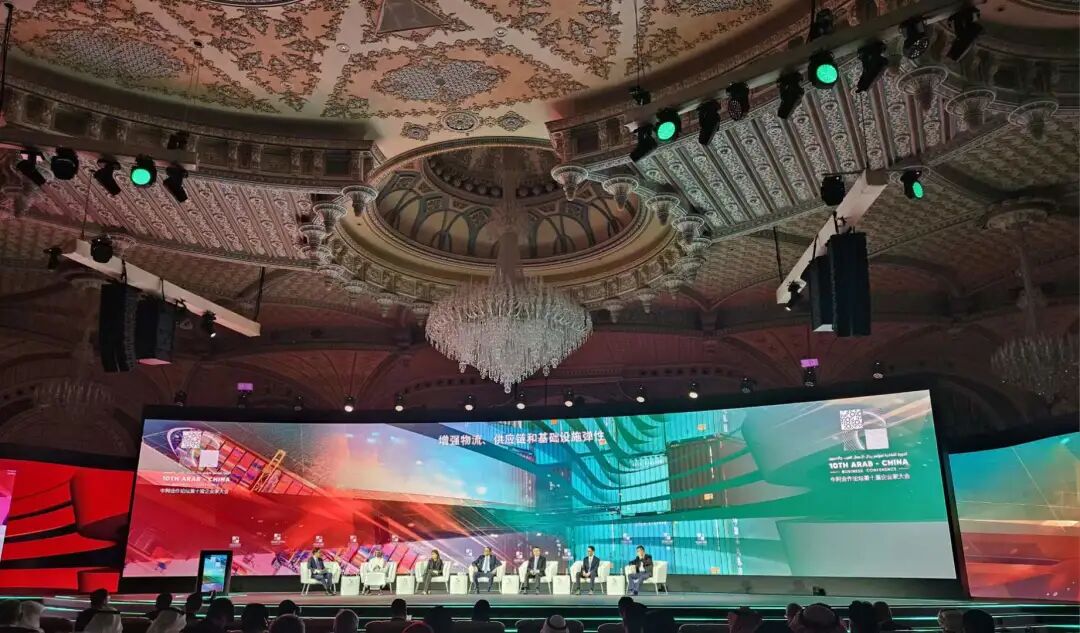
Today's Saudi Arabia has an intense hunger for new technologies and products. They pursue only the best, with absolutely no shortage of money. For example, their average e-commerce order value is 20-30% higher than in the US. This isn't unique to Saudi Arabia — it's similar across the Gulf Cooperation Council countries, since Saudi Arabia actually has the lowest per-capita GDP among these oil states. These six countries together have roughly 60 million people, with considerable purchasing power. The surrounding Arabic-speaking countries (like Egypt, etc.) have 340 million people with significantly weaker purchasing power; but since they share Arabic language and unified cultural customs, this relatively unified market is still worth careful consideration for companies going global.
Therefore, doing business in Saudi Arabia should emphasize performance, not cost-effectiveness. In China-Arab cooperation, previous collaboration concentrated on infrastructure, energy, and telecom — fields suited for large enterprises. But for private companies with innovation and service capabilities, opportunities are just beginning.
On the business front, they're also developing many new areas. One example: digital mapping and address digitization. Saudi Arabia only completed address digitization in recent years. This is hard for Chinese people to imagine. You might ask, then how did they shop online? Exactly — a few years ago, online shopping was basically impossible. I couldn't help but picture a mail carrier arriving at a village entrance shouting "Cuihua, package for you!" During this period, a Chinese entrepreneur in Saudi Arabia wanted to start an e-commerce business, only to discover the country had no house numbers. This entrepreneur worked with various Saudi government departments and, over several years, completed address digitization. From this perspective, Saudi Arabia likely still has many peculiar innovation lowlands where ideas from China or the US can be directly transplanted.
However, Saudi Arabia is only just beginning to pay attention to early-stage innovation. Giants like PIF are also starting to make direct investments or build teams to invest in PE/VC funds, so professionals who've had a rough time at foreign dollar funds should seriously look at opportunities here.
Dubai
After three days in Riyadh, I went to Dubai and stayed nearly a week. It was my first time there, and it turned out far more prosperous than I'd imagined, very much like Singapore or Hong Kong — particularly given the UAE's distinctive structure.
Each emirate of the UAE enjoys strong autonomy, so Dubai can develop as it sees fit. Decades ago, Dubai accumulated substantial wealth through the oil industry. In the early 1970s, the then-ruling elder resolved to transform the emirate, making massive infrastructure investments to build it into an international tourism city.
Today, tourism accounts for a large share of Dubai's GDP. As a successful tourist destination, it's very welcoming to visitors from around the world and highly open overall, so Dubai doesn't entirely feel like a traditional Muslim country.
Of the UAE's 10 million total population, only 1 million are actual Emirati citizens; the remaining 9 million are expatriates. Thus Dubai must ensure its systems keep these foreign residents satisfied.
In the UAE, particularly Dubai — the most populous area with roughly three to four million people — openness and freedom are essential. They must provide a good living environment for these long-term foreign residents. I heard about many wealthy Saudis who live and work in Saudi Arabia but zip over to Dubai on weekends when they want entertainment and alcohol, since Dubai permits alcohol consumption in designated areas. Of course, you won't see young people wandering the streets clutching bottles as you might in parts of London.
Compared to Saudi Arabia or even Abu Dhabi in the same country, Dubai doesn't emphasize industrial落地 [industrial落地 → industrial localization/physical industrial presence] as much. A sovereign wealth fund we visited told us they couldn't even provide suitable sites for industries wanting to establish operations. Dubai tends to emphasize financial development and financial returns instead. Nevertheless, Dubai attracts substantial high-end talent through high-standard living conditions, convenient transportation, and other advantages.
Notably, Middle Eastern investors are currently quite positive in attitude toward investing in China, though cautious in action. Historically, Middle Eastern investment concentrated heavily on assets, especially in Europe. For instance, much of London's property is owned by Middle Eastern sovereign wealth funds. However, over the past decade, they've begun turning toward emerging markets, particularly Chinese hedge funds, large PE funds, and buyout funds. In recent years, they've also gradually started paying attention to VC investments. Over the past six or seven years, they've taken their lumps — many people previously thought they were rich and naive, and got burned in various ways. Now they've become very cautious and sophisticated, bringing in more professional teams. Overall though, they still fall somewhat short of the most sophisticated veteran American investors. The Middle Easterners frankly acknowledge this themselves, but they do have abundant capital, thick blood bars [blood bars → deep reserves/running room], and they'll learn gradually. They're still actively improving — both attitude and execution are quite on point.
This Middle East trip also gave me new perspectives on Muslims and Islam. I found that Islam is actually a religion with commercial rule attributes, emphasizing rules and etiquette for interpersonal conduct. Most Muslims are quite moderate. Reading some history, I felt that Islam, emerging several centuries ago, was like a social operating system emphasizing unified rules for the then-fragmented Arab society — a productivity leap from DOS to Windows, gaining rapid adoption upon arrival. Rules like not eating pork initially formed as local customs based on economic and environmental factors — pork simply wasn't the optimal protein source in Arabia's geological conditions compared to cattle and sheep — only later evolving into religious taboos. Ultimately, religious unity achieved Arab world unification.
Today's Middle East extends sincere and enthusiastic welcome to Chinese companies and institutions visiting. They don't care about American investors' current "coldness" toward investing in China; they joke that this gives them their big opportunity to participate in China's economic development. Indeed, previously China's best funds, especially VC and PE funds disciplined about scale, didn't really consider Middle Eastern funds. But this doesn't mean Middle Eastern funds are rash in their investments. Apparently there's considerable sophistication here, blending American-style professionalism with Chinese-style relationship dynamics.
Regarding my travel experiences in Dubai, I mainly explored two things. First was desert dune bashing — driving deep into the desert in an off-road vehicle, then sandboarding down from heights and tumbling dizzyingly. Second was Dubai's skydiving, with the Palm Islands as backdrop — spectacularly effective, thrilling yet seemingly safe. This was my second skydive, and my facial expression management was noticeably better than the first time.
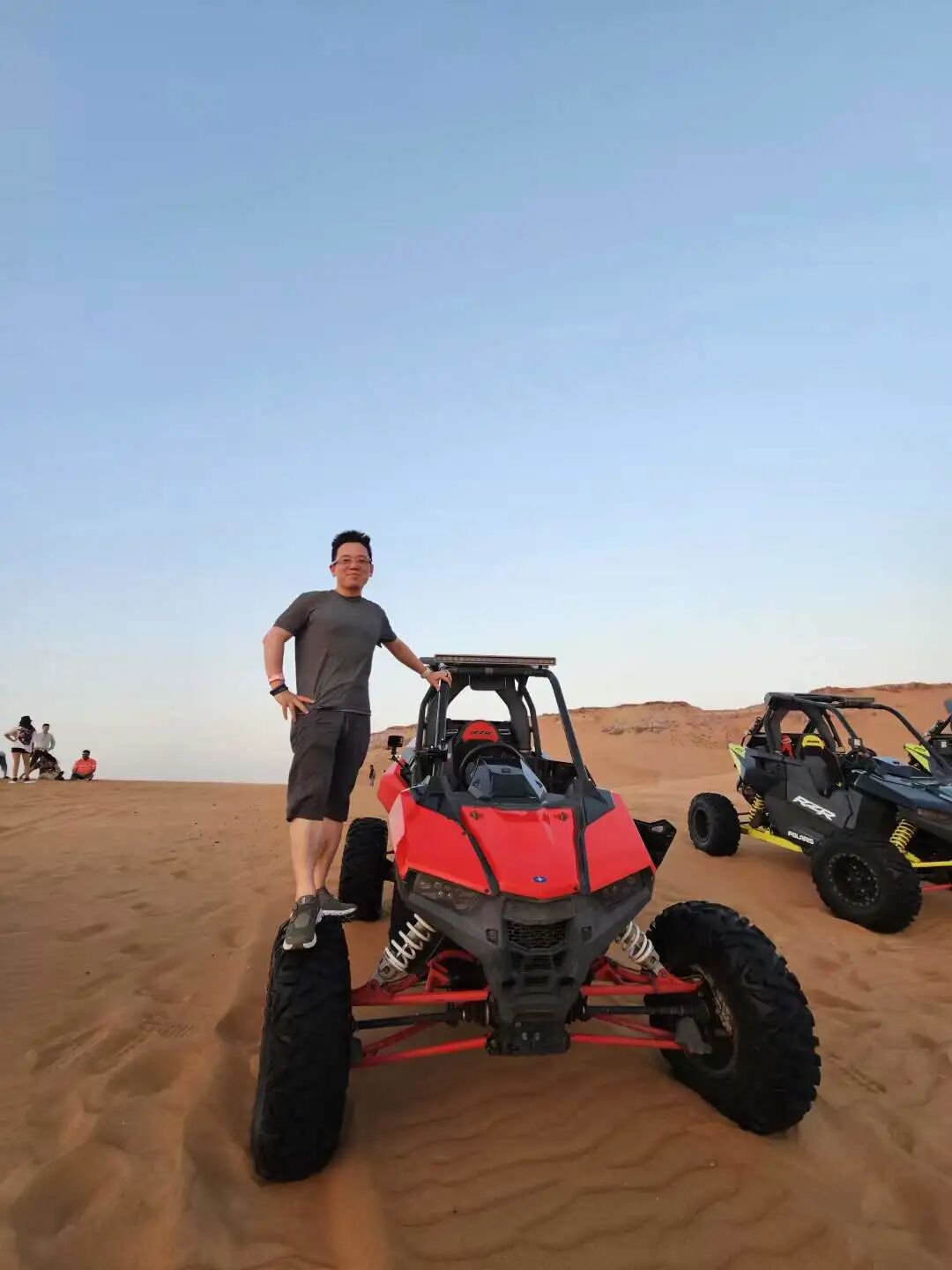
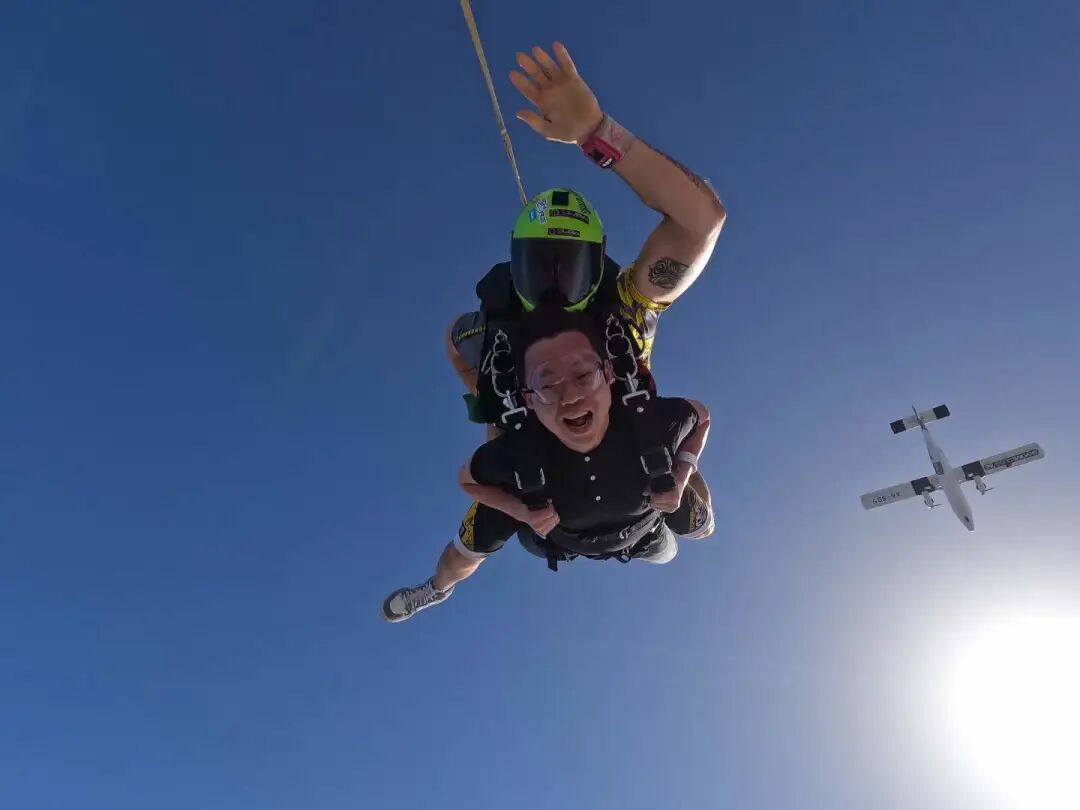
That week we went to so many places, walking 10,000-20,000 steps daily with good buddies, taking many Ubers. I found the Uber drivers were mostly from Pakistan, and their attitude toward Chinese people was incredibly warm — they'd start with "Chinese? I'm from Pakistan. Brothers." One veteran Pakistani driver who'd worked in Dubai seven or eight years repeated for half an hour why he believed the future belonged to China, until I told him multiple times "Bro, easy, keep it low-key."
Something quite magical also happened in Dubai. When I first arrived, I didn't even know what the ten-year Golden Visa was, but by the time I left a week later, I already had my ID card. Their government efficiency is quite high — there are clear rules, but they're also very willing to accommodate special circumstances. I used the genuine reason of "I'm flying out in a few days" to ask staff to expedite several steps. A pragmatic, efficient government can get things done. I'll need to visit the Middle East more going forward, and we also plan to bring more of Linear Capital's portfolio companies to take a look.
Abu Dhabi
My impression of Abu Dhabi differed from Dubai as well. Abu Dhabi has more oil and more wealth, but slightly inferior infrastructure development. Yet it's also quieter, more suitable for family life. Dubai focuses more on gathering high-end talent (especially young people) and corporate headquarters — more dynamic and bustling.
Abu Dhabi also pays more attention to business attraction and recruitment, and is quite willing to provide funding for this. They welcome companies that truly have everything ready except the money.
My overall impression of the Middle East is quite positive — a new market full of opportunity and hope.
PS: Cover image generated by Tiamat.
About Linear Capital
Linear Capital is an early-stage investment institution focused on "frontier technology + industry," covering frontier technologies such as data intelligence, digital new infrastructure, next-generation robotics, and new technological transformations in traditional sectors (such as biomedicine, materials, and energy), applied across vertical industries to substantially improve industrial efficiency, empower solutions to pain points, and complete industrial upgrading — achieving excess commercial returns through significant enhancement of industrial value. It currently manages ten funds with total assets under management of approximately $2 billion.
Our investment stage focuses primarily on leading angel to Series A rounds, with typical investment amounts of $3 million to $8 million or equivalent RMB per project.
To date, we have made early-stage investments in over 120 entrepreneurial teams including Horizon Robotics, Kujiale, Sensors Data, Tezign, Rokid, Guandata, and Agile Robots. The combined valuation of Linear Capital's portfolio companies is approximately $20 billion.
In the near term, Linear Capital is striving to become the best "Data Intelligence Technology Fund," and in the long term, gradually build itself into the most influential "Frontier Technology Application Fund."