Red Star Over the West — The Europe Chapter
[Last week](http://mp.weixin.qq.com/s?__biz=MzAwNTAyMDAyNQ==&mid=2652305127&idx=1&sn=a57926357750f1a5edad1ef67de718e0&chksm=80c156f1b7b6dfe710934bfd06d7452e0
Last week I shared my observations and impressions from the Middle East. This post is about Europe.
I made two trips to Europe this spring and summer, visiting the UK, Germany, France, Switzerland, Italy, Turkey, and other countries. The main agenda was visiting universities, research institutes, and catching up with old and new friends. What left the deepest impression was how strong Europe's early-stage original technology research is — but how it lacks mature venture capital systems and supply chains to translate that research into actual products and get them deployed. For Linear Capital, the question we thought about most during this trip was how to land these original technology research breakthroughs in China's industrial upgrading. After returning to Shanghai, we also pulled in founders from Linear's portfolio who have European backgrounds (having studied or worked there) to exchange ideas, and we distilled some takeaways that I'll share below.
 (EPFL entrance)
Let me start with some personal observations and impressions from daily life. The last time I came to Europe was five years ago — without comparison, there is no harm done. First, Europe is expensive. My summary: Home Inn quality, Hyatt pricing. We even stayed at a hotel charging 350 euros that somehow had no air conditioning. Pretty outrageous. Food and lodging share this pattern — the low-end stuff is way more expensive than in China, but normal Michelin-starred restaurants are half the price of their China equivalents. Of course, there are also very expensive Michelin places, but I have no interest in those (after so many years as an engineer, I'm used to going for value).
A second strong impression: wireless networks and 5G, both coverage and speed, are pretty mediocre. Third, people are more sensitive about geopolitics (though not as sensitive as Americans). Five years ago, when you met people, the conversation was usually about what their company does, what their product is, how they commercialize. Five years later, geopolitics is an unavoidable topic — that's a massive change.
But I'm optimistic. I feel Europe's attitude toward China remains very friendly, pragmatic, and open to cooperation. As a tech fund, everywhere Linear went, the exchanges felt quite open and sincere. Conversely, China's massive market and industrial manufacturing capabilities represent attractive investment opportunities for Europe. So overall, you can still feel that they want to engage with friends from China, want to explore development opportunities together. In this atmosphere, observation, exchange, and discussion all become possible.
As a Chinese person spending time in Europe, what you probably need to adapt to most is the pace of life. Their pace is genuinely slow — in Chinese terms, not "juan" enough [not cutthroat enough]. Among Europeans, Germans and Swiss are relatively more driven, but their "drive" is limited to getting things done during work hours. Some of our portfolio founders who previously worked in European tech also say Europeans work quite seriously during office hours, but the boundary between work and life is fairly clear. The overall culture rejects receiving emails or messages after hours, and people tend to use email. Of the countries we visited, the Spanish are even more extreme — lunch at 3 p.m., dinner at 8 p.m., constantly chatting over plates of tapas for ages. There's the factor of long daylight hours (it's still light at 10 p.m.), and overall the populace pursues "for fun" more. I think there's also historical reasons — their historical accumulation and economic development have reached a point where people don't need to work so hard to live decent lives. Plus, industry unions in various sectors constrain how companies hire and operate.
By comparison, this is because commercial society has been磨合 [tempered] over many years into a "stable state." The system has already been optimized by the last industrial revolution. There's not much delta left in the system, and the role individuals can play within it isn't particularly large, so people have settled into this pace of life. In China, we're more willing to throw more people at problems, constantly working overtime, constantly grinding. But the problem is we're less willing to use systematic tools to improve overall social productivity — something reflected in the willingness and habits to pay for SaaS products. On the bright side, this also shows China's commercial society is still in dynamic adjustment. In this process of competitive forward motion, reality has many shortcomings, but it's precisely these shortcomings that create many opportunities.
Europe also has some very strange phenomena I still haven't figured out — like having to pay to use the bathroom. Imagine a pretty high-end mall, and when you can't hold it anymore, you discover you have to pay 0.5 euros for relief. That particular mix of urgency and indignation is something you only understand through experience.
The most unforgettable part of the Europe trip was in Istanbul — crossing between Europe and Asia twice in one day.
 (Istanbul)
 (Berlin)
 (Florence)
If I continue with obvious contrasts, what struck me most was electronic payments and AIGC. In European countries, electronic payment means adding your debit or credit card to Apple Pay or Google Wallet to achieve payment digitization. In other words, they follow a similar path to the US — electronic payments are born out of credit card systems that have existed for decades. China, by contrast, went straight to mobile payment natives (like Alipay) or grafted onto new products that emerged in the last decade on social networks (WeChat Pay). This is easy to understand — after all, we leapfrogged their credit card era entirely and went straight to mobile payments. All innovation must respect history. Opportunities for great leaps forward often come precisely from being able to shake off historical baggage, or from not having it in the first place. Traveling light makes it easier to lead. China's mobile payments are exactly this.
The same logic applies to AIGC. This is a quite interesting phenomenon. Of course, part of the reason also relates to what we'll summarize later about startups here lacking systematic support. But overall, if we're talking about AIGC-related startups, European companies can't compare to their Chinese or American peers in either quantity or quality. The main reasons include: they don't have large internet companies, or companies controlling massive data (or vertical domain data), as supporting industries to drive industrialization. So some excellent talent or academic innovations (like GAN, which Europeans invented) end up moving to the US to develop. No industrial chain — you have a starting point, but no follow-up opportunities (software is like this; other industries have similar problems). Plus regulations are very strict, data oversight (GDPR) is very strict (excessively so), making many things difficult. And the population itself isn't large (2022 statistics show total European population at 748 million, with 0.12% growth), with many countries and many languages, making the market fragmented and dispersed. This forms a sharp contrast with China, the US, and India — countries with large populations, unified languages, and relatively concentrated markets.
This is also what I most want to say: the opportunity to combine Europe's frontier technology research with China's market and supply chain.
Europe's tradition and atmosphere for original technology research is excellent. Schools encourage research and innovation, which greatly helps scientific research and early-stage product commercialization. For example, in the UK we visited Trinity College Cambridge (where Newton worked), Hawking's office at Cambridge, the building where penicillin discoverer Alexander Fleming worked, the Cavendish Laboratory (where Francis Crick and James Watson together discovered the double helix structure of DNA), and more. In Switzerland, we visited ETH Zurich, which has produced over 32 Nobel laureates and 1 Turing Award winner (it's also Einstein's alma mater). Without exception, these schools are very supportive of startups.
 (Mathematical Bridge, designed by Newton)
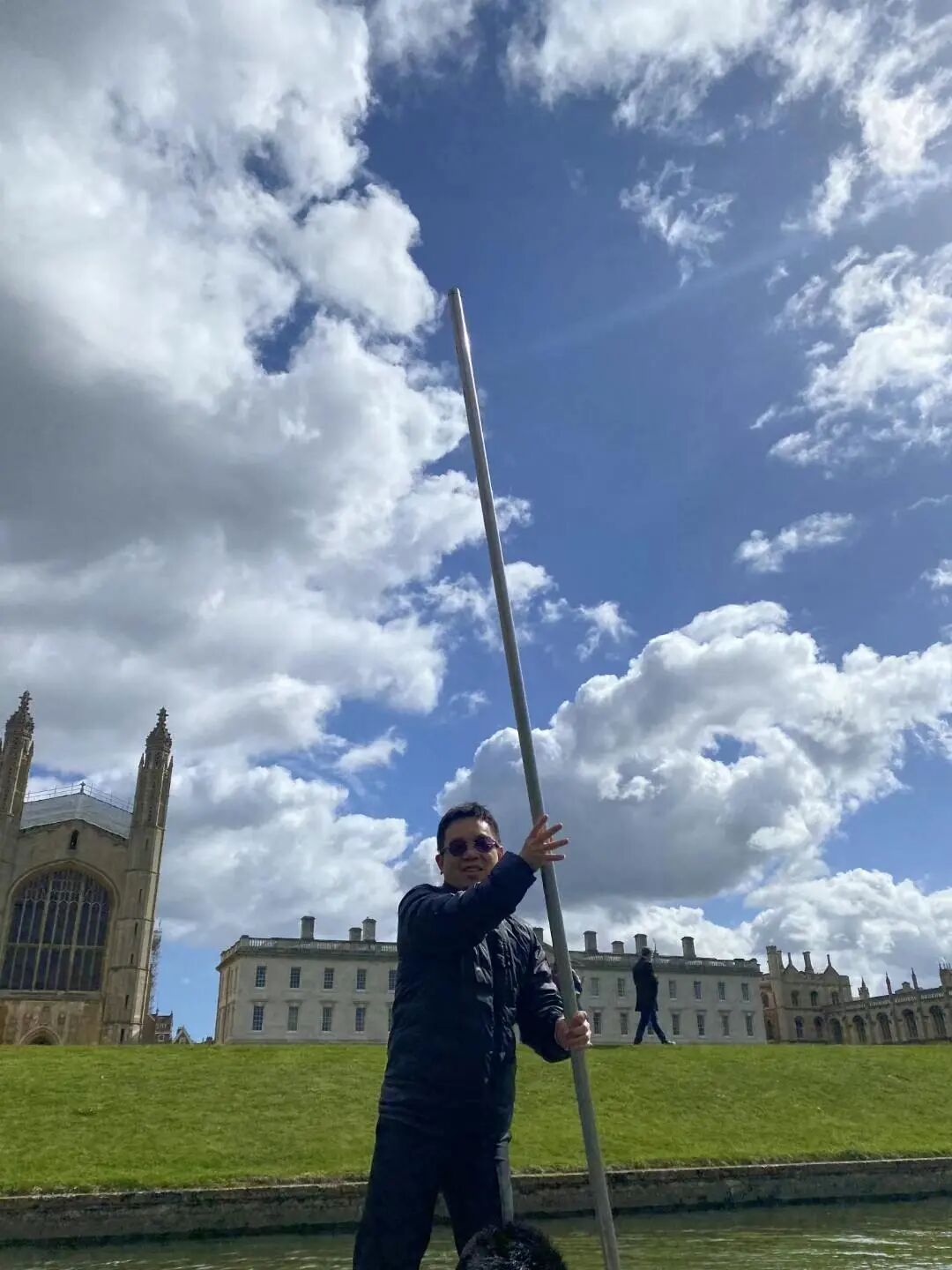 (Recreational activities at Cambridge)
Beyond schools, individual investors also play a fairly important role. Take the UK as an example — there are many individual investors in early-stage investment, and they're quite active. At the same time, tax policy stipulates that losses from early-stage project investments can be deducted from taxes. This gives innovation considerable room, encourages individual investors, and brings a virtuous cycle of original technology innovation. London is now a center for biopharma innovation, with many relevant startups and industry activities gathering there.
But the question is: with such a good research environment, why does Europe rarely see companies that develop locally, that transform research results into actual technology products? What we heard is that the most common situation here is actually this: from R&D to testing, often before a new technology can be fully productized, a startup may get acquired, or have to go elsewhere to seek growth and development.
Compared to China and the US, Europe's lack of full-process investment mechanisms from VC to PE is one underlying reason. With many schools and individual investors, it's easy to create a "keep the good stuff in the family" and "insider circle" culture. If you're not in this "circle," it's hard to access or invest in good projects.
Second, compared to other regions, Europe has a notable characteristic: there are many long-established, old-brand enterprises. We heard that when these established companies discover emerging startups that could complement or compete with them, they often acquire the original technology or product prototype through acquisition and digest it internally. For entrepreneurs, selling the product for a substantial acquisition price to achieve financial returns is indeed not a bad option. But from the perspective of a startup's development path, this atmosphere and the "rules of the game" it creates can also foster an entrepreneurial mentality of "getting rich early and getting by with less" — lacking long-term goals and preparation for sustained struggle. Naturally, it's hard for companies to get big. "Can't get big" has become the common curse of European new tech enterprises in recent decades.
Founders from Linear Capital's portfolio told us that European-background technical entrepreneurs are best at going from zero to one (or conservatively, from 0 to 0.5) — precisely the part that Chinese本土 [local] entrepreneurs are relatively less skilled at. But Chinese entrepreneurs are extremely good at the leap from 1 to 100. If the next phase of entrepreneurship combines European innovation with China's engineering culture, China's massive market, and supply chain capabilities, this may also be an effective path for frontier technology to land in industry and solve China's industrial upgrading challenges.
We're already seeing some examples. Let me give two cases from Linear Capital's portfolio here. Agile Robots — the team originated from the German Aerospace Center, and the founders have studied and researched robotics in China and Germany for over 20 years, from high-precision force control and force sensing technology to today's AI intelligent robots deployed on production lines. Digisight Medical — the founding team comes from a top German robotics and AI lab and a Fortune 500 German pharmaceutical company. Their "Digisight MicroEdge" ophthalmic surgical robot recently completed the first clinical retinal sub-thrombolysis surgery for macular hemorrhage at Zhejiang Provincial People's Hospital — the first clinical application of an ophthalmic robot in Asia. We believe there will be increasingly more such cases in the future.
Our observations and reflections from visiting Europe, cases from portfolio companies, plus the welcoming attitude we felt in Europe and the open atmosphere when discussing technology topics — we believe Europe is a place worth investing more energy to find projects and talent. We also strongly believe that if these excellent original technologies can be combined with China's industrial upgrading, it will bring enormous commercial value and social value.
PS: Cover image generated by Tiamat.
About Linear Capital
Linear Capital is an early-stage investment institution focused on "frontier technology + industry" — that is, frontier technologies represented by data intelligence, digital new infrastructure, next-generation robotics technology, and new technology transformations in traditional domains (such as biomedicine, materials, energy, etc.), applied across vertical industries to substantially improve industrial efficiency, empower them to solve pain points, and complete industrial upgrading — achieving excess returns through substantial increases in industrial value. We currently manage ten funds with total AUM of approximately $2 billion.
Our investment stage focuses on leading angel to Series A rounds, with typical check sizes of $3 million to $8 million or RMB equivalent.
To date, we have made early-stage investments in over 120 entrepreneurial teams including Horizon Robotics, Kujiale, Sensors Data, Tezign, Rokid, Guandata, Agile Robots, and others. The combined valuation of Linear Capital's portfolio companies is approximately $20 billion.
In the near term, Linear Capital is working to become the best "Data Intelligence Technology Fund," and in the long term, gradually build itself into the most influential "Frontier Technology Application Fund."