"贻如生物" Su Rui: How the World's First Continuously Produced 100% Bio-based Leather Was Achieved | Linear Capital Portfolio Interview Series
Today, SynMetabio, a Linear Capital seed-round lead portfolio company, announced it has raised tens of millions of RMB in a Pre-A round. One year after announcing its seed round from Linear Capital in April 2023, SynMetabio has made significant progress, **including optimizing its entire production process, substantially reducing manufacturing costs, and achieving cost advantages for bio-based materials in most application scenarios.** Next, SynMetabio will build a factory in Changzhou to scale up mass production of its synthetic leather.
Today, Naro Biotech, a portfolio company in which Linear Capital led the angel round, announced it has raised tens of millions of RMB in Pre-A funding. A year after announcing its angel round led by Linear Capital in April 2023, Naro has made significant progress, including optimizing its entire production process, substantially reducing manufacturing costs, and achieving cost advantages for bio-based materials in most application scenarios. Next, Naro will build a factory in Changzhou to achieve scaled mass production and commercial delivery of cultivated leather. Recently, Linear Capital partner Neil Zeng sat down with Naro founder and CEO Rui Su to discuss his thinking on the development of bio-based leather, and how he has grown rapidly as an entrepreneur—while being the youngest founder in Linear's portfolio.
The Linear Portfolio Founder Interview Series is a regular interview column by Linear Capital. Through in-depth conversations with founders of portfolio companies, we share stories of tech investment and tech entrepreneurship. For more interviews, click "Read More" at the end of this article.
Neil Zeng: Rui, please start with a brief introduction of yourself and the story of Naro Biotech.
Rui Su: Naro Biotech was founded around December 2021 in Shanghai. It originated from a synthetic biology project at ShanghaiTech University, which we then pivoted into synthetic biology materials.
Before meeting Linear, we experimented with many directions—different skincare ingredients, other high-value biological synthesis products. Around the time we met Linear, we settled on applying synthetic biology to the leather industry.
Currently, Naro has developed the world's first continuously produced 100% bio-based leather, and we're actively collaborating with downstream partners. We're also making efforts in non-food biomass conversion, as well as high-performance and bio-based coating materials.
Neil Zeng: Why did you start a company? What was your original motivation?
Rui Su: For me, entrepreneurship was a very natural and inevitable path. During my formative years, around ninth grade, my father asked me what I wanted to do. I said I wanted to be an entrepreneur. He asked why, and I said I wasn't sure—I just felt that entrepreneurs did particularly solid things. Thinking further, I realized entrepreneurs could lead changes and drive transformation in civilization's development, which appealed to me. From that point, I seemed destined for entrepreneurship. Throughout my education, I consciously or unconsciously cultivated these capabilities—early on in student government, and in college I immediately minored in innovation and entrepreneurship management. At graduation, I had degrees in both innovation/entrepreneurship and biomedical engineering. By then I was already running my company, having connected with MiraclePlus as our seed investor, and things developed smoothly. The more I did it, the more I loved it. Despite many dark moments, my life motto has always been: if you don't have dark moments, what's the point of living? So entrepreneurship may be the optimal solution for what I pursue—meaning in life, strategic control of the future, personal fulfillment. Honestly, I have no basis for comparison, since I've never worked for anyone else.
Neil Zeng: How did you meet Linear? Any memorable stories from your interactions?
Rui Su: Linear's lead in Naro's angel round was my most difficult round—we had nothing, yet people were willing to invest. To this day, I'm deeply grateful for that validation. Having that round versus not having it was crucial for Naro's development—it truly enabled us to accomplish things and eliminate much uncertainty.
The story is more interesting. My first meeting with Linear was during the mask era, talking online with Tianyi. We went from synthetic biology to traditional Chinese medicine to wellness, discovering two young people who both liked wellness—this seemed like a very interesting firm. What impressed me more was how many times we met, despite online and offline restrictions. I remember listing all possibilities and meeting every single partner multiple times before finalizing. It felt so thorough and detailed that I thought, for Linear, not investing would be too costly—the sunk cost was too high.
I think often, like when we earliest discussed Naro's future production, to later achieving breakthrough production paths, the reality differed from what we discussed. So sometimes it's hard to evaluate, even for us founders, what our future state will be. Perhaps we shouldn't overly pursue logical closed loops and rigor. Business operations need to be closed-loop, but investment sometimes doesn't need to be. Our company has a saying: life will find the way. Life always finds its path; as long as a company evolves, it will find a way—don't worry too much about what it is now. Of course I'm being somewhat absolute. From a closed-loop perspective, look more at the people, especially young people—honestly we have no advantages, except one: we can sleep at the company, and we're ready to fight.
Personally, when early logic isn't clear, there are two possibilities. One: spin in place until you die. Two: find entirely new paths, iterate fast, develop fast. Of course I'm an outsider; investment is very difficult. Judging people is something I'm profoundly unprofessional at. Neil, only after seeing so many people can you summarize patterns—this is your core competence.
Neil Zeng: As you said, Naro's product direction evolved, but core competitiveness remained. Early on, synthetic bio materials were just emerging. Over these two years, including three funding rounds, you've met with hundreds of investment institutions. Of those, how many truly understood what you're doing?
Rui Su: Very challenging question. First, I can't blame people for not understanding—we're doing something quite interdisciplinary, spanning synthetic biology, large-scale fermentation engineering, polymer materials, to downstream consumer applications driven by ESG or green manufacturing. The scope is relatively broad. And indeed, before Linear's lead in our angel round, our directions were quite diverse. Later we felt as a startup we needed more focus, eventually converging on bio-based leather. Core reasons: first, large market with clear demand. Our product selection logic followed this—many customers proactively approached us, saying this had huge future potential, that they'd been searching for such materials for years without success. We realized this might be a gap, a blue ocean where we strategically chose a new value point to provide customers with novel solutions while having advantages in cost and manufacturing.
With investment institutions, early on we complained that no one understood us. Later we became more accepting—being misunderstood is normal for an interdisciplinary field or industry.
However, we're happy to see that as we delivered progressively, turning uncertainties into certainties—whether in production, sales, or downstream customer validation—people gradually understood.
Neil Zeng: Understood. Linear has always paid close attention to technology projects involving interdisciplinary science. From the history of science, interdisciplinary concepts have always existed. Though disciplines specialize, increasingly problems can't be solved by single disciplines. We believe specialization and integration complement and promote each other, enabling disruptive innovation. Internally at Linear, members covering different domains often jointly research and decide on projects—for Naro, colleagues with biology backgrounds and chemistry backgrounds participated together. In your investor interactions, did investors with materials backgrounds understand you more easily, or those with biology backgrounds?
Rui Su: This is quite interesting—this brings me back to meeting Linear. The investment manager on our deal, Zhou Tianyi, had an interdisciplinary background. I'm not sure whether to call him a biology investor or materials investor—he was chemistry. But sometimes understanding has little to do with expertise, because our modules are quite balanced. If you studied biology, you might have biases in materials understanding; if materials, you might not grasp the biology as well. So I think the core is maintaining an open mindset. When we talked with Linear, they felt very open, our discussions were broad-minded, and to this day Linear keeps providing new ideas. Our current product system actually came from a sudden idea during discussions with Linear friends—we went back and tried it, and wow, it really worked, essentially leapfrogging a very important mass production hurdle. So I think mindset matters more.
Neil Zeng: Yes, Linear's logic is also to maintain an open mindset in directions people can't immediately understand. Ultimately, the investors who become interested and decide are those who understand the technology's value and its future application directions. In this field, where does Naro currently stand globally?
Rui Su: Not to be immodest, let's not talk about our global position, just share some data points.
First, we should currently be the only company globally that can achieve 100% bio-based leather continuous production. There are many ways to achieve 100% bio-based, but when measuring an industry's mass production capability—basically at the level of hundreds of thousands of meters—Naro should currently be the only one achieving hundreds of thousands of meters with continuous production. That is, we truly produce in roll form, aligned with existing artificial leather development processes.
Many overseas companies use sheet-based production thinking. We should be one of few using roll-based production that can interface with existing processes. This stems from fundamentally different thinking when developing our product. For artificial leather processes, we lean more toward manufacturing, looking more at artificial leather rather than genuine leather—and artificial leather usage is 10x that of genuine leather. For artificial leather, China has unique advantages: globally, over 80% of artificial leather capacity is in China. So when designing our product, though we early on went through a sheet phase, we later found first, large-scale application was difficult, production was hard. Second, it didn't fit well with existing industrial systems. So we essentially rebuilt from the chassis to align with existing industrial systems, creating an integrated solution.
Neil Zeng: From your description, compared to other companies in related fields, Naro took a somewhat different technical path, but the core is that you believe this better fits China's upstream-downstream industrial chain.
We've internally discussed that many people think synthetic biology mainly faces engineering problems without particularly big technical hurdles. But I still feel that understanding synthetic biology's true technical difficulties isn't easy.
We all know the two hardest fundamental problems: one is product selection—what to biosynthesize. Second is product scale-up, mass production. How to select, what chassis organism to choose, how to optimize and iterate metabolic pathways, fermentation processes, what carbon and nitrogen sources to use, and how to ensure efficiency while maintaining cost structure—this is quite difficult. So I'd like to ask Rui, beyond the scale-up and industrial chain alignment we mentioned, including in product selection, fermentation scale-up, what other insights do you have?
Rui Su: Understood, Neil raises a very professional question. When people first looked at synthetic biology, they focused more on technical barriers—whether your strain had uniqueness, whether product pathway design had uniqueness. Later people gradually realized manufacturing scale-up was crucial, so for a period, core investment criteria became whether pilot scale was completed, and even today many synthetic biology valuation logics still use pilot completion as a milestone.
But now people are noticing that productization form and how to meet downstream customer needs are critical questions. We internally divide this into three barriers:
First, technical barriers—core is chassis organism, including carbon/nitrogen source selection and cost structure.
Second, translating to manufacturing barriers—whether you have scalable processes, stable production, guaranteed yield, and cost scale effects.
Third, product barriers—how to combine products. Currently most synthetic biology is in a very simple state: produce ethanol for biofuel, or some pharmaceutical intermediate for direct sale—very simple structure. But going further may involve combining with other substances to form something specialized. Many US companies do this; when we recently looked at chitosan selection, they combine chitosan with other things into a solution, selling the solution directly, which becomes certain coating agents or covering materials—the thinking opens up.
Conversely, we also went through several stages, perhaps more complex because our final leather product requires other things as additives, bio-based controls, while guaranteeing 100% bio-based. So supplier selection matters, and we also need to scale up leather coating. So when designing our entire path, we prioritized following existing artificial leather production paths. We have excellent engineering teams from the synthetic leather industry. Based on existing gears, we reverse-engineered what could satisfy existing production conditions, then worked upward to what strains could satisfy our conditions, then controlled costs— yielding many insights. Early on we considered agricultural waste. At first we thought bio-fermentation's main cost was raw materials, perhaps approaching over half of costs. We planned to replace glucose with agricultural waste; many now use corn waste. We're still working on related non-food biomass, like straw transitioning gradually from corn cobs. But in actual production, we found more bugs—for example, using standard microorganisms requires sterilization, and sterilization's main cost is steam. That is, reducing raw material costs from 3,000 RMB/ton to 1,200 RMB/ton might mean less than solving steam costs. So based on our original strains, we looked for non-sterilization approaches.
We ultimately adopted an integrated system from high-performance strain development to wastewater treatment to downstream scenario applications, stringing together core know-how, finally presenting what we call high-quality, high bio-based content, competitively priced and cost-competitive products to customers. So it's ultimately a systematic engineering problem, requiring many people with different professional backgrounds to jointly research how to build such an integrated process and system. The hardest requirement is technical people must have market thinking—they must reverse-engineer from market perspective. Early on we often had conflicts between departments; these require product managers to carefully coordinate and connect every step, ultimately delivering products to customers.
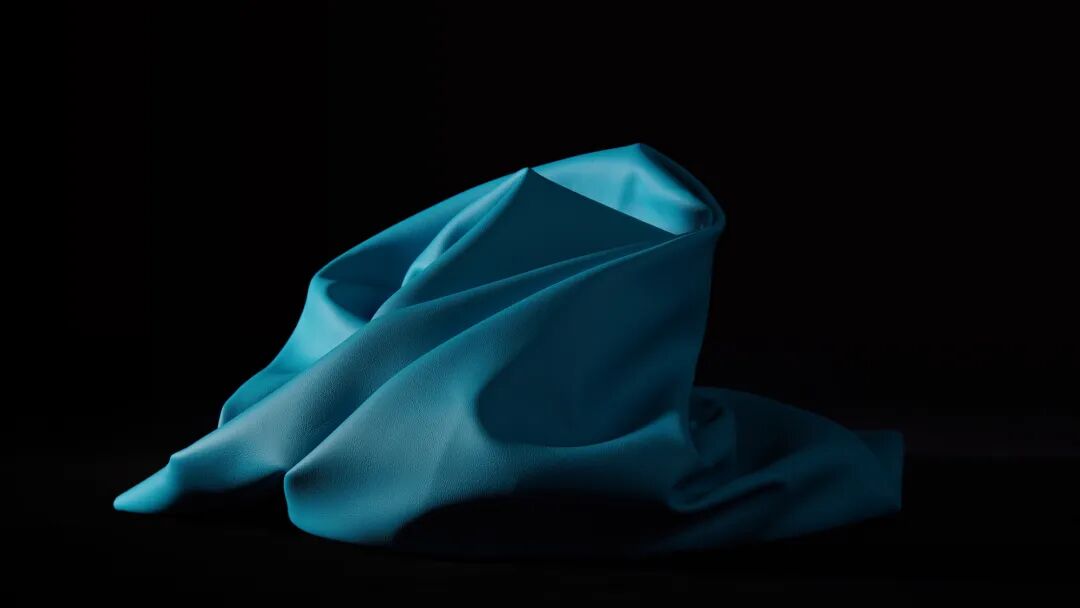
Naro Cultivated Leather
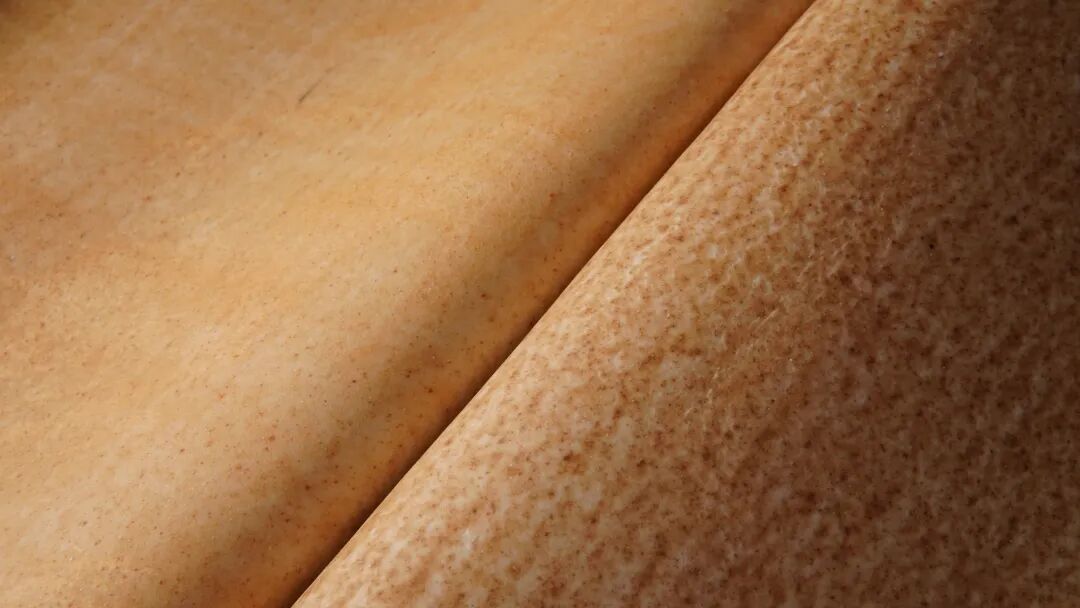
Mycel Mycelium Leather
Neil Zeng: When I first met you, you'd just won gold at iGEM and were still a student. Yet the development approach you just described starts from market demand and mass production—somewhat end-to-beginning thinking. Also, precision fermentation is a major challenge, but you took another path, deliberately cultivating a highly adaptable strain to reduce overall fermentation control. I'm quite curious— in 2021, you'd just led an undergraduate team to win gold at the International Genetically Engineered Machine competition and placed third globally, still a student. How did your thinking transform to your current entrepreneurial state? Could you share your experience and how your thinking evolved?
Rui Su: I have to thank Neil for constantly pushing me to focus. Entrepreneurship isn't as free as research. Early on with mussel adhesive protein, we found it wasn't market-rigid demand, took a hard loss, had to change direction. Adopting factory and manufacturing thinking came because our earliest bacterial cellulose route crashed when about 4,000 modules ran simultaneously—prior investment completely wiped out. After taking that hard fall on mass production, we realized we needed to build on existing industrial wheels. When talking with customers, they'd ask why costs couldn't come down—unacceptable. Every time we got knocked down hard, we had to get back up.
So often we perhaps just fail fast, are pragmatic, don't pursue technical perfection, but stand from customer perspective thinking what our downstream customers actually need and how we satisfy them.
We're currently still ToB. What we can do is constantly create new value and enhance current value, because ultimately we need to sell products. Upstream, don't pursue excessively high technical states; core is fast iteration, good enough is fine. As Neil mentioned, we could do precision fermentation and have extensive experience, but sometimes need technical restraint. As a researcher, pursuing research perfection is fine, but now we're a company, an entrepreneur, we need to solve problems quickly in engineering ways. If something can't support our core hypothesis, discard it rapidly—don't hesitate, don't wait. Time is the most precious asset; startup survival rates are quite low. What we can do is quickly find business models, quickly sell things, find suitable directions—that's what matters most.
Conversely, I think many things are like this, especially doing technology—always take off first, adjust direction later. Get the plane flying first; don't worry about how bumpy takeoff is, maybe even take off and drop a bit before flying up is viable. Including precision fermentation—we've reached good consensus with our technical team: when product side says no problem, we'll pivot to precision fermentation on our existing foundation, exploring higher-value things, but preconditioned on our current core hypothesis being validated, when our capabilities start overflowing.
Neil Zeng: Yes, I think this is quite worth considering for tech entrepreneur peers. Often we focus too much on science and may neglect creating value for customers. Actually, after quickly completing proof of concept, we should quickly complete proof of value, the PMF value point. After TPF is completed, knowing the technology can solve the problem, quickly move to the PMF point.
Rui Su: Yes, I think closed loop is important, forming an entire business closed loop. Our internal definition of closed loop is having customer delivery and repurchase—only then is it a complete business closed loop.
Neil Zeng: So what's Naro's current progress in this area? For example, in November 2023 we saw Naro and Dole's announced strategic partnership, and know besides your first Naro cultivated leather, you've also launched the Mycel mycelium leather product line. Could you share how Naro's industry对接 and commercialization progress currently stands?
Rui Su: We're currently focused on the entire civilian leather field—various top customers excluding automotive leather, roughly the top two market share customers in each segment we've connected with. Currently focusing on several major areas including luggage, casual shoes, 3C, furniture, etc. In automotive, we signed a strategic cooperation agreement with listed company Kuangda Technology, currently collaborating to accelerate bio-based materials into OEMs through to application. One important business model is finding the most head customers in each industry, polishing products together with them. This year we'll have several major customers in different areas, very iconic orders and products meeting consumers.
Those were all downstream; we also have upstream cooperation partners, like the Dole announcement in November 2023. Mizuho Bank introduced us, saying very promising, we could cooperate, and we hit it off immediately. Through nearly half a year of repeated trials with Dole—from initially bringing back waste fruit, fermenting, various testing, completing verification that it could serve as fermentation material—we finally announced at the CIIE. We're also exploring raw materials with many brands, like Snow Beer waste yeast, possibly doing some joint research, etc.
We're building our first million-meter capacity factory in Changzhou. Phase one includes four sets of 100L-20,000L fermentation systems and one coating production line with annual capacity of 5 million meters, beginning first ultra-large-scale mass production.
Neil Zeng: Quite remarkable. In 2023 some overseas pioneers encountered problems, some closed product lines. Naro was founded only at end-2021, yet has achieved such results. What do you think are the two most important points that impress customers?
Rui Su: First, Naro truly fits current industrialization solutions—we basically ensure customers receive products that can interface seamlessly, or only need to adjust a few different parameters to use directly. The ease of use compared to overseas peers is vastly superior.
Second, more core, is that we iterate very genuinely with customers. We have an internal requirement that all customer feedback cycles cannot exceed two weeks. Some may feel two weeks is already long, but from material feedback to R&D, engineering improvement, completion, sample mailing—two weeks round-trip is already very fast. And we currently have over 100 customers and brands we're engaging with; our entire middle platform plus brand team totals under 10 people—basically a small horse pulling a big cart. Yet even so, we guarantee fastest feedback to customers; some major customers get weekly feedback. So many customers often say Naro is the fastest-moving project they've seen, because iteration speed is truly fast.
Neil Zeng: These years, from a student who hadn't yet graduated to now being a company's founder and CEO—what's the biggest difference you feel between these two identities?
Rui Su: I think I've become more restrained. When I first started, like at our first meeting, I thought I could do many many directions. But currently within the team, including the whole team's evolution, it's very obvious—before any new initiative everyone asks: does this support our existing core hypothesis? Why spend energy on this? If we divert to do this, will someone else do it with 120% pressure better than us? So now we're very restrained on many directions. Before it was like, the world is vast, synthetic biology for everything, biology synthesizes everything, I can do it all. Now it feels like there really aren't many doable projects; product selection is truly difficult.
Neil Zeng: Yes, as an entrepreneur, especially as CEO, the pressure you bear is quite large—many grievances you can only endure alone. Talk about even in these short few years, what were the dark moments in your entrepreneurial journey? How did you get through them?
Rui Su: Quite many dark moments; let me list a few.
Early team instability—we were all ungraduated college students. Partner departures were definitely the harshest blow. We earliest had 6 founders; only 3 remain. Before even getting first-round investment, three wanted to exit—that was already a very dark moment. At seed round, investor MiraclePlus gave us a hard time; at that time perhaps not so mature, still needed some support.
Later many more dark moments. We'd just recruited our current marketing partner; I'd just described our optimistic future prospects to him. At that time products were very immature; we went to see a customer and got thrown out. Very dark moment—things weren't as good as imagined, yet you still had to cheer everyone on, quite difficult. There were several other painful moments. Perhaps many founders feel their team hasn't kept up with their development. From the moment of getting thrown out, I began crazy iteration.
Fortunately, entrepreneurship is actually a process where people's minds become very mature and resilient. So I think later I found some methods to overcome these dark moments and continue entrepreneuring positively—quite not easy.
For getting through: first, perhaps need some time to think clearly—why did people leave, why was it such a loss to you, why did you feel this was a dark moment. Ask yourself more questions. Once you can think clearly what you're actually afraid of, you'll know why you're in a dark moment. Somewhat like what heart-mind learning says: "innate nature is self-sufficient, no need to seek externally"—when you can comprehend yourself, your mind becomes quite calm.
Second, sometimes you may feel team coordination is insufficient. My summary is that relationships between people can't be too complex. For example, as CEO, simultaneously being your partner's educator or mentor teaching them things—this is inappropriate. You can't combine these two relationships well because they involve different games. This was actually my biggest problem at the time: no matter how I taught, I couldn't teach them, and had to realize I wasn't suited for this, had to find someone to help.
We later brought in people to help with this education. Recently I've felt very strong team power. Once team values and culture form and can generate very strong combined force, the CEO's life becomes very easy. You'll find your pressure distributed across the whole team; everyone's views are very aligned. What you more need to do is help everyone escape information cocoons, constantly look at new directions, have more time for creative and targeted thinking—very happy. So I think there's no unsolvable pain, only wrong methods, nothing more.
Neil Zeng: Just as we say product technology always gives you a time window; ultimately what a company competes on is team and organizational management. To date, what do you think Naro's company culture is? If you're hiring now, what kind of people would you want?
Rui Su: Yes, it's organizational capability; we're now putting great effort into organizational culture. We recently finished discussing culture committed to paper. Our core values summarize to three.
First: constant iteration. This is engraved in all our souls. People must maintain very high iteration speed and sufficiently open mindset. Recently we're recruiting many "veterans," but one important criterion for evaluating veterans is whether their mindset is sufficiently open—openness determines iteration speed and learning ability.
Second: people must be closed-loop, business must be closed-loop. Not just a viewpoint proposer—must have a complete system from viewpoint to logic chain to value to solution methodology.
Third: our management thinking, called "no gaming" or "kingly way." We feel in early-stage startups, no need to constrain behavior with systems, because everyone is here based on future long-termism thinking. Our company has no work hours, no attendance clock-in—everything is very free. Core is just think for the company; we rarely argue with employees about salary performance. Our company has no performance, only bonus system. We designed a complete system telling everyone: we don't want to game with you. Because a company essentially purchases efficiency, not time.
Contact Naro Biotech via the official account below ⬇️
About Linear Capital
Linear Capital is an early-stage investment institution focused on "frontier technology + industry"—that is, frontier technologies represented by data intelligence, digital new infrastructure, next-generation robotics technology, and new technology transformations in traditional domains (such as biomedicine, materials, energy, etc.), applied across vertical industries to substantially improve industrial efficiency, empower solutions to pain points, and complete industrial upgrading—achieving excess returns in commercial value through substantial increases in industrial value. Currently managing ten funds with total AUM of approximately $2 billion.
Our investment stage focuses primarily on angel to Series A lead investments, with typical investment amounts of $3-8 million or RMB equivalent per project.
To date, we have made early-stage investments in over 120 entrepreneurial teams including Horizon Robotics, Kujiale, Sensors Data, Tezign, Rokid, Guandata, Agile Robots, and others. The combined valuation of Linear's portfolio companies is approximately $20 billion.
In the near term, Linear Capital is striving to become the best "Data Intelligence Technology Fund," and in the long term, gradually build into the most influential "Frontier Technology Application Fund."