Linear Capital Portfolio Company DigiSight Ophthalmic Surgery Robot Completes Asia's First Clinical Application of Ophthalmic Robotics

Recently, portfolio company of Linear Capital **Hangzhou Disight Medical Biotechnology Co., Ltd.** successfully completed its first retinal sub-thrombolysis surgery for treating macular hemorrhage using its **"Disight MicroEdge"** ophthalmic surgical robot at Zhejiang Provincial People's Hospital. The procedure was safe and smooth, the patient recovered well, and has since been discharged in stable condition. This marks the first clinical application of an ophthalmic robot in Asia, representing a major technological advance for the entire field of ophthalmic microsurgery.
Recently, Linear Capital portfolio company Hangzhou Disight Medical Biotechnology completed the first-ever subretinal thrombolysis procedure for macular hemorrhage in Asia using its "Disight Weifeng" ophthalmic surgical robot at Zhejiang Provincial People's Hospital. The surgery proceeded safely and smoothly, the patient recovered well, and has already been discharged. This marks the first clinical application of an ophthalmic robot in Asia, representing a major technological advance for the entire field of ophthalmic microsurgery.
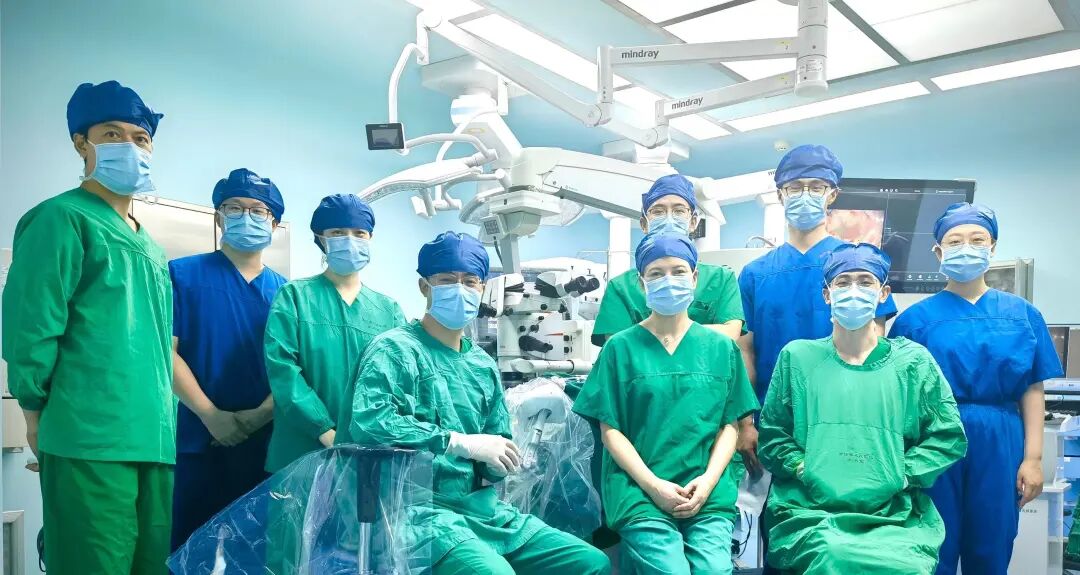
Following detailed preoperative examination and careful preparation, the surgical team from the hospital's Ophthalmology Center, led by Professors Shen Lijun and Chen Yiqi, operated the "Disight Weifeng" ophthalmic surgical robot. Using a microinjection needle with an outer diameter of 100 micrometers, they precisely delivered 400 microliters of recombinant tissue plasminogen activator (rtPA) into the patient's subretinal space within three minutes. Intraoperative OCT imaging confirmed the drug was accurately delivered to the lesion site, successfully remaining in the subretinal space above the retinal pigment epithelium layer as planned. The entire procedure was fluid, stable, and precise.
During vitreoretinal surgery, physicians must maneuver instruments around the sclerotomy entry point with extremely high precision. The foveal center in the macular region averages about 250 micrometers in thickness, and may thin further after disease onset. The ideal instrument movement precision is within 10 micrometers. Yet the human hand has an inherent, insurmountable physiological tremor of approximately 100 micrometers that even the most skilled surgeons cannot eliminate. This tremor easily causes tissue tearing at incision sites during complex, delicate ophthalmic procedures, making it difficult to perform precise operations and stable injections at the micrometer scale — ultimately affecting postoperative healing and visual recovery. Additionally, experienced ophthalmic surgeons are scarce, training cycles are exceptionally long, and the pressure of freehand micro-manipulation is considerable.
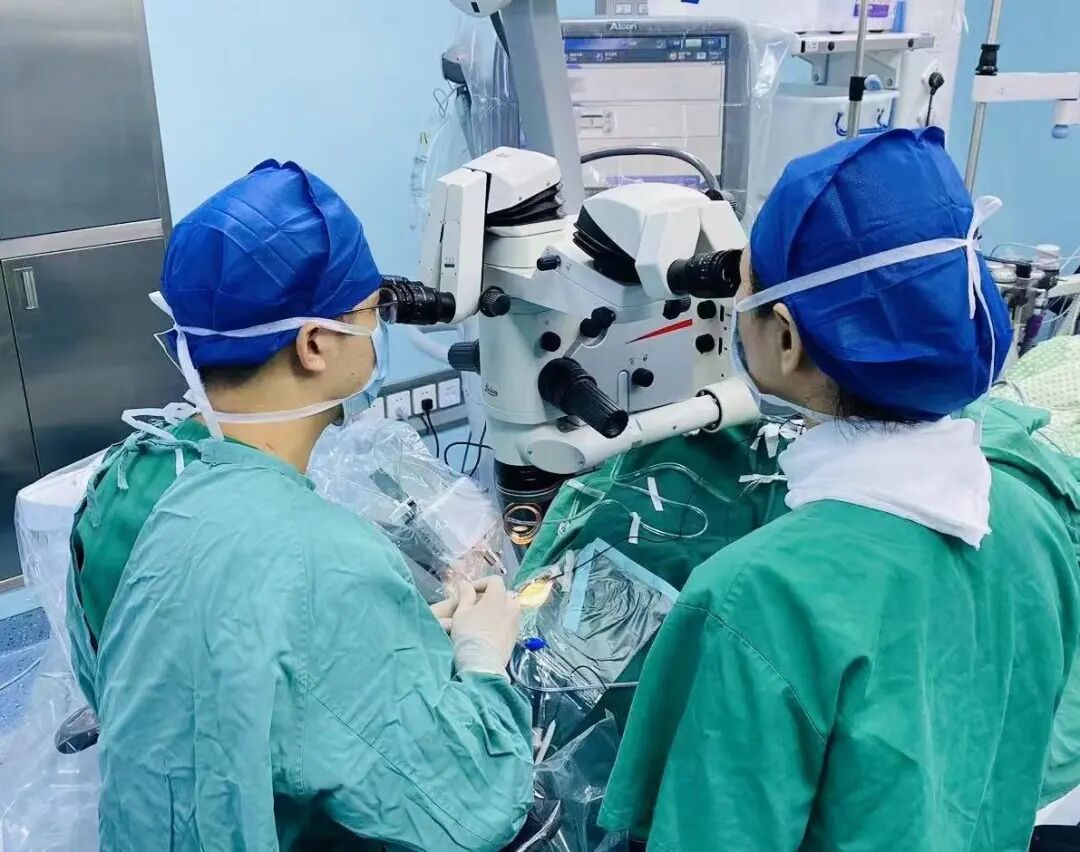
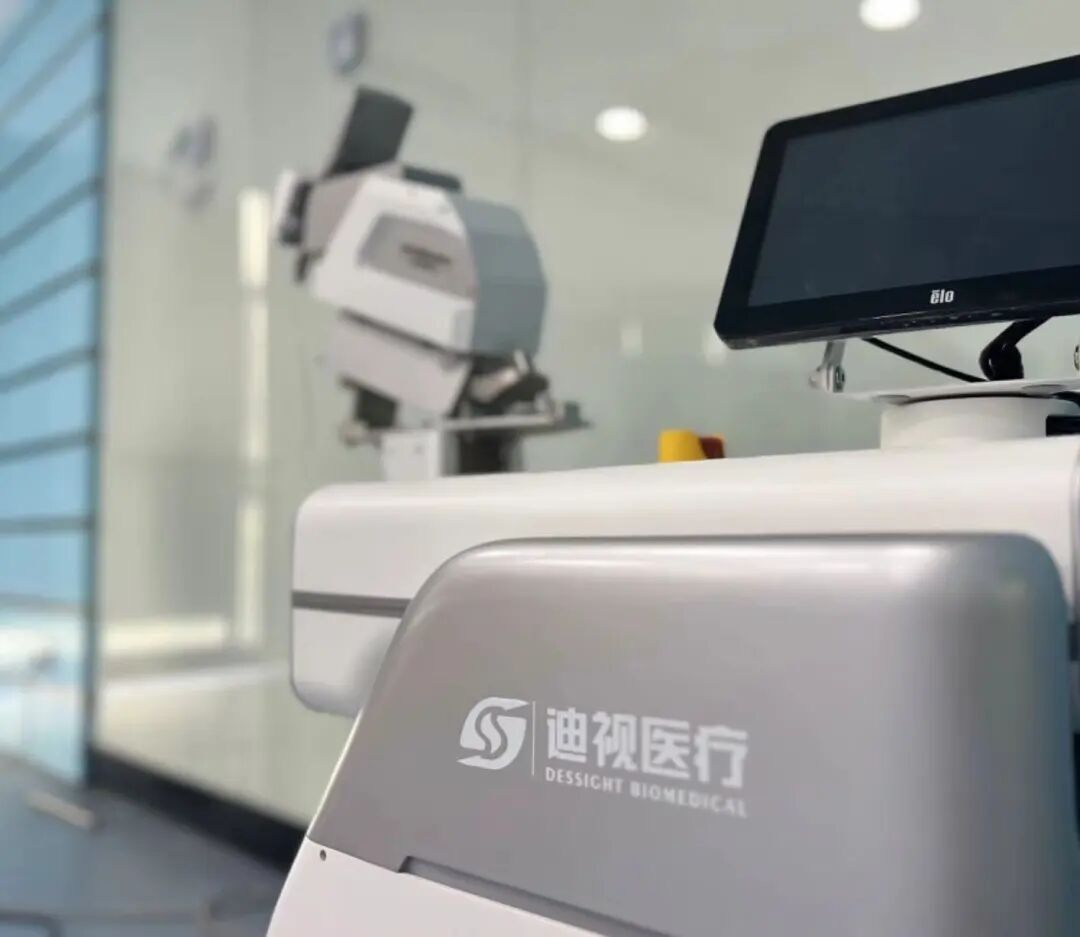
To address these clinical pain points, ophthalmic surgical robots are considered a powerful tool for shortening the physician learning curve and transcending human physiological operating limits. Internationally, only a handful of companies and research institutions in Europe, the United States, and Israel are conducting research and product development in this area. Disight Medical's fully self-developed "Disight Weifeng" ophthalmic surgical robot has become the first to fill this domestic gap, featuring proprietary flexible safety controls and achieving internationally leading 3-micrometer motion precision — placing it among the global leaders in this field. Early animal clinical data showed that compared to the 85.5% success rate of manual clinical procedures, the success rate of subretinal injection assisted by the "Disight Weifeng" robot increased to 100%.
This clinical application of ophthalmic surgical robots treats submacular hemorrhage caused by age-related macular degeneration (AMD) and other conditions. Hemorrhage in this region causes rapid central vision loss, and without treatment, most patients cannot recover spontaneously. According to the International Agency for the Prevention of Blindness, AMD and its complications are the third leading cause of blindness worldwide, and the primary cause of blindness in aging populations. The World Health Organization estimates that 196 million people globally had AMD in 2020, projected to increase to 288 million by 2040. AMD treatment has long been one of the most challenging areas in clinical ophthalmology. As ophthalmic surgical robots like Disight Weifeng achieve successful clinical application, they will undoubtedly help more such patients regain their sight.
Professor Shen Lijun, Director of Zhejiang Provincial People's Hospital Ophthalmology Center, stated: "For physicians, vitreoretinal surgery requires prolonged micro-manipulation under the surgical microscope — high pressure, long operative times, and maintaining fixed positions easily lead to occupational injuries in the cervical spine and wrists. All of this makes training a qualified vitreoretinal surgeon extremely difficult, with an average learning curve of ten years. Moreover, due to age-related physiological limitations, the number of senior surgeons capable of performing complex, delicate procedures is even smaller. The emergence of Disight's ophthalmic surgical robot gives us ophthalmologists a powerful new tool, reducing the learning curve while alleviating operative pressure and transcending human physiological limits — enabling us to perform newer, more refined surgical treatments and bring benefit to more patients."
Professor Chen Yiqi, Executive Deputy Director of the Ophthalmology Center, stated: "Ophthalmic microsurgical robots are promoting the development of ophthalmic surgery toward minimally invasive, intelligent, and precise approaches. Research focus has gradually shifted from prototype development and animal studies to human clinical application. Going forward, there will be broader application prospects, including various macular diseases, retinal vascular occlusive diseases, stem cell therapy, gene therapy, and remote vitreoretinal surgery — offering significant social and economic benefits."
Dr. Zhou Mingchuan, Research Fellow at Zhejiang University and technical advisor to Disight Medical, stated: "Micromanipulation primarily operates at the micrometer precision level, at the boundary of human operational and perceptual limits, posing major challenges to human capability. Robotic micromanipulation can help humans better accomplish micro-scale dexterous operations, with important applications in medicine, agriculture, and industry. Disight Medical's ophthalmic microsurgical robot enables physicians to achieve stable, safe, refined, quantified, and visualized operations in delicate tissues and complex surgeries, allowing doctors to focus more on intraoperative decision-making — bringing major technological innovation to ophthalmology and supermicrosurgery."
Dr. Cui Di, Founder and CEO of Disight Medical, stated: "Supermicrosurgical robots, with ophthalmic surgery as a representative application, are the product of multiple disciplines including computer science, engineering technology, and medicine. Applying this innovative technology to clinical patient treatment has received strong support from the Hangzhou municipal government and high market recognition. Our R&D and clinical teams conducted extensive testing to achieve the system's high precision and safety. This first clinical application marks the first step for China's ophthalmic surgical robots to reach international leadership. We firmly believe that clinical application of ophthalmic surgical robots can better serve physicians and benefit more patients."
About Disight Medical: Hangzhou Disight Medical Biotechnology was founded in 2021 in Shangcheng District, Hangzhou, Zhejiang Province, focusing on developing intelligent surgical medical system auxiliary robots centered on ophthalmology and supermicrosurgery, supported by biotechnology. Its currently advancing ophthalmic surgical robot aims to address the massive shortage of vitreoretinal surgeons, extend practicing physicians' careers, improve surgical success rates, and reduce sequelae, while providing powerful delivery tools for gene therapy and cell therapy. Disight Medical has previously received investment from Linear Capital, Hillhouse (GL Ventures), Infinity, and other notable institutions, as well as support from multiple industry capital partners.
About Linear Capital
We are hiring for our investment team — multiple positions are currently open. For details, please click here.
Linear Capital is an early-stage investment firm focused on "frontier technology + industry" — frontier technologies represented by data intelligence, digital new infrastructure, next-generation robotics, and technological transformation in traditional domains (such as biomedicine, materials, and energy), applied across vertical industries to substantially improve industrial efficiency, empower solutions to pain points, and complete industrial upgrading. Through significant increases in industrial value, we achieve excess returns in commercial value. We currently manage ten funds with total AUM of approximately $2 billion.
Our investment stage focuses primarily on leading angel to Series A rounds, with typical check sizes of $3–8 million or RMB equivalent.
We have made early-stage investments in over 120 entrepreneurial teams including Horizon Robotics, Kujiale, Sensors Data, Tezign, Rokid, Guandata, and Agile Robots. The combined valuation of Linear's portfolio companies is approximately $20 billion.
In the near term, Linear Capital is working to become the premier "Data Intelligence Technology Fund," and over the long term, gradually build itself into the most influential "Frontier Technology Application Fund."