Using Remote Medical Technology to Solve Healthcare Access Challenges, Linear Capital Leads Angel Round in Hebin Intelligent as Its Ultrasound Robot Deploys at a County Hospital in Guoluo Prefecture, Qinghai Province

** **Golog Tibetan Autonomous Prefecture in Qinghai Province sits at an average altitude of 4,200 meters, with a permanent population of 210,000 — over 90% of them Tibetan. Two branches of the Kunlun Mountains, the Anyemaqen and Bayan Har ranges, traverse the entire region, while the newborn Yellow River winds its way between them, gathering strength as it flows. This harmony of mountains and water brings not only breathtaking scenery but also abundant alpine grasslands. Thanks to these geographic advantages, the Tibetan herders here raise robust cattle and sheep.
*** Origins ***
Golog Tibetan Autonomous Prefecture in Qinghai Province sits at an average altitude of 4,200 meters, with a permanent population of 210,000 — over 90% of them ethnic Tibetans. Two branches of the Kunlun Mountains, the Anyemaqen and Bayan Har ranges, traverse the entire region, while the newborn Yellow River meanders between them, growing stronger by the day. The harmony of mountains and waters brings not only stunning scenery but also abundant alpine grasslands. Thanks to this geographic advantage, the Tibetan herders here raise robust flocks of cattle and sheep.

Pastoral scenery
Yet the rapid development of animal husbandry has brought herders another hidden danger — hepatic echinococcosis. Also known as "worm cancer," echinococcosis is a common zoonotic parasitic disease prevalent in pastoral areas, with a fatality rate as high as 90%. China's high-incidence regions include Xinjiang, Qinghai, Gansu, and Tibet. Related surveys show that the prevalence among populations in northwest China ranges from 0.5% to 5.0%, while Golog Prefecture once saw rates as high as 7.8%, making it a severely affected outbreak zone.
The Expert Consensus on Imaging Diagnosis of Hepatic Echinococcosis notes: Over the past 20 years, China has seen more than 5,000 new cases of echinococcosis, causing immense suffering and heavy economic burdens for patients and their families. It is one of the leading causes of poverty and return to poverty due to illness among farming and herding communities in western China.
Echinococcosis can occur in any organ throughout the body, most commonly the liver, followed by the lungs. The disease has an insidious onset, with clinical symptoms varying depending on lesion size and location — none of which are specific. Residence in an endemic area can only serve as one diagnostic clue. Serological testing offers some assistance but suffers from both false negatives and false positives, making imaging examination a critical diagnostic method. Among various imaging modalities, ultrasound has become the preferred screening method due to its efficiency and cost-effectiveness.
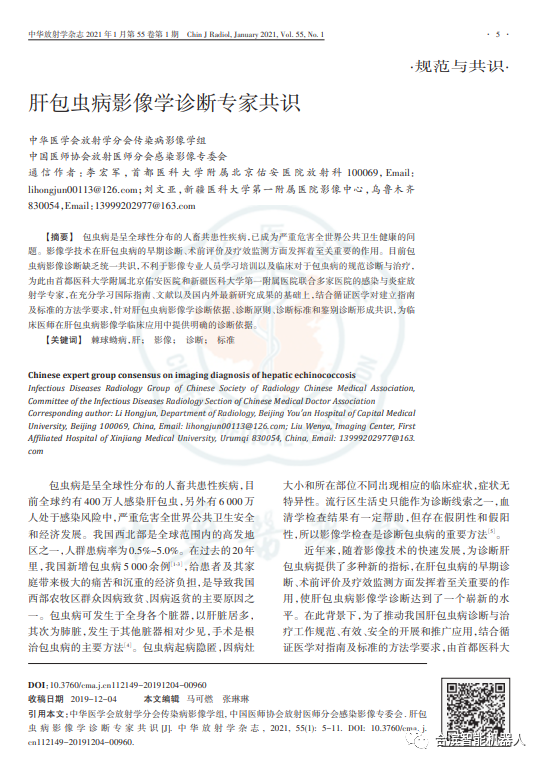
Expert Consensus on Imaging Diagnosis of Hepatic Echinococcosis
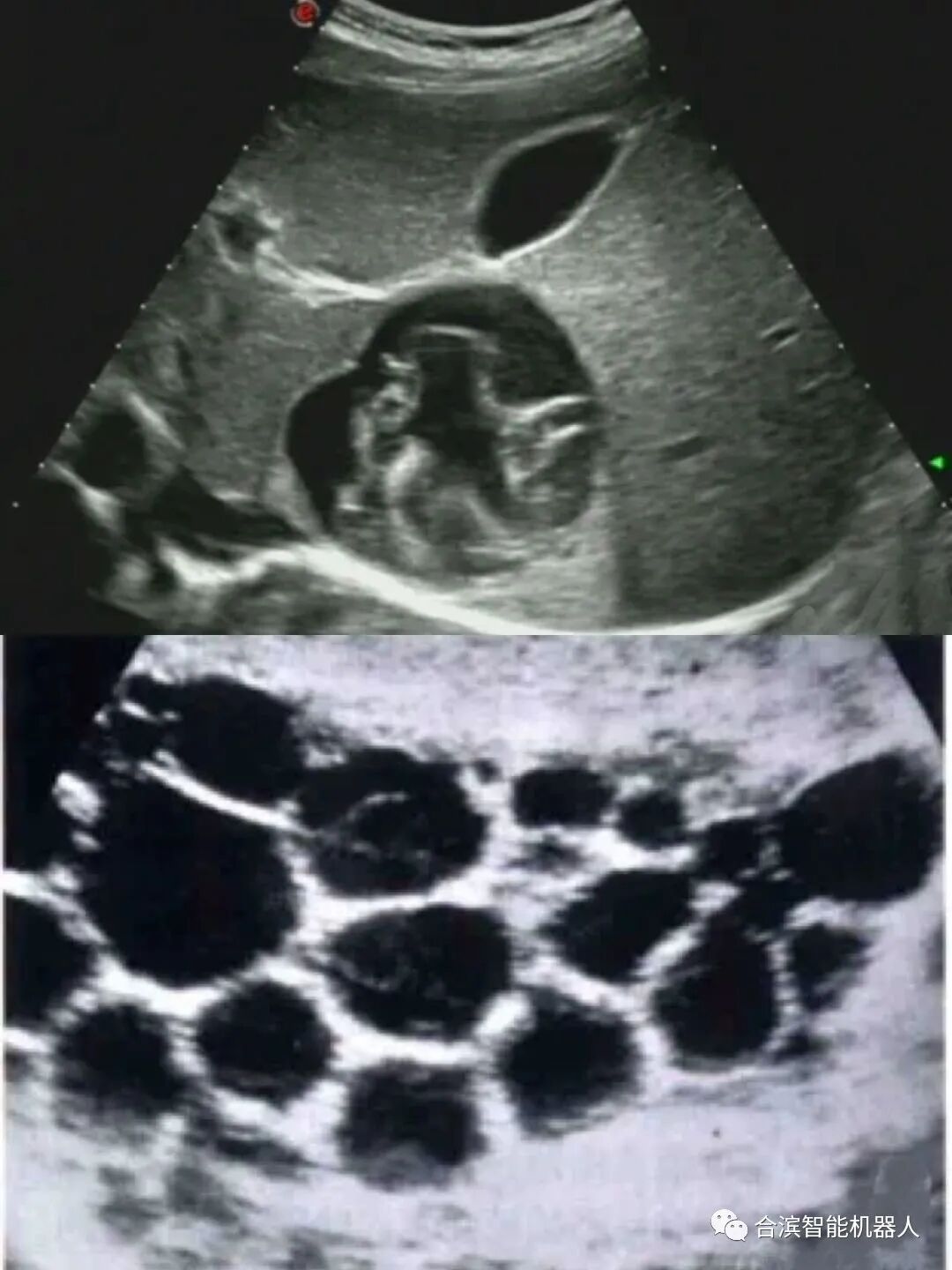
Ultrasound imaging of hepatic echinococcosis
Take one county in Golog Prefecture as an example. With 30,000 permanent residents, the county hospital's doctors are mainly dispatched from superior hospitals in Xining as aid workers. However, due to the county's high altitude, doctors from Xining often cannot stay long-term and must frequently return to Xining to relieve severe physical discomfort caused by altitude sickness. Residents' routine ultrasound checkups, echinococcosis screening, cervical and breast cancer screening, chronic disease follow-ups, and emergency care needs are often difficult to guarantee at high quality. And if patients want to seek medical care in Xining, they face a full day's journey — made even harder when winter snow seals off the mountain passes. Beyond the time cost, additional travel and accommodation expenses place extra burdens on residents.
*** Breaking the Stalemate ***
The emergence of telemedicine technology has brought entirely new possibilities to this problem. Recently, a "remote ultrasound robot" independently developed by Hebin Intelligence was successfully deployed at a county hospital in Golog Prefecture, Qinghai, bringing the benefits of technology to local residents. Located deep in the plateau with relatively scarce medical resources, Golog Prefecture had a gap that Hebin Intelligence's remote ultrasound robot now fills, delivering more timely and professional medical services to local people. This initiative also aligns with the national strategy of driving high-quality medical resources downward, further promoting balanced development in healthcare.
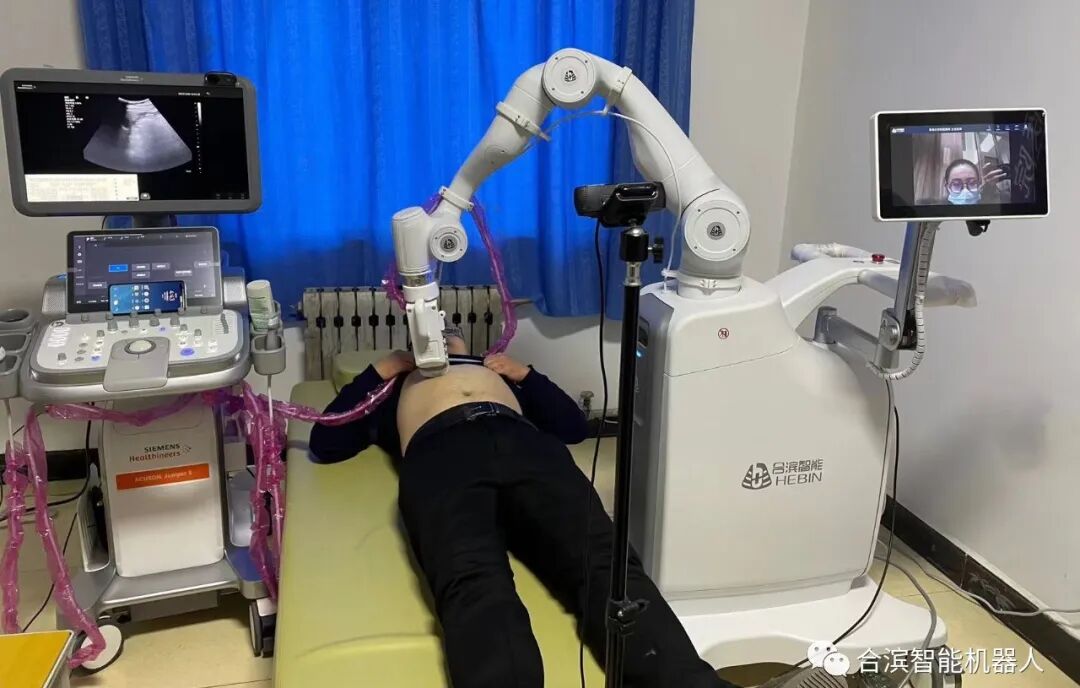
Hebin Intelligence's remote ultrasound robot deployed at a county hospital in Golog Prefecture
Hebin Intelligence's remote ultrasound robot consists of two components: a "patient end" and a "physician end." At the patient end, drawing on the team's years of R&D experience in space robotics, aerospace-grade teleoperation technology has been adapted for ultrasound applications. Combined with a 7-degrees-of-freedom robotic arm, this enables precise replication of remote physician techniques and safe human-machine interaction.
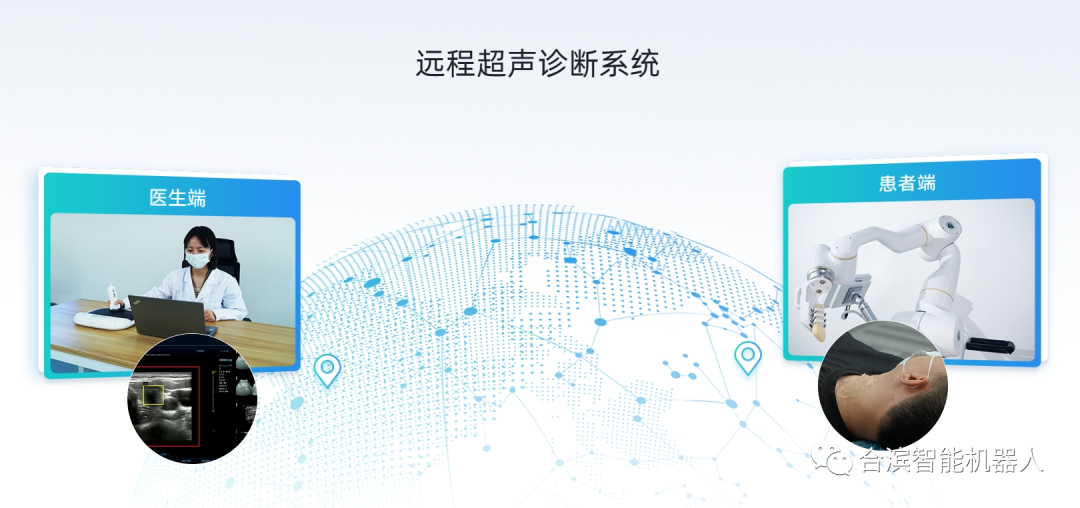
Product schematic of Hebin Intelligence remote ultrasound robot in use
At the physician end, Hebin Intelligence provides experts with an "ultrasound-shaped handle" and a "biomimetic force-feedback operating platform." This setup not only captures expert techniques in full three-dimensional detail but also features mouse-like operation logic — plug-and-play compatibility with any laptop or desktop host, diversely meeting physicians' needs. Doctors can get started quickly without training, easily performing remote ultrasound scans.
Compared with traditional telemedicine, where superior experts could only "give verbal instructions" to guide remote physicians through ultrasound scans before passively reading the ultrasound images, Hebin Intelligence's remote ultrasound robot transforms superior experts from "passive" to "active," providing an entirely new interaction mode where they can "both speak and act," enabling more efficient and intuitive remote diagnosis and treatment. Additionally, the ultrasound robot can seamlessly integrate with hospitals' existing ultrasound equipment, significantly reducing secondary procurement costs.
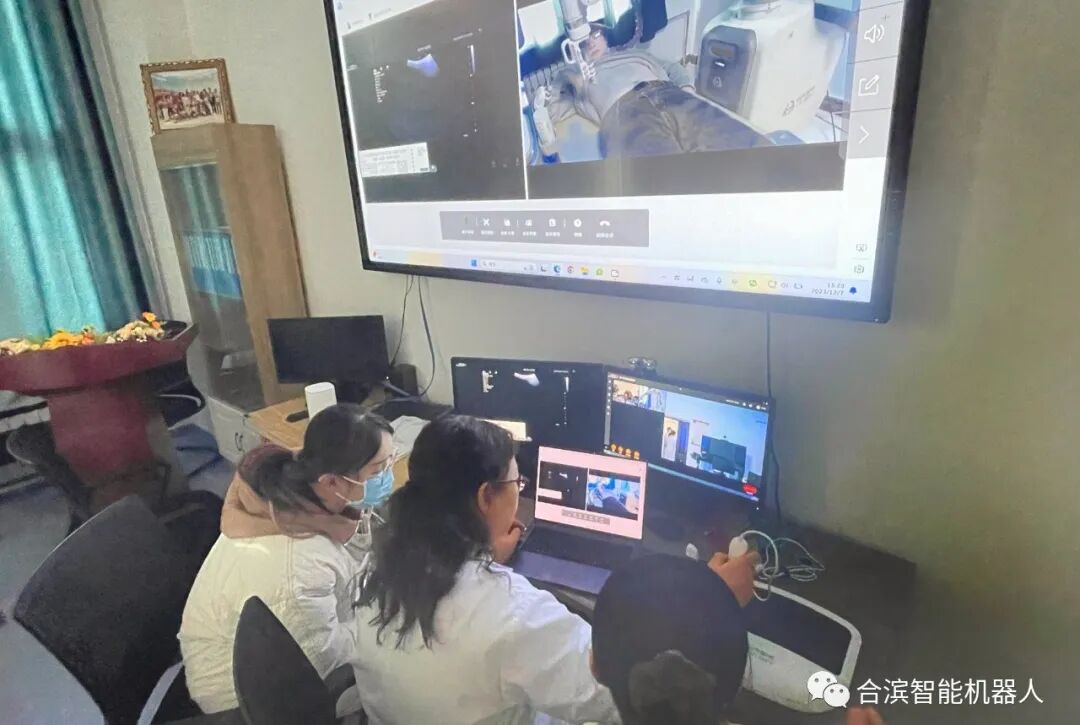
A hospital in Xining performs remote ultrasound scans for Golog Prefecture residents
Since the project's launch, the county's ultrasound department has been freed from its predicament of scarce ultrasound physician resources. Superior doctors from Xining no longer need to endure altitude sickness to see patients, and county residents no longer need to undertake arduous long-distance journeys for medical care. Beyond echinococcosis screening, residents' routine health checkups and examinations of the thyroid, abdomen, and kidneys can all be accomplished through Hebin Intelligence's ultrasound robot, greatly enhancing satisfaction and well-being for both doctors and patients.
*** Epilogue ***
Going forward, Hebin Intelligence's remote ultrasound robot will continue expanding its presence in Qinghai while promoting adoption at medical institutions in other remote areas, helping more frontier regions benefit from advanced medical technology. Liu Zhen, founder of Hebin Intelligence, said: "After all these years of research, we hoped that one day we could put what we learned into practice. That our products could truly benefit people and improve their lives. We want technology to reach wherever our country needs us most."