Mindverse, a Linear Capital angel-round project, secures nearly 100 million RMB in consecutive funding rounds with Linear Capital doubling down

Released the AI character generation engine MindOS.
36Kr has learned that Mindverse AI, an AI character generation engine provider based in Hangzhou, has announced the completion of nearly RMB 100 million in angel and angel+ funding rounds. The angel+ round was led by Yinxingu Capital, with Plug and Play China and Linear Capital — an existing investor from the angel round — making additional investments beyond their pro-rata rights, and HSG also participating. The funds will be used primarily for product iteration, algorithm upgrades, and business development.
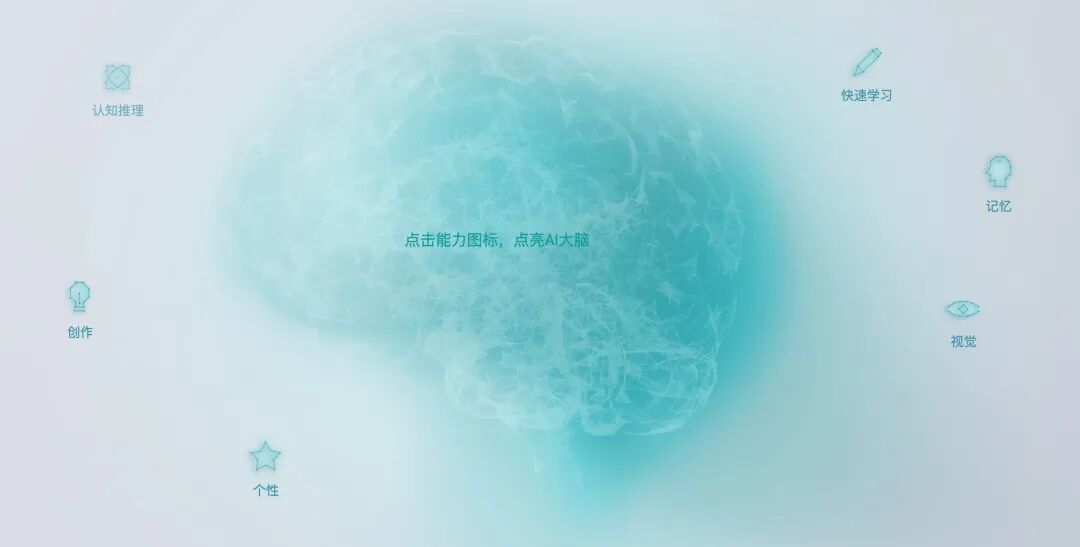
Founded in late January this year, Mindverse has pioneered the UMM (Unified Mind Model) whole-brain framework and introduced the concept of "digital mind." UMM is the first cutting-edge mind AI framework based on the brain's "thought flow," designed to overcome existing AI limitations by drawing on how the human brain works — giving AI systems agency while maintaining both complex task-processing capabilities and personalized character traits.
Based on UMM, Mindverse developed the MindOS platform, offering open MaaS (Mind as a Service). The continuously evolving MindOS can give AI systems genuine cognitive mechanisms, enabling holistic evolution and learning in open, complex environments much like the human brain. Users can set personality, persona, preferences, and memory for digital beings within MindOS.
MindOS can be understood through two key distinctions. First, while most digital human services start with face customization, MindOS begins by shaping the digital brain itself. Second, typical digital human intelligence relies on large models and deep learning — long cycles, massive compute demands, and difficult cost control. UMM takes a different approach, significantly reducing the algorithmic framework's dependence on heavy compute.
Fangbo Tao, founder and CEO of Mindverse, told 36Kr: "Our technical approach essentially balances and integrates the macro-level cognitive architecture from neuroscience with AI capabilities including large models, visual algorithms, and micro-level processing power. This gives it both the flexible processing capability of deep learning and the macro-level cognitive framework from neuroscience."
MindOS has two distinctive characteristics. First, all creation is built on a general-purpose brain with autonomous imagination and visual perception in open domains — ensuring each brain is human-like enough for general conversation with real people, while also being imbued with authentic character and domain expertise so MindOS can integrate well into open-domain planning. Second, MindOS achieves breakthrough capability in personalized customization: as an AI character generation engine, it can rapidly configure whatever virtual character a user wants, with strong interactive capabilities in open domains.
Dr. Tao elaborated further: "When building our macro-level cognitive framework, we use what we call a 'thought flow system,' similar to the global workspace theory in neuroscience. Through this approach, we mobilize different brain regions to better coordinate with central consciousness for task distribution and processing."
On the technical front, Mindverse has completed the first version of its digital brain and can now maturely and stably output technical capabilities to external partners.
On the academic front, Mindverse is also planning collaborations with top-tier research institutions globally to publish its new digital brain framework and technology worldwide, launching an entirely new research track.
This technical foundation makes it possible to easily upload multimodal, unstructured professional knowledge, enabling "digital brains" to learn rapidly and deliver professional knowledge services through natural, deep interaction.
With breakthroughs in AI image generation, AIGC has successfully broken out from industry buzzword to productivity tool accepted by general users. But from a content output perspective, images are single-dimensional. Higher-dimensional AIGC involves generating characters through platforms. When AI can generate characters with personality, it means breaking through discrete, specific content to reach something close to the ultimate complete form of content.
Mindverse defines the AI characters created by MindOS as "digital life," with MindOS itself as the AI character generation engine. Such AI digital life is no longer simply a high-definition digital human or chatbot — the combination of front-end digital appearance and back-end digital brain can provide deep, interactive experiences for numerous application domains.
Dr. Tao believes MindOS's value lies in moving from cold content generation to creating more perfect deep interactive experiences — experiences that themselves represent a distinctive content expression philosophy. As an engine and platform, MindOS is driving AIGC toward higher-dimensional evolution.
This year, the explosion of AIGC has become a phenomenon in tech and venture capital. Not long ago, Stability AI announced $101 million in seed funding, and text AI company Jasper.ai completed a $125 million Series A. Both reached unicorn valuations, making it foreseeable that AIGC will become the focal point for next-generation AI achieving large-scale commercial deployment.
Despite being founded just this year and still at the angel stage, Mindverse has already made breakthroughs on the commercialization path.
In September, Mindverse's AI+AR mini-program "Wanwu Zongdongyuan" (Everything Mobilized) launched on WeChat and Douyin. Through AR scanning, users can have conversations with any object in their daily lives — each with its own personality and "self-awareness." As an attempt to expand the next paradigm of artificial intelligence, it offers users not just the experience of conversing with everything, but also new paths for brand marketing.
Mindverse also recently collaborated with Microsoft OfficePLUS to upgrade the classic IP Clippy, which debuted on Wanwu Zongdongyuan on November 10. Users can experience it through the mini-program and the Microsoft Documents WeChat official account. Mindverse helped OfficePLUS give Clippy a complete makeover — not just new clothes, but an AI brain. In the near future, Mind AI will be able to empower more office scenarios.
Dr. Tao stated that over the coming year, Mindverse will focus on its B2B platform, and will launch B2C services at the appropriate time to help end users create their own digital avatars — as personal assistants, artist personas, virtual consultants, or various other digital roles.
Mindverse's core team comes from Tsinghua University, Peking University, the University of Hong Kong, the University of Illinois at Urbana-Champaign, and other institutions, with over ten years of combined technical and business experience at Meta, Google, NASA, Alibaba, ByteDance, Microsoft Research, and other world-class tech companies and research institutions.
About Linear Capital
We are hiring for our investment team. Multiple positions are now open — click here for details.
Linear Capital is a professional investment firm focused on Data Intelligence and Frontier Technology.
Linear Capital currently manages ten funds with approximately $2 billion in total AUM.
We focus on early-stage projects in Data Application, Data Infrastructure, and Frontier Technology applications. We typically lead investments from angel through Series A, with typical check sizes of $3–8 million or RMB equivalent.
Our early investments include Horizon Robotics ($3B valuation), Tongdun (>$1B), Kujiale (>$1B), Sensors Data, Tezign, Rokid, Guandata, Agile Robots, and over 80 other founding teams. The combined valuation of Linear's portfolio companies is approximately $15 billion.
In the near term, Linear Capital is working to become the best Data Intelligence Technology Fund, and in the long term, to build the most influential Frontier Technology Application Fund.