Leadigital closes consecutive A1, A2 rounds worth tens of millions, product deployed at over 100 top industrial firms | Linear Portfolio

Embed industrial knowledge and business expertise into models and agents.
y'x

Recently, Leadigital announced the completion of two consecutive funding rounds — its A1 and A2 rounds — raising tens of millions of RMB. The investors include Shanghai Pudong Venture Capital Co., Ltd., Shanghai Zhangjiang Science & Technology Venture Capital Co., Ltd, and Xi Chuang Tou. Previous investors include HSG, Linear Capital, and Yinxingu Capital.
In the first half of 2026, the company's revenue already exceeded its full-year 2025 figure, and it expects to remain profitable for the full year. Its products have now been deployed at over 100 leading industrial enterprises, including state-owned enterprises, publicly listed companies, and top players across various sectors.
Linear Capital was the lead investor in Leadigital's angel round and has continued to invest in subsequent rounds.
Inside manufacturing enterprises, there exists a rare kind of capability — difficult to buy and even harder to replicate. It might be the experience needed to judge whether a design is sound, or the intuition to spot delivery risks. Knowledge accumulated over decades is scattered across drawings, technical specifications, business records, and the minds of experts, underpinning daily decisions.
When this experience can be understood, invoked, and put to work by AI, a new kind of business is emerging.
As early as mid-2023, Leadigital launched R&D on manufacturing AI agents. At the time, the technical path for large-model agents was still being explored, yet Leadigital had already oriented its development toward the specialized work of manufacturing enterprises, making it one of the earliest Chinese tech companies to lay out in this direction.
That forward-looking judgment has continued to be validated: in 2024, Leadigital's multi-agent project received the SAIL Star award at the World Artificial Intelligence Conference; in 2025, its self-developed Baigong Industrial Large Model became Shanghai's first industrial vertical large model to pass the national cyberspace regulator's filing requirements.
This earlier, systematic positioning won Leadigital time on model R&D, product iteration, and validation with top-tier customers. Today, that accumulation is translating into technological and commercial first-mover advantages.

Traditionally, if a manufacturing enterprise wanted to acquire a professional capability, it would hire experts, build a team, and accumulate experience project by project.
Leadigital is changing how capabilities are delivered: by embedding industrial knowledge and operational experience into models and agents, making specialized expertise accessible to more people through professional services.
Designers can use AI to understand technical requirements and check design specifications. Production teams can draw on process knowledge and analyze quality issues. Supply chain staff can use agents to track procurement progress and identify material shortages and fulfillment risks.
Leadigital's growth path thus unfolds along the specialized work inside enterprises: from one role to multiple departments, from a single task to clusters of interrelated operations. Behind this work lies the professional judgment that Leadigital has built up alongside its customers over the long term. Converting the standardizable portions of this expertise into models or applications means professional capabilities gain new delivery mechanisms — and open new commercial space.
The hardest part of industrial AI happens after the model receives a task. It needs to know under what conditions a specification applies, which version a document corresponds to, which materials a design change will affect, and how the final result should be validated.
These problems point to the technical directions that enterprise AI is now pushing into: context engineering, business ontology, and continuous evaluation. Together, they determine what information a model can access within a specific enterprise, what rules it must follow, and how it completes its work.
Leadigital has built its industrial AI technology system around these challenges.
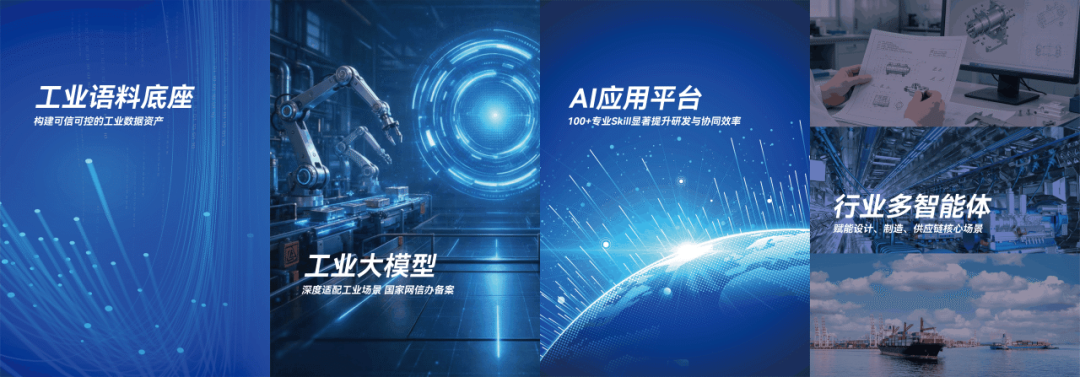
First, organizing industrial data into engineering relationships that models can understand.
Lead Forge · Industrial Knowledge Production Toolchain parses documents, drawings, and business data. Through terminology governance and ontology alignment, it maps information with varied names and scattered sources onto unified industrial objects and relationships, establishing connections.
Next, giving models the right knowledge and constraints when a task arises.
The Baigong Industrial Large Model is trained on over 10TB of industrial domain corpora. Combined with domain fine-tuning, knowledge graph enhancement, and context engineering, it assembles the professional knowledge, applicable rules, and relevant information needed for a task — improving the model's adaptability to specific industrial scenarios.
This capability determines whether an enterprise's existing knowledge can be accurately invoked at critical moments.
Finally, checking results against engineering requirements.
Lead Guild · Agent Platform brings together business tool components, organizing these foundational capabilities into applications for different roles and processes — with continuous improvement through on-site feedback.
From understanding the business, to invoking the model, to validating results — each step requires accumulation and refinement.
Along this technology chain, Leadigital has made sustained investments in multimodal parsing, industrial knowledge governance, training corpus synthesis, and feedback learning, accumulating nearly 100 invention patents and other forms of intellectual property. These investments enable faster translation of models into products that customers can use.

There is a long distance between a successful demo and stable performance on everyday tasks. Leadigital has accompanied numerous customers across this gap.
Entering large state-owned enterprises, publicly listed companies, and industry leaders means facing complex technical standards, cross-departmental workflows, and strict delivery requirements. Accuracy, traceability, data security, and integration with existing operations must all be tested in real-world use.
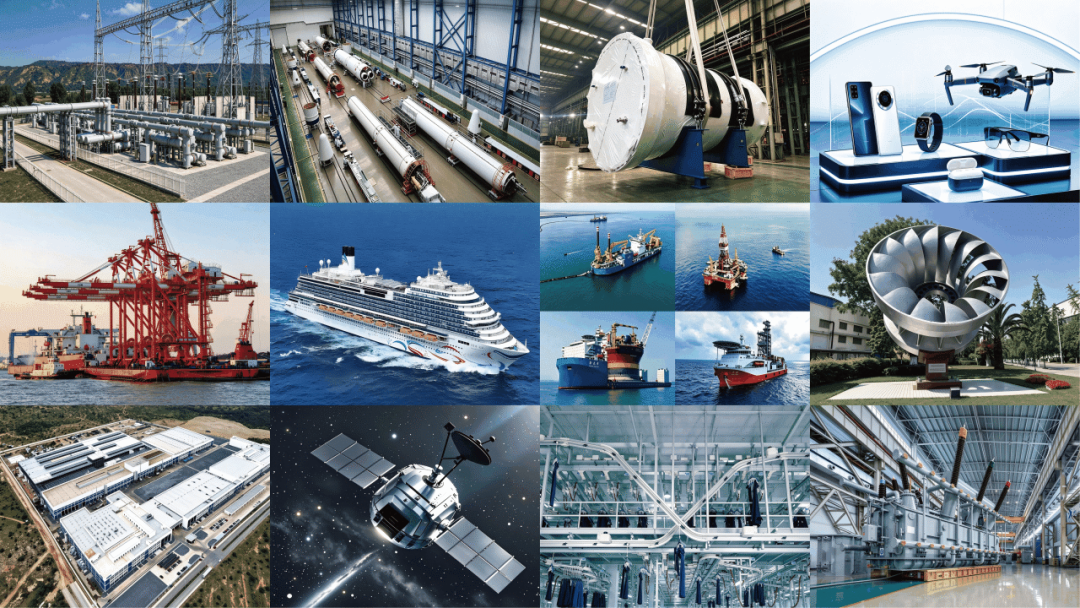
These experiences provide AI with validation environments that are difficult to fully replicate in a lab. Which knowledge tends to be missing, which rules need to be made explicit, and what results can pass professional review — all become clearer with each delivery.
Within customer-authorized and data-compliant boundaries, Leadigital can continuously accumulate knowledge processing methods, common rules, evaluation mechanisms, and delivery modules. These help subsequent deployments avoid detours and improve product generalizability.
Technical accumulation helps Leadigital win demanding customers; customer sites in turn raise the maturity of its technology and products.
This is a barrier that takes time to build: securing real application opportunities, completing delivery, then converting experience into models and products.

Leadigital's choice to enter through demanding, complex customers also establishes a product foundation for broader market expansion.
Founder Wenwei Guo leads a core team with over two decades of accumulated industrial operations management experience and domain knowledge built inside global manufacturing enterprises. The company has now formed a lean professional team of nearly 100 people, with R&D staff accounting for over 70%.
Beyond products, platforms and channels for reaching a wider customer base are being developed in parallel. Leadigital has partnered with carriers on MaaS platform collaborations, combining standardized industrial agents with carriers' platform capabilities, channels, and service networks to provide application access points for more small and medium-sized manufacturing enterprises.
At the same time, Leadigital is working with mainstream foundation model providers on ecosystem partnerships around industrial scenario adaptation, product collaboration, and market expansion — connecting base model capabilities more tightly with a customer-validated industrial application system.
In 2027, building on its existing product foundation, Leadigital will further refine its business model and promotion mechanisms, gradually expanding customer coverage across industries and regions. Enterprises of different sizes can start from their most urgent tasks, choosing agent products suited to their needs, then expand applications as their business develops.
Top-tier customers help products go deep; standardized products and ecosystem networks help the business go wide.

Beyond the World Artificial Intelligence Conference SAIL Star, the company has also been included in Shanghai's "AI + Manufacturing" Service Provider Capability Map in both the model platform and agent/application categories. Multiple industry research institutions have also recognized Leadigital's capabilities and potential.
From underlying knowledge and model building to application delivery for real business operations, Leadigital has formed a mutually reinforcing capability system. As more manufacturing clusters seek AI transformation paths, this system has gained broader application space.
The practices of anchor enterprises can provide a starting point for building corpora, models, and agent applications across their supply chains, reducing the cost of redundant exploration.
Currently, Leadigital has expanded from the Yangtze River Delta to more manufacturing regions across China, and has taken its first steps in overseas business. The funding will continue to be invested in core technology R&D, product matrix iteration, and brand and market expansion.
Decades of accumulated manufacturing experience is gaining a new delivery mechanism. What Leadigital aims to do is turn professional capabilities that have passed rigorous business testing into industrial AI products and professional services that more enterprises can actually use.
At present, the national "AI+" initiative is being deeply implemented, and the "AI + Manufacturing" special action is accelerating. Leadigital will continue along this direction, enabling industrial agents to truly take root in more manufacturing enterprises, supporting the digital transformation and upgrading of manufacturing, and accelerating the cultivation of new quality productive forces.