After the First Wave of Hype, Three Tests AI Hardware Must Pass | Linear View

Intelligence, product, and cash flow.

The primary market never lacks for surging hotspots. As the industry oscillates between hot and cold, how to navigate cycles and build technology products that truly change people's lives is a theme we've long kept our eyes on.
Over the past while, hardware investment went from being largely ignored to locally overheated, then cooled again. But from our perspective, as AI infrastructure develops up and down the stack, the opportunity for hardware and applications is only just beginning. Entrepreneurs need to think harder about: what does AI actually bring, what do users really need, and how far can their money carry them.
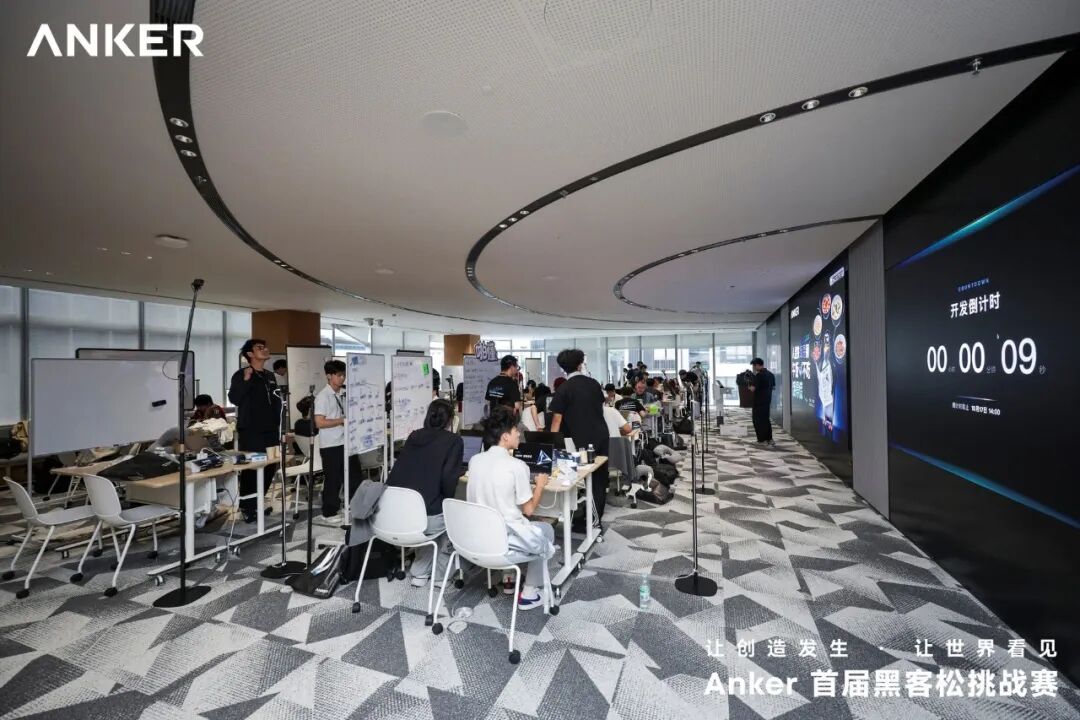
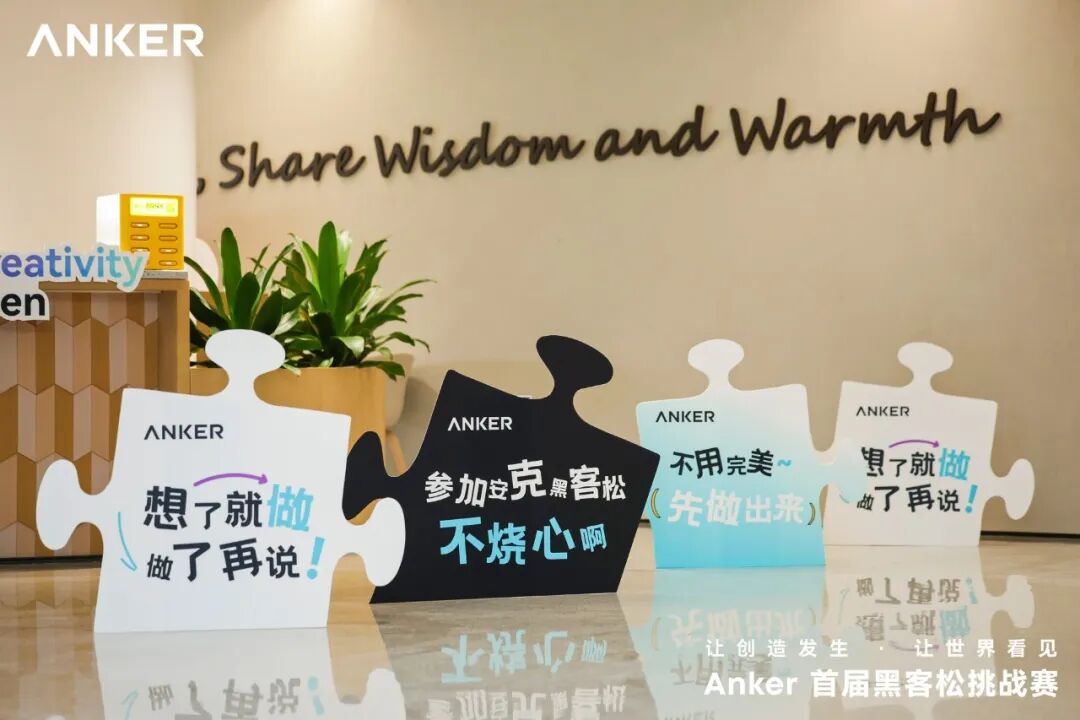
Last weekend, at Anker's inaugural hackathon, Linear Capital participated as a venture partner and shared its thinking on edge AI hardware during the Workshop session. We've compiled some of the team's on-site perspectives for discussion.
Hardware evolution can be roughly divided into three generations: traditional hardware, smart hardware, and AI hardware.
The first generation, traditional hardware, was relatively simple — each device did its own thing. An MP3 player was for music. The companies that won that wave mostly did so by driving scale to make products cheaper. The rise of Japanese consumer electronics was essentially a story of manufacturing and scale advantages.
Around 2007, smart hardware began to emerge. The biggest beta that wave was Mobile Internet, including ecosystems like the App Store: hardware became the entry point, and software defined the experience.
The third generation is AI hardware, starting from 2023. The biggest variable this round is, without question, AI. Entering 2026, AI hardware has already shown observable scale growth and is beginning to exhibit clear differentiation.

Many people think you should first build good hardware, with AI as a nice-to-have addition. But in our view, if it's called AI hardware, the biggest variable should be AI.
If you remove the AI, how much core value remains? Does it change how the product understands the user, responds to needs, and completes tasks? You might say you're building smart hardware, but AI hardware has to be AI-native.
We believe that to let everyone access sufficient intelligence at lower cost and become super-individuals, the edge side also needs to be strong enough. Relying on the cloud alone probably won't suffice.
To unpack this: first, it needs to understand the real world and perceive the environment multimodally; second, it needs to complete tasks continuously — Agents must execute in multiple steps, constantly doing what you ask of them; third, it needs memory, it needs to personalize, it needs to deeply understand you.
So from a physical standpoint, this intelligence needs to happen continuously, in real time, and on your person.
At this point, the cloud's problems become quite concrete. First is latency — every request has to make a round trip. Second is privacy — much sensitive information, we'd prefer to keep local. Third is cost — continuous usage means continuous API fees.
Moving more computation local reduces network round-trips and gives sensitive information a chance to stay on the device. Cloud calls are ongoing operational expenditure (OPEX); local deployment requires upfront device investment (CAPEX), plus depreciation, power, and maintenance. For scenarios with continuous sensing and frequent calls, you can have the local side handle high-frequency tasks and the cloud handle complex requests; whether this pays off depends on call volume, utilization rates, and device lifecycle calculations.
Over the past while, AI hardware has been hot in the market, but much of the experience hasn't truly come together yet. One important reason is that the edge side simply doesn't have enough intelligence.
So we pay attention to models, and also to chips and storage. Edge deployment must first answer: can the model fit, and once fitted, can it run fast? Capacity determines the former; memory bandwidth is an important factor for the latter.
Let's start with the most basic capacity math: using FP4, meaning 4 bits per parameter, a 10-billion-parameter model requires roughly 5GB just for weights; 100 billion parameters needs about 50GB; a trillion parameters needs about 500GB. This doesn't even count quantization metadata, inference-time KV Cache, and other runtime overhead. Historically, the edge side has struggled to achieve high capacity and high bandwidth simultaneously at low cost and low power.
One direction very worth watching now is HBF (High Bandwidth Flash). Based on NAND flash, it attempts to combine higher capacity density with bandwidth approaching HBM levels. SanDisk and SK Hynix have both pushed for standardization of this technology. In public materials, SanDisk has proposed achieving roughly 8–16x HBM capacity at comparable cost. This offers a new path to break through the constraints between capacity, bandwidth, and cost.
If such technology is applied to edge devices, larger models could be deployed at the edge. But for consumer products meant to be worn and used intimately, chip adaptation, power consumption, thermal management, and system cost still need to be solved. Technology opens possibilities; engineering turns them into experience.
So the meaning of edge intelligence ultimately has to show up in user-perceivable experience: stronger intelligence, more timely response, more continuous service, and usage costs that can be borne over the long term.

We believe new multimodal devices will emerge in the future. That device probably won't just be today's phone: it needs to sense you in real time, be on your person, and minimize latency as much as possible.
Phones carry a massive functional load, but they aren't necessarily suited for all real-time, on-person intelligent services. Hardware may first deconstruct, then reconstruct: slice off thin scenarios like recording and health, make more direct products for them, then reconstruct into new forms. It might be glasses, it might be something else — we don't know yet today.
For entrepreneurs, this means two different choices. The first, we call "old wine in new bottles." The old wine is existing user habits — glasses, earphones, toys. The demand is real, the supply chain is mature, the channels are already there; AI further empowers it.
The second is defining an entirely new species. Users don't yet have corresponding behavioral habits; the risk and potential reward are both large. It demands more from the team, and timing matters enormously: you have to hit the exact right moment for the product to take off.
Relatively speaking, the first is more suitable for getting started. First nail a high-frequency scenario, get the AI right, then extend toward becoming a platform. Whether choosing glasses, earphones, or other forms, what truly needs to be accumulated is understanding of user needs, and the AI capabilities that underpin the experience.

Everyone talks about their PMF, but for most AI hardware products, we might actually look at aesthetics first — that is, ID design: does this thing actually look good, before we even talk about PMF.
Because consumer-facing AI hardware is still consumer electronics at its core, and much of it is worn on the body. If at first glance it doesn't look good — whether in form or finish — consumers may not even give it a chance. This also means that industrial design should be involved from the very beginning of product definition.
Most founders we've met think their product has PMF. But a very common mistake is "I think there's PMF" when there actually isn't. It's not as simple as having interviewed a few people and thinking that proves something.
Specifically, did you research dozens, hundreds, or thousands? More importantly, how did you converge on product features. The robotic lawn mower wave was a classic case — many product managers did research, probably asking similar questions, yet ended up with different features. What pain points do users actually have, and how do you turn that into product — that's what matters.
Previously a founder said they wanted to make diving AR/AI glasses. Just talking about the defogging feature, they'd basically thought through five or six possible solutions, eliminated them one by one, and finally chose the most user-friendly one. Including why the logo curvature was chosen this way, why consumers would find it more comfortable to use — they had thought it through. This kind of thinking is probably more convincing than simply saying "we really understand users."
Rather than just looking at demos, we'd rather hear founders explain clearly: how features were converged upon, why it ended up this way. Product capability shows up in these specific trade-offs.
PMF validation also needs to extend past the purchase. A hardware-plus-subscription model can look complete, but whether users keep using it and are willing to renew still has to be answered by the product.

Capital market heat easily creates a sense of acceleration. Consecutive funding rounds, rising valuations, make entrepreneurs feel they must get to the next round as quickly as possible.
Later on, investors won't keep buying just because of who invested before or how good the story is. If the product can't be built or doesn't sell, however smooth the earlier fundraising went, valuation inversion can still happen. Funding can be pulled forward, but product validation cannot be skipped.
So cutting through the noise, entrepreneurs shouldn't just chase so-called high valuations, nor does every round need to close in rapid succession. What the company actually looks like, only you yourself know; how much mold-making, validation, and mass production each cost, how much you spend each month — you should have these numbers in your head. Funding plans should follow actual R&D and production rhythms.
For hardware startup teams, we often advise setting aside a portion of funds and not touching them normally. If the next round really can't be raised, use that money to address urgent needs. Whether in consumer electronics or consumer brands, many companies ultimately fail because they lacked sufficient awareness of cash flow.
Returning to the beginning: every generational shift in hardware reopens the space for product definition. What form AI will take as it enters daily life, there is no定论 today — and that is precisely what makes early-stage entrepreneurship worth investing in.
We're willing to work with founders earlier, putting our technology judgments into concrete products and subjecting them to the test of real-world use. After round after round of hype fades, the products that remain by users' sides and see continued use will let us more clearly see what the next generation of AI hardware looks like.