Event Recap | AI SaaS Global SEO and AI-Native CMS in Practice
From Keywords to Landing Pages: A Comprehensive Guide to Boosting Website Conversion Rates

👋 Event Recap
Today at Linear is a regular sharing series hosted by Linear Capital. We hold events in major cities to help founders better understand industry trends and explore opportunities at the frontier of technology.
On July 12, Linear Capital hosted an offline "Linear Capital AI Sharing Session" in Shenzhen, centered on two topics: SEO for AI SaaS going global, and building an SEO-friendly, AI-native CMS.
After the event, we compiled the key takeaways from both speakers' sessions. We hope you find them useful.
📝 Session Notes
01 Building an SEO-Friendly, AI-Native CMS
Speaker: Ge Fei, SEO expert, overseas AI tool entrepreneur, and founder of a thousand-member community
SEO is a critical way to improve website rankings and gain organic traffic. In this session, Ge Fei discussed three core themes: an introduction to SEO, characteristics of SEO-friendly pages, and how to build an SEO-friendly, AI-native CMS.
1. What is SEO?
SEO (Search Engine Optimization) is the practice of improving a website's ranking in search engines by optimizing its content and structure, thereby gaining more organic traffic. SEO is especially important globally, where Google holds over 90% market share. But SEO isn't just about rankings — it's about meeting users' search needs and improving their experience.
2. What does "SEO-friendly" mean?
Being SEO-friendly essentially means following Google's rules to create pages Google likes, which improves your site's ranking. Typically, SEO-friendly pages share these characteristics:
- Good user experience: fast loading speeds, mobile-friendly design, and sensible internal linking.
- High engagement: longer dwell time, lower bounce rate, and more pages per session.
- High-quality content: original, authoritative, useful, relevant, and regularly updated.
- Solid on-page SEO: well-crafted titles, descriptions, and heading tags, with controlled keyword density.
- Strong domain and page authority: built through high-quality backlinks. For example, you can boost your page's authority by getting your AI product listed on AI directory sites.
3. How do you build an SEO-friendly, AI-native CMS?
An AI-native CMS deeply integrates artificial intelligence into content management to improve efficiency and quality. An SEO-friendly, AI-native CMS should have these features:
- AI-powered site planning: from content generation and multilingual translation to automatic internal and external linking, minimizing manual work.
- AI-generated content: producing high-quality content through prompts and reference materials.
- Automated workflows: using AI to handle every step from content creation to publication.
Finally, Ge Fei shared a real-world example: his AI tool directory site, Way.ai. Launched on April 30, the site saw continuous traffic growth through July, demonstrating the viability and effectiveness of an SEO-friendly, AI-native CMS.
Check out Way.ai here: https://woy.ai/
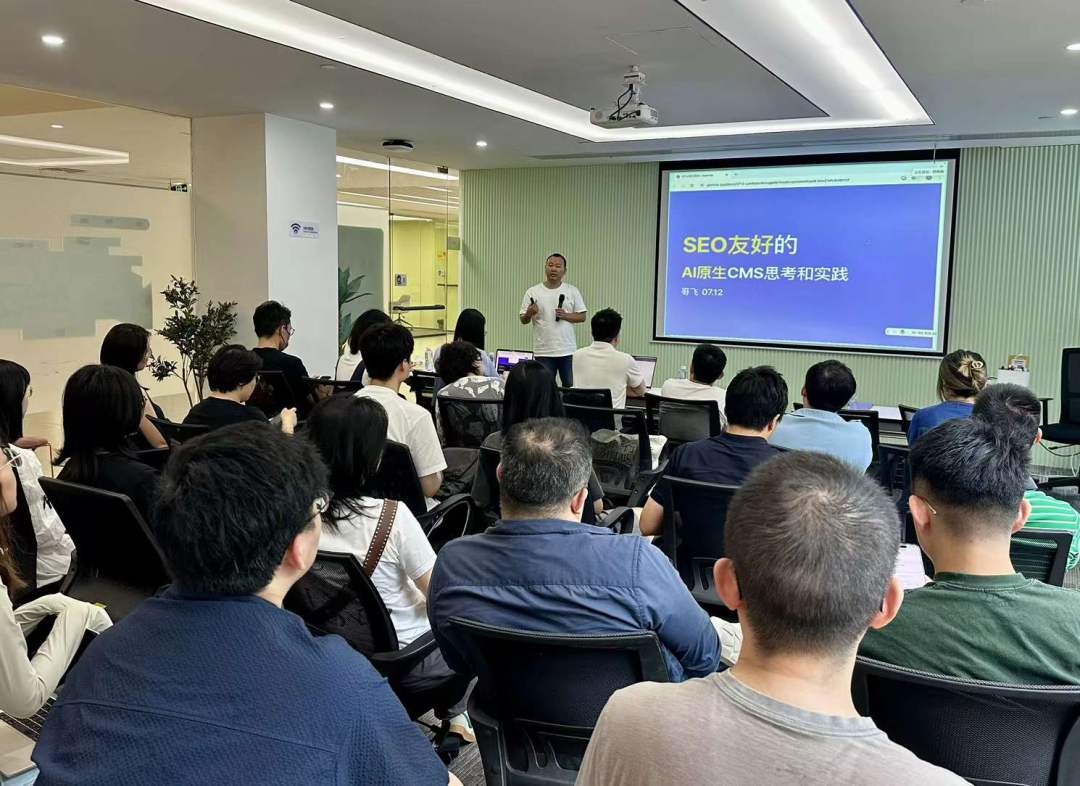 Photo | Ge Fei's presentation
02 AI SaaS Going Global: The Most Effective Website Page Strategies
Speaker: Chen Pan (Span), former SEO lead at a leading overseas SaaS company, bootstrapping practitioner
Chen Pan Span shared how to build an effective website page strategy and explained how optimizing pages can help you scale quickly and improve conversion rates.
1. Start content creation with bottom-of-funnel keywords
- Users go through six stages from discovering your product to purchasing: awareness, interest, trial, purchase, loyalty, and advocacy.
- If you view marketing as a funnel, the top helps users discover your product, the middle builds interest, and the bottom drives trial and purchase.
- Bottom-of-funnel keywords address specific problems or product needs and are directly tied to purchase decisions — they convert at higher rates. For example, someone searching "best transcription software" has clear buying intent. Content targeting these keywords should thoroughly introduce your product to match that search intent.
2. Build a content hierarchy
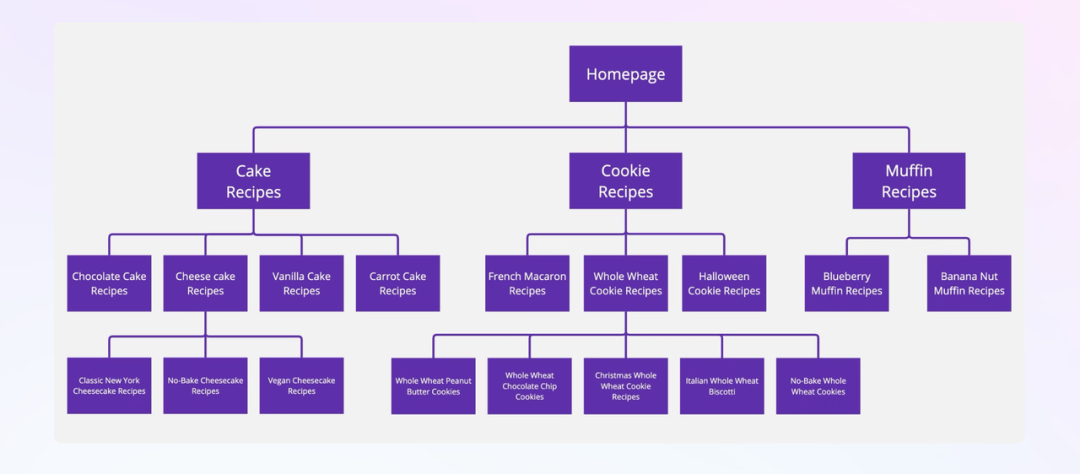
- Website content needs clear hierarchical structure. Benefits: better user experience, easier navigation, improved crawlability for search engines, and stronger topical authority. For example, a recipe site might organize content into cakes, cookies, etc., then further into cheesecake, icebox cake, and so on. This structure improves UX while building authority on specific topics.
- On page depth: as long as your hierarchy is clear and user-friendly, don't worry about deeper levels hurting page authority.
3. Learn from others' models to find your own approach: building landing pages
Core landing page types for SaaS products with SEO intent: variant keyword pages, competitor comparison pages, feature pages, related tool pages, and template pages.
- Variant keyword landing pages: Identify your main keywords, find all synonyms, near-synonyms, and intent-equivalent terms, and build dedicated pages for each.
- Competitor comparison landing pages: Create comparison pages using competitor brand terms, like "Salesforce vs HubSpot," to capture users comparing alternatives. Even early-stage startups can piggyback on competitor brand traffic to boost their own visibility.
- Feature pages: Build individual landing pages for each feature. For example, a video editing tool might create separate pages for "add images to video" and "add music to video." These highly targeted pages convert well when users search for specific capabilities.
- Related tool pages: Break out product features into standalone micro-tools users can try online. For example, an SEO analysis tool might offer pages to check domain authority or backlinks, drawing users in to explore more features.
- Template pages: Create template galleries based on product functionality, such as invoice templates or contract templates. These meet specific user needs and drive conversions.
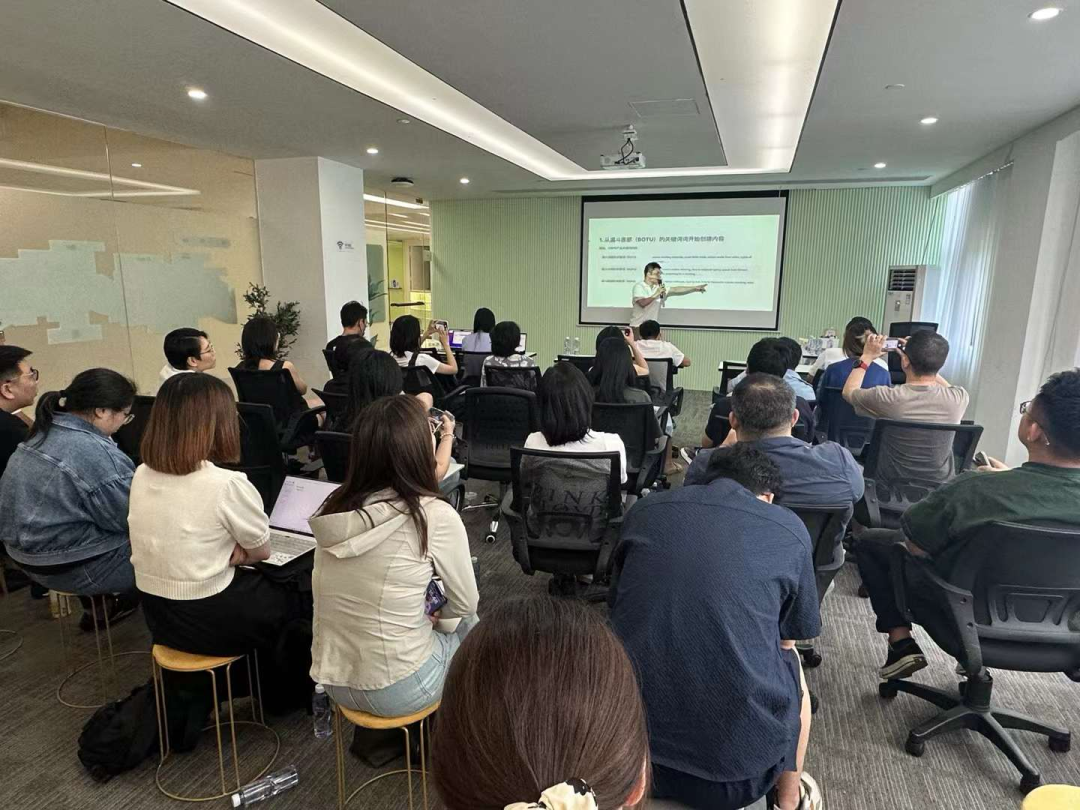
Photo | Chen Pan Span's presentation
✨ Upcoming Events
That's a wrap on this Linear AI Sharing Session. We'll continue hosting events on related topics — follow Linear Capital's WeChat official account for the latest updates.
About Linear Capital
Linear Capital is an early-stage investment firm focused on "frontier technology + industry." We target frontier technologies — including data intelligence, digital new infrastructure, next-generation robotics, and new technology transformations in traditional sectors such as biomedicine, materials, and energy — and apply them across vertical industries to dramatically improve efficiency, solve pain points, and enable industrial upgrading. We aim to capture outsized returns through substantial value creation. We currently manage ten funds with approximately $2 billion in total AUM.
Our investment stage focuses primarily on leading angel to Series A rounds, with check sizes ranging from $1 million to $10 million (or RMB equivalent).
To date, we have made early investments in over 120 teams, including Horizon Robotics, Kujiale, Sensors Data, Tezign, Rokid, Guandata, and Agile Robots. The combined valuation of Linear's portfolio companies is approximately $20 billion.
In the near term, Linear Capital is working to become the premier Data Intelligence Technology Fund. In the long term, we aim to build the most influential Frontier Technology Application Fund.