JPMorgan Chase Global China Summit: Linear Capital's Voice on AI and AR | Linear Portfolio

The next step for AI is to achieve deep integration with the physical world.

On May 22–23, the 21st Annual JPMorgan Global China Summit took place in Shanghai — an event long regarded as a "super window" for observing the direction of China's economy and technology.
During the summit, the founders of Kujiale and Rokid, two early portfolio companies of Linear Capital, were invited to participate in roundtable discussions and keynote presentations, sharing their insights on AI and AR innovation with global investors and industry experts.
As one of Asia's most influential annual investment conferences, the 21st JPMorgan Global China Summit was held in Shanghai from May 22 to 23. The summit has long been regarded as a "super window" for observing the direction of China's economy and technology.
This year's summit, themed "Capital as a Bridge, Connecting the World," brought together participants to discuss the most pressing topics on investors' minds.
The 2025 edition gathered over 3,000 attendees from global institutional investors, Chinese and international corporate executives, and industry experts, spanning more than 1,300 companies across 30+ countries and regions. The agenda focused on hot topics including China's macroeconomy, artificial intelligence, and new energy, making it a vital platform for China-foreign investment exchange.

Kujiale co-founder and chairman Huang Xiaohuang joined Zhang Jianfeng, president of Alibaba's DAMO Academy, and Elaine Leung, managing director of Cypress Corporation, for a dialogue on the theme "Artificial Intelligence: The Power of Innovation."
Huang stated that the next step for AI must be deep integration with the physical world.
"We hope AI's value won't stop at keeping people company with poetry and painting, but will enter the physical world and drive greater transformation in productivity and production relations."
How can AI better enter the physical world? Huang identified three critical components — spatial cognition, reasoning, and action. Among these, interactive 3D data is the key factor in training physical AI.
"When we train AI, real-world data for many scenarios is difficult to obtain, and synthetic data has already proven to be a viable approach."
Huang expressed hope that Kujiale's more than ten years of technology and data accumulation could further help intelligent agents complete their training in cognition, reasoning, and interaction.
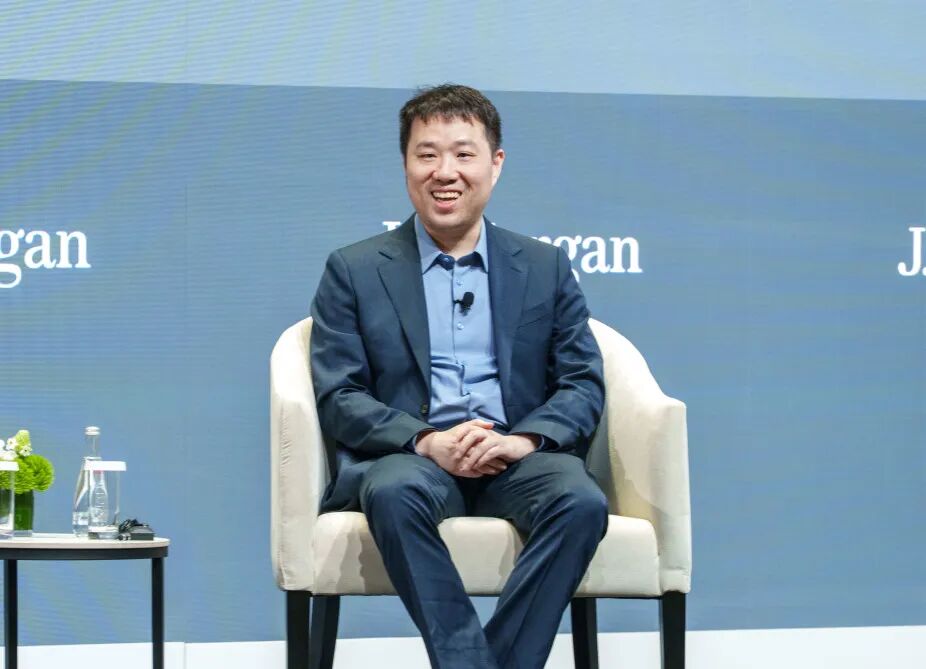
Kujiale co-founder and chairman Huang Xiaohuang
Kujiale has consistently centered its development on being a "physical world simulator," focusing on photorealistic rendering, industrial digital twins, and intelligent agent training — dedicated to bridging the physical and digital worlds while accumulating massive amounts of physically accurate 3D spatial data.
Currently, Kujiale is helping industry partners train corresponding models through open-source models and spatial datasets on one hand, while leveraging its own historical accumulation to train its own spatial models around spatial cognition, reasoning, and action on the other.
In March this year, Kujiale open-sourced its SpatialLM spatial cognition and understanding model, providing embodied intelligence with a foundational training framework for spatial cognition and understanding, thereby helping it master human-like spatial awareness and parsing capabilities. Kujiale's previously released SpatialVerse platform further handles intelligent agents' action and interaction training in simulated environments.
Huang emphasized that compared to closed-source approaches, the open-source path can more rapidly build a technology ecosystem and promote the inclusive development of global AI technology. Kujiale will continue deepening its open-source efforts and ecological collaboration to advance the practical application of spatial intelligence.

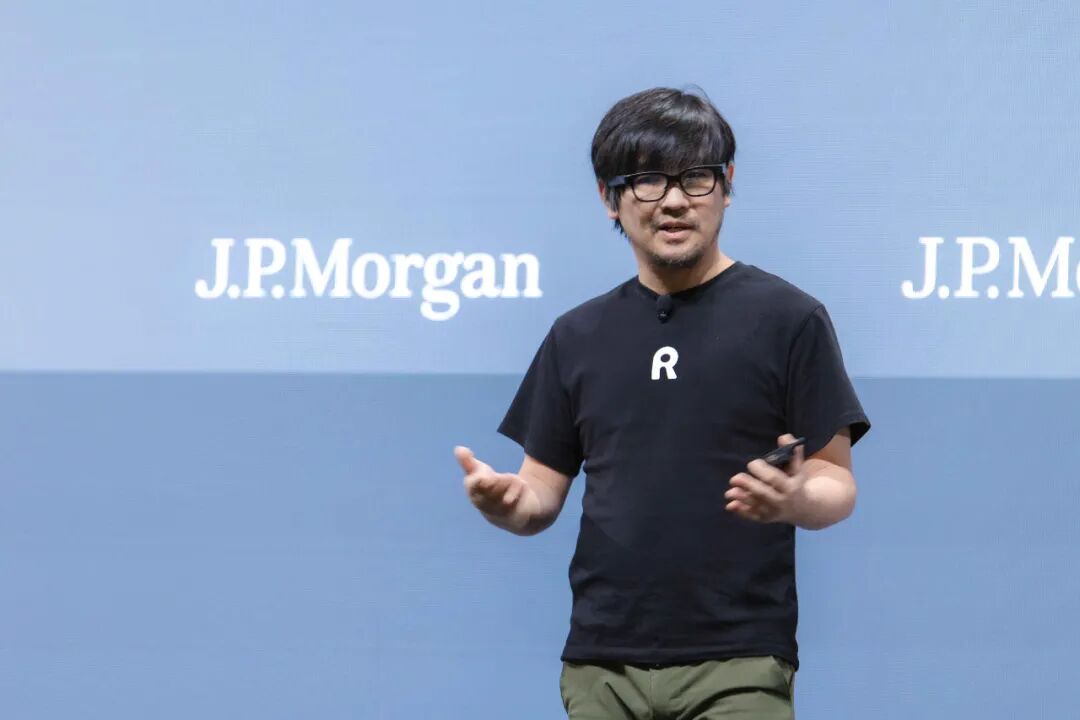
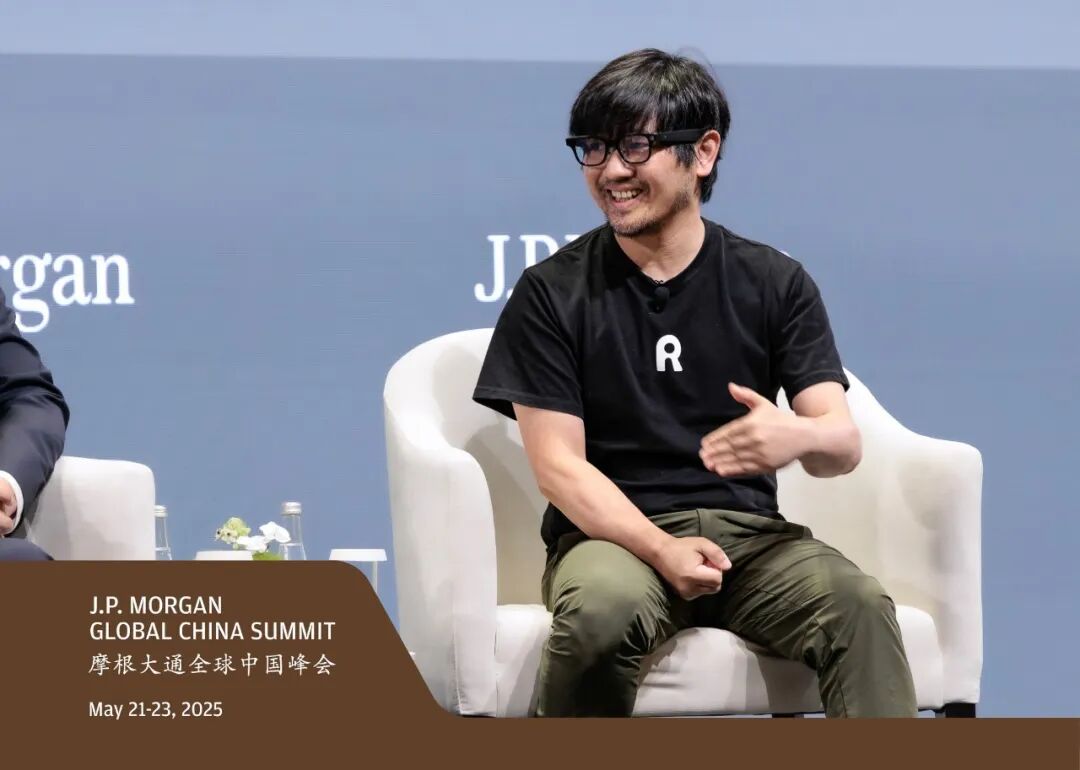
Rokid founder and CEO Mingming Zhu delivered a presentation titled "AI + AR: Exploring Human-Computer Interaction Products."
Zhu noted that while the way we access and process information has evolved from desktop computers to mobile devices, it has remained constrained by the two-dimensional screen interaction framework. Rokid breaks through physical boundaries through its four-in-one technical architecture of "perception-cognition-interaction-content" to achieve a natural interaction experience of "what you think is what you see." This would not be possible without the capabilities that AR brings to bear.
The first capability is perceiving the world — through sensors such as cameras and microphones.
The second is understanding the world — including understanding the objective physical world, as well as understanding people, their intentions, their relationships with others, and their past behavioral habits.
The third is interaction — being able to present the results of this world-understanding in more natural ways, providing effective and valuable information to users through more convenient and natural means.
The fourth is collaboration — between humans and virtual beings, as well as between humans in the physical world.
And finally, digital content creation.
Rokid is a company focused on AI and AR human-computer interaction — a next-generation human-computer interaction platform. It is precisely through eleven years of accumulated exploration that we can see: in museums, visitors wearing AR glasses can see three-dimensional cultural relics floating in midair, making history tangible; in oil fields, engineers use remote AR collaboration to precisely diagnose equipment faults... Bringing the display-equipped glasses from science fiction films into reality is Rokid's answer to the AI era.
"We believe that future intelligent terminals won't just be phones, but devices like these glasses that liberate us from the confines of phone screens, bringing human-computer interaction back from 'finger swiping' to 'eye contact.'" In Zhu's view, future AI will become an invisible yet omnipresent capability.
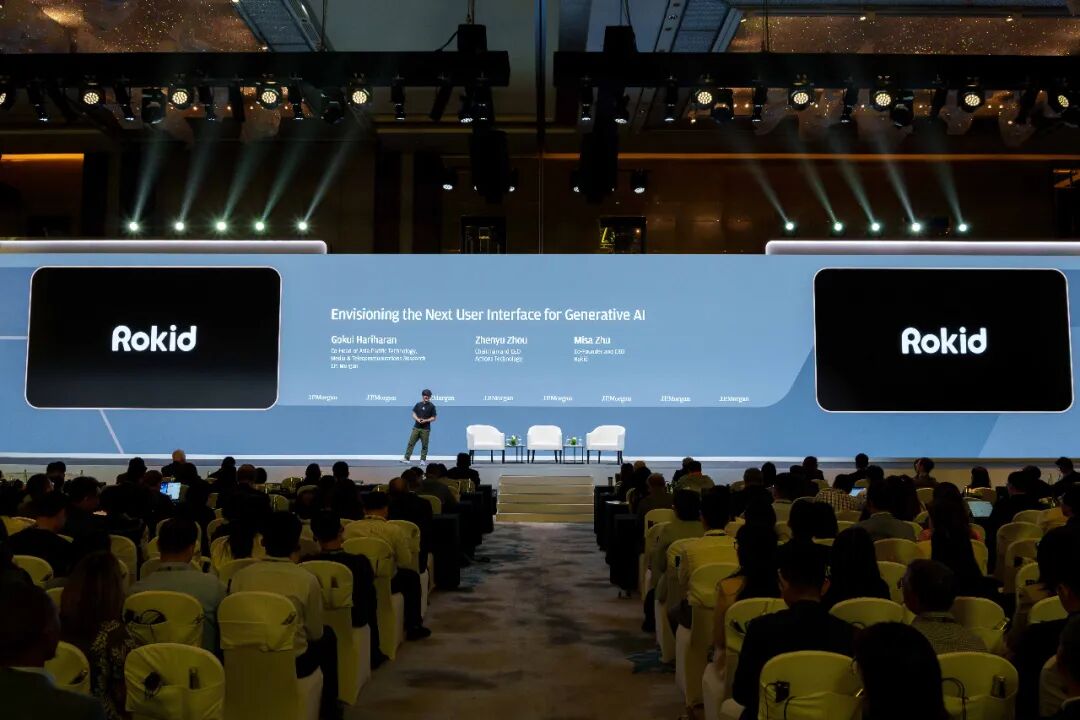
During the product showcase and panel discussion sessions, Rokid also demonstrated its outstanding innovation in the AI + AR space. Rokid founder and CEO Mingming Zhu joined Gokul Hariharan, JPMorgan's co-head of Asia Pacific technology, media, and telecom research, and Zhou Zhengyu, chairman and general manager of Actions Technology, for an in-depth panel discussion.
Zhu noted during the discussion that breakthroughs in AI large models and other technologies have created new opportunities for AR product innovation. However, technological advancement is only one aspect driving AR's development — improving user experience is equally critical. Only by tightly integrating technological innovation with user needs can AR products achieve greater breakthroughs at both the technology and application levels.
Take the recently spotlighted Rokid Glasses as an example. As a vehicle for AI large models, this product integrates multiple large models including Qwen, DeepSeek, Doubao, Zhipu Qingyan, and Nami Search, supporting functions such as real-time translation, object recognition, navigation, and message alerts. It also features rich capabilities including point-and-shoot photo viewing and voiceprint payment, providing users with tremendous convenience.
On-site, Zhu also shared three key data points with the guests. Rokid has gathered over 13,000 developers, including 4,000 enterprise-level developers, making it the largest AR developer community ecosystem in China; it holds a 99% market share in the global cultural heritage market, with AR glasses services reaching more than 2.5 million users; and daily user engagement has reached 2 hours and 45 minutes.
The explosion in popularity of AR glasses may seem sudden, but it is in fact the inevitable result of systematic upgrades in China's innovation ecosystem. It tells us: there is no such thing as "corner overtaking," only the accumulated strength of industrial chains, precise insight into market demand, and ecological cultivation through government-enterprise collaboration.
At the summit venue, numerous attendees stopped to experience Rokid's two cutting-edge products: Rokid AR Lite and Rokid Glasses. Rokid AR Lite features an outstanding reading mode with text clarity as eye-friendly as paper books; its giant screen mode delivers an immersive private cinema experience; and its triple-screen mode enables multi-tasking collaborative operations to boost work efficiency. For cross-language communication, Rokid Glasses' real-time translation function received unanimous praise from attendees. It accurately handles mutual translation among Chinese, English, Japanese, Korean, French, and other languages, with such high accuracy that it completely breaks down language barriers, fully demonstrating technology's humanistic care.
Following the event, Zhu told Bloomberg in an exclusive interview that "smart glasses have a huge market in China, and we're confident we can become the leader in 2–3 years."
The JPMorgan Global China Summit has long been regarded as a "super window" for observing the direction of China's economy and technology. This year, Rokid's appearance as the only invited AR company on this international stage represents not only capital markets' validation of its strength, but also signals that China's AI + AR technology has risen from "participant" to "rule-maker" in the global industrial transformation.