Linear Capital π Review: AI Hardware Entrepreneurship — Don't Rush to Build the Next iPhone | Linear Event

The core of AI hardware entrepreneurship ultimately still comes down to people.

"Linear Tech π" is a new frontier-tech salon series launched by Linear Capital, designed as a no-fluff, high-density forum where founders and practitioners can exchange substantive insights.
The second installment took place in Shenzhen on November 29. We invited guests from Rokid, Odyss, D-Robotics, Qinglantu, and CGL to join Linear Capital's investment team for a discussion on "The N+1 Possibilities of AI Consumer Hardware."
The response far exceeded our expectations — we received over 200 quality applications. To ensure meaningful, in-depth conversations, we had to limit attendance, but we've compiled highlights from the day to share here.
Over the past year, AI hardware has attracted remarkable attention.
Beyond the hype, more people are asking fundamental questions: What problems should technology actually solve? How can organizations support products with greater density and speed? And amid the constraints of cultural differences, user scenarios, and business models, how do you find your own narrow path?
At this edition of "Linear Tech π," several founders and investors working on the front lines offered their unvarnished perspectives: How does original intent help founders navigate the noise? How do products move beyond showing off to delivering real value? How do teams make the most effective choices with limited resources? How do you tell a global story under the vision of technology democratization? And why, ultimately, is AI hardware entrepreneurship still about people?
As the discussion reached its peak, a clear theme emerged: in this wave of intelligent hardware driven by next-generation AI infrastructure, what deserves attention isn't merely the commercial success of any single product generation, but the clarity and resolve founders demonstrate through iteration, trial and error, and continuous improvement.
These reflections may offer a better reference frame for building the next generation of AI hardware.
PART 1
Original Intent as a Filter for AI Hardware Entrepreneurship
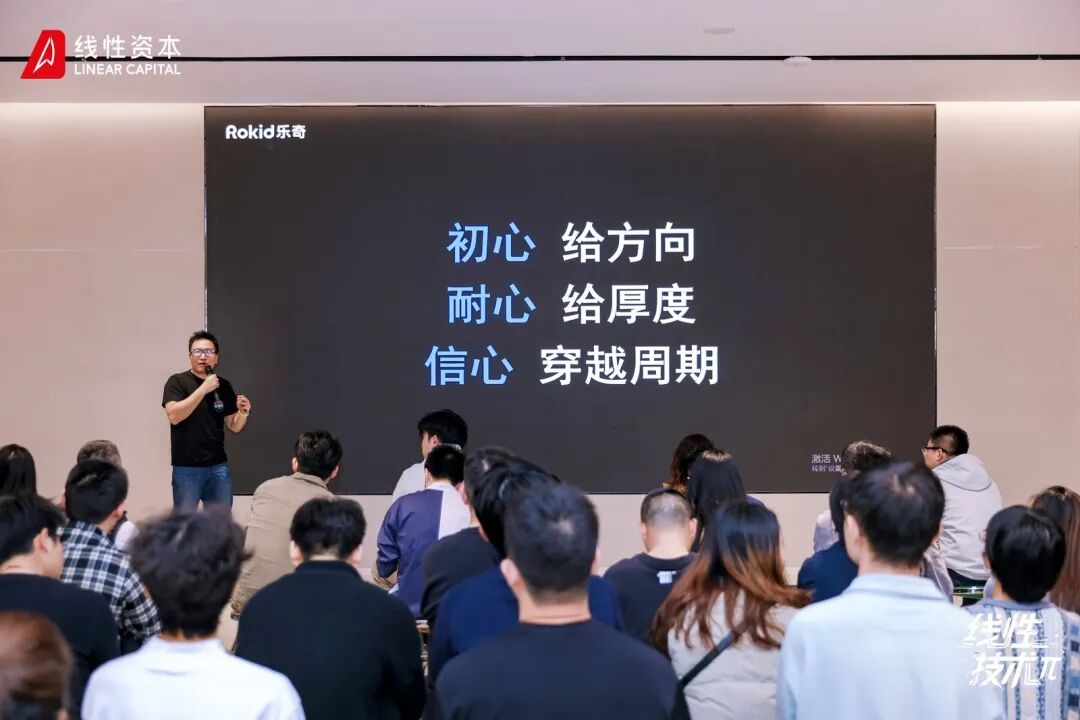
Zhao Weiji | Head of Global Developer Relations, Rokid
The end goal of technology is to make life easier for people. Its core purpose isn't to turn humans into more efficient "beasts of burden." Many so-called "silicon-based" approaches today essentially impose AI on people, giving them enhanced capabilities to become more advanced "super beasts of burden."
I've seen several AI or XR glasses companies shut down. But a company with genuine original intent is less likely to be swayed by trends — whether investment trends, startup trends, or profit-driven trends. Having that core purpose keeps you steady.
The biggest bottleneck or dilemma for many technically-minded founders is that they desperately want to show off their "muscles" — muscles they've built over ten years, and they want to display them. But technology isn't for showing off; the core of technology is solving problems. If it doesn't solve problems, it should stay in the lab incubating slowly. Flashiness might get some people to buy, but the core is always product strength. So original intent acts as a filter, helping you stay clear-headed amid the noise, like someone sailing across the ocean.
We must deliver genuine value — output things that solve problems, bring joy, or provide solutions. That never changes. Otherwise, you might take off with your first product for various reasons (say, suddenly going viral on TikTok), but the second generation won't work — and the second generation is the real test of a hardware company's capabilities, the founding team's strength, and what you're actually worth in the market. Original intent helps us focus on what truly matters.
For hardware, quality comes first. You don't get many chances to try again; the market won't give you multiple opportunities to refute user feedback, and production lines can't simply be restarted on demand. So prioritizing quality is the top imperative.
PART 2
Building Spaceships That Help Ordinary People Solve Concrete Problems
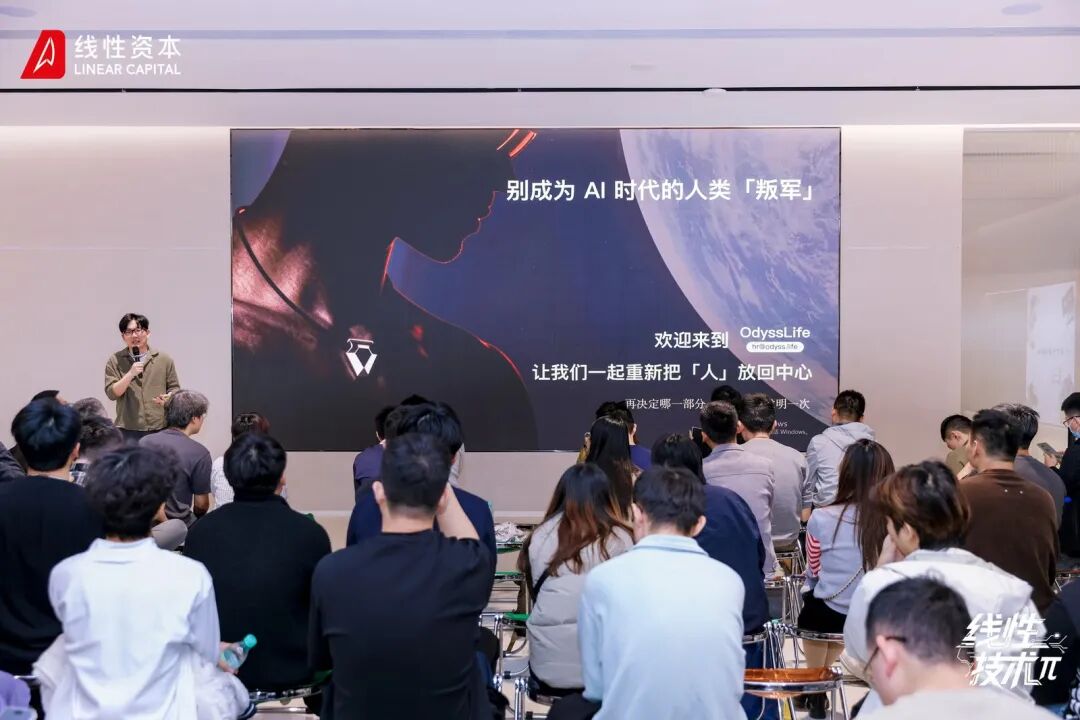
Pan Yuyang | Founder, Odyss
Right now, everyone is searching for the next iPhone moment. Most AI hardware has to answer one question: How do we find an entry point for large models? But we're asking the opposite: Is there an AI hardware product that can completely ignore those grand trends and simply focus on helping ordinary people solve concrete problems in daily life?
Look at the products that defined eras. The iPhone wasn't a better Nokia — it was an entirely new terminal integrating phone, internet, and applications. The Nintendo Switch wasn't a more powerful gaming console — it started from how people engage with games and created a multiplayer entertainment experience.
So after the noise dies down, let's return to the origin and rethink from real needs: What kind of spaceship can we build?
Everyone wants to replace the phone and become the next entry point. But the phone itself is already a near-perfect form factor. Before trying to replace it, we need to ask whether there's actually a reason to do so. At this stage, general intelligence is captivating, but a single piece of hardware can only carry one mission.
When product functionality hits bottlenecks and experiences converge, why should users choose yours? The answer won't be found in spec sheets — it's hidden in the moment users put it on, pick it up, or set it on their desk. It's emotion, attitude, and a choice of identity.
PART 3
Building a Universal Development Platform to Avoid Reinventing the Wheel
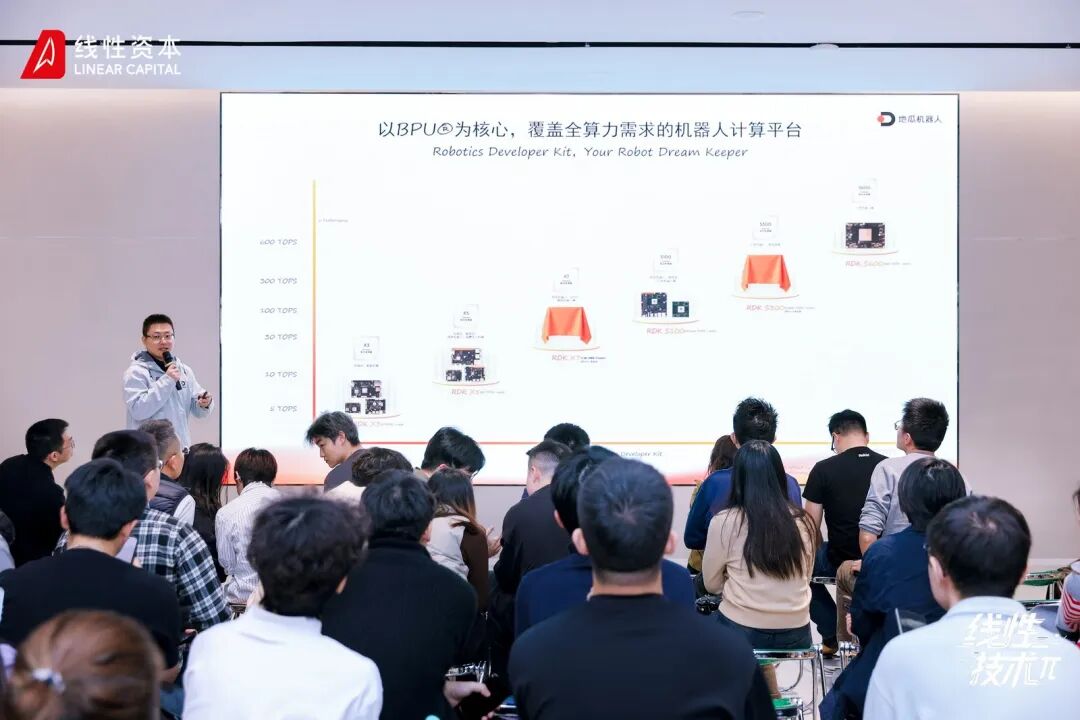
Liu Yue | Director of Ecosystem Expansion, D-Robotics
We believe there is no ultimate form for robots in the future, and they shouldn't be limited to humanoid forms. This is fundamentally a trade-off between efficiency and cost — both the user's cost of use and the developer's cost of deployment. In some scenarios, aerial robots are most efficient; in others, tracked or wheeled robots may be more suitable. But regardless of form, the underlying technology stack is highly similar. That's why we're committed to building a universal robot development platform: to prevent everyone from having to reinvent the wheel.
In entrepreneurship, you can move fast, but your mindset can't be rushed; once you're anxious, your actions become distorted. Some foundational work can be accelerated, like basic startup processes or assembling a core team. When some directions aren't yet clear, validate quickly with simple prototypes. But before truly committing, you must think through and articulate "what exactly are we going to do." You can talk it through with trusted, experienced friends, see if they truly understand, and from their perspective uncover information you've missed, making your plan as complete and actionable as possible.
Finally, we'd like to share something that left a deep impression on us while building our global robot developer ecosystem. This year we met a developer from France who may be the oldest RDK developer globally. After trying our product, he was so excited that within a week, voluntarily and without asking for anything in return, he translated our English user manual into French and proactively helped us with various promotions. Simply because he genuinely believed in the platform and felt it deserved to be seen by more people. This was incredibly inspiring for us, giving us more motivation to continue refining our platform. We hope you'll join us in building a more prosperous robot developer ecosystem.
PART 4
Where Ideas Come From May Matter Less Than You Think
Zou Lin | Founder, Qinglantu
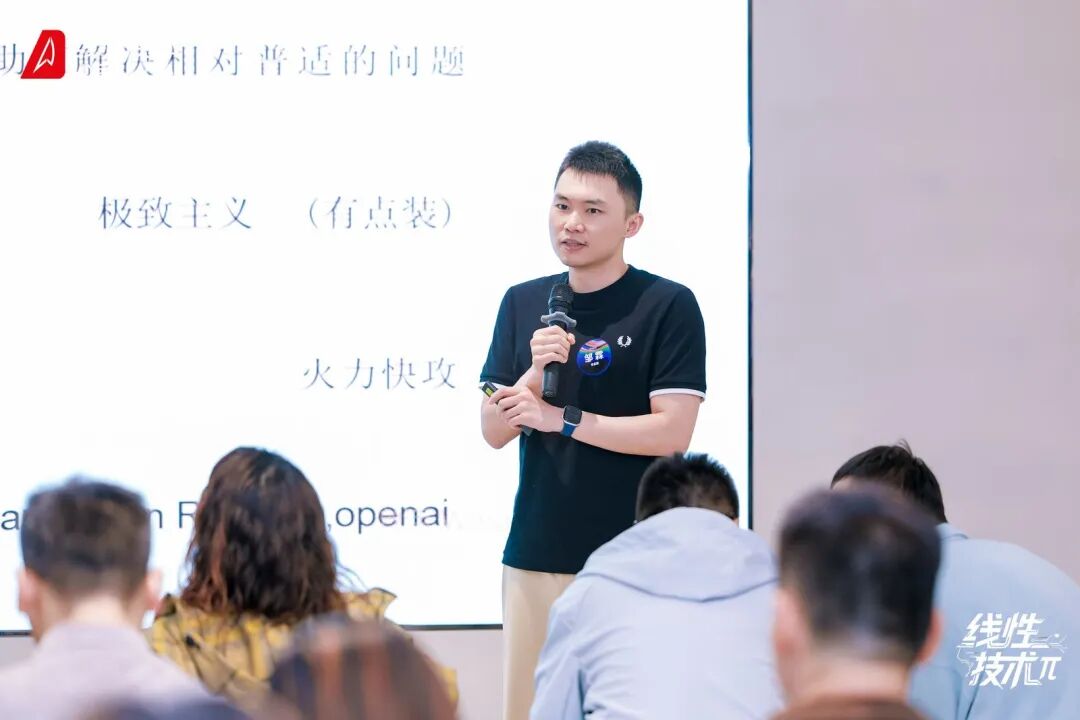
When you truly find precise product-market fit in a niche market, there's a raw "sense of life" — the product is rough, users curse at you, yet they can't live without it. Many great things born in niche markets follow this dynamic path.
In this wave of AI hardware, it's not just hardware veterans who can start companies — software people, designers, and product managers can all find their own advantageous tracks, identify their optimal paths, nail the MVP, and iterate furiously.
The process of grinding out direction and product with the founding team is like a round table of knights discussing back and forth, balancing user needs, interaction, engineering, experience, design, and ultimately arriving at a good product.
After experiencing many ideas and projects, you'll realize that where ideas come from sometimes doesn't matter that much — whether it's a flash in the shower, logical deduction, asking AI, or coming from data, none of it really matters. Because once the idea arrives, you still need massive, repeated refinement. Ultimately, it's that polished stone, that beautiful finished work that counts.
PART 5
The Key to Breaking Through in AI Hardware Entrepreneurship: Organizational Iteration Capability
Fang Ling | Co-founder, CGL
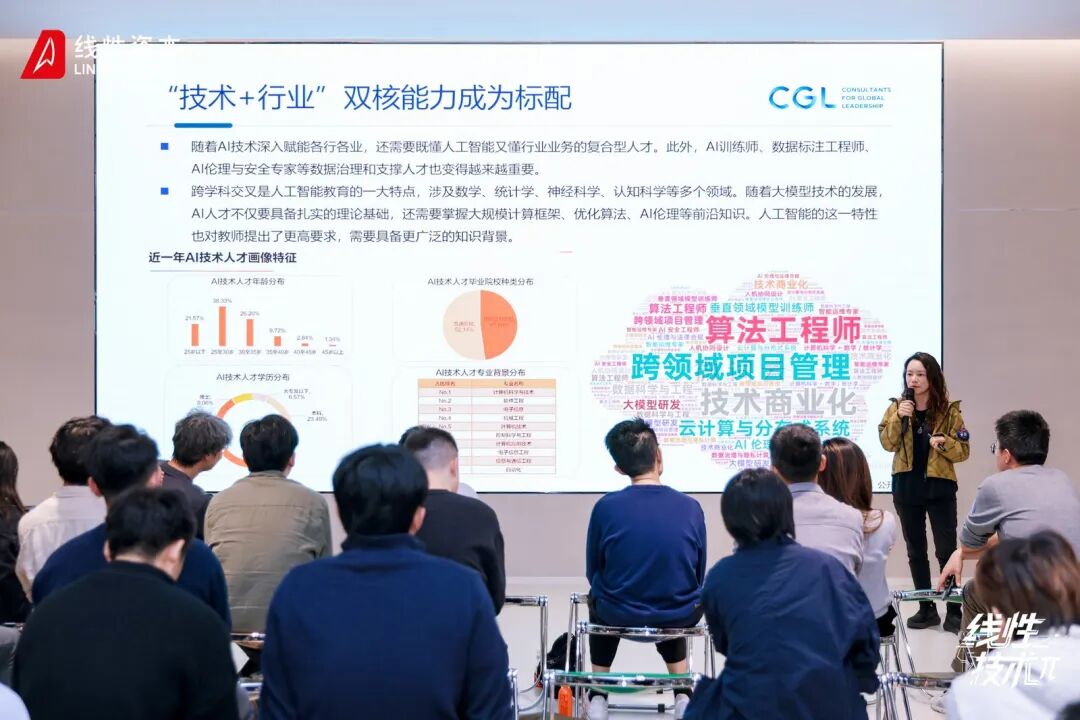
With the emergence of tools like Agent, much engineering work is being automated. What once required 10 people may now need just one. Founders must then ask: With limited cash flow, what kind of people should you hire to maximize resource efficiency?
Many founders lack a sense of rhythm about when to expand, when to contract, when to introduce the right people at leanest cost, and when to invest heavily during commercialization. At angel or pre-Series A stage, people tend to be viewed as costs, always trying to hire good people at lower prices, only recruiting excellent talent when funds are abundant — but this thinking may be wrong. One outstanding person can deliver 10x, 20x, or even more impact. If your team is full of mediocre people, product progress gets severely delayed, the 0-to-1 cycle stretches out, and you may keep iterating on your ideal product in a closed loop without validating whether the market actually wants it.
Today, smart hardware entrepreneurship is shifting from relying on product scarcity to relying on organizational iteration capability. As financing and supply chains become increasingly transparent and homogenized, the key to breaking through in AI hardware entrepreneurship is becoming more like what determined success in internet entrepreneurship: extremely high talent density.
In a company, beyond the CEO as the all-around "hexagonal warrior," the second critical role is HR. HR is the first window facing excellent talent. If that window isn't professional, if it can't clearly communicate the company's vision and strengths, many outstanding people won't consider you at all.
Technical talent today typically has several criteria when choosing companies: first, they admire strength — the CEO needs a distinguished background, and the product R&D team needs to be among the market leaders in a specific domain; second, you must be able to articulate your dreams and vision, a capability the CEO must possess, and your HR partner must possess as well. Future competition isn't just about product — it's about people.
PART 6
Making Frontier Technology Affordable and Delightful for More People
Dong Dunmin | Senior Director, Linear Capital
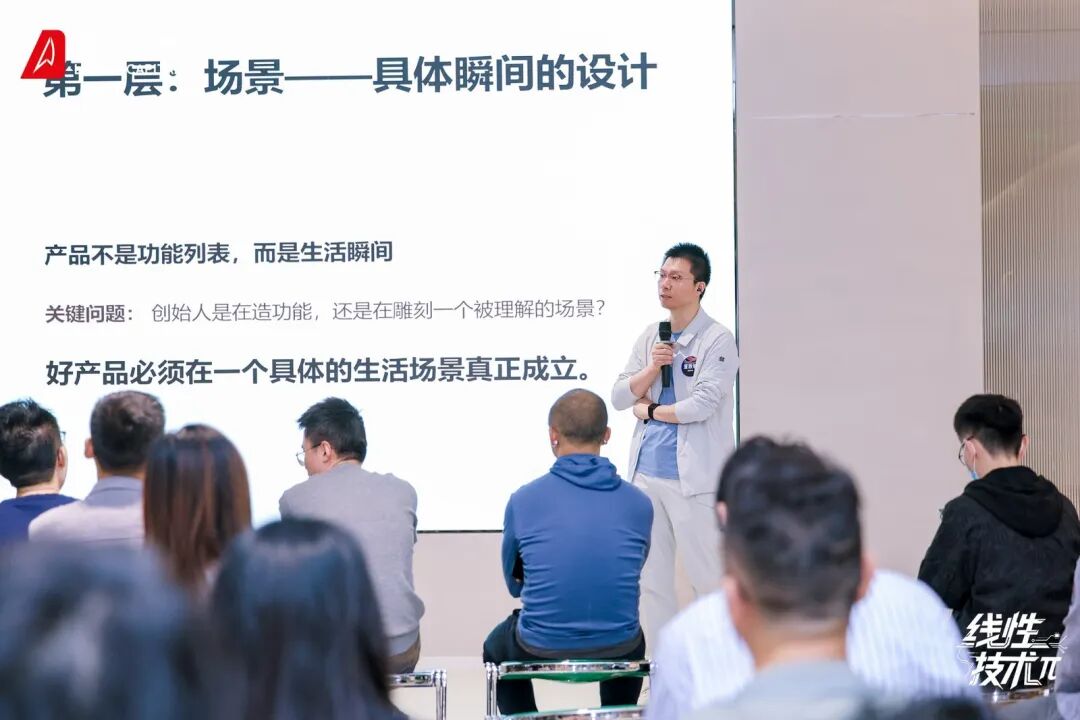
We believe excellent products follow a three-layer logic: the outermost layer is scenario, the middle layer is culture, and the bottom layer is human nature. Only when all three layers hold true can a product genuinely move a broader audience.
We typically ask founders a critical question in early stages: Are you building a function, or are you sculpting a scenario that users can accept or be moved by? We believe good products must be authentically grounded in specific life scenarios.
True global expansion is about cultural integration and recreation, not simply translating copy or selling domestic products abroad.
Dopamine creates stimulation — like scrolling Douyin or Pinduoduo's "chop a buck" feature; endorphins build trust, creating security and long-term dependence, like Duolingo's streaks. Products with lasting appeal need to find balance between these two.
In the past, people always wanted to simply replicate Silicon Valley's high-premium stories. I don't think we need that anymore. Combining China's industrial advantages and strong engineering capabilities, we have the opportunity to make technologies that only a few could afford accessible and delightful for far more people. And in different cultural environments, we can find a narrative that we can articulate clearly and use confidently — ultimately enabling more ordinary people globally to enjoy good technology at reasonable prices. This brings not just commercial value, but also a new global strategic objective.