Bolt Picks | Indie Developers: How to Find the Right Startup Idea for You
Successful ideas usually originate from users' genuine needs.

A recent Hacker News thread on "how founders find startup ideas" struck a chord with many. The topic drew numerous entrepreneurs to share their experiences and insights, offering valuable reference for indie developers searching for inspiration.
We've distilled the standout perspectives from the discussion to share with you, hoping they might spark some ideas. You can access the original content via the "read more" link.
Here's a summary of the key takeaways 👇
01 Key Takeaways
1. Execution beats originality: A founder's success often hinges on execution rather than having a unique idea. Even in existing markets or product categories, proper execution can still yield substantial returns — for example, by delivering better service or targeting a specific niche.
2. Solve real problems: Successful ideas typically emerge from solving problems you're personally experiencing, or from observing difficulties others face. The key is whether your solution addresses genuine user needs, even if those needs sometimes appear deceptively simple.
3. Don't overthink competition: Competition isn't necessarily bad. The existence of other products validates that market demand exists. You can differentiate through superior customer service, more reasonable pricing, or by targeting a specific niche.
4. Focus on niche markets: Targeting underserved segments is a recurring theme. Identify markets that are poorly served or overlooked, where competition may be relatively limited or demand hasn't been adequately met.
5. Start from personal pain points: Many well-known products began when developers, dissatisfied with existing tools or systems, decided to build their own — and later found much broader audiences.
6. Iterate and adapt: You can start with any idea and let user feedback guide product development. Launching quickly and iterating based on user input is key to finding product-market fit.
7. Maintain clarity about the founder role: An indie developer's work extends far beyond coding. Marketing, sales, and customer service often consume significant time.
8. Domain expertise matters: Stick to building in areas where you already have professional knowledge, as developing products for unfamiliar industries can lead to misjudging real problems and solutions.
9. Customer interaction is crucial: Talking to potential customers is essential, but come prepared. Ensure you have a solid grasp of basic industry knowledge first, otherwise superficial questions in specialized fields may frustrate practitioners.
10. Prioritize iteration over perfection: Launch early. Learning and adjusting matters more than waiting for the perfect idea or product.
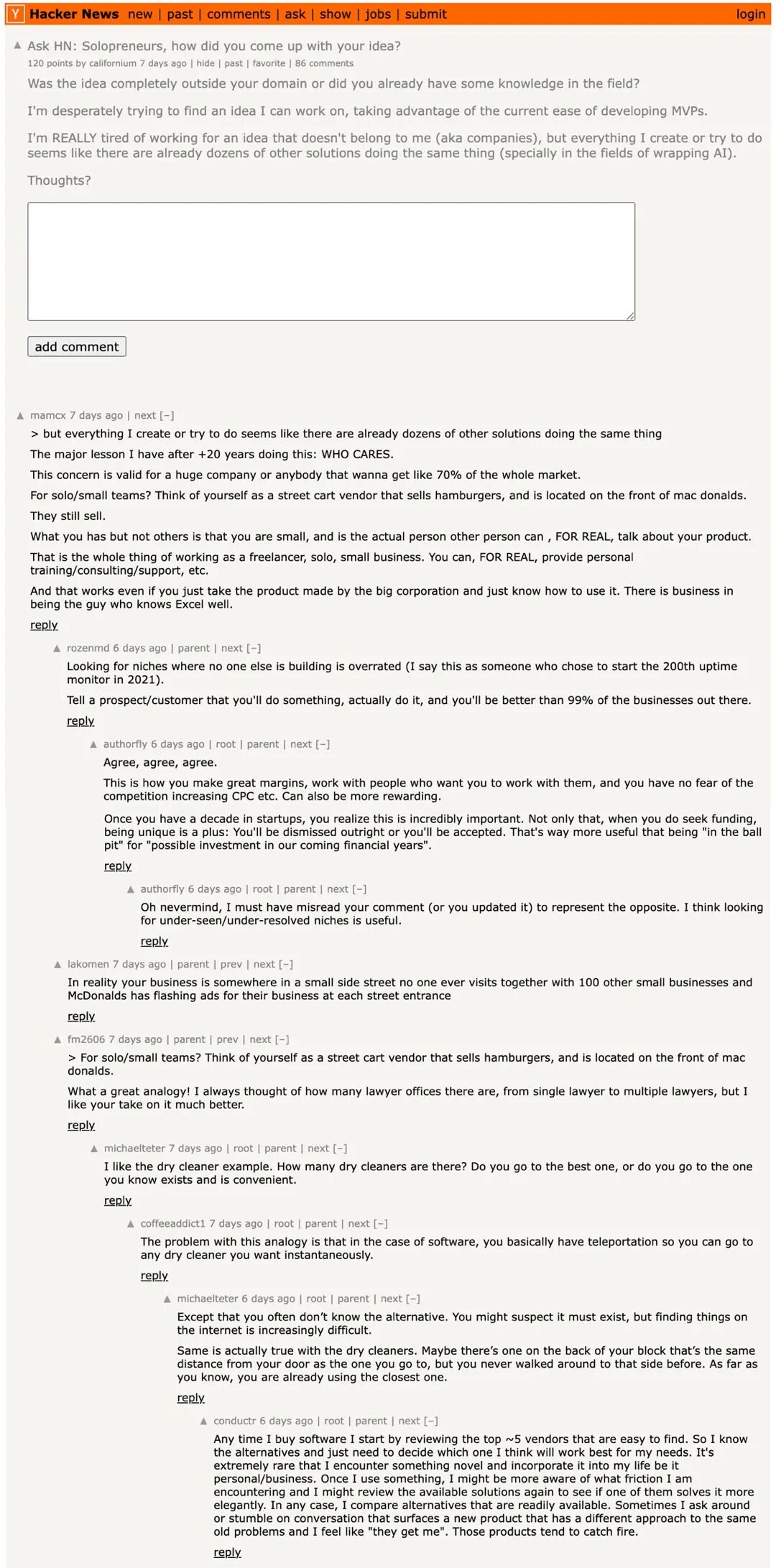
Image | Ask HN thread discussion
02 Further Reading
Linear Bolt Bolt is an investment initiative by Linear Capital specifically for early-stage, global-market-facing AI applications. It upholds Linear's investment philosophy, focusing on projects where technology drives transformative change, and aims to help founders find the shortest path to their goals — whether in speed of action or investment approach. Bolt's commitment is to be lighter, faster, and more flexible. In the first half of 2024, Bolt invested in seven AI application projects including Final Round, Xinguang, Cathoven, Xbuddy, and Midreal.