Bolt Picks | How to Find Your Co-Founder
Appendix: 50 Interview Questions for Partners

Rob Balian, founder and CTO of Reprompt (YC W24), spent nine months interviewing nearly 100 candidates before finding his current co-founder — far more time and energy than he'd anticipated. Since then, he's helped friends develop a rigorous process for finding their own co-founders, and shared what he learned in a blog post.
We've organized and translated the author's article; you can read the original via the "Read Original" link at the end.
01 Define Your Ideal Co-Founder Profile
First, you need a clear definition of your ideal co-founder. The more specific the profile, the less time you'll waste on mismatched candidates. The three most important factors are:
- Skill set
- Timing and location
- Interest in your startup idea
Here's a sample pitch for finding an ideal co-founder:
I'm looking for a technical co-founder who can commit to starting a company together in the next 2-3 months and work in-person in San Francisco. I'd want them to own product, design, and engineering. I'm non-technical and would handle sales, marketing, and product. I'm committed to building in health tech and have several ideas, but I'm also open to exploring others in the space.
02 50 Questions to Explore with Potential Co-Founders
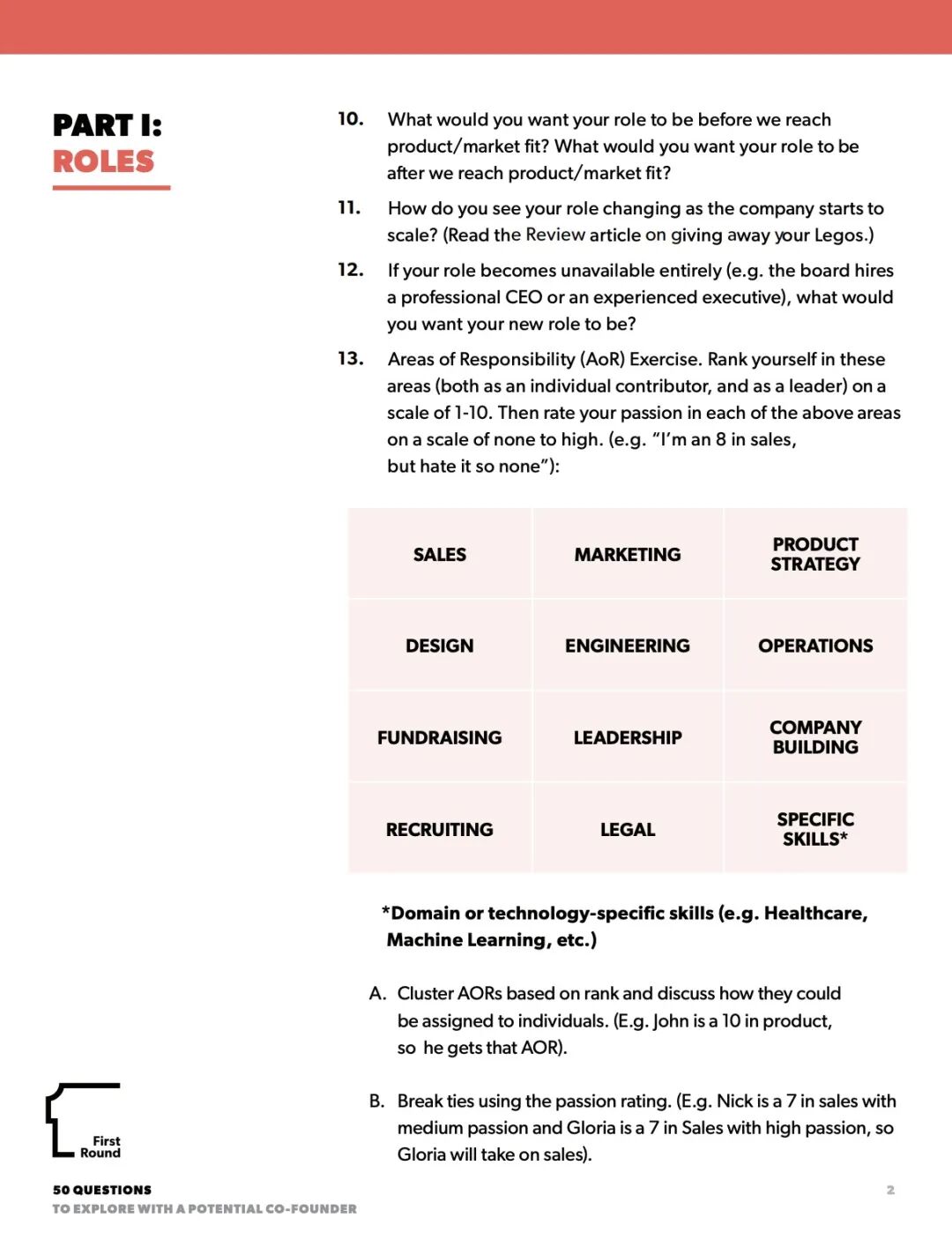
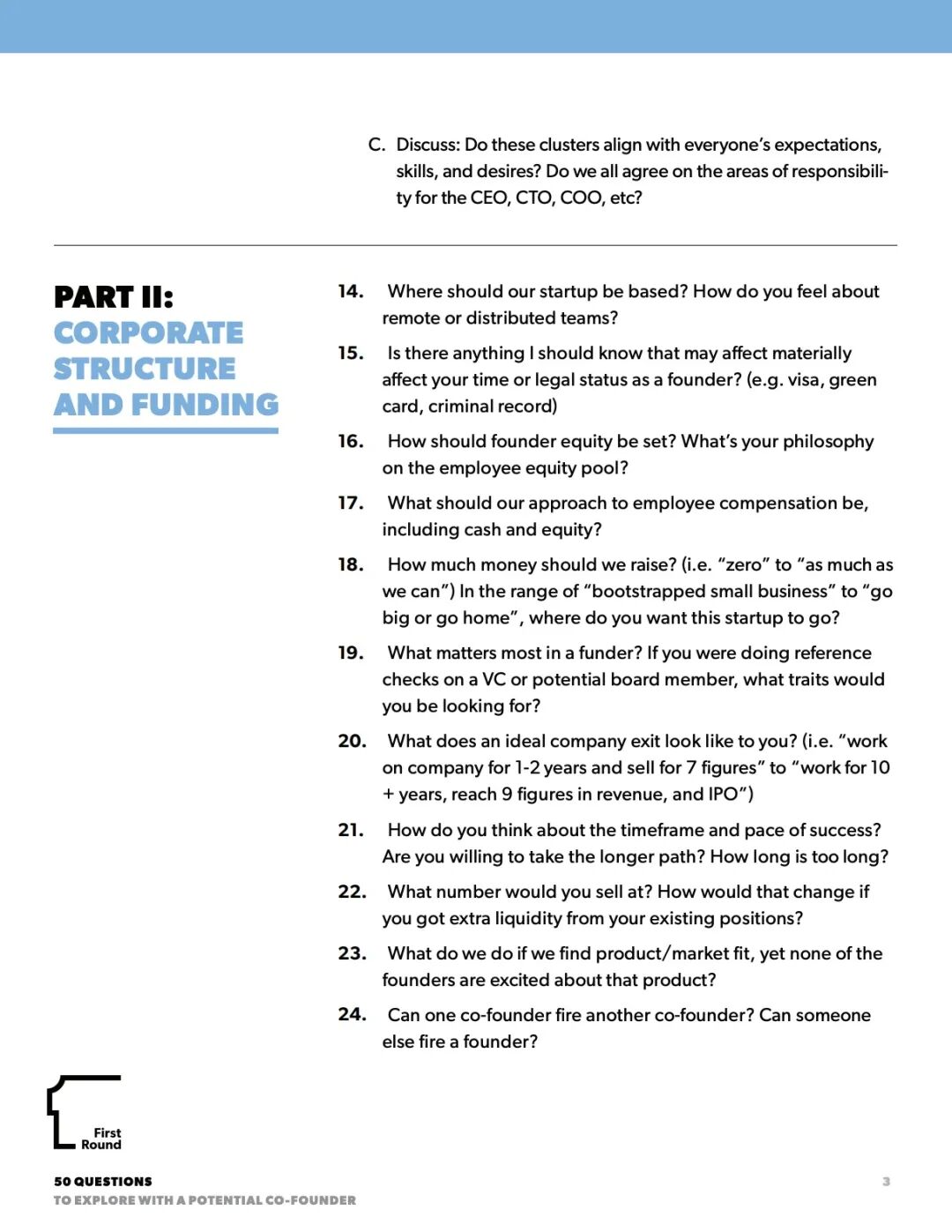
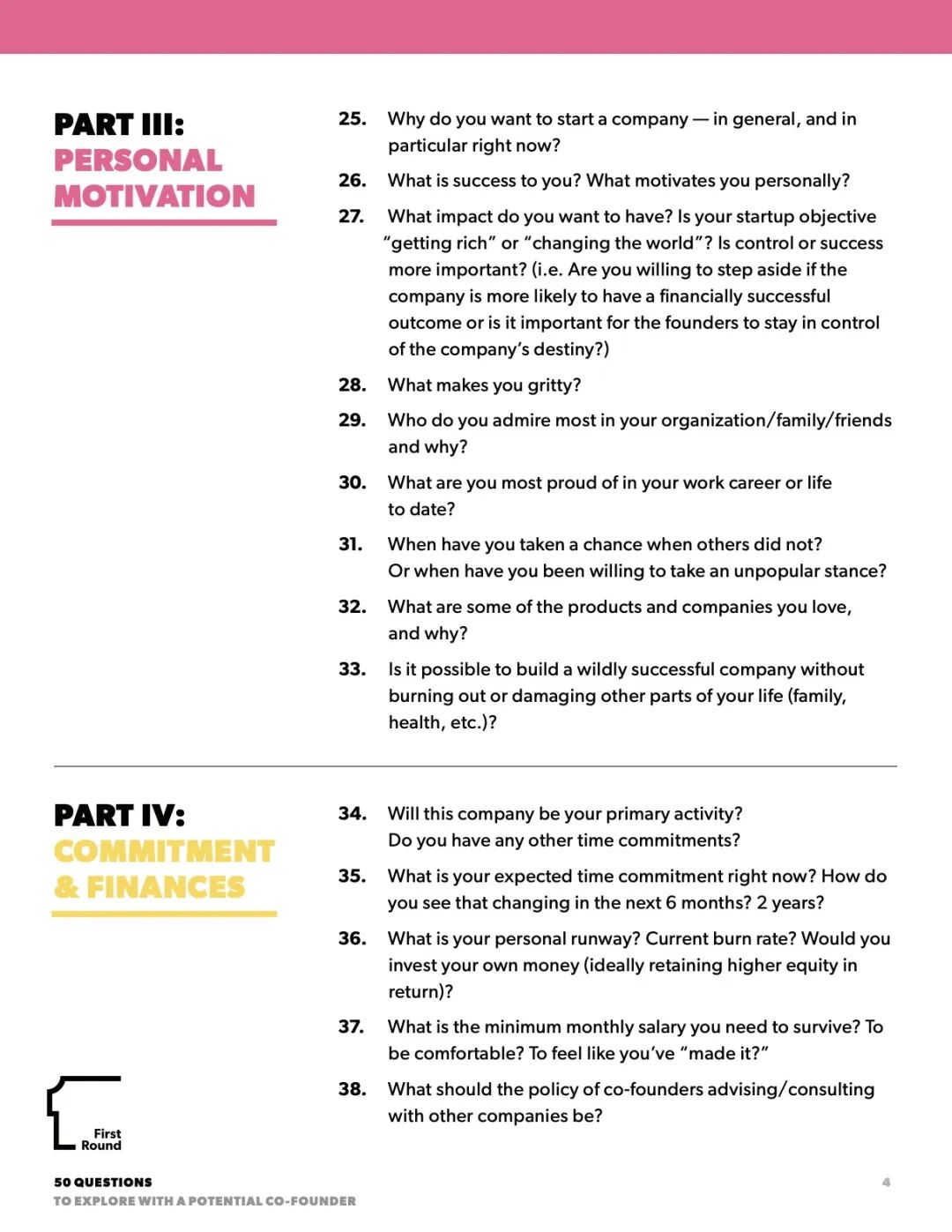
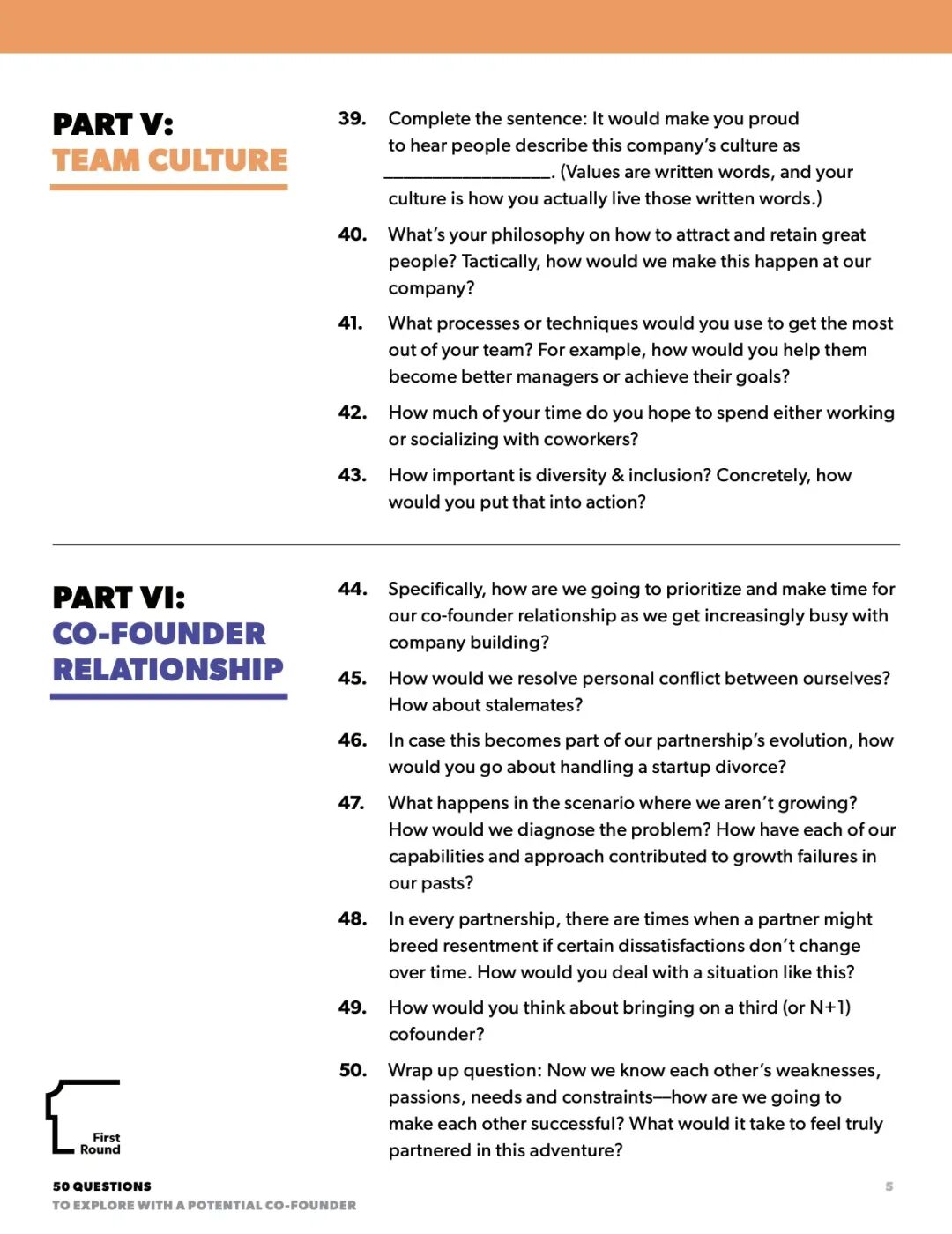
First Round Capital put together an excellent co-founder questionnaire (linked at the end). It takes about 2.5 hours to complete. That sounds long, but it saves time in the long run.
These questions help you self-assess what's important to you, identify what traits to look for in a co-founder, and end unpromising conversations early.
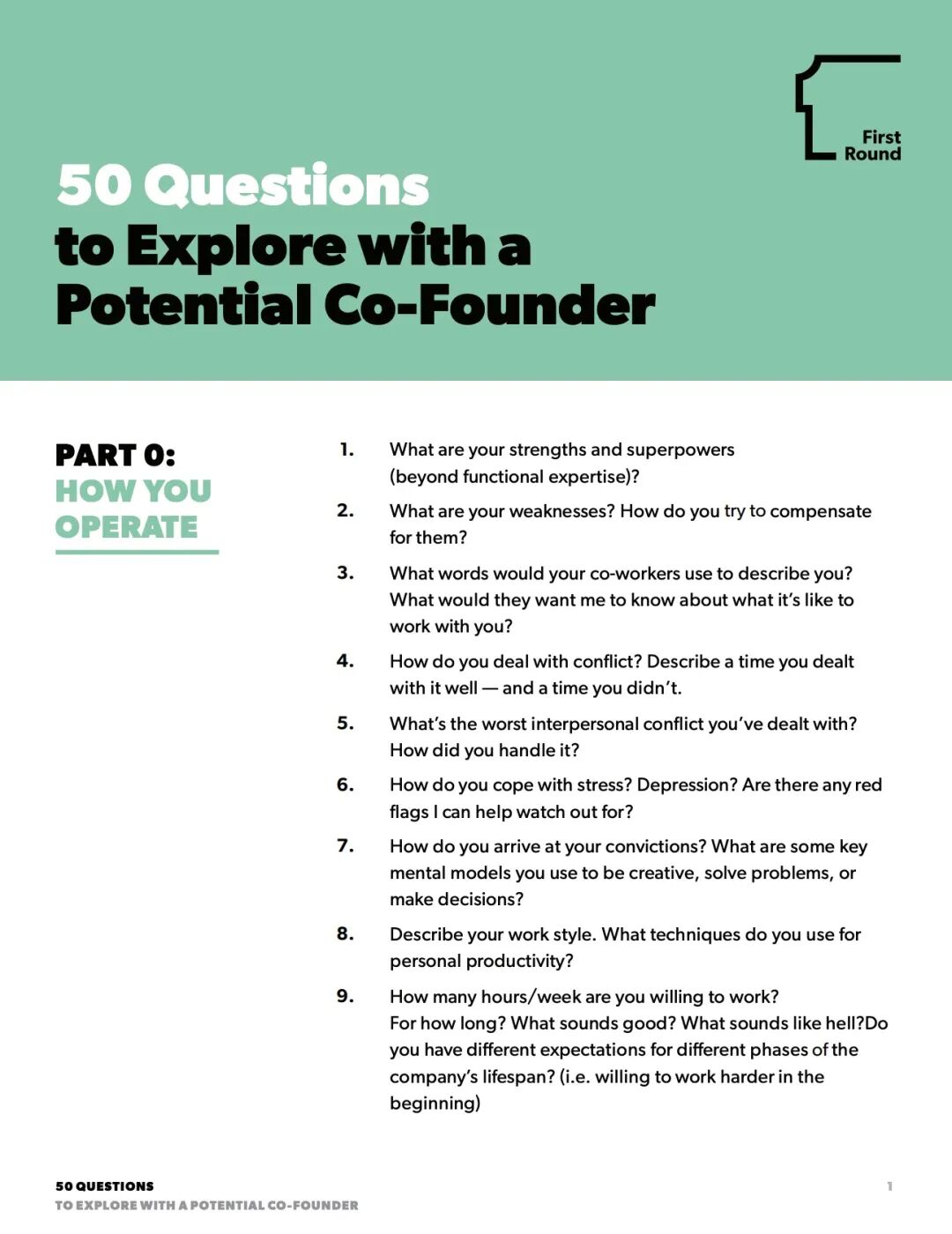
Image: Questionnaire
There's also a Google Sheet with all the questions (linked at the end), which is easier to use than First Round Capital's PDF. You can put your answers next to a potential co-founder's and see where you align and where you differ.
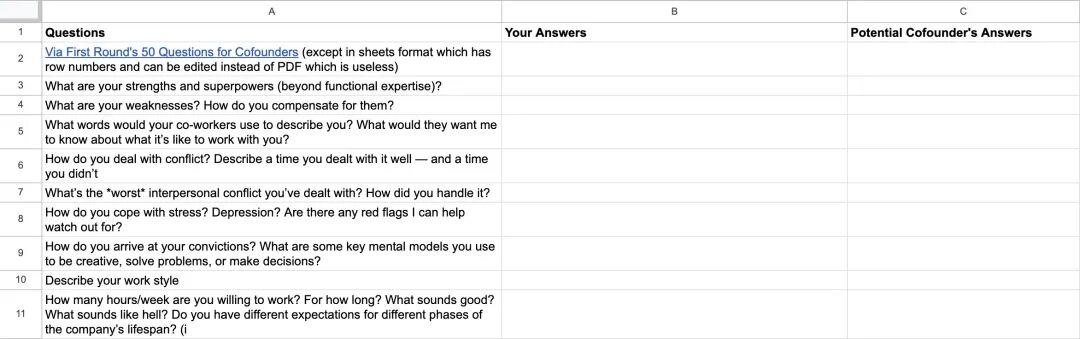
Image: Questionnaire (Google Sheet version)
03 Sourcing Potential Co-Founder Leads
Start with the most promising sources:
-
People you already know: Former colleagues are great because you already understand how they work, what energizes or stresses them, and what ideas excite them. Just make sure they fit your ideal profile. In my ten years of work experience, I only had seven people on this list — and all of them said the timing wasn't right.
-
Your network: Broadcast that you're looking for a co-founder and share your ideal profile. Ask for introductions to potential candidates. Even if people don't know someone suitable now, they'll think of you when they do.
-
Co-founder dating apps: YC's co-founder matching platform is quite good, with high-quality talent. Browse profiles and adapt your own based on examples you see.
-
Events and hackathons: These can be decent sources, but figure out who's actually looking for a startup opportunity versus who's satisfied with their current job.
04 On the Importance of Timing
Finding your co-founder requires the right timing. It took me nine months, which seems crazy in retrospect. People ready to start a company immediately are rare, and this affects your decisions in several ways:
-
Measure in days, not total hours. Interviewing potential co-founders typically means spreading hours across many days. Cramming too many meetings into one week yields diminishing returns. Better to consistently meet a set number of people each week and wait for the right match.
-
Finding a co-founder isn't your main job. The search may take months — consider what else you can do during this time: keep your current job, start building your company, or take a break.
-
Reject the non-committal. You'll meet many people considering entrepreneurship but without clear commitment. Don't spend too much time on them; just check in occasionally to see if their situation has changed.
05 The Co-Founder Interview Funnel
1. First Meeting: Video Call (30 minutes)
The goal is to gauge how you feel about the person and verify they match your ideal co-founder profile.
- Skip the coffee for now. Zoom is more efficient — 30 minutes versus two hours.
- Minimize small talk; get to substance. Discuss what you're working on, what ideas excite you, and why you're interested in starting a company.
- If the conversation feels good and they fit your profile, schedule the second meeting immediately. If not, politely say no.
2. Second Meeting: In-Person Coffee (2 hours)
Meet face-to-face to actually feel out the person. Go deeper on ideas and ask about their working style — daily workload, remote versus in-office, favorite projects, and so on.
If things go well, send them the questionnaire mentioned above and ask them to complete the 50 questions thoughtfully before your next meeting, when you'll discuss their answers together.
3. Third Meeting: In-Person Project Work (2-3 days)
Two options:
- Hackathon style: Join a hackathon unrelated to your startup idea. The time pressure lets you test their ability to build, design, pitch, and work under stress.
- Startup style: Pick one of your ideas and plan a 2-3 day project sprint. You should divide tasks roughly equally. Watch how they talk to customers — that's a strong signal. Examples: build a product feature to demo to customers, create a sales deck, or interview industry experts.
4. Next Steps
Work together as much as possible from here. If you can both go full-time, start immediately. If not, make a plan to get there as soon as possible.
06 Red Flags
-
They're unwilling to change an idea you hate.
-
You're placating each other — agreeing on the surface without genuine understanding.
-
They don't fit your ideal co-founder profile (e.g., unwilling to do sales, or not the technical talent you need).
-
Something just feels off.
-
They want to work on this part-time.
-
They want to quit their job but haven't set a resignation date.
-
They'll quit, but only after passing a YC interview or raising funding.
Appendix: Co-Founder Questionnaires
-
First Round Capital's questionnaire: https://proof-assets.s3.amazonaws.com/firstround/50%20Questions%20for%20Co-Founders.pdf
-
Google Sheet version: https://docs.google.com/spreadsheets/d/14mQjkD6wpf-ncdWT9guf5h9KV10cVMK8vDdkff5LyHw/edit?pli=1&gid=0#gid=0
Linear Bolt Bolt is Linear Capital's dedicated investment program for early-stage, global-market-facing AI applications. It upholds Linear's investment philosophy, focusing on technology-driven transformation, and aims to help founders find the shortest path to their goals. Whether in speed of action or investment approach, Bolt's commitment is lighter, faster, and more flexible. In the first half of 2024, Bolt invested in seven AI application projects including Final Round, Xin Guang, Cathoven, Xbuddy, and Midreal.