Bolt's Take | Recommended Reading on Apple's Model Experiments, Plus Two Thoughts on the Apple Launch Event

In *What Apple's AI Tells Us: Experimental Models*, author Ethan Mollick discusses Apple's latest experiments in AI, highlighting their attempts using four models: the AI model, the usage model, the business model, and the future model. He analyzes how Apple's strategy differs from other tech giants in AI development, particularly Apple's focus on
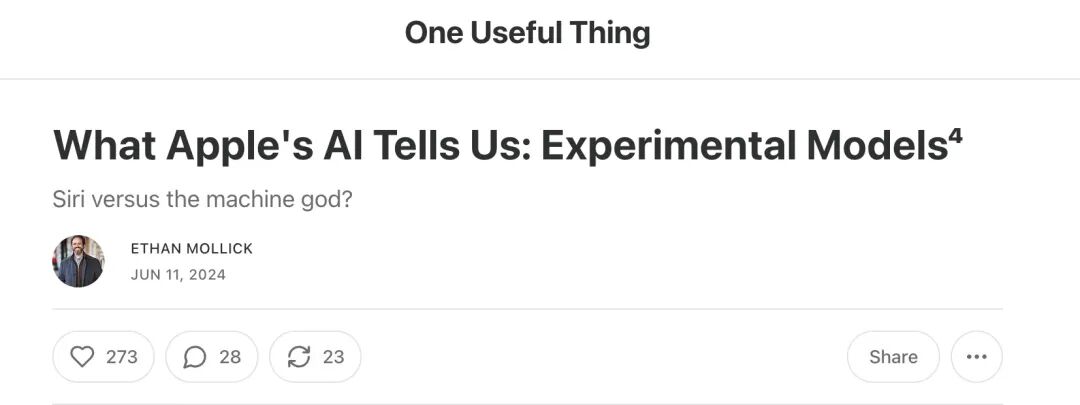
In What Apple's AI Tells Us: Experimental Models, author Ethan Mollick discusses Apple's latest experiments in AI, emphasizing their attempts across four types of models: AI models, models of use, business models, and future mental models. He analyzes how Apple's strategy differs from other tech giants in AI development, particularly in its trade-offs between on-device and cloud processing. I'll summarize the key points first, then share my thoughts on Apple's announcement.
Original: https://www.oneusefulthing.org/p/what-apples-ai-tells-us-experimental
"When Life Gives you LLMs, make llmonade."
Sharing a fun pun from the comments section.
Most players are running experiments from four directions:
- AI models
- Models of use
- Business models
- Mental models of the future
**
AI Models
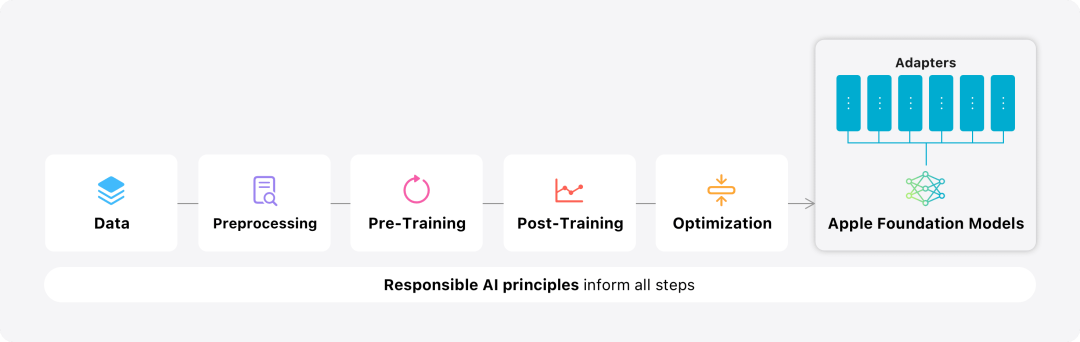
The current consensus is that frontier foundation model capabilities are the baseline (GPT-4o, Gemini 1.5, or Claude 3 Opus). The most straightforward example: GPT-4 can easily beat BloombergGPT across nearly all metrics, despite BloombergGPT being fine-tuned for the financial domain. Almost every tech company is trying to develop small models that can run on hardware devices, turning large models into on-demand cloud resources.
Models of Use
A major direction for AI applications (and one the Bolt team is particularly interested in) is productivity tools. And simple task completion — GTD (Get Things Done) — may not require a $20-per-month supermodel to accomplish.
**
Business Models
OpenAI delivered an impressive answer over the past year with its rapid revenue growth, showing how a model company can monetize. But for most future AI companies, finding a sustainable business model will require experimentation. The most important problem these companies need to solve is earning user trust — ensuring users feel their information is secure. Privacy protection is also one of Apple's greatest strengths.
Future Model Paradigms
For many AI companies, the most anticipated yet feared moment is the arrival of AGI (also the ultimate goal for companies like OpenAI and Anthropic). If that moment truly comes, the small models currently being polished for specific scenarios will ultimately become stepping stones for future models. Apple's bold choice to go deep in this seemingly narrow domain — the exploration path it carves out — will likely serve as a guide for future on-device models.
Bolt Thought
-
While many Apple Intelligence features remain in internal testing, the announced capabilities and vision have given users and developers significant confidence. And many of the foundational architecture tools introduced (such as Talaria) play an important role in continuously optimizing the on-device model user experience.
-
Talaria is crucial for optimizing machine learning models, especially on resource-constrained devices. As on-device computing demands increase, how to run these models efficiently without sacrificing performance becomes critical. Talaria helps users intuitively understand model statistics and evaluate optimization schemes through simulation to improve overall model performance, meeting on-device technical requirements. Designed to optimize machine learning models for efficient operation on resource-limited devices, it helps users compile models to hardware and displays model statistics in an intuitive way. Users can simulate optimization schemes and assess their impact on performance metrics including model size, latency, and energy consumption. Talaria official introduction: https://machinelearning.apple.com/research/talaria
-
What excites me most about Apple Intelligence this time is the system-level future interaction with Siri. This foundation traces back to Workflow, which Apple acquired years ago. Early on, it mainly enabled voice-based app interaction, allowing visually and physically impaired users to operate iPhones through VoiceOver. An acquisition originally intended primarily as an Apple accessibility feature has become, years later, a cornerstone for realizing a key component of Apple Intelligence.
Easter Egg: Bolt Portfolio Product "Xinguang" Appears at WWDC
During WWDC24, Xinguang's developers Legolas and Oran had in-depth discussions with multiple Apple engineers about new features announced at the event and Apple Intelligence, and will integrate capabilities from Apple Intelligence's upcoming releases in their latest version.
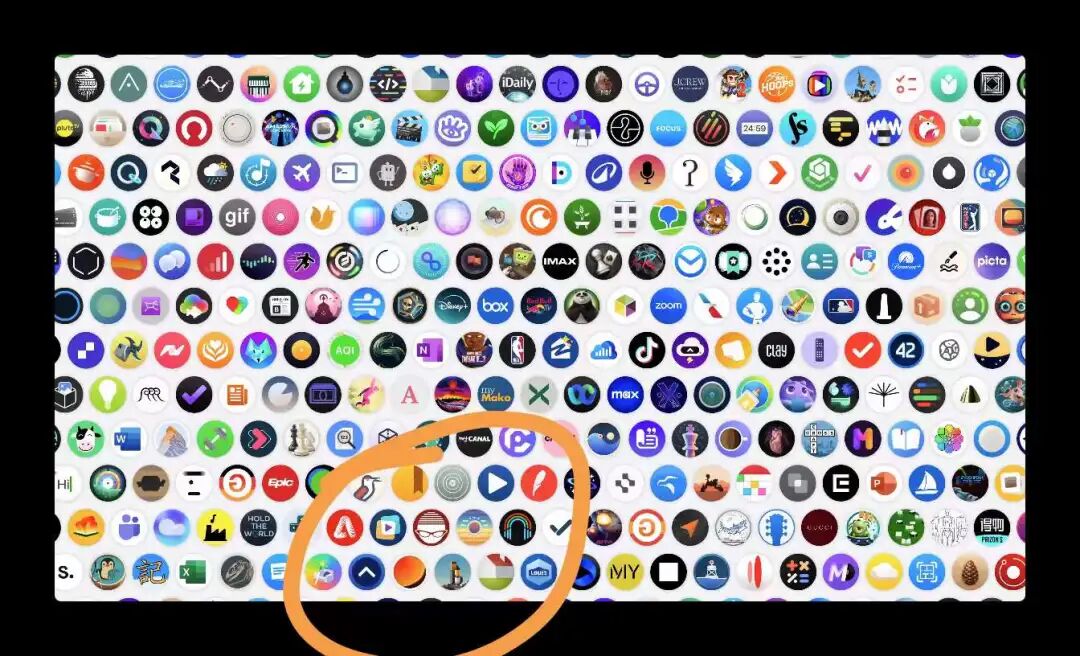
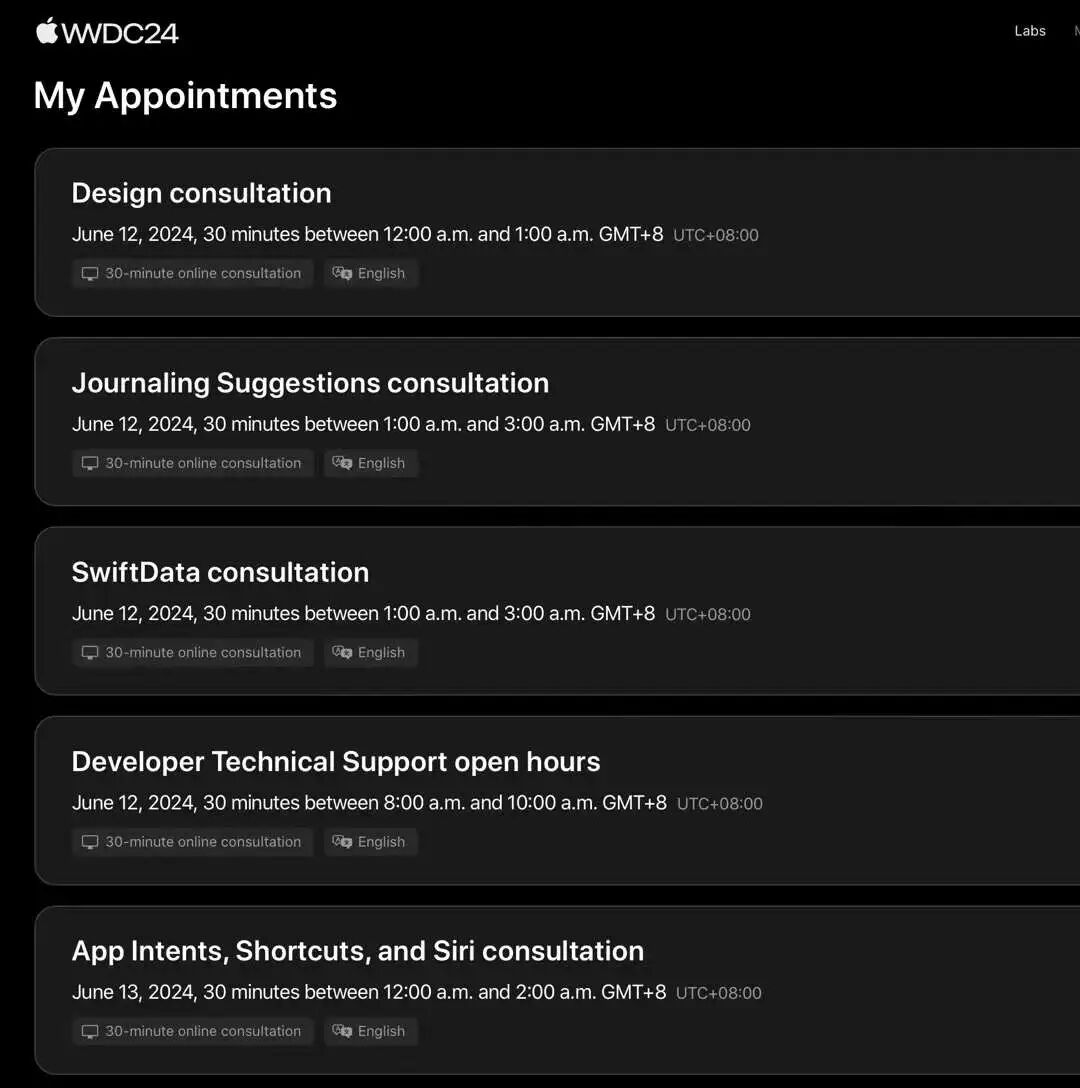
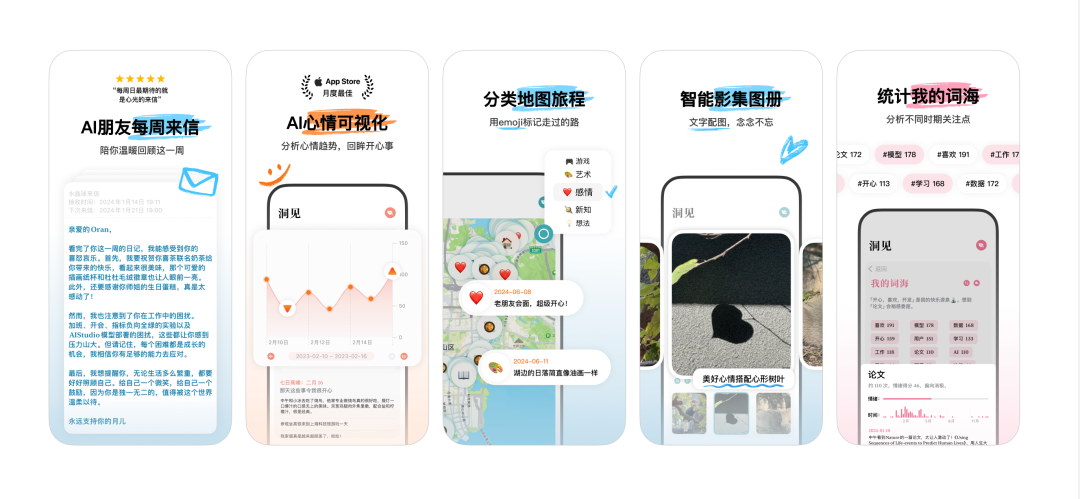
As an AI life-logging companion app, Xinguang has always been committed to bringing users the most accessible experience and the warmest companionship. Version 3.0 is currently in beta and launching soon. Those interested in the product are welcome to search for Xinguang on the App Store, follow Xinguang's official WeChat account or Xiaohongshu for the latest updates, and join the user community to record the starlight of everyday life together 🌟 (my WeChat: zoey_jingyi).
Bolt Community
If you're an explorer of the AI wave who resonates with Bolt's perspective and wants to discuss with like-minded peers, welcome to scan the QR code below to briefly introduce yourself. After review, you'll be invited to join the discussion.

** Linear Bolt Bolt is an investment initiative established by Linear Capital specifically for early-stage, global-market-facing AI applications. It upholds Linear Capital's investment philosophy, focusing on projects driven by technological transformation, with the goal of helping founders find the shortest path to their objectives. Whether in speed of action or investment approach, Bolt's commitment is lighter, faster, and more flexible.