Bolt Perspectives | OpenAI's Latest Acquisition Through the Lens of Features vs. Products: Why Rockset, and What Comes Next?
OpenAI's recent acquisitions have drawn a lot of attention. Today, I'll use its acquisition of Rockset as a starting point to share some thoughts on the difference between a feature and a product.
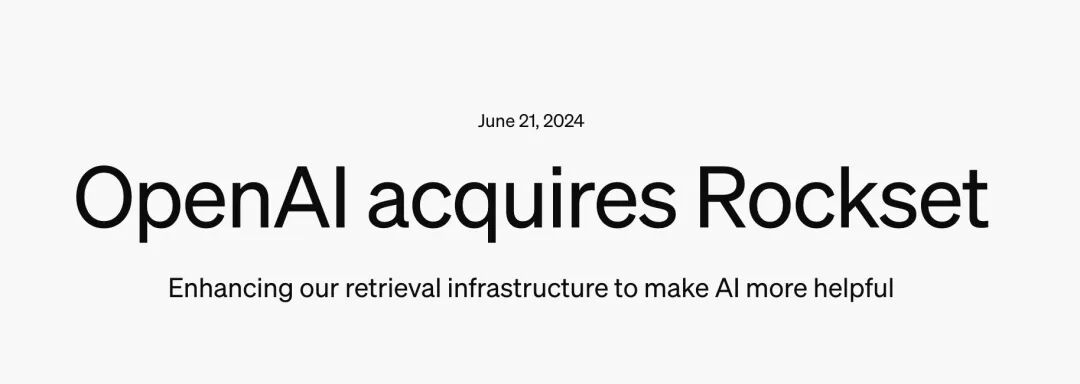
OpenAI's recent acquisitions have been drawing considerable attention. Today, I'll use its purchase of Rockset as a starting point to share some thoughts on the distinction between a feature and a product.
In early 2021, Silicon Valley was still in the thick of the pandemic. During my work-from-home days, aside from writing code, my most vivid memories were hopping between voice rooms on Clubhouse. I recall that Clubhouse barely had any pre-launch buildup before it rapidly attracted celebrities including Elon Musk and Oprah. Combined with its invite-only design, this quickly propelled the voice-only chat app into the spotlight, with its valuation surging past $1 billion. Yet today, a few years later, compared to the phenomenon of the GPT series launched the same year, I can count on one hand the friends still using Clubhouse. The company laid off more than half its workforce last year. After the fleeting voice chat craze faded, what stuck in today's products are the voice channels in Twitter and Discord. Similar products include Lensa, EPIK, and Miaoya.
Digging deeper into the reasons behind this, many buzzworthy products are essentially single features rather than complete products, and tools with this characteristic may be more vulnerable to being left stranded by waves of technological iteration. The arrival of generative AI has prompted increasingly deep reflection on features versus products, leaving many investors and even product managers in a wait-and-see mode, fearful that a single GPT release could render their team's efforts on image models obsolete. Our view: the capabilities of foundational AI models are themselves largely features, while the moat of a product that cannot be easily replaced should come from data and support for specific workflows (the future potential of agents).
Looking at OpenAI's recent data-layer acquisition: as a complete real-time data analytics solution, the Rockset acquisition reflects OpenAI's strategic vision (offering a glimpse into its data strategy), with potential to enhance its retrieval capabilities, drive enterprise applications, and optimize search functionality going forward, while also pointing toward new directions for AI infrastructure development.
Rockset is a real-time analytics database company founded by former Facebook engineers. From a macro perspective, OpenAI acquiring a database company isn't surprising. The GPT series, as the flagship product of large language models, had a major weakness early on: no official support for connecting with external data. After OpenAI launched its Assistant feature last year, Retrieval Augmented Generation (RAG) became the hottest keyword after large models themselves. When the acquisition news broke, HackerNews was filled with puzzled voices (including some from current customers complaining about Rockset's planned Q3 shutdown). What confused observers was why OpenAI didn't invest in or acquire qdrant or Pinecone — the high-valuation vector database companies that had been in the spotlight and that OpenAI had used internally in 2023 — instead choosing Rockset, which hadn't been much discussed since the large model boom?
This brings us to the perspective this article aims to offer: from the feature-versus-product lens, Rockset — built on open-source projects — has accumulated considerable valuable assets over the years, including a complete real-time database analytics solution focused on data integration, query optimization, and visual analytics for user insights. Compared to Pinecone, which mainly offers vector database functionality to developers, Rockset is closer to a complete product.
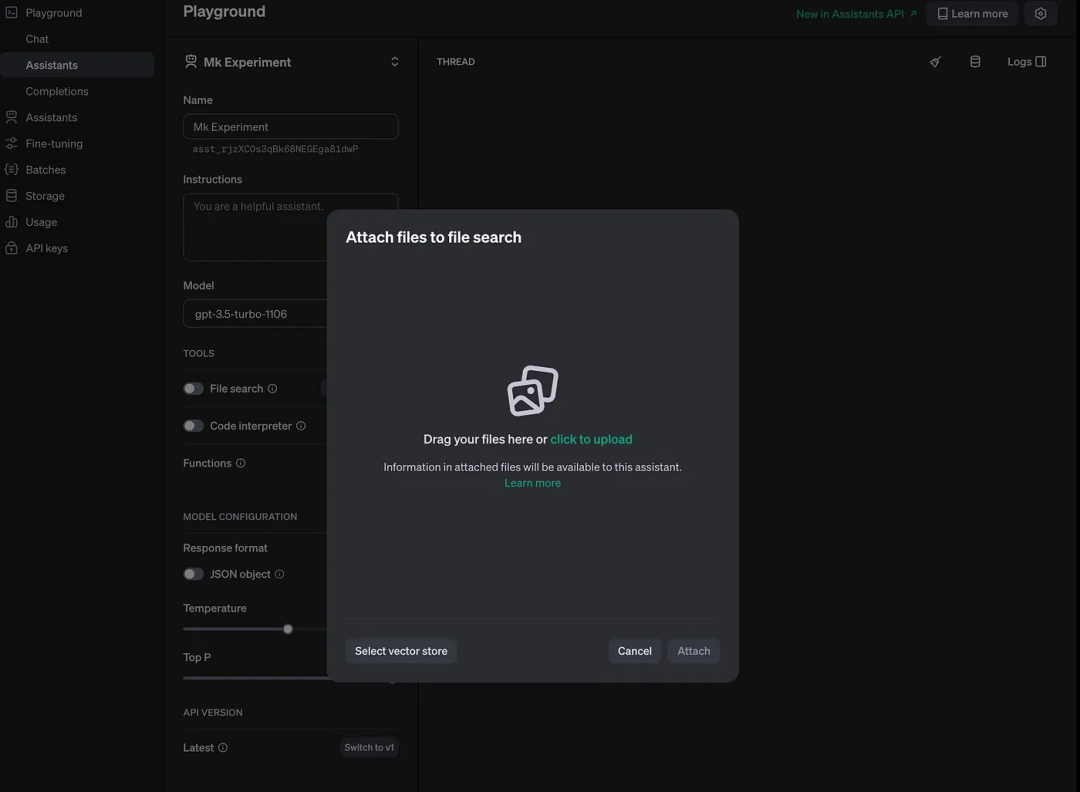
Precisely because of this, this acquisition leads me to three expectations and speculations about OpenAI's future product development:
-
Continued expansion of OpenAI's native Retrieval capabilities, adding support for structured databases to the low-code, out-of-the-box document upload model based on Assistant, providing developers with more middleware modules above the model layer, or potentially launching its own analytics functionality.
-
Since the launch of ChatGPT Enterprise, many consulting firms, Fortune 500 companies, and universities have announced strategic partnerships, but large-scale deployment has yet to materialize. Previously, these organizations' biggest concerns about using GPT directly were data security, accuracy, and real-time performance. After integrating Rockset's talent and technology, could B2B scenarios become OpenAI's second growth curve after ChatGPT, emerging as the go-to choice for comprehensive AI deployment at large enterprises?
-
With large-scale real-time data retrieval capabilities in hand, is OpenAI's own LUI (Language User Interface) search also coming closer?
Bolt pays attention not only to cutting-edge developments in AI applications but also looks forward to the rise of infrastructure platforms and components with complete product attributes. As AI technology advances, what we need is not merely the implementation of single functions, but comprehensive solutions that seamlessly integrate and enable multi-functional collaboration. We welcome all tech enthusiasts interested in AI-era infrastructure and databases to connect with us, to jointly explore the most promising developer tools and architecture-layer products for optimizing on-device AI experiences, and to work together in shaping the future technology landscape driven by AI. (My WeChat: zoey_jingyi)
A bonus:
Since its founding, OpenAI has made over a dozen external investments covering areas from education to embodied intelligence. Feel free to share this article, follow the Linear Capital WeChat official account, and reply with "OpenAI investments" in the backend to receive our compiled list and introduction of OpenAI's portfolio companies.
Bolt Community
If you're an explorer of the AI wave who resonates with Bolt's perspective and would like to discuss with like-minded peers, welcome to scan the QR code below to briefly introduce yourself. After review, you'll be invited to join the discussion.

Linear Bolt Bolt is an investment initiative established by Linear Capital specifically for early-stage, global-market-facing AI applications. It upholds Linear's investment philosophy and principles, focusing on projects where technology-driven transformation occurs, with the goal of helping founders find the shortest path to their objectives. Whether in speed of action or investment approach, Bolt's commitment is lighter, faster, and more flexible.