Event Recap | Search, Character.AI, Hardware: A Year of AI's Bumpy Road to Real-World Deployment

Linear Capital vs. Zhipu AI's Z Program — Text Summary
On September 22, Linear Capital and Zhipu AI's Z Plan co-hosted a closed-door discussion in Shanghai. We explored potential future directions for model iteration, the progress of application deployment, and possible scenarios from the perspectives of models, investment, and applications. Below is a written summary of the sharing from this event. Special thanks to Yizheng and zR from Zhipu AI's Z Plan, as well as the roundtable guests Wang Yuxiao from Lumi, Mo Zihao from Nuanwa, Zhuang Minghao from TuLongZhiShu, and Bai Zeren from Linear Capital.

Photo | Group photo from the event
Table of Contents — We recommend reading selectively based on key points. 👇
- General-purpose AI search is a big tech game, while the value increment of vertical search hardly offsets switching costs
- The user acquisition and monetization challenges of Character.AI-style products
- Is AI + Coding an opportunity for startups?
- AI + Hardware: combining China's honed software capabilities with hardware supply chain advantages
- What industry insights about AI have emerged in the past six months?
- Discussing the release of OpenAI o1
- How is AI landing in the ToB space?
- What advice is there for independent developers building AI products?
1. General-purpose AI search is a big tech game, while the value increment of vertical search hardly offsets switching costs
In 2024, Google's search revenue was approximately $230 billion, with a MAU of roughly 3.8 billion, yielding an ARPU of about $60, corresponding to a $4 CPC and $6 CPM. In comparison, Perplexity has $20 million in ARR and 20 million MAU, with an estimated subscription ARPU of roughly $1.
This shows that advertising remains the most efficient monetization model, far surpassing subscriptions. Perplexity clearly also hopes to adopt advertising-based monetization — reportedly targeting a $50 CPM. Such a high price means they need to attract high-quality users with purchase intent.
This narrows Perplexity's monetization problem down to:
- How efficient is it at aggregating/identifying high-quality users and driving purchase conversion? — Distribution strategy
- How much value does it deliver to users? — Task execution
The overseas ecosystem is web-based; search is the entry point for all users, with a large enough funnel. Users can complete their entire task execution through Google search on the web (i.e., making a purchase), delivering maximum value to both users and advertisers.
The domestic ecosystem is app-based; completing a purchase requires switching back and forth between apps like Xiaohongshu, Ctrip, Fliggy, Air China, and others. The tracking path is fragmented, and the value delivered to users is limited. In fact, search advertising's share in China has been declining — Baidu's search advertising share also showed a downward trend in its Q2 2024 revenue.
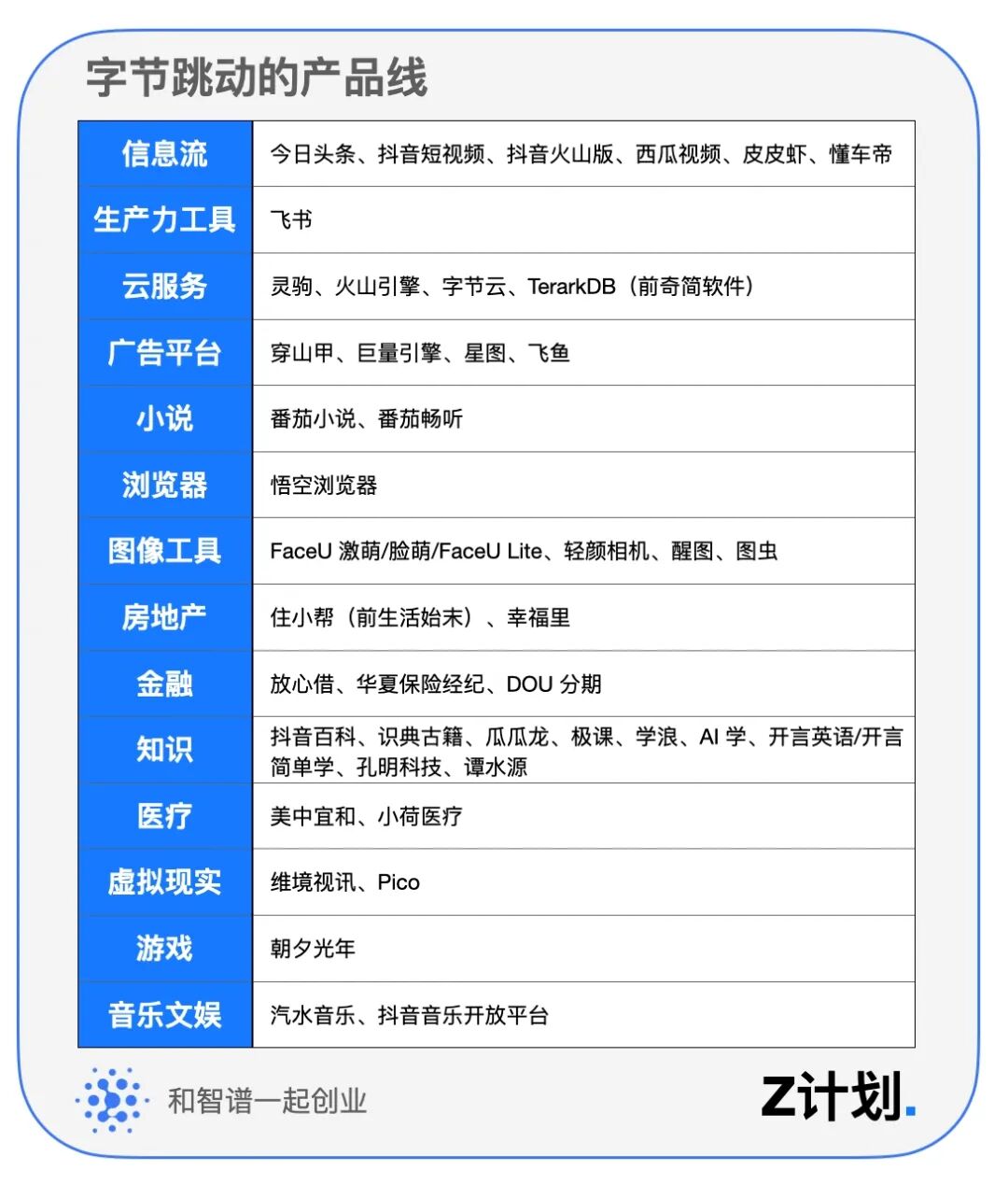
More than Baidu, ByteDance is the most likely to achieve AI search. ByteDance has Douyin as a high-traffic entry point (800 million DAU for Douyin vs. 200 million for Baidu), and also owns the most cross-industry apps, enabling Doubao to serve as an entry point connecting various application data to complete execution. Given its largest traffic entry point and the most extensive cross-industry app matrix, general-purpose AI search is far more favorable to big tech companies.
As for vertical AI search, breaking the switching costs of vertical applications is extremely difficult. For example, VS Code as a tool has far greater user stickiness than the migration cost of switching search tools. In this case, the efficiency of AI search in aggregating high-quality users in vertical domains isn't significantly different from traditional vertical applications. For programmers, when they need to write code, they'll choose to use VS Code rather than searching for relevant information on other platforms. Therefore, vertical AI search will likely become a feature within these products rather than standing alone as an independent product.
2. The user acquisition and monetization challenges of Character.AI-style products
Many AI applications show unoptimistic performance in user stickiness and payment willingness. Different markets require different strategies and data varies greatly — the same companionship and conversational capability delivers vastly different value to different users. Currently, there are three main types of applications in the emotional companionship direction:
- Novel-based interactions, primarily targeting teenagers and users under 25, who converse with agents that have personas and storylines, creating a novel-reading experience.
- Game-based interactions, similar to 1990s internet text-based adventure games where users choose paths to proceed;
- Some borderline content. Users with longer chat durations are typically discussing NSFW (Not Safe For Work) content.
- Some functional applications. For example, emotional problem venting. AI fortune-telling, with next-day retention around 30-40% and average conversation rounds of about 5 to 10. Users who chat longer sometimes continue for two hours, but this usually occurs when they've encountered specific problems.
C.AI once mentioned that their core users can chat for two hours daily. The scenarios with very long chat durations above are mainly character roleplay (yu C) and borderline content. Their users are primarily students aged 14 to 21 — Gen Z's inner needs and mental world require such scenarios, but their willingness to pay is low. This is a major problem currently facing AI emotional companionship applications.
OC (original character) roles exist in both the novel-based and content game scenarios described above. They are one of the user groups that spend more time on extended conversations, sometimes 2-3 hours. Talkie falls into this category, with average user time of 84.18 minutes per day. One guest shared that based on his client feedback, the app's month-two retention is approximately 10%, and the 10% who remain have very high stickiness — some users may spend 6-7 hours daily.
From the data above, we can observe that having a vertical conversational scenario can indeed drive up duration; but if the scenario is too generalized, most users will leave after some time.
C.AI is considered an AI product that has achieved PMF: its usage duration, retention rate, and user scale are all much better than Perplexity, which currently receives more hype. Its weak monetization is because the team itself isn't focused on this. If one seriously studies this track, others who want to make money — as long as they're willing to take unconventional approaches — have opportunities.
However, as such applications continue to emerge, Google and app stores have also begun cracking down on them to some extent, not displaying what Google considers NSFW content.
Looking at the domestic market, STARFIELD as an "AI-native" application with over 1 million DAU is already quite successful. But looking at China's entertainment market, Douyin's various versions combined have 800 million DAU, Kuaishou has 200 million DAU, covering 1 billion DAU, while China's internet user population is about 1.2 to 1.3 billion — Douyin and Kuaishou capture 80% of the traffic.
If such large traffic portals don't allow AI applications through, there's already very little space left for other entertainment applications in China. The opportunity for two-sided ecosystems to scale up has been blocked by big tech to some extent.
3. Is AI + Coding an opportunity for startups?
1. Low barriers, compounded by model capability limitations on product development
80% of such products' capabilities come from the underlying model. With a lack of excellent code generation models domestically, there are limited tools available. One audience member noted that developing such applications is actually quite easy, without significant barriers, not much different from Cursor. After building a knowledge base in a specific domain, the system can achieve automated generation, and integrating into VS Code isn't difficult either.
Cursor became popular partly due to influencer marketing effects, and partly because they genuinely invested effort in the product. Their interface design, such as using DIFF functionality in interactions for reviewing information.
From Cursor's data, we can see that its technical moat doesn't lie in indexing itself, but more in engineering and product experience know-how.
In Cursor's community, they indexed 130,000 repositories last year with 1.3 billion downloads total, averaging 10,000 downloads per code repository. This data shows they have unique strengths in product and user experience, enhancing user stickiness and satisfaction.
2. Low domestic demand — programmers who actually write code are already using foreign applications
Capable domestic programmers have long been using foreign tools (like Cursor, GitHub Copilot) to improve efficiency, and these tools are already quite popular domestically. Programmers lack strong motivation to seek out or use new domestic alternatives, as existing tools already meet their needs.
Meanwhile, code generation tools mainly solve basic coding problems and can't handle complex algorithmic logic. Domestic labor costs are relatively low — rather than using code generation tools, it may be cheaper to hire a few more interns. For enterprises, the cost-performance ratio of investing in these tools isn't high.
Regarding work content: for foreign projects, the core workload in going live is generating code, while domestically it's more about dealing with WeChat verification, applying for WeChat Pay, business registration, ICP filing, and other trivial matters — these occupy 90% of the effort, so the time saved by code generation is limited.
OpenAI's sliced data showed that on one day around mid-last year, Chinese users accounted for less than Japanese users, under 10% — there aren't actually many domestic users of such tools.
On the 2B side, big tech companies including ByteDance and Baidu started from their original internal programming assistance tools, gradually opening up from internal use to external release. These companies developed similar capabilities internally years ago, and their target customer groups are mostly concentrated in finance and state-owned enterprises — programmers in such companies are unwilling to use purchased AI programming tools.
3. Globally, code generation capabilities will continue to improve
Unlike human language expression, code generation emphasizes logical reasoning ability more. If we view the prompt as the root node of a tree, then the generation process is like performing BFS (Breadth-First Search). Models trained through SFT (Supervised Fine-Tuning), combined with Wikipedia searches, are essentially performing DFS (Depth-First Search) in a tree structure.
Taking the o1 model as an example, it performs various DFS searches during MCPS (Model-Constrained Perplexity Search), and optimizes through a value function at each search. Since the entire exploration space is relatively large, as large models develop toward reasoning, mathematics, and code directions, the reasoning results in code and math directions are usually unique — with only one or a few correct answers.
As logical reasoning capabilities strengthen, large models' performance in code generation will further improve. Following this trend, code generation efficiency will continuously increase — search tools have already improved programmer productivity from 10% to 30%, while Cursor can further push it from 30% to 40%.
When efficiency reaches a certain tipping point, perhaps product managers can directly generate entire system code from requirement documents, eventually completely eliminating the need for human intervention.
4. AI + Hardware: combining China's honed software capabilities with hardware supply chain advantages
AI + hardware will combine honed software capabilities with hardware supply chain advantages, bringing new opportunities to both startups and traditional hardware manufacturers. Two main trends currently identifiable are globalization and overseas expansion bringing new demand, and entering through hardware entry points in already-validated scenarios:
Translation demand from going global: For example, when users use overseas models, they often first translate prompts into English, then translate output back to Chinese or other languages, implicitly increasing demand for translation services.
"Xinchuang" going to the Middle East: Due to certain unexpected events, the Middle East market has begun showing new "xinchuang" (IT localization) opportunities, especially in the 3C sector. The Middle East has 500 million people, and their reaction to hardware explosion incidents has been quite intense, creating a new opportunity for Chinese companies going global to some extent.
Some enterprises have achieved "dimensional reduction strikes" by combining their hardware supply chain advantages with domestic software productization capabilities:
(1) Translation products (iFlytek's translation earphones): iFlytek's translation earphones, priced around 1,900 yuan, have sold hundreds of thousands of units, far exceeding expectations.
(2) Meeting minutes/conversation analysis products (Plaud): Plaud's revenue this year is approximately $50 million, achieving quite good results.
This proves that if you focus on one scenario, maximize software productization, and add a hardware form factor, you can still achieve considerable results.
(3) Finding long-existing hardware entry points
Now, many products have found long-existing hardware entry points, such as phone cases, employee badges, etc. Employee badges naturally exist in usage scenarios and are relatively close to users' mouths. One client uses a B2B2C model, using badges for customer profiling analysis to help enterprises better manage employees.
Overflow of consumer electronics demand
From glasses, Apple Watch, phones, computers to earphones, there seems to be little room left to expand wearable device forms for adults. But this demand can actually "overflow."
(1) From adults to different age groups and species. The Apple Watch for adults can be the "Xiaotiancai Watch" in the children's market, and with the booming pet economy, the Apple Watch can become a pet collar — extending human needs to children and pets.
(2) From individuals to scenarios. While embodied intelligence still has a long road ahead, we can first try placing it in specific scenarios, such as children's robots, companion robots, or products like Lovot, scenario-izing personal consumer electronics.
5. What industry insights about AI have emerged in the past six months?
AI development remains in early stages. Analogous to the internet's development trajectory — from browsers in 1995 to the dot-com bust in 2000, then to the mobile internet era — AI will undergo a similar long-term development process.
Today's market shares some similarities with the internet startup stage 10 years ago, still requiring time and capital to drive the entire industry's development. Although many funds have begun investing in AI projects, there aren't many companies truly rooted in AI applications; many are still in experimentation and exploration phases.
In the past year, besides large model companies, there may have been only about 20 pure AI application companies that received larger-scale investment (over $50 million). These companies average 20-50 employees.
Despite the seemingly calm capital market, people engaged in AI application entrepreneurship and exploration remain very active. This year, many entrepreneurs are adopting more efficient organizational methods to rapidly advance AI application deployment. These entrepreneurs' teams are small, perhaps only 3-5 people, but with very strong execution. Therefore, institutional investment strategies are also adapting to this trend, supporting these entrepreneurs in faster, newer, and earlier ways.
Compared to a year ago, many core problems facing AI entrepreneurship still exist, such as user growth, retention, conversion rates, etc. Changes in the current environment require adjustments to AI-related companies' development strategies.
Traffic used to be extremely cheap. Now, on one hand, the financing environment has changed; on the other hand, internal capital flows within companies are also shifting — many companies have found that rather than investing capital in content production, it's better to invest in content operations.
By analyzing Y Combinator's past projects, we can see that AI entrepreneurship directions are already relatively saturated — most conceivable AI application directions already have people working on them. In this wave of AI entrepreneurship, there aren't huge differences among participants in model capabilities, direction selection, project implementation, and market promotion, so big companies have obvious advantages in many consensus directions due to their scale.
In AI hardware, beyond the mentioned computers, phones, earphones, watches, and glasses, there are many other possibilities, such as rings (like Oura), sensors (like CGM blood glucose monitoring) — the body can carry many similar sensors, but this potential is greatly underestimated.
Sensors can also be applied in healthcare, replacing cameras to help family members understand the real situation of care.
AI brings new hope to China's ToB market. The traditional SaaS model involves selling internal efficiency optimization tools to other companies, essentially cultivating competitors. With the "dragon-slaying blade" of large AI models, enterprises can focus more on expanding business scale and investing in more valuable scenarios, rather than just selling tools.
6. Discussing the release of OpenAI o1
o1's emergence demonstrates how AI has already surpassed humans in specific domains. For example, o1 can rank in the top 500 in North American math competitions, and has reached top-tier levels in mathematics, physics, chemistry, and other subjects. This is like the difference before and after AlphaGo surpassed humans.
How to effectively utilize AI tools will become an important topic, especially when AI exceeds human capabilities — going forward, we need to focus on learning how to transform AI's intelligence into resources usable by humans.
o1's strength lies in its excellent handling of complex problems requiring logical chains and reasoning chains, displaying thinking processes similar to human intelligence, with particularly outstanding performance in code generation. Because o1's professionalism and ability to solve complex problems have significantly increased, users need to ask higher-quality questions to fully leverage its potential — therefore, model progress places higher demands on users' thinking and questioning abilities.
In terms of usage scenarios, o1 has great potential in complex multi-step decision-making tasks, such as open-world game plot arrangement, personalized sales process design, etc. Through reinforcement learning and other methods, AI can complete tasks with clear goals and requiring confrontation.
However, o1 is not yet the "ultimate form" — its speed and efficiency still have much room for improvement, currently requiring 30 seconds to answer a question. From a technology development perspective, it remains in a relatively foundational stage — the process from "having" to "usable" to "good to use" has just begun.
From an investment perspective, in early 2023 investors focused on large models, in H2 on AI computing power, in early 2024 they began looking at AI applications, and just a few months later, some believed the AI application market might already be saturated — but actually, this has only just begun.
For example, it's now generally believed that the returns from scaling law parameter competition aren't good enough, then it was discovered that reinforcement learning can be used in pre-training and post-training, and multimodal large models beyond text are also not fully developed.
From a short-term perspective, two potential application directions for OpenAI o1:
-
Higher education scenarios in mathematics, physics, chemistry, and other advanced subjects. Can work with existing AI education platforms to provide college students with higher-level AI-assisted education.
-
Interdisciplinary research and reasoning. Because o1 has been exposed to multiple disciplines during reinforcement learning, enhancing interdisciplinary reasoning capabilities, it may bring new opportunities in materials science and applied perception, among other fields.
OpenAI's latest funding target is between $5-7 billion, with a minimum investment threshold of $250 million, already exceeding the total scale of many funds. The reason o1 is considered so important is that how decision-makers at financial groups controlling such massive capital view o1 is decisive — whether as the beginning of a new era, or as a stage of technological progress. This difference determines capital flows.
7. How is AI landing in the ToB space?
AI has enormous potential in the ToB space, and ToB business is much simpler than ToC — you only need to see if it can improve ROI. For ToB business, by breaking down very simple parts of what humans handle into extremely small SOPs, then achieving full automation through large models, you only need to assess whether the large model processes accurately and completes most of the work. So doing ToB doesn't require the exhausting guesswork of what users want like ToC — you only need to observe ROI and profitability.
The SaaS business model can still work in China; the core is whether it can help enterprises achieve positive ROI. Large model applications in the SaaS domain are very effective, because all data is now stored in databases like MySQL or MongoDB — developers only need to extract data from databases, then process it with large models to greatly improve efficiency, without needing to build infrastructure or develop apps from scratch, completely different from 10 years ago.
Besides large companies, startups also have opportunities to provide ToB services using AI. As long as startups master core AI landing capabilities, such as building online data feedback standard platforms, prompt orchestration and management platforms, combined with model update and data sample management platforms, and adapt and iterate workflows, they can provide relevant AI services.
Nowadays, with company procurement budgets gradually tightening, SaaS companies doing ToB business can try new business models — freely helping companies with private deployment, and directly participating in company business profit-sharing. This business model has potential for scaled application across different industries, but requires time to verify its long-term effectiveness.
8. What advice is there for independent developers building AI products?
Independent developers need to possess good comprehensive abilities, including aesthetic sense, user communication skills, product execution capability, operations and marketing skills, etc. The key to success lies in recognizing one's own shortcomings and actively finding ways to compensate for them.
The current era is enormously friendly to independent developers. Utilizing various technologies and AI tools to compensate for personal capability gaps can enable more people to have opportunities to successfully develop and promote their own products.
About Linear Capital
Linear Capital is an early-stage investment institution focused on "frontier technology + industry" — that is, frontier technology represented by data intelligence, digital new infrastructure, next-generation robotics technology, and new technological transformations in traditional fields (such as biomedicine, materials, energy, etc.), applied across various vertical industries to greatly improve industrial efficiency, empower them to solve pain point problems, and complete industrial upgrading, achieving excess returns on commercial value through substantial increases in industrial value. It currently manages ten funds with total AUM of approximately $2 billion.
Our investment stage focuses primarily on leading angel to Series A rounds, with individual investment amounts ranging from $1 million to $10 million (or RMB equivalent).
We have already invested in over 120 entrepreneurial teams at early stages, including Horizon Robotics, Kujiale, Sensors Data, Tezign, Rokid, Guandata, Agile Robots, among others. The combined valuation of Linear Capital's portfolio companies is approximately $20 billion.
In the short term, Linear Capital is working to become the best "Data Intelligence Technology Fund," and in the long term, gradually build itself into the most influential "Frontier Technology Application Fund."