"Data Science Team Collaboration" Explained: Hejing Technology Founder and CEO Fan Xiangwei Breaks Down What It Actually Means

Fan Xiangwei, founder and CEO of HeyWhale, is a rare breed — one of the earliest entrants in a niche most overlook: data science team collaboration tools. He sat down with *Dear Data* to share what's on his mind.
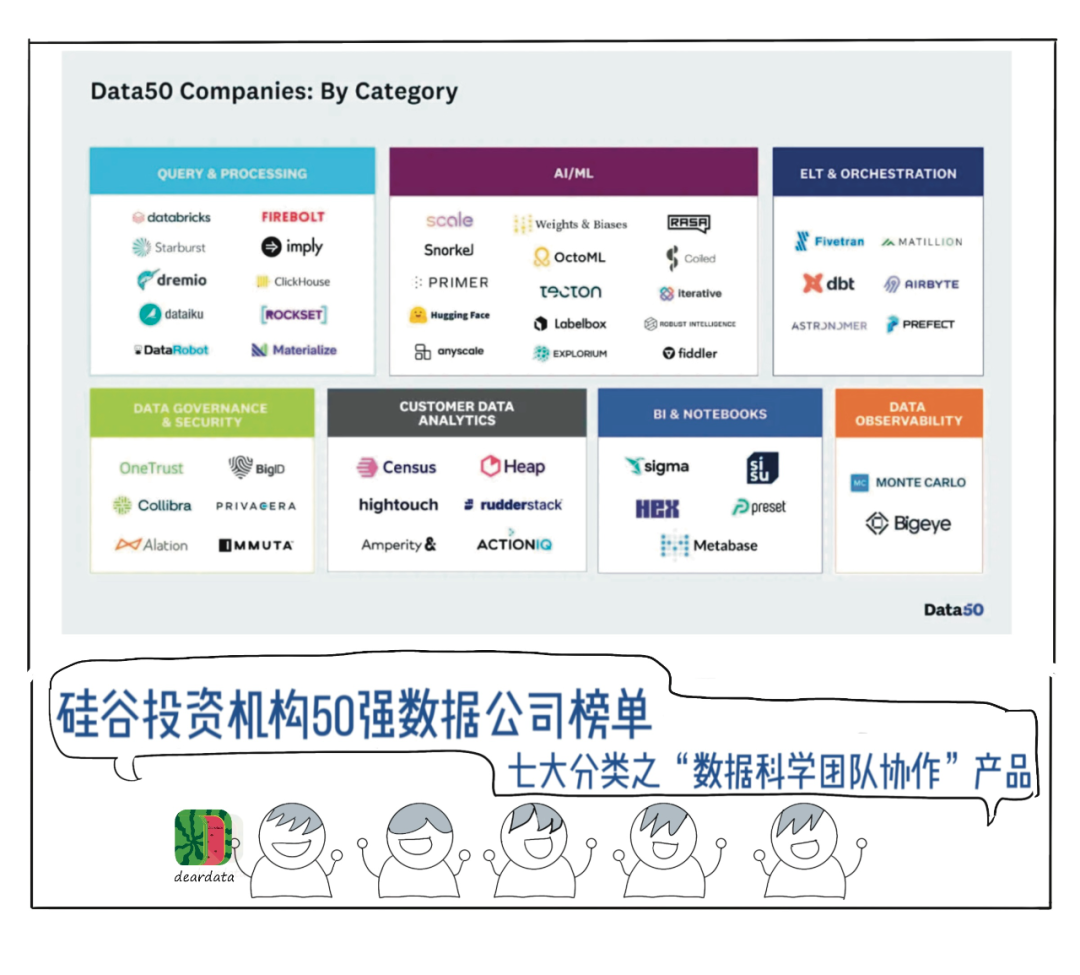 Text and images by Tan Jing
As a rare company focused on "data science team collaboration products," and an early entrant in this space, HeyWhale founder and CEO Xiangwei Fan answered a few questions from Dear Data, sharing his thoughts.

Q: Data science team collaboration products are a niche category. From when the idea took shape to when you became fully committed, roughly what stage of the startup journey was that?
HeyWhale founder and CEO Xiangwei Fan: HeyWhale's predecessor was Kesci. Starting in 2016, we partnered with PPdai, Ctrip, and Baidu on a series of algorithm competitions. We saw that algorithm project management was incredibly difficult — not only were business requirements costly to communicate, but development environment setup and model reusability were challenging, and the entire chain involved staggering waste.
 On average, 500 people participated in each competition, including top graduate students from leading universities and full-time data scientists from major companies. Contestants submitted roughly 1,000 models, yet the vast majority never got used. And from model development to evaluation to deployment, the chain was broken.
In short: extremely low efficiency.
At the time, the typical collaboration toolkit we saw was email + FTP + Jupyter + incompatible open-source frameworks + irreproducible model files + inaccessible database environments.
Conditions were so primitive that I called it the awkward reality of "scientists driving tractors."
Once we saw the pain point, by late 2016, multiple phenomena kept validating our thesis, and I felt genuinely excited. My team and I believed the moment for change had arrived.
Open-source tools had crossed the threshold where they could replace proprietary solutions. At internet companies, Python had become the default modeling tool, not SAS or MATLAB. Andrew Ng's online machine learning course had used MATLAB; after 2016, it switched to Python.
Meanwhile, we observed that GitHub, GitLab, and Atlassian had all entered rapid growth trajectories. All three centered their value proposition on collaboration for software engineering, and they were growing revenue at roughly 3x annually — an astonishing pace.
We formed a very simple idea: combine the trends of data tools going open-source and dev tools going collaborative. In other words, GitLab and GitHub for Data Science.
Looking back at that period, so much was happening.
A16Z, the renowned Silicon Valley firm, made a major bet on GitHub.
Atlassian was the most efficient-growing SaaS company.
Databricks and Dataiku were beginning to enter the enterprise market.
There was a time lag between China and North America on data science — three years, five years? I don't know.
But we were convinced: the direction was solid, it was right.
 Q: How do you understand "collaboration"?
HeyWhale founder and CEO Xiangwei Fan: Pain points aren't usually obvious — you discover them by stumbling into pitfalls.
Early in our startup journey, our data competition community gave us an unusually early view of collaboration's value. Seeing it firsthand made the impression deepest, and we immediately decided to build our data science platform around collaboration.
"Collaboration" was a fresh concept.
Ten years ago, using Weibo, it was hard to imagine how WeChat would work.
Ten years ago, using Outlook and Excel, it was hard to imagine Slack or Airtable.
Similarly, it wasn't until some people saw the soul of Deepnote, Hex, and Dataiku that perspectives began to shift.
A collaborative data science platform lets employees across different departments participate in data science development — some building models, some creating reports, some asking questions, some finding data, some managing compute resources.
When you're producing models at scale, screenshots, meetings, and phone calls can't solve problems, and others can't see the full context of what went wrong with a model.
And modeling work is precisely a complex process full of questions and bugs.
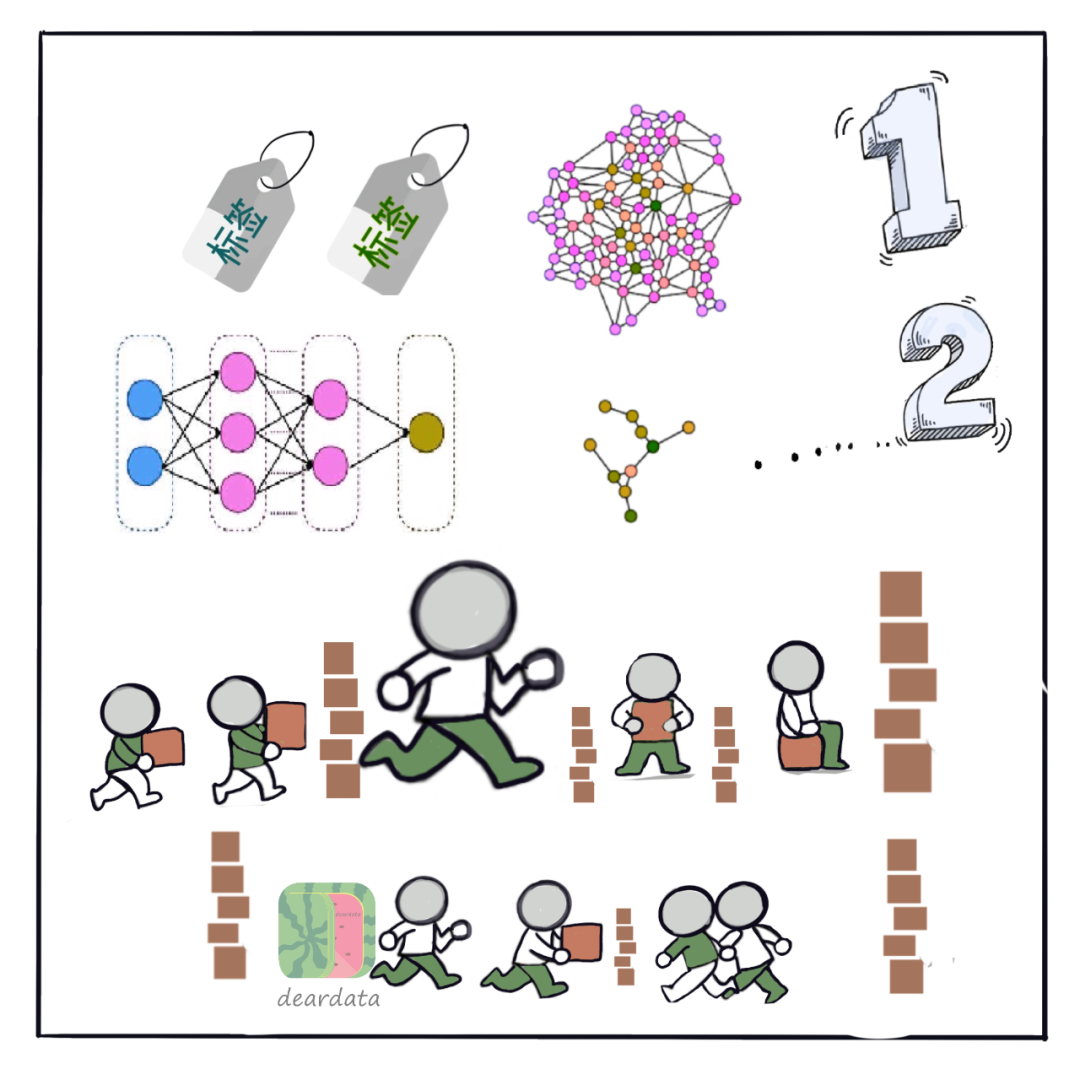
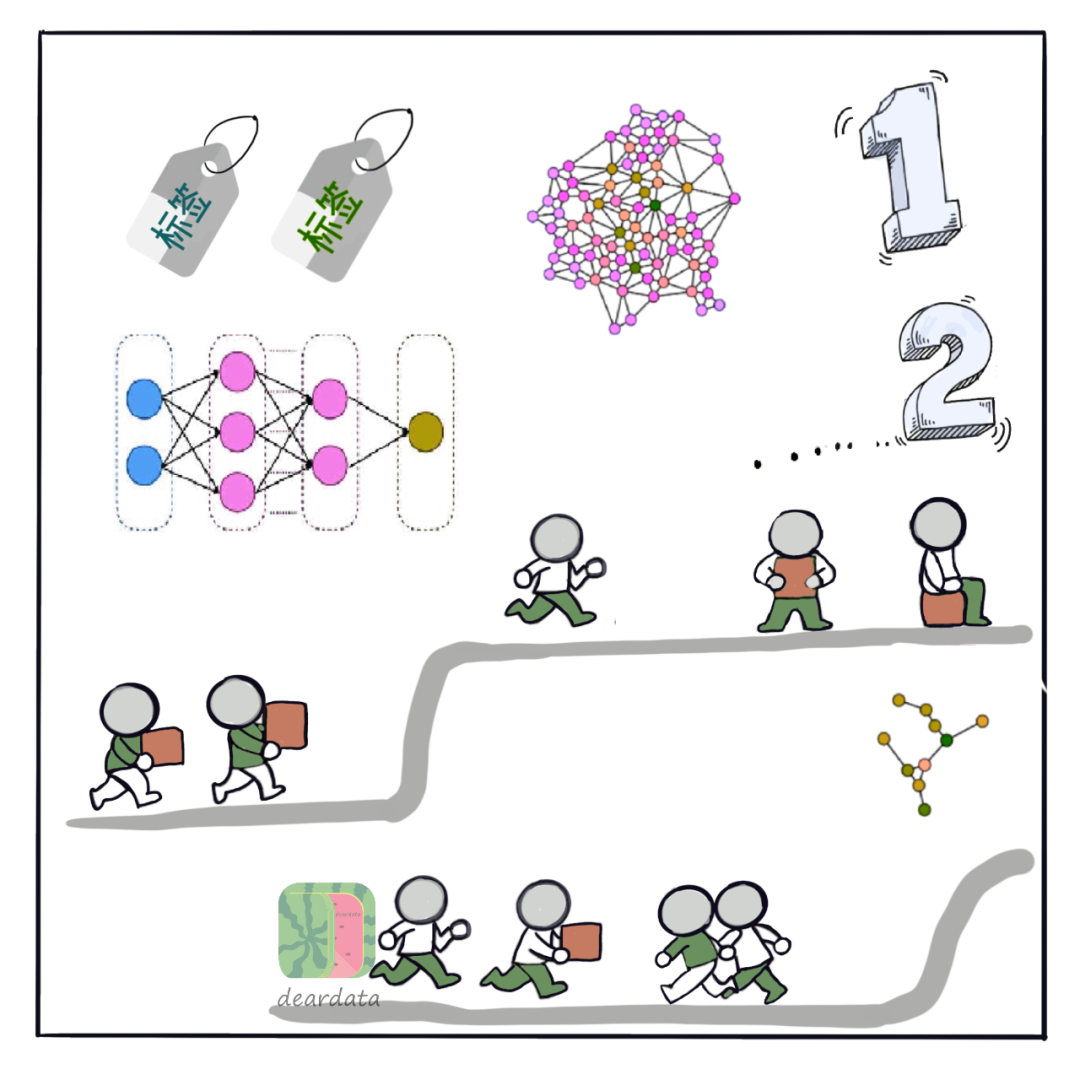
The word "collaboration" is too abstract, and it's still rarely used domestically. People more often say "business staff should also participate in model development" or "model assets should be reusable across different business units" — the essence is business requirements driving data collaboration. Although executives all emphasize this, data and business departments struggle to actually work together. One speaks business language, the other speaks engineering language — they're practically different languages. Most of the time, if one link stalls, the entire chain gets stuck. Collaboration becomes the bottleneck.
Q: Some machine learning platform vendors claim to have data science team collaboration features. How do you view this? Which approach is more competitive?
** ** HeyWhale founder and CEO Xiangwei Fan: We believe an ideal collaboration tool still has a long road ahead, and HeyWhale is merely on that journey, because the business落地 and capability普及 of data science are still in very early stages — perhaps only 5% progress. Collaboration as a positioning isn't original to HeyWhale either, and this turned out far less intuitive than we initially assumed. We discovered that collaboration's complexity is an order of magnitude higher than software engineering collaboration.
SaaS collaboration is difficult to design and implement in general, because enterprise workflows have nonlinear collaborative logic — no fixed starting point, no fixed endpoint, with constantly extending, cycling, and overlapping elements. It easily becomes a tangled ball of feature bloat. Product teams need strong intuition to judge where collaboration's boundaries, main thread, and leverage points lie.
Enterprises are composed of collaborative flows of people, tasks, and things, so collaboration is both a hard need and a pain point. No productivity-related SaaS or PaaS would claim collaboration isn't their concern — that would be like saying user experience isn't their concern.
Because HeyWhale's community and competition scenarios involve unusually deep collaboration, we've ventured deep into uncharted territory on this front.
In enterprise settings, making anything work as SaaS is difficult — the depth is unfathomable. Seemingly simple scenarios, when done deeply, test the product team's worldview.
Q: Data science team collaboration products may have one pain point: senior executives don't particularly care about data scientists' experience. Is this a misconception or actually true? Have you encountered this? How do you respond?
HeyWhale founder and CEO Xiangwei Fan: Executives genuinely don't care about data scientists' experience, because they don't understand "what data scientist experience means," nor do they need to.
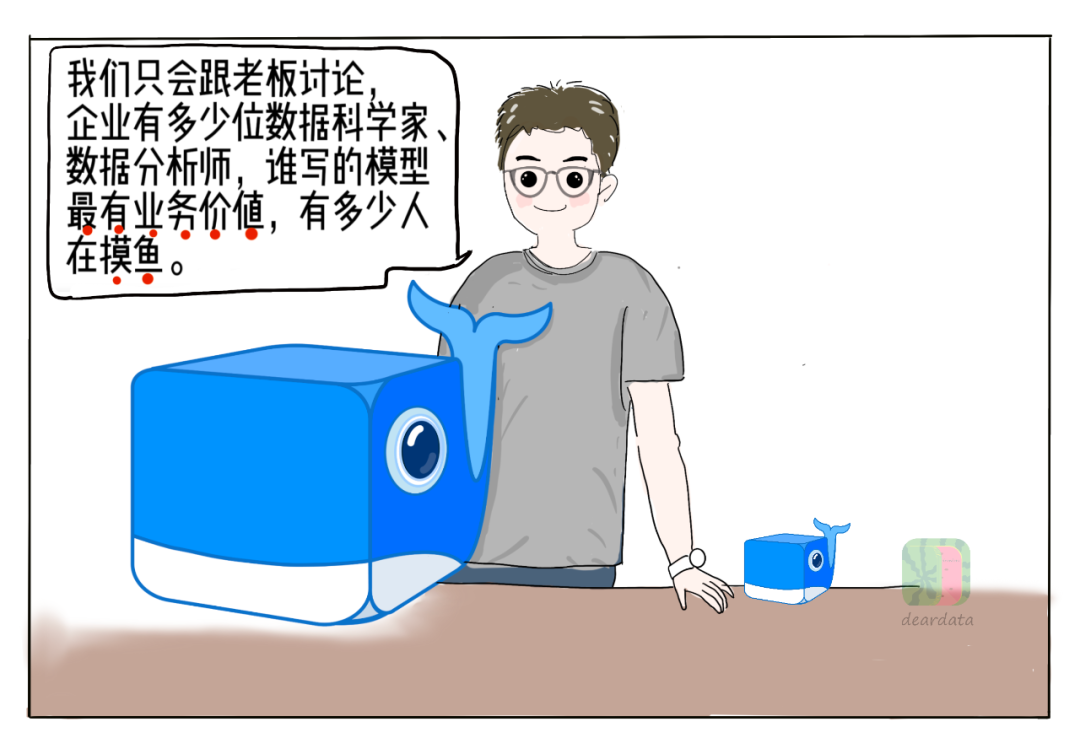
More often, we interact with CIOs and CDOs, and our discussion centers on how without good collaboration tools, data teams lose top talent more easily — because they can't access needed data, and their value goes unseen.
Business department managers also question data teams' value, because data teams are expensive. Where's the ROI? Without collaboration tools, how do you let business managers see data teams' ROI?
People rarely recognize waste in a process unless they've experienced a better one.
So we don't do much persuasion. Instead, we cultivate as many product users as possible, accompany their growth, and help them become backbone contributors to enterprise data science work. When the models they develop deliver value, that's the product's best advertisement.
Q: What business lessons have you learned?
HeyWhale founder and CEO Xiangwei Fan: From the very beginning, we were mentally prepared for a long track, thick scenarios, and a high ceiling — a protracted war. For a startup like HeyWhale to survive in this赛道, we had to build a unique competitive strategy.
The cost of enterprises switching productivity platforms is high — would a startup's product even get taken seriously?
Our plan was "indirect approach."
First, refine the product in competition and community scenarios to create a leading user experience.
First, sell to universities and research institutions, grinding collaboration capabilities to perfection, becoming the best collaboration product on the market, then enter government agencies and mainstream enterprises to achieve replicable product revenue.
This is HeyWhale's three-stage rocket strategy: Community & Competitions → Universities & Research → Government & Enterprise.
HeyWhale's development model can be summarized thus:
To build a highly complex collaboration product well, HeyWhale's community business became a high-fidelity laboratory for product R&D, enabling high-intensity, high-frequency validation of user needs and product design. Following the maturation of our collaboration product, we leveraged our community business's user reach advantage to gradually enter higher-barrier, higher-complexity细分 markets.
Later proved, this was a complex but effective strategy.
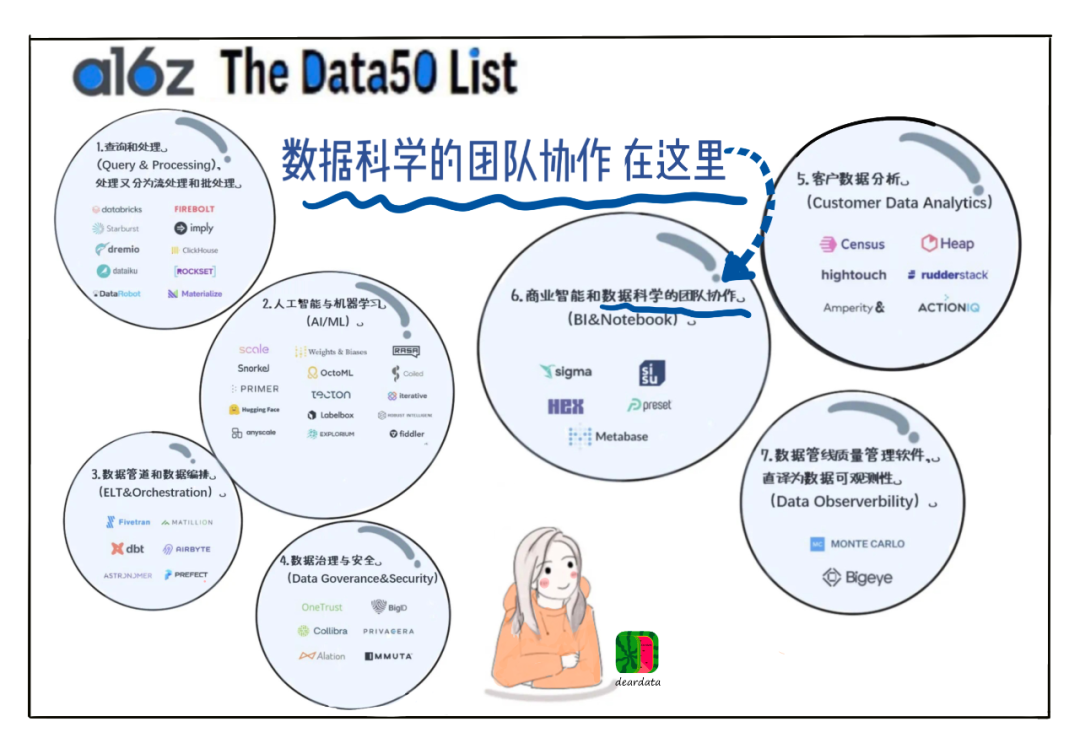
Besides HeyWhale, no second domestic company can offer a "collaborative data science platform."
HeyWhale simultaneously occupies three core variables of a productivity tool: user base, iteration efficiency, and benchmark customers.
These three variables form an interlocking, mutually reinforcing virtuous cycle.
HeyWhale attempts to lock down the collaboration赛道: high-frequency competitions → highly active community → high-intensity iteration → excellent collaboration product experience → best practices with头部 customers →普及 among community users.
In retrospect, this combines lean startup principles with compounding effects — respecting users, respecting uncertainty, making daily progress, and wearing down stone with water drops. The process was genuinely arduous, and we didn't expect we'd actually persist.
In 2020, in a bid for a national ministry, the client evaluated nearly all domestic suppliers through extremely rigorous multi-round论证, ultimately selecting HeyWhale's product. After this, we realized our path might have worked.
**
 Q: In this细分赛道 of data science team collaboration products, what are the China-US differences? ** ** HeyWhale founder and CEO Xiangwei Fan: There's no difference in technical form, but there are major differences in customer needs.
China's digital environment is extremely complex — CBDs, urban-rural fringe areas, subways, all under construction simultaneously. It's a massive building site.
Enterprises currently have three overlapping cycles: informatization, digitization, and intelligentization. This poses major challenges for product positioning, R&D rhythm, and market expansion. One misstep and you become a custom development shop, no longer clear what you're actually doing.
Specifically regarding data science collaboration, North American enterprises' comprehensive capabilities remain far ahead globally.
Databricks and Dataiku's revenue scale and product capabilities are at very high levels. North America has sufficient market demand, capital scale, and IT ecosystem — this flywheel spins at astonishing speed.
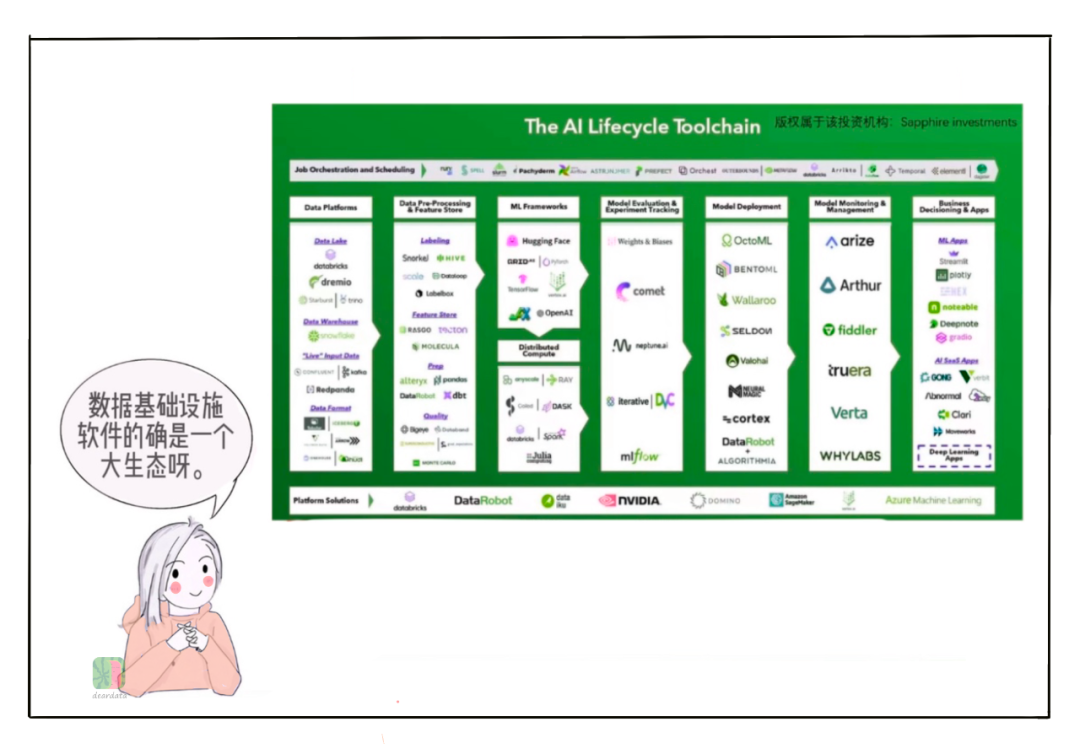
Moreover, America's data tools ecosystem has精细化分工 rivaling Along the River During the Qingming Festival — dozens of ecological niches, some with dozens of companies. Many Chinese companies directly package open-source technology, with highly homogeneous product forms, lacking分工, lacking positioning, lacking accumulation. Suddenly confronted with massive market demand, they can only grasp everything at once.
China has almost no survival soil for细分 positioning, which gives Chinese data tools a unique opportunity: once they can withstand China's immense market pressure, they can achieve PMF for standardized products in China's enterprise market (which is extremely difficult here).
I believe overseas competitors will struggle to reach equivalent survival capabilities. The essence of 2B (enterprise) software is still efficiency and ROI.
Although China's 2B market environment is torturous, it has tempered Chinese companies. Nine deaths, one life; accumulated depth, eventual爆发. Enduring hardship may be the destiny of Chinese data tool companies in this era.
Q: For you, what is the relatively "enduring" product capability? ** ** HeyWhale founder and CEO Xiangwei Fan: For enterprises, software speed and features certainly matter. However, the essence of data science isn't merely a technical problem or business problem — it's also a management problem, an operational problem.
How to leverage digital capabilities to help companies survive better?
The essence of data science collaboration products is a question of enterprise ROI and competitiveness.
In recent years, many business schools have established data science programs, while computer science departments more often establish AI programs. Their curricula are somewhat similar, but their orientations differ — one focuses on economic效益, the other on engineering efficiency.
Leading enterprises treat data science as a lever, a hub — using its connective capacity to串联 entire corporate assets, processes, and metrics, building a virtuous cycle of climbing operational efficiency. This is a difficult transformation to achieve.
After bitterness comes sweetness; the effects are astonishing.

Q: What do investors most fail to understand about data science team collaboration products?
HeyWhale founder and CEO Xiangwei Fan: Investors often ask: what exactly is data science, and how does it relate to BI, AI, and data middle platforms? What's the moat around collaboration, why is HeyWhale the only company doing this, and can't Alibaba, Baidu, or Huawei build it?
In our entrepreneurship, we gradually discovered that many tech companies, especially resource-rich teams, actually lack patience. Too many KPI constraints make it hard to long-term anchor on a "non-converging complex problem" — if short-term results don't materialize, projects may get killed, and energy gets diverted to quick wins.
Competition is fierce, but effective competition is rare. Most competitors are only doing this顺带, aiming to add a component to a large integrated platform.
(End)
ONE MORE THING

(End)