BASAL Intelligence Closes Seed Round Led by 5Y Capital, with Linear Capital Co-investing

Advance the development of native embodied foundation models with propulsion capabilities.
y'x

Today, "BASAL Intelligence" announced the completion of its seed round led by 5Y Capital, with participation from Ivy Capital, Linear Capital, and Huashan Capital.
BASAL Intelligence was founded in July 2026 by Jianxiong Li, a first-generation PhD student at Tsinghua University's Institute for AI Industry Research (AIR), together with eight researchers in embodied intelligence. The company has developed an "action-native In-Context embodied foundation model" that aims to enable robots, when confronted with unseen scenarios, tasks, or robot embodiments during training, to learn and adapt within minutes through a small number of human demonstrations and autonomous trial — without retraining the model.**
Linear Capital supported BASAL Intelligence's seed round and plans to increase its stake in subsequent rounds.
Recently, BASAL Intelligence (Beijing BASAL Intelligence Technology Co., Ltd., hereinafter "BASAL") completed its seed round led by 5Y Capital, with Ivy Capital, Linear Capital, and Huashan Capital (WestSummit Capital) participating. The company focuses on developing action-native embodied foundation models, exploring technical pathways for robots to adapt to new tasks in real-world environments through demonstration and interaction.
BASAL was founded on July 21, 2026, by eight researchers in embodied intelligence. Core members hail from top domestic and international institutions including Tsinghua University and Peking University, most of whom have collaborated continuously since their undergraduate or research assistant days. The team's research and engineering backgrounds span embodied intelligence, multimodal large models, world models, reinforcement learning, autonomous driving, and robotic systems. Core members received high-paying offers from companies such as ByteDance Top Seed, NVIDIA, and Xiaomi, as well as PhD admission offers from overseas universities.

BASAL focuses on the problem of task adaptation after robot deployment. The team believes that when environments, manipulation objects, or operational workflows change, deployment approaches relying on task-specific data collection and post-training may require repeated investment, increasing costs for multi-scenario deployment. The company aims to reduce the need for re-collecting data and retraining models for specific tasks through on-site model learning and adaptation.
In this direction, BASAL is developing an "action-native In-Context embodied foundation model." The team treats action as the model's core mode of expression, focusing on modeling the relationships between actions, task feedback, failure correction, and human demonstration, while dedicating the model's primary capacity to action generation. The model organizes continuous physical interaction information through long context, adjusting subsequent decisions based on prior actions and their outcomes.
Here, In-Context Learning refers to the model's ability to adapt to tasks using demonstrations and interaction information within the current context. BASAL's research goal is to enable robots, when facing unseen scenarios, tasks, or robot embodiments during training, to complete learning and adaptation within minutes through a small number of human demonstrations and autonomous trial — without retraining the model.

The team has been conducting continuous research on rapid adaptation, cross-task learning, and cross-embodiment action representation since 2024, and has proposed the cross-embodiment model X-VLA and the latent-space world model ODEWorld.
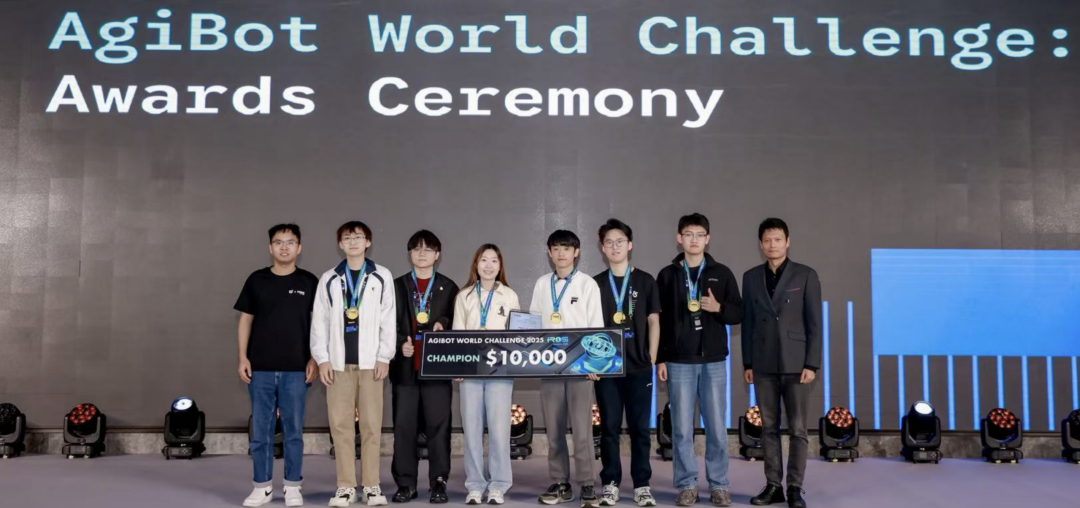
According to the team, X-VLA explores learning and transfer across different robot embodiments using less than 1,000 hours of pre-training data. Based on this model, the team competed in the AgiBot Challenge at IROS 2025, winning the championship out of more than 400 participating teams.
ODEWorld studies the representation of long-horizon physical information through continuous physical-time latent-space modeling, providing a technical foundation for robots' in-context learning. The above work constitutes the team's research积累 in cross-embodiment action representation and physical interaction modeling.

BASAL founder and CEO Jianxiong Li graduated from the School of Mechanical Engineering at Xi'an Jiaotong University in 2021, ranked first in his major, and was recommended for admission to Tsinghua University's Institute for AI Industry Research (AIR) for doctoral studies under Academician Ya-Qin Zhang. He is among the first PhD students admitted by Tsinghua AIR and by Academician Ya-Qin Zhang, and has long been engaged in research on embodied intelligence, reinforcement learning, and robotic systems.
During his doctoral studies, Li published nearly 30 top-conference papers in related fields, five of which were selected for Oral or Spotlight presentations; he received the Outstanding Paper Award at the ICML 2024 MFM-EAI Workshop, the Best Paper Award at the ICLR 2026 ES-Reasoning Workshop, and the National Scholarship for Doctoral Students at Tsinghua University. He also has experience in robot hardware R&D and real-machine systems, having won more than 20 hardware competition awards.
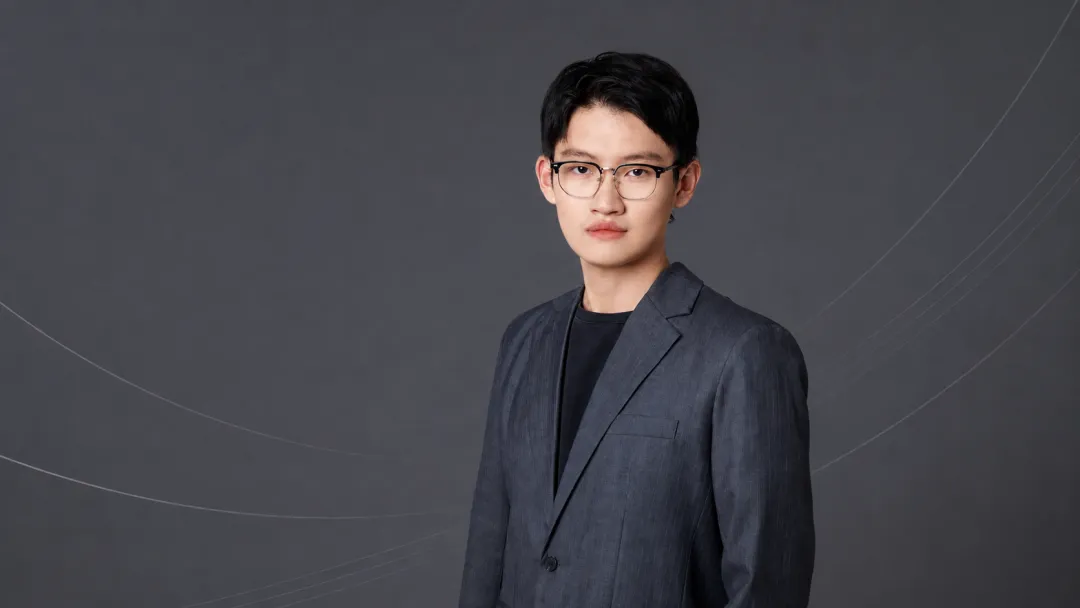
Chief Scientist Xianyuan Zhan is currently an associate professor at Tsinghua University's Institute for AI Industry Research (AIR) and director of the AIR-DREAM Lab. He previously served as a researcher at Microsoft Research Asia, data scientist at JD.com Technology, and dual-appointed young researcher at Shanghai AI Lab. His research interests include decision intelligence, embodied intelligence, and autonomous driving, with more than 80 published papers. He has served as an area chair for academic conferences including NeurIPS and ICLR for multiple consecutive years, and as co-chair of RLDM 2025.
Other core members have participated in embodied model projects including Wall-OSS-0.5 and X-Tokenizer. In the autonomous driving direction, the team proposed Diffusion Planner, applying diffusion models to planning; subsequent work Hyper Diffusion Planner further studied the design and training of end-to-end autonomous driving models based on diffusion models, with real-vehicle validation completed. The team's relevant research and engineering experience covers algorithm research, model training, robotic system construction, and real-machine deployment.