Linear Capital's Yingzhe Zeng: Early-Stage Investing Isn't a Great Business Model — So Why Do We Keep at It? | Linear View
Knowing full well the path ahead was strewn with thorns, they still ran barefoot alongside the founders.

Recently, at the Yale in China Shanghai stop, Neil Zeng, partner at Linear Capital, sat down for an in-depth exchange with student representatives from various stages of their Yale careers.
Over nearly two hours of Q&A, Neil shared insights spanning Linear Capital's project evaluation principles, how early-stage investors think about FOMO, observations on successful and failed founders, and investment frameworks for specific sectors. We've distilled some of his answers below. We also look forward to more young entrepreneurs connecting with us in the future.
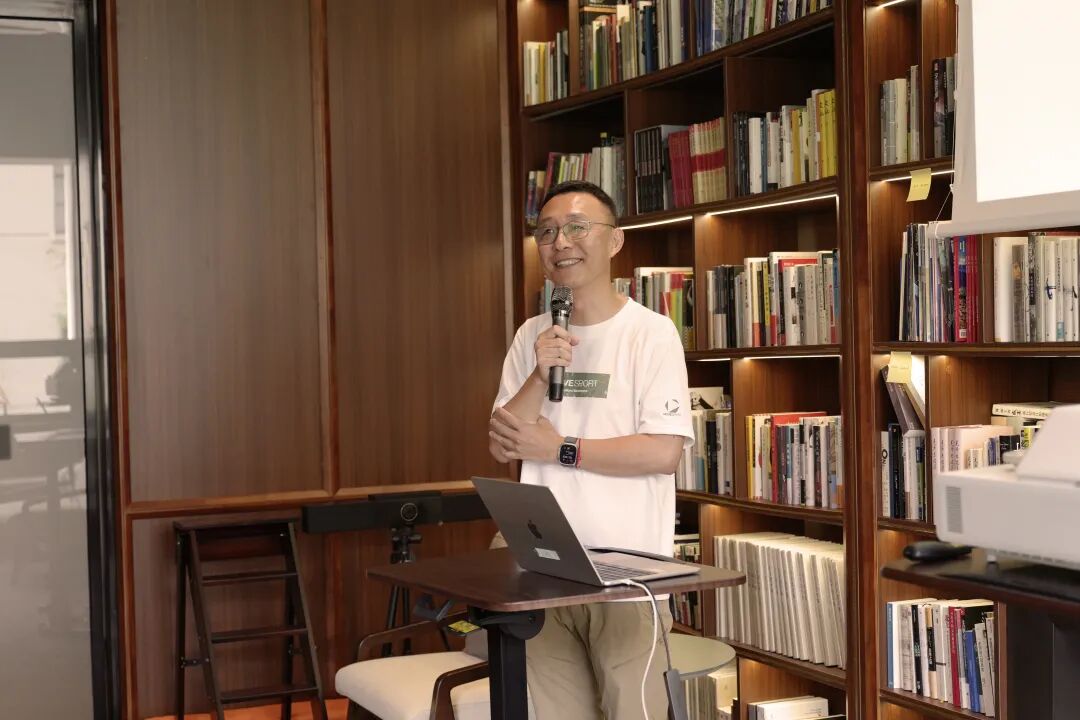
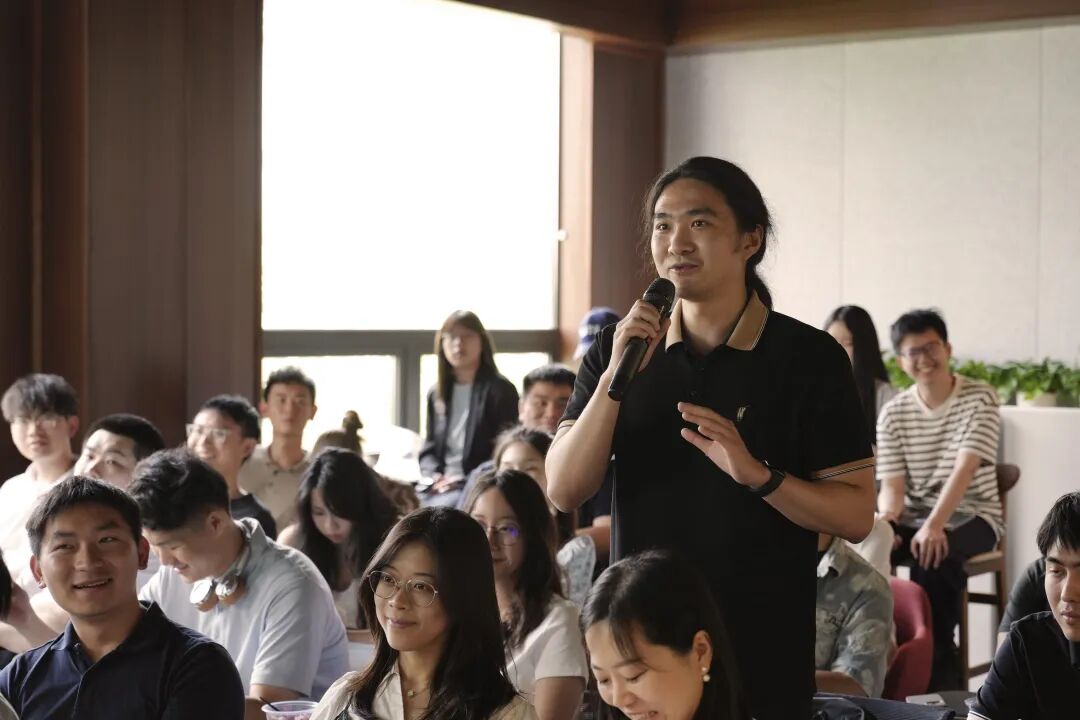
On June 27, the final stop of the Yale in China Shanghai tour brought students to Linear Capital's offices. Linear Capital partner Neil Zeng fielded questions and engaged in deep discussion with over thirty Yale students.
As a Linear investor focused on interdisciplinary industrial applications, Neil brings more than 15 years of experience in tech investing and business management. During the nearly two-hour session, he spoke openly about his own path into early-stage investing, how he thought through pivotal life decisions, and shared Linear Capital's investment evaluation framework.
In his view, if you look purely at returns, early-stage investing may not be a short-term-friendly business model. But the greatest joy of the work is being forever surrounded by young people and forever exposed to the world's newest technologies. He cautioned that opportunism has no place in entrepreneurship — you must genuinely believe in what you're building and be willing to commit years of effort to it. The real wealth of youth lies in having "the courage to run barefoot through thorns when you know full well they're ahead." He urged students to always heed that restless inner voice and seek out an undefined future.

Probably because our team all comes from technical backgrounds, we're fundamentally people who have faith in technology. So first, we conduct very deep technical evaluation and due diligence. TPF (Tech-Problem Fit) has always been a key dimension we focus on — we want to make early bets on teams that can use specific technical approaches to solve real-world problems. Linear's logic is that if the technology is strong enough and the founder exceptional enough, we can sit down together and figure it out. We'll have the patience to help you find a commercially viable application.
Of course this approach doesn't guarantee picking winners, since entrepreneurship demands well-rounded excellence — great technology doesn't automatically make great products or great businesses. So product capability is also something we highly value. Maybe you're not the most hardcore technologist, but you happen to satisfy genuine user needs — those are projects we'll also look at.
The second thing is sizing the market. We often say: don't overestimate markets that look huge today, and don't underestimate ideas that currently seem absurd. If you pick a future-facing, large-scale赛道, your odds of success may be higher; if you pick a smaller赛道, with sufficient resources you can potentially expand horizontally, though the probability may not be as high as the former.
No investor's judgment is 100% right or 100% wrong. For young people, I think don't idolize success formulas, because the most successful people are always the ones who break them. Don't rush to find answers — what's more important is protecting your questions, keeping them alive. That may be the rarer and more precious thing.

I actually don't think these two are contradictory. As for being wrong — over the past decade-plus, we've been proven wrong many times. After all, everyone knows early-stage investing, especially at the angel level, has a very high failure rate. You could even say seven out of ten cases won't be very successful, two or three will yield ordinary returns, but what matters most is catching those few home runs. So I think if you're particularly afraid of being wrong, maybe don't do angel investing — PE might be a better fit.
As for FOMO (Fear of Missing Out), we've always been fairly cautious about it. A phrase we often use internally is "don't go where the crowds are." Rather than judging whether to follow the herd, the more important question is "why couldn't we find this area before the crowds arrived?"
Looking back at statistics, you'll find that cases where "everyone said yes" and cases where "everyone said no" generally don't turn out well — the best cases are always the most controversial ones at the time.

From my own observation, a project's success or failure is often decided the moment you pull the trigger. So I tell our colleagues: try to resolve as many issues as possible during pre-investment diligence.
On the post-investment side, we do help our portfolio companies quite a bit. For example, for follow-on financing, Linear typically helps introduce at least 1-2 rounds of subsequent investors — for AgiBot, at least 60% of the investors across its many rounds came through our introductions. This might be the one thing we're better at than the companies themselves.
But if we're talking about playing a decisive role in their success, I think that would be giving ourselves too much credit. A company's success ultimately depends on the founding team. I often tell founders: don't be afraid to try things — if we're not afraid of being wrong, what are you afraid of? But you have to find your own direction. We believe good startups have strong endogenous growth power — they know clearly what they lack and find ways to fill those gaps through various channels.

Every era has a different backdrop — winners result from the right timing, place, and people coming together. So personally I think do as little "winner pattern study" as possible — trying to distill success patterns divorced from context isn't very meaningful.
But I do think "loser pattern study" is necessary. Life is really just a process of falling into pits and climbing back out. Which pits to avoid — that's the only thing we can actually learn from.
One interesting thing about Linear is that we've actually helped many failed founders start over. Early-stage investors have an inherent advantage: after investing, you grow alongside them. Having been through so much together, having observed how they approach difficult decisions, you develop a deeper understanding of the person.
Failure isn't always entirely the person's fault — there can be many external factors. If we genuinely recognize certain qualities in them and believe they still have a chance at future success, we'll often continue supporting their next venture. Even Yiming Zhang failed several times before Toutiao, yet his early investors kept backing him — I think they saw those shining qualities in him, and that matters.
Of course some failures are genuinely personal problems, and we reflect on these too. There are actually some common "red flags." For example: strict with others, lenient with oneself. Or: not spending when you should, spending recklessly when you shouldn't. We also observe through many small details, even setting up stress tests to see founders' true performance across dimensions.
Similarly, we can identify commonalities among successful entrepreneurs. Entrepreneurship requires a spirit of grinding it out to the end. Many smart people with impressive backgrounds have too many options — they retreat after six months when things get hard, and never accomplish anything. Our advice is: when you decide to start a company, absolutely don't be opportunistic. You must genuinely believe in what you're doing and be willing to commit long-term effort to it.

I've always paid close attention to ESG, because it's one of the few investment directions relatively unaffected by geopolitics, politically correct globally, and genuinely beneficial for Earth's development. But after years of investing in the space, my deepest realization is about cost control: we need ESG, but we need "affordable ESG." We've visited many large enterprises — they're ideal customers who will pay for ESG. But we find their willingness to pay a premium for ESG probably doesn't exceed 20%.
So for our green investments now, we focus on whether the technology can ultimately deliver costs and products that are matched — it can be more expensive, but not by too much. For example, we invested in SynMetabio, a bio-leather company that produces mycelium leather through novel methods with strong mass production potential, and has already partnered with brands like ANTA. Another example: in aviation, we believe a global hydrogen revolution isn't realistic within 5-10 years, but sustainable aviation fuel (SAF) presents opportunity. After deep sector research, we invested in Green Carbon Synthesis, which has dramatically reduced costs through next-generation Fischer-Tropsch synthesis technology for green energy production.
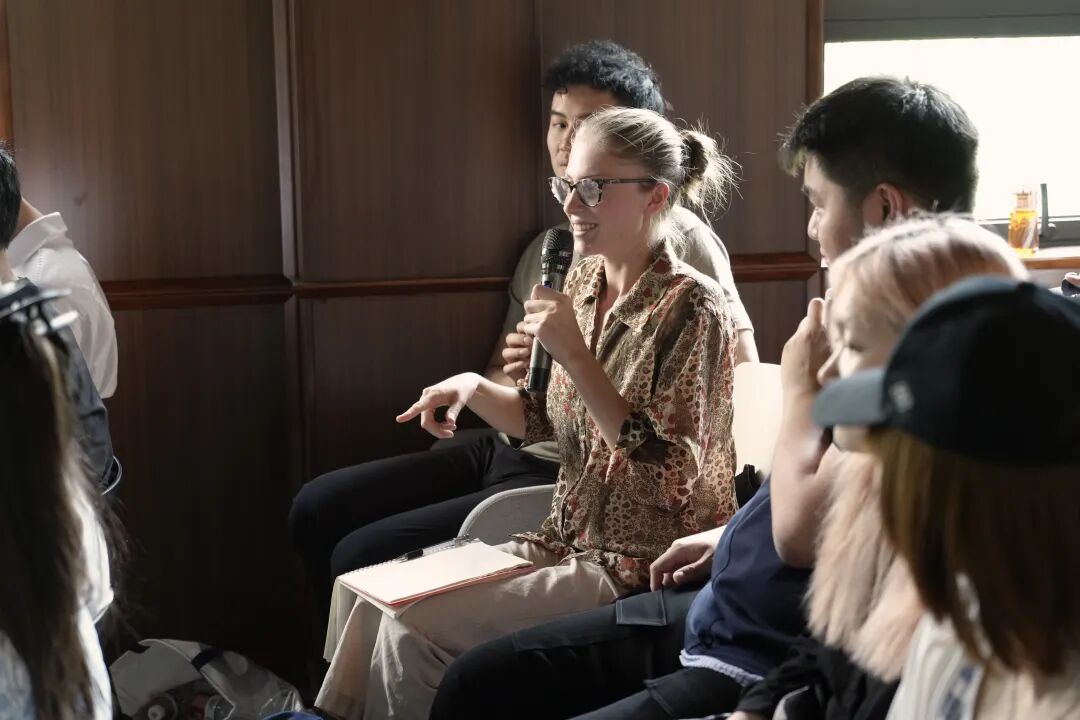
If you look at US-China competition in low-carbon, I think China has significant advantages on the more industrial, more implementation-heavy side, because our industrial base is relatively complete. I believe good technology ultimately needs to be continuously refined in real business scenarios. And China's great advantage is our speed of iteration. Looking globally, it's hard to find another country that adds over ten million new engineers annually.
Over a decade ago, when I was still at Bosch, I visited BYD. Our German colleagues came back unimpressed, saying they didn't see BYD succeeding because "after all, this is building a car — you can't build a car that way." But in just over ten years, the landscape has transformed completely.
But we do have concerns: many domestic customers aren't willing to pay for these green technologies, and it's too easy for everyone to get pulled into price wars racing to the bottom on costs. What we'd like to see is: refine it domestically first, then compete globally.

As early-stage investors, having seen countless deals means inevitably missing many too. Some of today's star cases, we spoke with but didn't invest — I do get frustrated thinking about it sometimes, and I discussed this with Harry (Harry Wang of Linear Capital). But he's more zen about it. He asked me: "Go back to that day — did you have strong conviction in them at that time? If not, what are you regretting?" I gradually made peace with it after that.
Honestly, if you look purely at business model, early-stage investing is definitely a terrible one — requiring very long-term commitment and effort, with enormous uncertainty in outcomes. Even when you hit a very successful project, the personal returns for the investor are limited. So why do we persist with early-stage tech investing?
I think one reason is that in the process of engaging with many S-tier entrepreneurs, you genuinely gain enormous insights. Also, I think the greatest joy of early-stage investing is that you're forever with young people, forever exposed to the world's newest technologies. Within our team, everyone has tremendous curiosity — we want to understand this technology, keep asking "why why why."
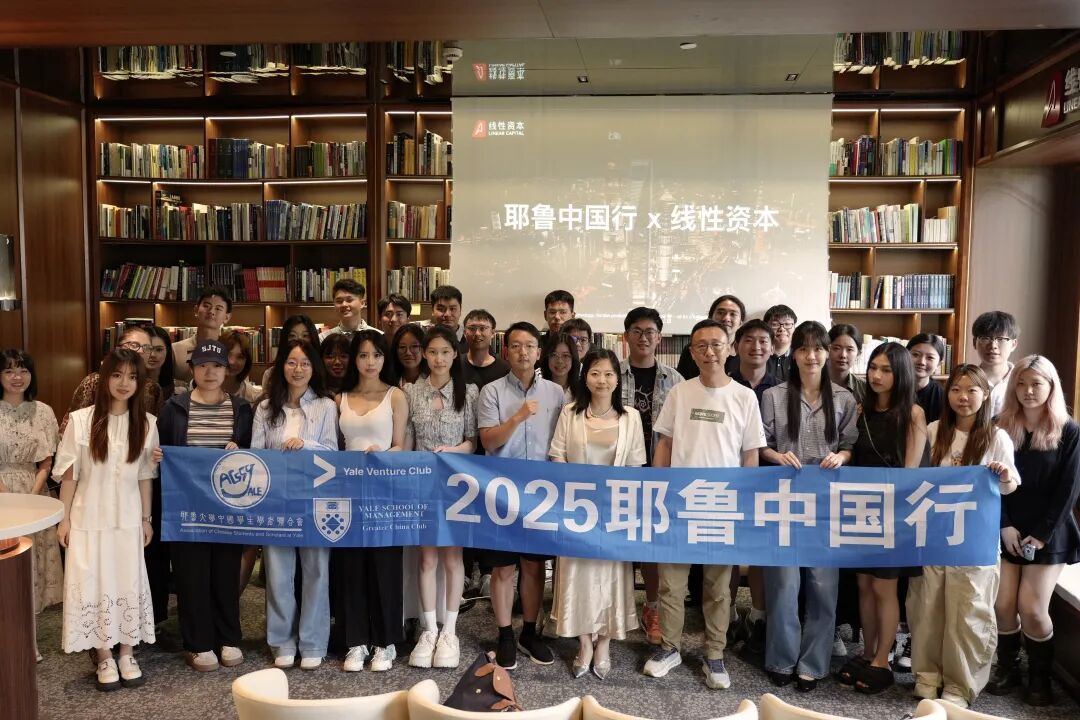
Seeing so many young students here today, I actually envy that courage of "knowing full well thorns lie ahead, yet still choosing to run barefoot through them." I think you should seize the freedom to fail that you have right now.
If when you're young you can't stand this, can't stand that — then why not go out and do something about it yourself? Don't hand this world over to people you look down on. I recall Yale's motto is "Light and Truth" — I hope you'll always follow that restless voice inside, and seek out that undefined future. That's a very cool thing to do.