Ten Years of Entrepreneurship: The Stories of People Coming and Going in Kai Yu's Eyes at Horizon Robotics | Linear Voice

The only way to change the script is to change yourself.

2025 marks the tenth year since Kai Yu left his job to found Horizon Robotics. From accidentally being struck by machine learning to navigating his way through academia, the internet industry, entrepreneurship, investment, and the automotive sector, Yu seems to have a knack for thriving wherever he goes.
But Yu doesn't see himself as a worldly operator. His obsession with technological innovation runs through everything he's done and hopes to do. "Most people gravitate toward the crowded, noisy places," he says. "We prefer to go where no one else is, where people don't understand us." Yet those places eventually become the sweeping tides of the world.**
Harry Wang, founder and CEO of Linear Capital, was the first investor Yu approached when starting out. Harry later introduced the Horizon Robotics project to Hillhouse, which then connected it to 5Y Capital, securing the company's first round of funding. Recently, Yu sat down with Zhang Xiaojun for an interview that vividly reconstructs a story of comings and goings in a world of relationships.
Dr. Kai Yu, founder and CEO of Horizon Robotics, has spent his 49 years navigating German and American academia, China's internet industry, the venture capital and investment worlds, and the global automotive sector. In every circle, he started as a nobody and levelled up. In the end, he did well in all of them.
A former senior executive who worked with him observed: "Despite his scientist background, Yu is unusually socially savvy for a scientist."
This frontier tech entrepreneur with an AI research pedigree has many counterintuitive sides. His WeChat profile picture has long been Guan Yu, the martial god. He readily strikes up conversations with fellow food enthusiasts. His favorite fictional character is Rhett Butler from Gone with the Wind. Rhett Butler was a smooth operator, navigating between the South and North during the American Civil War. Even when imprisoned, he could quickly win over the guards and come and go as he pleased — this is the realm of social dexterity that Yu admires.
Born in 1976, Yu graduated from Nanjing University and Ludwig Maximilian University of Munich. In his youth, he aspired to be a painter. He accidentally encountered machine learning and was so captivated he couldn't stop, entering the field of artificial intelligence. He made his way through academic circles in China, Germany, and the United States, publishing over 100 papers. In industry, he worked at Siemens and NEC Research Institute, returned to China in 2012 to join Baidu, and left in 2015 to found Horizon Robotics. This year marks exactly a decade since he started the company.
In the first half of 2025, Zhang Xiaojun spoke with Yu twice. This interview is an oral history of Yu's life.
You'll see this story is filled with human traces. From Geoffrey Hinton, Yann LeCun, Fei-Fei Li, and Andrew Ng during his Germany and US periods, to Robin Li, Wang Chuanfu, Xiang Li, and He Xiaopeng in China — Yu has consistently deployed a social intelligence beyond that of a scientist, deftly entering and navigating various worlds. And he has maintained a philosophy: don't follow the crowd, move from the margins to the center.
His life's throughline has never changed — over 20 years in artificial intelligence and deep learning. His trajectory has tracked AI and deep learning's journey from obscurity to ubiquity.
As the large language model wave explodes and more AI scientists flood from academia into entrepreneurship, Yu's views on entrepreneurship, his bearing and manner, may offer some insights — entrepreneurship is not just technology and business, not merely cutthroat competition, but also a story of people coming and going in a world of relationships.
As Zhang Zuolin says in the TV drama The Young Marshal: "The jianghu isn't about fighting and killing. The jianghu is about human relations."

Zhang Xiaojun: I notice that despite being a scientist-founder, you're exceptionally skilled at orchestrating relationships. You've opened doors in academia, the internet industry, the venture capital world, investment circles, and the automotive sector. Have you noticed this yourself?
Yu Kai: Probably because **we're in B2B, and B2B is hard — you must have empathy, the ability to connect emotionally.
If you're in B2C, you don't need to deal with as many people. B2C is about being yourself, making a good product.** B2B requires more putting yourself in others' shoes, thinking from their perspective.** Ask me to do B2C, I probably couldn't.
Zhang Xiaojun: Which circle was the hardest to break into?
Yu Kai: None were easy. In academia, I started out completely unknown too — once I had my fortune told, and the fortune teller said before age 24, I would be "obscure and toiling without reward."
I loved doing research then, completely absorbed in writing papers and navigating academia, desperately hoping my papers would catch the attention of big names. I'd bring my papers to conferences to discuss with the big shots, and usually they'd ignore me.
At the start, you're absolutely a nobody, and inside you're definitely thinking: I have to work hard! I'd be frustrated — why don't these big shots understand me? Why won't they listen to me? — Just like how I feel selling products now.
Of course Horizon Robotics' products are doing alright now, but at the start with Journey 2, knocking on these automakers' doors: why don't they understand us? Why don't they recognize our products?
As an individual researcher, Silicon Valley lab director, Baidu Research Institute head, to entrepreneur — levelling up each time, every start is about breaking through. That mentality is like a young person coming to Beijing, arriving in a big city, a bigger world, wondering how to go from a nobody to being recognized.
Zhang Xiaojun: How did you grow up as a child?
Yu Kai: On rice, of course. Nutrition every day.
I once aspired to be a painter. In elementary and middle school, my first choice was to apply to Zhejiang Academy of Fine Arts, now called China Academy of Art. In middle school, it gradually became clear that I had more talent in math, physics, and chemistry. But I think it was great — art gave me tremendous nourishment. Engaging with aesthetics leads you to engage with many people, history, movements.
What's a company's core competitive advantage? Technology? Product? Brand? I don't think so — it's taste. Taste is about choosing what to do and how you're willing to do it. Both matter. Sometimes the how matters more than the what.
Zhang Xiaojun: When choosing your research direction, deep learning was your taste. How did you choose deep learning?
Yu Kai: Deep learning falls under machine learning, which falls under AI.
AI has two schools: one is logic and rule-based, which dominated from the 1950s through the late 1990s and early 2000s. The other is learning-based, called data-driven — that's machine learning, getting machines to keep learning like the human brain, learning from data, getting smarter.
In 1995, my sophomore year, I first read a neural network paper.
Zhang Xiaojun: Which paper, do you remember?
Yu Kai: It was using neural networks for speech recognition. It was like being electrocuted. This thing hit me — machine learning found me.
Sophomore year, I found every book I could get my hands on and read ravenously, staying up through the night until I finished. I read until I achieved unity of heaven and man, oblivion of self and world. I said: "Oh, I want to do this my whole life." And I really did it. I'm a lucky person.
I was in the electronics engineering department, which leaned toward hardware. I was among the earliest in the hardware-leaning direction to get into software algorithms. Most people who went into software algorithms later feared hardware. I was naturally comfortable with it, which gave me a unique perspective. The day before yesterday on a plane I was reading Jensen Huang's book (The NVIDIA Way), about how he and his girlfriend in college prepared breadboards and worked on hardware. I was doing that then: building hardware on breadboards.

Zhang Xiaojun: Was your dream back then to become a scientist?
Yu Kai: At first, yes. I had several strokes of luck: one was encountering AI early, and encountering a non-mainstream school at that — machine learning.
My first job was at Siemens Neural Computation, also a strange research group — 20-30 researchers working on things of no social value, that no one cared about. I had a blast there.
My second job was in the US, at NEC Lab, where I happened to land in a deep learning stronghold, getting further into convolutional neural networks, deep learning, and so on. So I got to know Geoffrey Hinton, Yann LeCun, and these people early.
Going deeper, machine learning has two schools: one called shallow learning, the other deep learning — networks with many layers. Shallow learning was the orthodox, established school; deep learning was for the few. There were probably only about 5 research groups worldwide doing deep learning, and mine was one of them. Geoffrey Hinton wasn't welcomed by the academic mainstream in his early years; mentioning neural network got you rejected. But you see, the world is always created by the minority.
My third job was at Baidu, founding the Institute of Deep Learning, working there for 3 years, persuading Andrew Ng to come over, then I left. Horizon Robotics in 2015 was my fourth job, also in machine learning, and I've been at it ever since.
I've changed companies throughout my life, but the passion has been the same.
Anyway, back to university — I resolved to do machine learning my whole life. When I wrote papers back then, sometimes I'd be deriving formulas in my dreams.
Zhang Xiaojun: You were a minority within a minority?
Yu Kai: I was incredibly luxurious back then. Now the most famous academic conference in AI is called NeurIPS, previously called NIPS. I first attended in 2002, in Vancouver, Canada, while I was doing my PhD in Germany. About 300 people, a small conference that no one cared about. A bunch of strange people doing neural networks and machine learning that nobody cared about. Nothing like today's tens of thousands of attendees.
During the conference, say at lunch, people would form groups of two or three to find restaurants together. Vancouver is near the ocean, with excellent seafood and Japanese food. I remember at a Japanese restaurant — at my table, across from me sat Yann LeCun; next to him, diagonally across from me, sat Geoffrey Hinton. The two of them were arguing the whole time.
Everyone was earnest, digging to the root of things. But that didn't stop the two from being close friends — Yann LeCun had been Geoffrey Hinton's postdoc.
Then, across from me at my table, there was someone unusually quiet. No one paid him any attention; he just sat there eating in silence. His field wasn't particularly welcome in this crowd — Reinforcement Learning. His name was Richard Sutton. He won the Turing Award not long ago.
Back then, reinforcement learning was a minor, fringe current in deep learning. No one engaged with him. He was particularly dejected, eating alone. But look today — reinforcement learning has become an essential path to artificial general intelligence.
So these people doing scholarship seek truth, follow their passion. They don't abandon something just because the mainstream doesn't celebrate it. Reinforcement learning was like this, deep learning was like this, and AI itself wasn't a prominent field for a long time — not recognized, hard to find work in. But there was always a group of people who persisted.
This resonated deeply with me. Take me, for instance — most people chose to go to America; I thought Germany sounded fun. Most people worked on software algorithms; I thought starting a company, maybe doing chips, would be more interesting.
In short, when most people went right, I figured left might be quieter, more remote, more interesting — a place where I could carve out my own space.
Zhang Xiaojun: I saw you've published over 100 papers. How did these papers help your later life and entrepreneurship?
Kai Yu: I was quite enamored with them. Sometimes in the quiet of night, I'd still flip through my old papers and admire my own work.

Zhang Xiaojun: But in 2012, you returned from the US to join Baidu. Baidu was then China's highest-valued internet company, and Robin was the richest man. That doesn't sound like a remote, untrodden place.
Kai Yu: It actually was. At that time, no one doing AI in America was coming back.
America had higher salaries, better research environments. China was an unknown — how would one adapt? I was likely the first overseas Chinese AI scholar to return. Not just the first to return, but the first to join an internet company. I started that wave.
I joined Baidu, founded Baidu Institute of Deep Learning, Baidu autonomous driving, built a star team. Later, many American AI scholars wanted to return.
Through bidding on Geoffrey Hinton, I drove up AI talent salaries worldwide — $44 million to acquire three people.
In 2012, the typical offer for returning from America was $100,000 or $150,000, about 1 million RMB, considered quite good.
Zhang Xiaojun: Did Baidu offer a high salary?
Kai Yu: No raise at all — purely matching my American salary. They found me through a headhunter.
Zhang Xiaojun: Tell us about secretly bidding on Geoffrey Hinton's company in America.
Kai Yu: Six months after I joined Baidu in 2012, something happened in October: the ImageNet (third edition) results came out, and Geoffrey Hinton won.
I was the first champion; I didn't participate the second year. The first year had over 30 teams, the second only a dozen or so, because no new theories or algorithms emerged — people lost interest. I didn't think anyone would surpass me, so I ignored it.
In the third year, Geoffrey Hinton came with two students and suddenly jumped my previous accuracy from 75% to 85% — a 10-point improvement. Most people didn't feel the significance of those 10 points. I was electrified! No one understood how difficult the ImageNet image recognition competition was, how meaningful, more than I did.
I immediately wrote to Geoffrey Hinton. On behalf of Baidu, I said: Baidu wants to collaborate with you. Geoffrey Hinton replied: Great, great, I'm also interested in collaborating with you — if you could provide some research funding, that would be even better.
That started the conversation. I said: No problem! How much do you need? We went back and forth over email.
Geoffrey Hinton said: Probably at least $1 million. I said: No problem, Baidu is willing to collaborate. I knew his research was important; I was certainly willing to pay.
Zhang Xiaojun: You could leverage that much money yourself?
Kai Yu: $1 million — as Baidu's AI lead at the time, I could decide that.
Geoffrey — despite being great at research, he also had excellent business sense. He immediately replied: Kai, that's great, but would you mind if I also asked other companies?
Zhang Xiaojun: You should have said you minded.
Kai Yu: I definitely minded inside, but had to appear magnanimous. I said: Fine, I don't mind.
I didn't expect this old man to ask several companies — Google, Microsoft, a bunch of them. By December, it evolved into a secret auction at Lake Tahoe, America. We didn't know who the other three bidders were.
I guessed Google and Microsoft, but the fourth company — I only found out ten years later. I thought it was IBM; at the time IBM had the world's best deep learning for speech recognition. But it turned out to be DeepMind.
DeepMind in 2012 was a one-year-old London startup, daring to participate in a world-class auction. You could see DeepMind already had the bearing of a king. That it later developed into what it is today is no surprise at all. In the end, we bid against Google all the way to $44 million.
Zhang Xiaojun: What was the highest price you could offer at the time?
Kai Yu: The authorization I had was a maximum of $24 million. Beyond $24 million, every bid had to be discussed with headquarters.
Zhang Xiaojun: So you discussed it up to $44 million?
Kai Yu: Yes. That old man probably had a moment of conscience, feeling the money was already too much, beyond his imagination. He proactively said: He didn't want to continue the auction, had already decided to go with another party. He didn't tell me which one, but I knew he went to Google.
A few months later, the entire transaction completed, they joined Google, and news broke worldwide.
When I returned to Beijing then, I felt I was also a winner. I let Baidu, let Robin Li, see that world-class companies were willing to fight for three people, to pay such high prices — this confirmed how important this was.
The auction ended in December 2012. In January 2013, we announced the founding of Baidu Institute of Deep Learning — China's first deep learning research institution.
Zhang Xiaojun: On your flight from China to America, what bidding strategy were you formulating? Since you had already guessed Google was a competitor, what did you think your odds were?
Kai Yu: I had definitely guessed, and guessed Microsoft too. The odds were low. Not only were their pockets deeper than ours, but there were cultural issues. Geoffrey Hinton had never been to China, didn't understand it — he had no concept of Baidu's culture. He only knew me — in 2009, Geoffrey Hinton and I had co-hosted a conference in Montreal, Canada.
If we offered the same price as others, he definitely wouldn't come to us. Plus he had back problems and couldn't fly — though you could use a private jet to bring him over, depending on whether Baidu was willing to pay.
Anyway, to have a small chance of winning, I made the first bid. Initially his appetite was only $1 or $2 million. I wanted to make one sufficiently high bid to scare the other players away. My first bid was $12 million.
I wanted to appear sufficiently sincere. But unexpectedly, the other three all followed, up to a bit over $20 million, when Microsoft and DeepMind dropped out.
DeepMind had no money at all — they were bidding with stock. You see, a one-year-old startup with such grand ambition.
Geoffrey Hinton had two students, right? One named Alex, one named Ilya. Alex was a hacker — no one was playing with GPUs the way he was at the time. But he later faded into obscurity, didn't do much more.
Ilya was a Great Thinker. I found Ilya to be someone with exceptionally active thinking, who could talk endlessly. My impression of Ilya at the time: Is this person all talk? Alex was solid, didn't speak.
I wanted to buy both of Geoffrey Hinton's students, each for their respective strengths. But I rated Ilya the lowest at that time (laughs). Ilya — you know what happened later, OpenAI co-founder, chief scientist, can be considered the father of ChatGPT.
Zhang Xiaojun: You mentioned what you were thinking flying there. What about the return trip? In your preface to The Deep Learning Revolution, you described running into Microsoft's Li Deng on the return flight, with both of you probing each other for 7-8 hours.
Kai Yu: I guessed they had participated in the auction; he guessed I had too. We dug at each other, circled around. After getting off the plane, I was certain he had participated.
I'd say: "Oh, Geoffrey Hinton doesn't seem to appear much at conferences, what's he up to?" Because at academic conferences, most people are in the venue listening to papers or discussing academic questions. I said: That old man Geoffrey Hinton attended the conference, did you see him? He said: Oh, I saw him. I said: How come he wasn't in the venue? What was he doing? — Circling around each other.
When you love an industry, you also love its gossip, immersing yourself in it.
Zhang Xiaojun: Not long after, how did you lure Andrew Ng back to China from America to join Baidu?
Kai Yu: Early 2014, just after Chinese New Year, I was on a business trip to America. At the Sheraton in Palo Alto, I ran into him at breakfast.
Old friends, long time no see — we chatted. I read some haziness in his eyes. I knew he was working on online education, Coursera, not going particularly smoothly because they kept changing CEOs.
So I asked him: Hey Andrew, what are you up to? How are things? Started probing. I said: Any thoughts of returning to the AI you truly care about? — He was somewhat moved. We chatted a while, felt we hadn't finished.
We made another appointment that evening at the Sheraton to continue dinner. I started encouraging him — don't do online education anymore, come back to AI. A bit like when Jobs persuaded that guy from Pepsi: Do you want to keep selling sugar water, or come change the world with technology? He was moved.
I arranged for him to come to Beijing to meet Robin Li, wrapped up within a month. He also knew how much Geoffrey Hinton had asked for, so it was a Big Deal.
At that time, for Americans returning to do AI at internet companies, the base compensation was generally $1 million.
Zhang Xiaojun: But right after you lured Andrew Ng to Baidu, you left.
Kai Yu: He joined Baidu in May 2014. I flew to Silicon Valley a month early to handle his onboarding. We met at a Starbucks in Mountain View. Since he's a good friend, I told him the truth: Andrew, I'm actually leaving Baidu. I'm going to start a company.
Andrew was stunned. He said: You lure me to Baidu and then run off yourself? That's pretty low. I don't really understand Chinese culture, I've never worked at a Chinese company, I barely speak Chinese — what am I supposed to do?
He kept pestering me to stay another year, help him get settled. I did stay another year, left at the end of May 2015.
Reading that book (The NVIDIA Way), I noticed it spends considerable space on someone named Bryan Catanzaro. He's the author of cuDNN, a Mormon, grew up in Utah. Jensen Huang would call him into his office frequently in 2013 and 2014. The book says Mormons really value family, so he had a lot of kids, didn't have money to raise them, really needed cash. Andrew Ng poached him to Baidu with triple his salary. Later he went back to NVIDIA.
The book says that for triple his salary, he gave up what would now be 1,000x in stock — I thought, this bad thing is kind of on me. (laughs)
Zhang Xiaojun: So why did you decide to leave Baidu?
Kai Yu: My mission there was complete. I'd also recruited a lot of people — not just Andrew Ng, but people like Mu Li (co-founder of BosonAI) and Junjie Yan (founder and CEO of MiniMax) — they were all our interns back then.
Zhang Xiaojun: Some investors say they invested in Yan because he reminds them of you.**
Kai Yu: His hairstyle reminds them of me. (laughs)

Zhang Xiaojun: When did you start thinking about entrepreneurship?
Kai Yu: It's hard to say there was one clear moment. In America, you're inevitably influenced by people around you. Silicon Valley has that culture — everyone's thinking about starting companies. Andrew and I seriously discussed entrepreneurship, planned together for quite a while. Around 2008, 2009.
Zhang Xiaojun: Who would be boss?
Kai Yu: We never got that far. Once I was driving, on Highway 880, and I said to him: You know, China's internet is really hot right now. I hear tons of engineers want to come study in Silicon Valley. Should we start an engineering training school? Probably could make serious money.
I was just talking. Andrew's actually a doer. The next day he told me: I checked at Stanford, how much is a classroom, he started calculating the costs, the returns.
Stanford professors were poor back then. The more prestigious the university, the lower the professor pay — the more prestigious, the more they exploit young faculty. They were all driving beat-up cars, renting apartments, famous outside, high social status, but making $70,000 a year.
Zhang Xiaojun: They were pretty poor, you were doing okay though, right?
Kai Yu: I wasn't much richer than them... They made maybe $70-80,000, I made under $200,000. Six of one, half dozen of the other. But it didn't matter.
Zhang Xiaojun: So you actually decided to start a company while at Baidu? How long did you think about it?
Kai Yu: All of 2013. Got PaddlePaddle (the deep learning framework) built, the autonomous driving team established, deep learning blooming across Baidu products. I felt my mission there was complete — I should do something more transcendent.
I was probably the earliest to recognize NVIDIA's value. I already knew the momentum and ecosystem NVIDIA had built in the cloud was unshakable, just a matter of time. Even though back then, Jensen Huang himself hadn't realized NVIDIA was sitting on a gold mine. Jensen only realized in 2014 that GPUs were so well-suited for deep learning parallel training.
Zhang Xiaojun: Did you buy the stock?
Kai Yu: Of course. In July 2015, when I founded Horizon Robotics, I made three investments: bought NVIDIA, bought Tesla, and bet everything on Horizon. I also convinced a few buddies to buy NVIDIA.
One good friend is still a researcher at Google. Now they talk about Chain of Thought, CoT — he's one of the people who proposed CoT.
This guy told me: Bro, you know what? My status in my household right now depends entirely on that one thing you said!
The day Horizon was founded, I checked. NVIDIA was just a $10.7 billion company. Now it's $3 trillion.
Zhang Xiaojun: You've held the whole time?
Kai Yu: Of course... though my most important investment is still Horizon.
But I realized at the time, doing compute hardware for servers and cloud — there was no opportunity left by 2015. I thought, there's another important domain in this world, far from the cloud: ubiquitous robots that will change the world. We founded Horizon Robotics.
I was working on autonomous driving at Baidu, so it was natural to think: doing compute hardware and its software at the edge was a different path. If we made dedicated compute chips for autonomous driving, we could push autonomous driving forward.
Back then, you opened the trunk of an autonomous driving test vehicle and it was this massive pile of machines, wires everywhere, complete chaos. How could I compress that pile — the industrial PC — into something compact? With better compute performance, lower power consumption, not so electricity-hungry, cost-controlled.
I discussed this with Baidu's core leadership including Robin. I felt Baidu and Google were the two strongest companies in the world at deep learning. I said, to further push AI and deep learning into every household, we need to go from software to chips, do joint software-hardware optimization — the entire Baidu management couldn't understand it — they thought: Hey, our business is doing so well now, software is so profitable, why would we do something as boring as chips?
But I believed AI development had to go this way. I thought: OK, then I'll start my own company.
I don't see entrepreneurship as my goal — it's just a means, a path. Becoming successful, becoming wealthy, becoming famous through entrepreneurship — that was never my goal. I have a mission to use AI to change everyone's lives. If Baidu could have supported me in doing that, I wouldn't have left to start a company.
Zhang Xiaojun: So your first major decision in starting up was to do software-hardware integration. Why did you start using GPUs so early?
Kai Yu: In 2012, NVIDIA's China salespeople told me I was NVIDIA's largest GPU customer worldwide at the time.
This was thanks to Andrew Ng. Andrew had written a paper early on, published at NIPS, using GPUs to accelerate machine learning algorithms. He and I discussed this extensively.
When Andrew was at Google, leading Google Brain, one frustrating thing was: he couldn't buy GPUs. Because back then Google's tech lead was Jeff Dean, who believed in stringing CPUs together to build a system platform layer. He'd done MapReduce and Bigtable earlier, which actually transformed cloud computing infrastructure. He wanted to extend that success, building a software layer on top of CPUs for parallel training and deep learning. So the first-generation Google Brain was entirely CPU-based.
Andrew was pretty frustrated then, couldn't buy GPUs, lots of things weren't going smoothly. That's also a reason he left Google Brain to do Coursera.
Later when I poached him to join Baidu, one argument I used was exactly this. I said: Andrew, if you join Baidu, you can buy as many GPUs as you want! You can train infinitely large neural networks! That moved him too.
But I realized then, why are GPUs efficient for deep learning but CPUs aren't? Because software and hardware can't be separated — this software suits this hardware, that software suits that hardware. I went further: wouldn't autonomous driving and robotics applications need dedicated hardware built for them, with even higher efficiency?
This deduction was very natural, very logical. So, designing dedicated chips for autonomous driving, for robotics — whether Horizon existed or not, this was where the world was inevitably headed. We had to be among the earliest to do it.
Zhang Xiaojun: Since you're doing software-hardware integration, why not just go all the way and build cars directly?
Kai Yu: (thinks for 5 seconds...) I don't think building cars would have that big an impact on the world. Think about it: do Lenovo and Dell have bigger impact on the world, or Microsoft and Intel?
I don't want to launch a product or a brand. I want to push forward an era. The PC era wasn't led by Dell, Lenovo, HP, or Compaq — it was driven by Microsoft and Intel. The mobile era, the real infrastructure was ARM, Android, Qualcomm. The AI era, for servers, it's not the server vendors, not the cloud computing companies — who is it? NVIDIA.
I believe pushing a new computing paradigm, defining software and hardware standards, is more exciting than building a specific product on top. Making cars around the world safer and smarter attracts me more than building a brand. Besides, if you asked me to build a specific brand, I don't think I could outdo Xiang Li anyway.
Zhang Xiaojun: You surveyed the semiconductor market at the time. What was China's environment like?
Kai Yu: Terrible, terrible. Terrible business. Many semiconductor companies, the first wave listing on STAR Market in 2019, most CEOs were 60-year-old grandpas. Software-hardware integration — nobody in China understood it. Not a single Chinese semiconductor fund invested in us. They all couldn't comprehend it.
Zhang Xiaojun: You approached them?
Kai Yu: Of course, I've forgotten all that kneeling history... Most of my time back then was spent kneeling.
Zhang Xiaojun: So why did Linear Capital get it? 5Y Capital got it? Hillhouse got it?
Kai Yu: They came from the software world. The entire Chinese semiconductor investment community missed us. They thought companies like Black Sesame Technologies and SemiDrive were the more authentic semiconductor companies.
Zhang Xiaojun: You had zero chip background. OpenAI was also founded in 2015 — why didn't you think of starting an AI company like OpenAI when you left?
Kai Yu: AI companies already existed then — SenseTime, Megvii, the Four Little Dragons of AI. There were already very successful ones, all software algorithms. They, like me, had software algorithm backgrounds, and the companies they founded were all software algorithms — when most people go right, I tend to wonder if left might be more interesting?
Never do analogy. Never think something because others think it; never do something because others do it.
You really have to think from first principles — what's your strategy, your business model? At that point I was already convinced, building dedicated hardware was the right direction, this was where the world was heading, I had to do it. Don't know how? Learn. Inside Horizon we constantly debated strategy, always insisted on being contrarian, contrarian.
Consensus is either wrong, because most people think about the future through inertia. But the future is non-linear. If you think about the future linearly, your predictions will definitely be wrong, so most people's consensus is wrong. Or, most people's consensus is right, but because it's consensus, there's no differentiation, no value. So consensus is either wrong or worthless.
You should always be thinking, what's your secret? What do you see that others don't? Is there a bug in the world? Is there a narrow door to the future that most people haven't noticed? That's where meaning lies.
In our sixth year, we were thinking: what are Horizon's values? We distilled it to eight characters: first, "delight the customer"; second, "embrace solitude."
Most people want to go where it's lively and bustling. We prefer to go where few have set foot, where we're not understood. But eventually it becomes the unstoppable tide of the world.

Xiaojun Zhang: When you decided to start a company, who was the first investor you approached?
Kai Yu: Harry Wang at Linear Capital. This guy somehow got someone to set up a dinner with me back in 2013. He said: Kai, any thoughts about starting a company? I said, no thoughts, I'm having a blast at Baidu, no thoughts.
He treated me to dinner, and when we parted he said: If you ever have ideas about starting a company, remember to find me.
Later when I had the idea, sure enough he was my first call. He introduced me to Hillhouse, and Hillhouse introduced me to Qin Liu at 5Y Capital — strung together the whole first round.
Xiaojun Zhang: That went smoothly. How did you later end up unable to find money?
Kai Yu: First round, we were at least a star team, people threw some money at us. Looking back it's unimaginable — we didn't write a single page of BP, just raised the first round. I thought: wow, life is so easy! It'll always be this smooth. Then the second round, met with 50-60 institutions, not a single one bit. Extremely difficult. No one understood.
Xiaojun Zhang: 2015 was the first round, the second round was first half of 2016, when they expected you to have a product.
Kai Yu: How could we have a product? Chips have long cycles, you don't see anything for a long time. Throw a stone in a pond and at least there's a splash — ours didn't even make a sound.
Back then everyone was investing in internet, in things with quick business models. Who would invest in such a boring project? I talked until I was parched, until the end of days, until everything went dark — no one was moved.
Second round, they don't look at your halo, they need something they can understand, something they can bet on. Many investors said, why don't you do face recognition? Why don't you do security? That's great, results in three months. I was like, "I have no interest."
Xiaojun Zhang: Standing in early 2016, what other negative feedback did they give you?
Kai Yu: They said chips are too risky, wait until you get the first chip out.
Later, I realized something: all these investment institutions, when you knock on their door, they see: oh, former head of Baidu Research, must have something, might as well listen, even if not interested in this direction.
They'd welcome me to their office, let me present — treat it as a learning experience — say, sure, great — everyone would politely see me out, then nothing.
I thought, human decision-making is a decision model, a funnel model. At first they've never heard of this, don't know this space. Someone knocks on the door to present, they say, sure, let's learn. From learning to interest, from interest to research, from research to visiting a few teams to form perspective and compare, then deciding which team is best. It's a funnel model.
The whole funnel decision process keeps narrowing, down to placing an order, making a deal.
But if you enter this funnel early, you spend enormous energy and time convincing them.
I later realized this, and made an iron rule for myself: my first meeting with an investor can never be in their office, it must be in my office. If they're in my office, it means they knocked on my door, they're definitely lower in the funnel, closer to showing their hand, not just casually looking at cards — higher success rate.
Once I understood this, I said: fine, I won't knock on doors anymore. I'll do some PR. Some investors come knocking, saying: Dr. Yu, I'd love to meet you, chat. Most of these are still in the looking-at-cards phase, just learning, chatting — investors look at projects every day. I'd say: I don't have time, I'm busy with projects, I have lots of customers.
Of ten who come knocking, maybe two or three were just casually looking at cards, they stop coming. Seven or eight left, I keep playing it cool. I say: I really don't have time, I'm just a focused, low-EQ scientist, tinkering with my own things, can't be bothered; or, go talk to my colleagues. Another three or four stop coming, they weren't that interested anyway, naturally drift away. About four institutions left. I say: fine, fine, I have time to see you.
Unexpectedly, these four come and say: Dr. Yu, I've done deep research in your space, before visiting you I also visited companies A, B, C, D, formed this perspective, on this business model, this team... look, look... I knew these four institutions were in the showing-their-hand state, so I talked seriously.
Turned out they had very high willingness to show their hand, each wanted to sign an exclusivity agreement, to only talk with them before completing investment. I said: no, I have to talk to all of these simultaneously. Whoever moves fastest, whoever's terms are most comfortable for me, I'll go with.
Xiaojun Zhang: You learned Geoffrey Hinton's move.
Kai Yu: Yes, that's what I did. So they moved incredibly fast, and that round got done.
Xiaojun Zhang: You adjusted strategy, not the company or product?
Kai Yu: Adjusted strategy. I give this advice to many entrepreneurs now: with fundraising, you must manage it — the first meeting can never be in their office, must be in yours.
Xiaojun Zhang: Later you had much more strategic capital. How did you think about that?
Kai Yu: The reason Intel decided to invest was, in 2017 Intel acquired Mobileye. Intel's CFO, who later became their CEO, was Bob Swan. He felt that betting everything on Mobileye in the automotive direction, he wasn't fully confident this company could win in China.
So to hedge the risk of acquiring Mobileye, he felt Horizon in China was somewhat like a Mobileye-type company, and invested.
Xiaojun Zhang: After the C round, you also brought in a lot of automotive capital.
Kai Yu: End of 2018, early 2019, it was SAIC. SAIC was also working with Mobileye at the time, so they more easily understood Horizon's model.
End of 2018, alongside SAIC's round, SK Hynix invested in us — one of the world's largest semiconductor companies. But Chinese semiconductor capital didn't invest in us, couldn't understand Horizon's model.
In 2019 we released Journey 2, our first automotive-grade chip. In 2020, right as smart vehicles heated up, we achieved our first mass production. C round, capital markets were unbelievably good — back then they even created a financial instrument called SPAC.
We created a C-round industry legend of 12 mini-rounds, raised $1.6 billion in one go — this was also anti-consensus.
By end of 2020, we'd raised $800 million and used up the expanded fundraising authorization our shareholders gave us. I told the fundraising team: fortune is the harbinger of disaster, it's going to crash, we need to keep raising money fast. Applied to shareholders for expanded authorization, expanded again, many small rounds, fundraising nonstop.
But our fundraising was very counterintuitive — we didn't increase valuation by a single penny. Later when we went public, old shareholders all felt we were very decent, everyone made money.
Xiaojun Zhang: Why did you want to have abundant capital on hand?
Kai Yu: Most people think about where the door to life is. Horizon spent more energy thinking about where we might die. We're strongly risk-averse, competition-averse, wanting businesses with wide moats and margin for error. In our history, we always had more money than we could spend.
From 2020 to 2021, frantically raised $1.6 billion, based on the same thinking. Capital markets were this good, probability of crashing down was higher, we had to prepare. So frantically raised money, didn't increase valuation.
Many people think valuation is so important. Compared to the mission to be accomplished, I think it's not important at all. Jensen Huang took 5% of NVIDIA, so what? Pony Ma took 7 points of Tencent, so what? — Getting something done matters more.
...
When I went public I needed all investors to sign, I looked: wow, Horizon actually had 102 institutional investor shareholders, I don't know how I ground that out. 102 institutions, every round's investment agreement, was a complex process. If I had to do it again, I probably wouldn't dare.

Xiaojun Zhang: You often say the first five years of entrepreneurship were the darkest hour. How dark was it?
Kai Yu: Pitch black — business progress wasn't smooth, organization wasn't smooth, talent was leaving, morale was very low, couldn't see future direction. Not the feeling of white knife in, red knife out. All the businesses felt: tastes like nothing, yet too good to throw away.
Xiaojun Zhang: Was the strategy wrong or the people wrong?
Kai Yu: Scientist founders usually have this problem: starting from a grand vision, feeling they have technology, but no concept of commercial scenarios — they'll spray 360 degrees instead of focusing on one hilltop, concentrating all artillery to bombard it.
By early 2019, we'd just completed that round with SAIC and SK, raised several hundred million dollars, but I felt uneasy inside — I felt something was wrong — strategy wasn't clear, organization also faced challenges.
I launched half a year of strategic discussion at the company, held dozens of meetings, some meetings went until dawn with no conclusion, some colleagues shed tears in the meeting room.
This kind of strategic discussion is about choosing and letting go, not just different opinions. Everyone has emotions about what they're doing, to choose and let go is against human nature. But regardless, by November I was certain — cut everything outside automotive.
Xiaojun Zhang: At the time Professor Zeng Ming and Xiang Li gave you some inspiration, right?
Kai Yu: I was taking classes at Hupan, Professor Zeng Ming gave a strategy class that helped me enormously, gave me a more holistic perspective to think about corporate strategy, to understand the necessity of focus. Very interesting, after that class, many classmates in my cohort went back to cut directions, lay off teams.
Xiang Li told me the same thing in early 2019. We were hiking together, and he said: you should focus on automotive. I heard it, I remembered it, but I didn't fully grasp it, and I didn't commit. It took me basically half a year of constant reflection, thinking, and discussion.
By November, I finally got it — choose one, abandon nine. Rather than digging a bunch of small holes, better to sink one deep oil well. We had about 1,200–1,300 people at the company. We cut nearly half.
After the November decision, HR presented me with a plan. I'd never orchestrated layoffs at this scale — what do we do? The consensus was to do it gradually, keep it from getting too bloody. A wave before the new year, another after, a third by summer. I agreed at first. Then one night, I jolted awake in my sleep: this is wrong.
These affected employees — every one of them has real skills. We're just dragging this out to make ourselves feel better. It's bad for them. What we should do is tell them immediately, own our mistakes, give them their packages, no excuses — this is on us. So from December 15, 2019 to January 15, 2020, one month, we got it all done. That strategic focus transformed Horizon Robotics.
I realized the first principles of business come down to three questions: First, can you clearly say who your customer is? Second, what are your customer's pain points and needs? Third, what do you have that's hard to copy, that satisfies those needs and pain points? The first question matters more than the second; the second matters more than the third.
Scientist founders usually fail on the first question: they spray 360 degrees.
Xiaojun Zhang: AI and large model companies all do this.
Kai Yu: It's universal among scientist founders. Among entrepreneurs, Xiang Li is one of the rare few who answered this first. His customer is the family dad — for the family dad, he keeps pushing.
This was a transformative upgrade for me. Outside reports at the time said Horizon was failing, doing layoffs — not at all. We had over 3 billion RMB in cash.
Gradually, Horizon's core strategic methodology crystallized: First, always compete where there's no competition — against consensus, forge your own path, don't do what others do, and keep ascending to higher dimensions so you're in a market without competition.
Second, never dance on the edge of a cliff. We spend more energy thinking about risk. We don't wait until risk hits to reactively, stressfully adjust strategy. Our 2019 organizational slimming and strategic focus was proactive and intentional — we weren't already at the cliff's edge.
Xiaojun Zhang: Jensen Huang reached the cliff's edge many times. Does never reaching it mean being too conservative?
Kai Yu: Quite the opposite. In Jensen Huang's entrepreneurial journey, his first-generation chip failed — that one really was the cliff's edge. After that, he merely had two instances where the stock dropped 90%, but the business fundamentals were sound, including the long-term investment in CUDA that others didn't understand.
What's the core? Something others see as risky — but you've seen its essence clearly, and you're hitting it with overwhelming force — in your heart, you know it's not risky.
Xiaojun Zhang: What would have happened without the 2019 decision?
Kai Yu: We definitely would have died.
2019 really was poor management. Not an organization — a brotherhood. A brotherhood runs on feelings. We hired a campus recruit; we thought he'd fit better in another department — to transfer this one person, I had to drink a whole bottle of Moutai with that department's head.
Xiaojun Zhang: You said every customer was won by kneeling — did you count how many?
Kai Yu: Basically all major Chinese OEMs are our customers now. Every one was hard. Looking back, it was crossing mountains and rivers, through devil-level trials — but the growth and rewards were enormous too.
Xiaojun Zhang: How did you crack open the automotive industry?
Kai Yu: We started working with Intel on autonomous driving projects. In 2018, we began partnering with Changan, establishing a joint lab to support their autonomous driving efforts — we forged some revolutionary friendships.
In 2019, we launched our first automotive-grade chip, Journey 2. The first mass production was in the Changan UNI-T in 2020, which became that year's breakout model. Sold over 10,000 units in the first month.
Changan was at its toughest in 2018–2019. Many automakers relied on joint ventures for profits, but Changan Ford had been underperforming for a while. So Changan had no cash cow to lean on — they had to stand on their own. That actually made Changan. Going through those hard times in 2018–2019, by 2020 they were China's top-selling domestic brand — and we were helping them right when they were at their lowest in 2018.
Xiaojun Zhang: You said in a previous interview that you had your team deliberately lose soccer games to customers (Changan).
Kai Yu: (laughs) Right. We were doing joint development projects in the dog days of summer, working to exhaustion, sleeping outdoors on-site at night. One of our people got heatstroke — one of our employees.
I went with Changan's leadership to visit him in the hospital. Going through hardship together built friendship. Then we'd play soccer together. I was half-joking: you guys should lose elegantly, subtly, deliberately — after all, they're our customers.
I'd ask, did you make it look convincing? They'd say, pretty convincing. (laughs)
Xiaojun Zhang: Any other customer-winning tricks?
Kai Yu: Going to Hupan was hugely rewarding — becoming classmates with Xiang Li. There wasn't much deliberate effort. Business is about people. Human emotion, trust, empathy — these matter enormously. The essence of all business is empathy. Understanding and respecting each other's concerns and needs, finding the best intersection point.
Every customer had to be won by kowtowing, or kneeling — that's a joke, but it really was hard enough. The only reason we could crack the hard things was that we had passion for it, we enjoyed the process.
Jensen Huang says, the best advice he gives young people is: I hope you suffer more.
Xiaojun Zhang: Your second OEM customer was Li Auto.
Kai Yu: Right, the first mass production of Journey 3 was with Li Auto. Xiang Li was also in a tough spot then.
Xiaojun Zhang: How did you meet him?
Kai Yu: We were classmates at Hupan. The opening ceremony was this mystical ritual — they took us hiking at night.
Xiaojun Zhang: What was your impression of him?
Kai Yu: He couldn't make it up the hill. His health was terrible then. Fundraising wasn't going well, he only had months of cash left, and he didn't dare tell his company. I felt like the pressure had broken his body. You know those tea hills around Hangzhou, small tea-planting slopes — he couldn't climb them.
Early 2019, he was wearing a military coat. It wasn't that cold; none of us were dressed that heavy. It was during that hike he told me I should go all-in on automotive.
Xiaojun Zhang: Why did you two click, wasn't it your first meeting?
Kai Yu: We had shared interests, both working on automotive-related things. Later we kept climbing; he stayed below in his military coat.
Xiaojun Zhang: Were you in better shape than him then?
Kai Yu: I didn't have his financial pressure. Hadn't I just raised several hundred million dollars? Before 2020, my fundraising was stronger than his; after 2020, his fundraising went god-mode. In 2019 he met Xing Wang — his destined benefactor.
Xiaojun Zhang: How did you two start working together?
Kai Yu: In 2020, his first-generation vehicle used Mobileye. Because of some China-specific road conditions — like construction cones — he wanted Mobileye to make some technology improvements for Chinese roads. But foreign vendors typically develop products for international markets, come to China thinking they're the best, there's no alternative, take it or leave it. They refused any localization. After enough buildup, Xiang Li decided to just switch.
This decision took guts. Many automakers faced similar problems but didn't dare switch. Horizon was a nobody — why believe in Horizon? What if there was risk? Xiang Li was willing to make the call, to decide — this takes courage, and I'd even say wisdom.
In September 2020, we launched this collaboration — the Li ONE facelift with our Journey 3 chip, our first mass-produced chip. Eight months to mass-produce something this complex, a Journey 3 chip that had never been mass-produced before, replacing Mobileye.
The Li ONE launched in May; his previous sales were 2,000–3,000 a month, but the first month hit over 7,000, later over 10,000 — another breakout hit. Our Journey 5's first mass production was also with Li Auto, the L7, L8, L6 — all breakouts. See, we do have dumb luck.
Xiaojun Zhang: What have you learned from Xiang Li?
Kai Yu: Xiang Li is a learning and evolution machine — meet him every three months, and he's iterated again. His recent deep thinking on AI? Honestly, from someone like me who's done AI for 30 years, I think his thinking is quite on point.
Xiaojun Zhang: What do you disagree with?
Kai Yu: I'd have to think about that. It's not about agree or disagree — it's his strategy, his trade-offs. Different position, different assumptions — a strategy could be wrong; change the conditions, change the position, it could be right.
Xiang Li has already transcended car-making. You can see Microsoft, Google, OpenAI — they're all within his targeting range. Xiang Li's future is to become an infinitely broad AI company, far beyond making cars. I think he's challenging himself with enormous ambition and goals.
Xiaojun Zhang: Who was the hardest customer to win among these automakers?
Kai Yu: Let me think... I still haven't cracked XPeng.
Xiaojun Zhang: Why do you think that is?
Kai Yu: Because he treats intelligent driving as his core competitive advantage. Naturally, he's going to be the pickiest. I've always been confident — it's just a matter of time.
Xiaojun Zhang: What efforts have you made toward him?
Kai Yu: This — sometimes you attack head-on, sometimes you go around. With someone like XPeng, who values intelligent driving so much, you have to read the room, check in from time to time.
Xiaojun Zhang: Check in about what?
Kai Yu: How's it going lately? Oh, your cars are selling well — is it because your intelligent driving upgraded again? Great, great, great. Then ask, any opportunities for us? Your new models, give us a window?
Xiaojun Zhang: What does he say?
Kai Yu: Yes, yes, yes — he gives me the runaround too (laughs) — some, some, some.
Xiaojun Zhang: What year do you expect to win him over?
Kai Yu: On one hand it's the customer, on the other it's your position in the industry.
Being rejected by XPeng — is that normal, or because we're not good enough? If my intelligent driving were 10x better than XPeng's, he'd use me too. I don't think that specifically about individual customers. Didn't we joke? "Customers torture me a thousand times, I treat customers like first love." You still have to do your own job well.
Xiaojun Zhang: How did you win over Wang Chuanfu?
Kai Yu: We met with Chairman Wang in 2022. Our team and his team naturally clicked — they're extremely pragmatic. Isn't Xiang Li extremely pragmatic? Isn't Changan extremely pragmatic? Otherwise how could you become China's top domestic brand in the ICE era?
Xiaojun Zhang: Are you dissing XPeng?
Kai Yu: It's not that XPeng isn't pragmatic — it's that intelligent driving is their strategic anchor. If I were doing their autonomous driving, that anchor would disappear.
Xiang Li cares more about the whole product, including intelligent driving, including everything else. Product-oriented companies click with us more easily. They understand how Horizon Robotics' value fits into their entire vehicle lineup to make the product succeed.
Our partnership with BYD also had a specific opening — another supplier of theirs had delivery issues. We seized that window of opportunity. It's like the door cracked open a sliver, and we slipped right through; once inside, we pried the whole door open. Didn't give competitors any chance.
Xiaojun Zhang: I saw Wang Chuanfu stand on stage for you at a product launch.
Kai Yu: Chairman Wang is an exceptionally humble person — an OEM executive personally endorsing a supplier, as far as I know, has never happened before.
You have to be good at understanding people. Besides physics, AI, and mathematics, which I'm passionate about, I'm deeply interested in humanities, philosophy, religion, and art. Food and wine — I'm super into those too. If any friend of mine is interested in food, I'll gravitate toward them, deliberately buddy up.

Xiaojun Zhang: Why has your profile picture always been Guan Yu?
Kai Yu: A random thing, really. When I was heading Baidu's deep learning research institute, an intern used a neural network to generate this avatar. If you look closely at Guan Yu's image, he's even wearing glasses — it's based on a photo of me. I thought it was pretty fun.
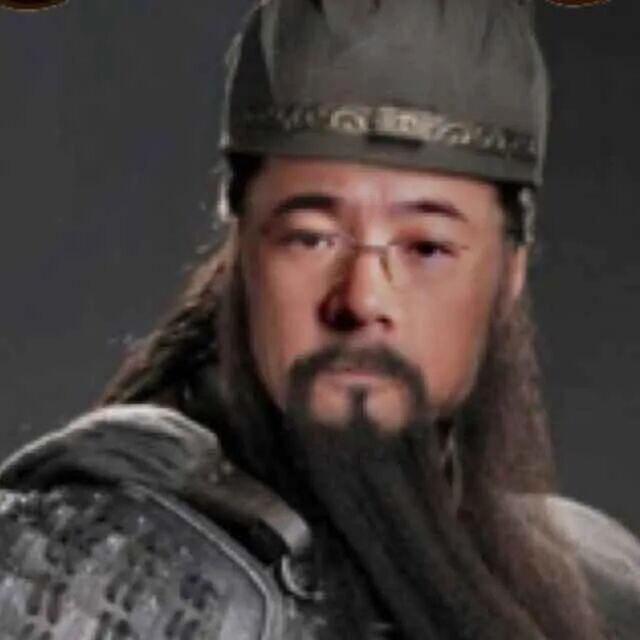
Kai Yu's WeChat profile picture
Xiaojun Zhang: I remember in your early years you only called yourself Horizon's Chief Scientist, not CEO.
Kai Yu: For a while, I thought — if I disguised myself as Chief Scientist to go sell stuff, would people feel more sympathetic toward me? Make things easier? It was a bit tongue-in-cheek, really.
Xiaojun Zhang: So what I said at the beginning — you navigate every circle with ease.
Kai Yu: You know which Chinese emperor I like most? — Liu Bang. Liu Bang was effortlessly adaptable. He knew when to bend and when to retreat, flexible in his methods. But his will was extremely strong.
You know which film character I like most? — Rhett Butler from Gone with the Wind. That guy moved between South and North, even in prison, he could get along with anyone, casually walk out, with everyone in the prison gathered around him. When Scarlett was in trouble and thought to find him, he was playing cards with a bunch of people in prison.
Being flexible and effortlessly adaptable — that's genuinely a state I enjoy. My surname is Yu, Kai Yu; the company name is Horizon Robotics — yudi, yudi (room to maneuver, room to maneuver). In doing things and being human, always leave yourself room, always have margin.
Xiaojun Zhang: Are you more of a Jianghu kind of person?
Kai Yu: If I were Jianghu, I wouldn't drink. (Referring earlier to drinking Moutai to recruit someone.)
I'm more about being emotional, reasonable, persuading patiently. Xiang Li finds this kind of thing too easy — he acts decisively. After all, he's a seasoned entrepreneur.
Once, I was doing strategic planning and suddenly realized I'd forgotten to do the budget. I happened to be chatting with Xiang Li and said: When we were discussing the strategic framework, how come you never mentioned budget to me?
He said: Does that even need to be mentioned? I've already run a publicly listed company.
Xiaojun Zhang: Now OEMs are all developing their own intelligent driving. How do you plan to compete with your customers?
Kai Yu: OEMs also need sufficiently good products. If a supplier does it 10x better than in-house development, is the OEM happy or unhappy? — They'll definitely embrace you.
Xiaojun Zhang: But the technology is homogenized.
Kai Yu: Have you ever seen any phone manufacturer develop their own calling function? No, right? Motorola, Nokia — they all used to develop their own communication basebands. Today, I'll tell you, even Apple doesn't develop its own baseband.
You're right, it's quite homogenized. Ultimately, I believe — and this is another contrarian view that most OEMs disagree with — OEMs will not self-develop autonomous driving in the future, because it's a standardized function.
The user experience of autonomous driving, whether for men, women, elderly, children, Chinese, Japanese, or Indian people — the standard for intelligent driving experience is the same: getting from A to B, safely, comfortably, efficiently. You can't have autonomous driving in a Guo Degang style or a Lin Zhiling style. Impossible.
Just like the user experience of making a phone call — whether you're Chinese, Japanese, elderly, child, or whoever — the standard is the same, you can't differentiate. In the end, you can rank things first, second, third, but you can't make them different. If a supplier does it better than you, you should use the supplier.
Where should car companies focus their energy? Photography. Photography has no common standard. What counts as good? It varies by person — it's emotional value. So phone manufacturers like Xiaomi and Huawei spend enormous energy on photography, because there's no common standard, but they don't self-develop basebands or calling functions.
If OEMs figure this out in the future, they should focus their energy on the emotional value of products. This standardized autonomous driving should be handed to suppliers — we can test this view in five years.
Xiaojun Zhang: If Li Auto hands intelligent driving to Horizon Robotics, it can't be an AI company anymore?
Kai Yu: You've indeed grasped the issue. But let me tell you — I've discussed this with Xiang Li.
Xiang Li agrees that autonomous driving is a standard feature, and from this angle, it's not worth self-developing. But don't forget — what is Xiang Li's ideal? It's not a car company. Xiang Li would love to eventually compete with Google, with Microsoft, with OpenAI — have you thought about that?
Doing autonomous driving is his path toward artificial intelligence — sustaining the war through war, training the team, building capabilities. Get it?
Xiaojun Zhang: If for his ideal he one day stops working with you, you'd be okay with that?
Kai Yu: Of course. Because his goal is to become a true AI company; making cars is just one step.
Xiaojun Zhang: Thinking today — what would be Horizon's "gate of death"?
Kai Yu: Product not good enough? Autonomous driving has now entered an era of 10x discontinuous change. The only thing you need to do is aim high, define the boundaries of technology, and strike slow with fast. In the entire history of science, such moments are rare. Once they arrive, the only thing you need to do is run like hell.
Xiaojun Zhang: To be the fastest, what are you planning to do next?
Kai Yu: We're doing software-hardware co-design. Worldwide, to date, only Tesla, Huawei, and Horizon Robotics do both chips and software simultaneously. This allows transforming software-hardware serial development into parallel development. Naturally, iteration speed is faster. Horizon Robotics has reached the stage of contending for the World Cup final championship; the only thing to do is execute resolutely and keep grinding intensely.
Xiaojun Zhang: Momenta is also making chips now. How do you avoid homogenized competition?
Kai Yu: You see the advantage emerging. More and more players are realizing chips matter. Except, when this battlefield opens up, whether you enter too late or laid groundwork early.
We're like — the moment the battle started, we were already in the center of the battlefield with fortifications and bunkers fully built, while other forces might still be en route. For typical chip companies, their first-generation, second-generation chips are tuition fees.
Xiaojun Zhang: How do you build Horizon's CUDA, like NVIDIA did?
Kai Yu: Haven't fully deployed yet. Autonomous driving has basically converged; it's a deterministic product.
Future robots hold infinitely broad possibilities — agricultural, manufacturing, home service, flying in the sky, swimming in water. That era should have something like a CUDA ecosystem.
We're still exploring this strategy; can't say it's already deployed. Horizon Robotics' core strategy for the next 5 years is still to run like hell in autonomous driving, become world number one, become 10x better than number two, become so good that even XPeng uses us. In 5 to 10 years, we'll deploy the robot CUDA and open ecosystem. We'll be exploring this in the next 5 years.
Xiaojun Zhang: Where's the innovation point for next-generation chips?
Kai Yu: Look at cars and robots — unlike cloud computing, where you can imagine almost infinite power supply and good cooling systems. But in cars or robots, they operate in bitter cold or scorching heat, relying on their own onboard batteries, without such good cooling systems, very constrained power supply.
You need to push extreme innovation at large scale in software and hardware, not small-scale innovation.
The human brain achieves 5000T computing power at 20 watts power consumption. Today Horizon Robotics' highest-performance chip Journey 6P has 10x that computing power, but you know Journey 6P alone consumes over 100 watts — it's impossible. With today's technology, we're very far from that goal. How to reach 20 watts, 5000T computing power, without needing a huge battery?
You need extreme innovation in computing architecture, moving away from current von Neumann architecture, completely merging computing and storage — a brand new architecture like the human brain, because our human brain completely integrates computing and storage, they're not separate.
We're moving toward such a future. We need to revolutionize current hardware architecture, revolutionize current software systems, especially compilers and operating systems — they'll be completely different from today, instruction sets completely different too.
Horizon Robotics, if only doing autonomous driving, because autonomous driving vehicles' batteries or overall vehicle size are sufficiently large, barely getting by with today's technology evolution might be okay. But for robots, absolutely not.
In the next 10 years, we need to do disruptive technological innovation, overthrow existing computing architecture and paradigms, including software and hardware.
Xiaojun Zhang: What's the farthest future you can see? Whether in AI, autonomous driving, or humanity's future.
Kai Yu: Autonomous driving is a problem about to be solved. L4 probably within 5 to 10 years — 3 years to achieve 100% hands-off; 5 years to achieve 100% eyes-off; 10 years to achieve 100% minds-off.
Look at today's humanoid robots — dancing, playing ball, it's performative. I hope in 5 years, robots that are genuinely useful in localized scenarios will emerge. In 10 years, some form of general-purpose robot will appear.
Humanity's future will inevitably move in a direction I don't wish to see — humans being domesticated by AI and algorithms. Horizon Robotics hopes to go against this current, doing artificial intelligence in the physical world, not the digital world. Physical world AI is cleaner, liberating humanity from boring, heavy, dangerous physical labor. Let machines be machines, let humans be humans.
Zhang Xiaojun: When you chose AI and deep learning, those were still fringe directions, but today they're hot. So I want to ask a question on behalf of young people: What is deep learning today?
Kai Yu: I'm quite worried that young people are all rushing to study deep learning. That's not great — it lacks independent thinking, and is more utilitarian.
Of course, the new generation is different. The older generation of Chinese young people, like me back then, and those born in the '70s and '60s who got into college and went abroad — deep down they carried a kind of mission, to lift their families out of poverty, so they couldn't let go. Today's young people have been looking at the world since kindergarten. They're more free-spirited, more curiosity-driven.
Zhang Xiaojun: You said not to ask what Kai Yu's dream is, so what is Kai Yu's dream?
Kai Yu: To bring AI into every ordinary household, so that everyone gains greater freedom through our work, not more control.
What brings me great joy in this process is self-cultivation. Painful but happy. My favorite investor is Warren Buffett — he tap-dances to work.
Zhang Xiaojun: Finally, a few rapid-fire questions.
Kai Yu: Sure.
Zhang Xiaojun: Your single favorite food anywhere in the world?
Kai Yu: I've eaten so many things, and I've found the best is still stir-fried pork with chili peppers.
Zhang Xiaojun: One favorite place?
Kai Yu: It's always the next place I want to go. Right now I'm thinking about visiting North Africa.
Zhang Xiaojun: Two must-read books?
Kai Yu: Tao Te Ching, Diamond Sutra.
Zhang Xiaojun: What's a fresh realization you've had about the world recently?
Kai Yu: I believe this world runs on a pre-written program, and I increasingly believe this. Everyone is acting according to a script, but you can change that script.
The masses exist on one dimension — you'll see your surroundings as a maze, dead ends everywhere. But someone like Shakyamuni or Zhuangzi, they're quite detached, thinking from a higher dimension. When you ascend dimensions, you realize the masses aren't in a maze at all — it's all connected.
If you can elevate the dimension of your life's realm, you'll discover there's a new script over there.
Though the script is predetermined, there are actually multiple dimensional worlds, multiple scripts waiting for you. But the question is: can you change yourself, continuously elevate and transcend, so that a better script awaits you there.
Zhang Xiaojun: What were the nodes in your life where you ascended dimensions?
Kai Yu: Entrepreneurship made me ascend dimensions. Because entrepreneurship is so damn hard. You know what I realized? The only way to change the script is to change yourself.
I don't have a Beijing hukou, and I still live in a rented apartment. I can't play Texas hold'em, I can't play golf, I can't even play guandan.
I'd rather choose a relatively simple life — to throw myself into something wholeheartedly, with complete focus, losing myself in the work. That's the state I enjoy.
Zhang Xiaojun: As a founder, what does your ideal day look like?
Kai Yu: To hear the Dao in the morning, and die content in the evening.
If one day you understand some interesting principle or have an epiphany, or get closer to the truth of the world — that would make me happy the entire day.
For the full version, watch the video (Bilibili) or listen to the podcast (Xiaoyuzhou, Apple Podcast, Spotify). Search for "Zhang Xiaojun's Business Interviews."