Event Recap | From Influencer Marketing to PLG Strategy: Unlocking New Approaches for AI Product Global Expansion

Growth Strategies for AI Products Going Global

👋 Event Recap
Today at Linear is Linear Capital's event series. We regularly host events in major cities to help entrepreneurs better understand industry trends and explore opportunities at the frontier of technology.
On August 15, Linear Capital held an offline "Linear Capital AI Sharing Session" in Shanghai, focused on two topics: 1. Influencer marketing strategies for AI products going global. 2. Open Source / Global Expansion / PLG: From Zero-Paid to Paid Marketing.
After the event, we compiled key takeaways from both speakers' sessions, hoping to offer some food for thought and inspiration.
📝 Session Notes
01 Influencer Marketing Strategies for AI Products Going Global
Speaker: Lysa, CEO of Katlas Media
Influencer marketing is a popular strategy where brands partner with individuals who have large followings and influence on social media platforms to promote products or services. Its advantages include: precise audience targeting, high cost-effectiveness (low cost, high exposure), brand awareness building and image cultivation, trackable data, and accumulation of ad creative assets.
Founded in 2021, Katlas Media is on a mission to serve a new generation of globally-minded enterprises. Focused on the AI sector while also empowering other outstanding tech and internet companies, the firm handles brand promotion, traffic growth planning, professional content production, and on-the-ground resource matching to help businesses achieve overseas growth.
At this event, Lysa shared the key components of influencer marketing:
1. Nail the positioning and identify your core user base
- Influencers typically have specific follower bases with shared interests, hobbies, and consumption habits.
- Before launching influencer campaigns, companies need to understand their product's target audience. Partnering with the right influencers helps brands precisely reach potential paying users.
2. Choose the right platforms and channels
- Different platforms require different strategies. Companies should select social media platforms based on product type — for example, LinkedIn for B2B products and TikTok for general entertainment products.
- Platform characteristics: Twitter works well for cold-starting AI products and acquiring seed users; LinkedIn suits B2B clients and serves as credibility backing; TikTok excels at entertainment content to attract young users; Instagram is ideal for visual storytelling and expanding brand influence; YouTube fits educational content for long-tail conversion.
3. Run small-scale tests, collect data for analysis and feedback
- Before paid acquisition, companies can conduct small-scale influencer tests with different user segments and influencer types, observing results and collecting data for analysis and feedback.
- Continuously refine and narrow target user groups through market research and user feedback, quickly gauging platform users' interest in the product.
4. Review and summarize to inform future campaigns
- Regularly review marketing campaign performance. Use analytics tools to understand user focus areas and product feedback, analyzing and summarizing data-driven insights to support future campaigns.
- For posts or videos with strong performance, expand reach through official platform paid promotion channels.
5. Trends in influencer marketing
- Influencer marketing is trending toward greater segmentation and verticalization, requiring deeper understanding of target users' culture and preferences.
- Intensifying market competition is driving up costs across channels.
- Focus on building owned media. By producing vertical content tailored to platform tone and user profiles, brands can achieve differentiation and efficient conversion.
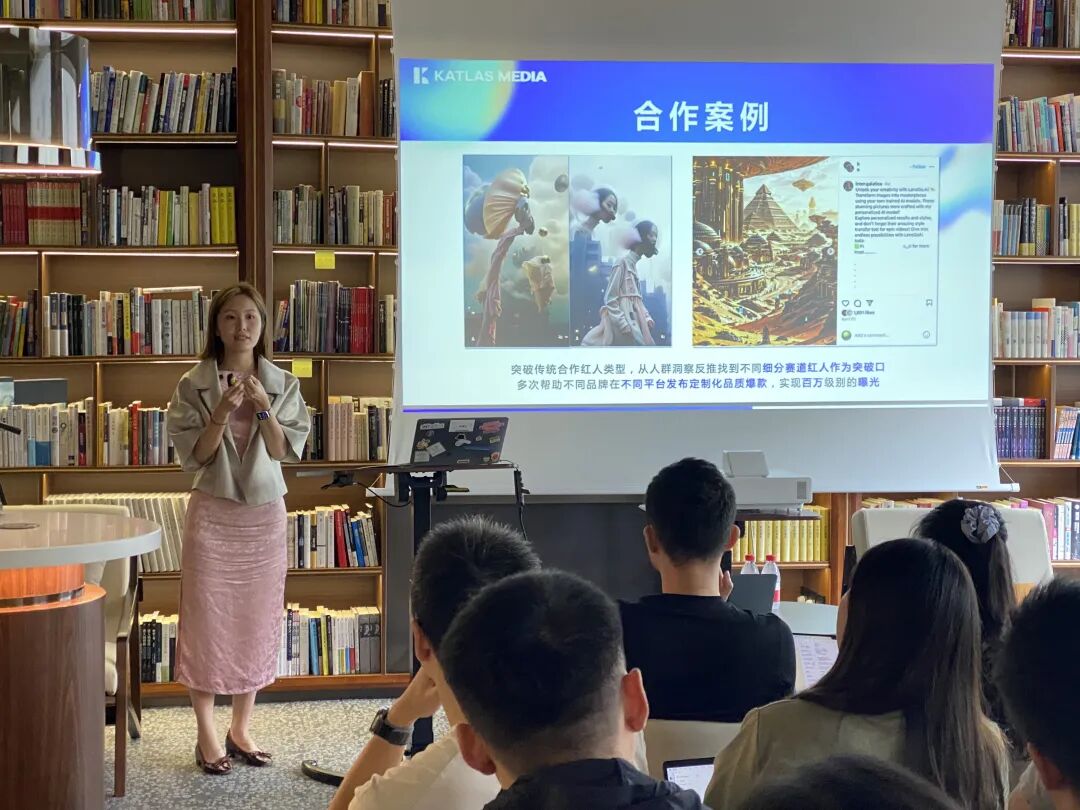
Photo | Lysa's presentation
02 Open Source / Global Expansion / PLG: From Zero-Paid to Paid Marketing
Speaker: Yipei Wei, ex-COO of AFFiNE
Yipei Wei (Iris) was previously Co-founder and head of operations at AFFiNE. In August 2022, she began leading the product's overseas expansion, accumulating extensive go-global experience over two years. Key achievements include: 1) The product gained 6k GitHub Stars in 7 days, reaching 33k Stars within a year and a half. 2) User coverage spanning 280 countries and regions worldwide. 3) Successfully coaching multiple projects to #1 on Product Hunt's daily, weekly, and monthly charts.
At this event, Iris shared many of her practical experiences and methodologies for going global. We've selected some key highlights.
1. How an open-source project gained 6,000 GitHub Stars in one week
- Before going open-source, clarify the purpose — whether it's to boost influence, kickstart commercialization, recruit talent, or raise funding. Beyond that, prepare a clear business model to capture the traffic from open-source and avoid wasting it.
- Ensure the GitHub Readme is clear and concise, with polished PR articles and developer documentation ready, and drive traffic through social media and community platforms. Reference the Readme structures of popular GitHub repos in the same industry vertical.
- During launch week, continuously operate and maintain the user community. Ensure all actions and plans go out within 24 hours — the high exposure and traffic from short-term intensity carries its own viral effect.
2. How to build an overseas community from 0 to 1
- The core of PLG (Product-Led Growth) is making the product good enough that users influence other users. The better the product, the higher the conversion rate.
- The secret to an active community is making friends with users. Through 1-on-1 meetings, you can deeply understand user needs and feedback, optimizing user journeys and continuously improving the product and user experience.
- Conduct effective user interviews. Give users the floor, cherish every opportunity to connect with them, and genuinely listen to their voices — early users often understand competitors better than you do.
- Optimize the user path from registration to payment. The more attention you pay to this journey and the more accurately you model it, the higher your paid conversion rate.
3. How to prepare for a large-scale Product Hunt launch
- Understand Product Hunt correctly: direct conversion from real users is relatively limited; the secondary conversion from earning badges holds more value.
- Plan and prepare well in advance. A well-designed user journey can simultaneously improve both paid conversion and retention rates.
- Ensure diversified traffic sources. Combine influencer marketing, AI directory sites and niche sites, and community KOLs for joint promotion.
- After launching on Product Hunt, promptly follow up on user feedback and product iteration. Referencing high-quality user feedback helps refine the product experience.
- Every wave of traffic must deliver value. Traffic from any channel should be converted into service.
4. Tips summary
- Don't mythologize open source, open-source influence, or traffic myths: only go open-source and spend heavily on paid acquisition when you're ready.
- Operations requires solid, hard work: genuinely listen to users and deliver high-quality products.
- Internally, be sufficiently candid and clear. Define delivery standards for different product features (what score qualifies for launch / what score qualifies for promotion), and strictly maintain quality control.
- If the product needs refactoring, pay attention to balancing the gap between refactoring and user experience.

Photo | Iris's presentation
✨ Event Photos
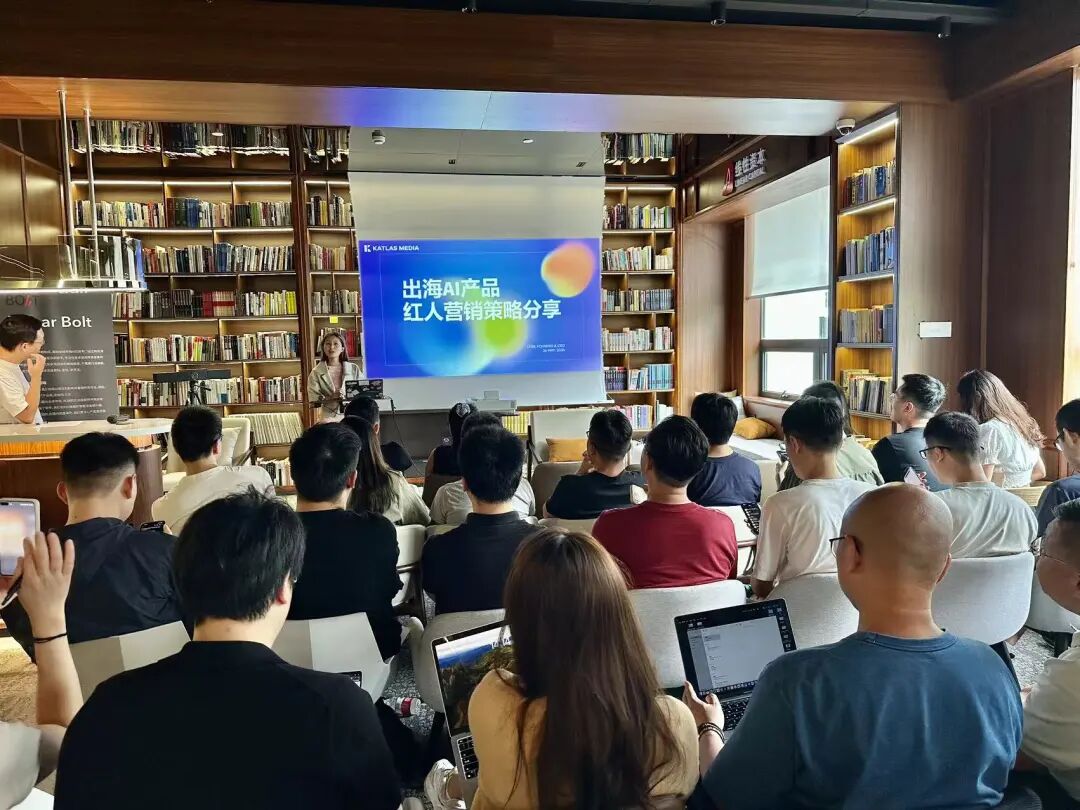
Photo | Event venue

Photo | Audience

Photo | Networking session
📮 Upcoming Events
That wraps up this Linear AI Sharing Session. We'll continue hosting events on related themes — follow Linear Capital's WeChat official account for the latest updates.
About Linear Capital
Linear Capital is an early-stage investment firm focused on "frontier technology + industry" — frontier technologies such as data intelligence, digital new infrastructure, next-generation robotics, and technological transformation in traditional sectors (biotech, materials, energy, etc.), applied across vertical industries to dramatically improve industrial efficiency, solve pain points, and enable industrial upgrading. Through substantial enhancement of industrial value, we achieve outsized commercial returns. The firm currently manages ten funds with total AUM of approximately $2 billion.
Our investment stage focuses primarily on leading angel to Series A rounds, with individual investments ranging from $1 million to $10 million (or RMB equivalent).
To date, we have made early-stage investments in over 120 founding teams including Horizon Robotics, Kujiale, Sensors Data, Tezign, Rokid, Guandata, Agile Robots, and others. The combined valuation of Linear Capital's portfolio companies is approximately $20 billion.
In the near term, Linear Capital is working to become the premier "Data Intelligence Technology Fund." In the long term, we aim to build the most influential "Frontier Technology Application Fund."