Linear Capital's angel-round lead investment project, *SynMetabio*, has raised tens of millions of RMB in a Pre-A round, with existing investor Linear Capital continuing to double down as a follow-on investor.
The cost of bio-based leather manufacturing has dropped sharply, and a commercial inflection point could arrive next year, with tens of millions of yuan in revenue.

By Hairuo Jing | 36Kr
36Kr has learned exclusively that SynMetabio, a bio-based leather manufacturer, recently completed a Pre-A funding round of tens of millions of RMB, led by Starry Sky Capital with follow-on investments from Linear Capital, Danen Capital, and MiraclePlus. The proceeds will primarily fund the first phase (of three total phases) of its factory in Changzhou, as well as scaled production and commercial delivery of artificial leather. The company has already initiated a new funding round.
Founded in late 2021, SynMetabio completed its angel round led by Linear Capital in April 2023. Last year, the company focused on bringing in three types of talent: synthetic biology R&D personnel with iGEM competition experience, artificial leather material and formulation development teams, and fermentation plant managers. The current team numbers around thirty people and is expected to expand to roughly sixty this year as the scaled production facility comes online.
"Through optimizations across the entire production process, we've achieved substantial manufacturing cost reductions that give us a cost advantage for bio-based materials in most application scenarios," founder Surui told 36Kr. These cost reductions stem from changes in multiple areas: strain development, raw material selection, and microbial fermentation methods.
First, SynMetabio selected specialized fungi capable of thriving in extreme environments — highly robust strains that eliminate the need for costly sterilization and cooling steps downstream. Second, the company uses agricultural waste as feedstock, materials that are easy to collect and store in centralized locations, lowering input costs. Third, the fermentation tanks were custom-modified for the new strains' characteristics. The entire production cycle can now be completed in as little as eight hours.
The R&D approach also underwent significant adjustment last year. The core shift was understanding bio-based leather within the context of the trillion-RMB artificial leather market. "For technology to scale, it needs to adapt to the mature dry-process coating production methods of artificial leather and fit existing production lines," Surui explained. Accordingly, SynMetabio abandoned its previous fermentation process in favor of biomass fermentation to produce leather "slurry" — positioning its product as a slurry compatible with existing artificial leather lines, enabling production switching and rapid scaling.
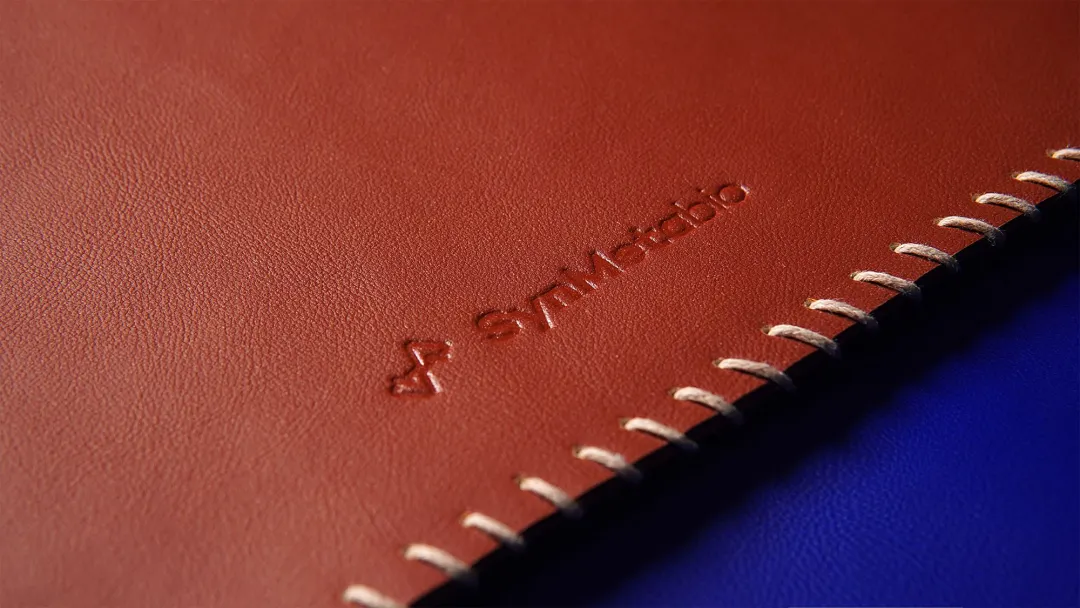
In 2023, SynMetabio focused on developing the complete process compatible with artificial leather production lines and completed trial production. Its scaled manufacturing facility has been sited in Changzhou, with planned annual leather production capacity of approximately 10 million square meters and designed output value of about 200 million RMB (to be invested in three phases).
Source: SynMetabio
Artificial leather is a perfectly competitive market characterized by large production scale, high energy consumption, and heavy pollution. Major producers coexist with relatively fragmented downstream distributors, and different applications — footwear, bags, automotive interiors — each correspond to distinct artificial leather material suppliers.
SynMetabio distills customer demand in the artificial leather industry into three points: cheaper, better, greener. The priority is helping downstream customers reduce costs and improve efficiency by providing lower-cost leather materials with consistent performance. Meanwhile, novel bio-manufacturing and circular fermentation systems enable "green production" that saves energy and cuts carbon emissions, aligning with current policy directions. For brand owners, applying more technologically sophisticated bio-based materials to build brand concepts better aligned with ESG requirements may also command product premiums.
"If a customer needs 100% bio-based, we have a complete materials development solution where higher bio-based content actually means lower cost — though of course we need to find the balance between cost and material performance," Surui explained. "Additionally, we've developed a circular fermentation system that uses algae to process large volumes of wastewater and exhaust gases, while extracting fibers produced by algal fermentation to incorporate into the leather production line. So SynMetabio's leather can achieve 100% bio-based content with 'negative carbon' emissions."
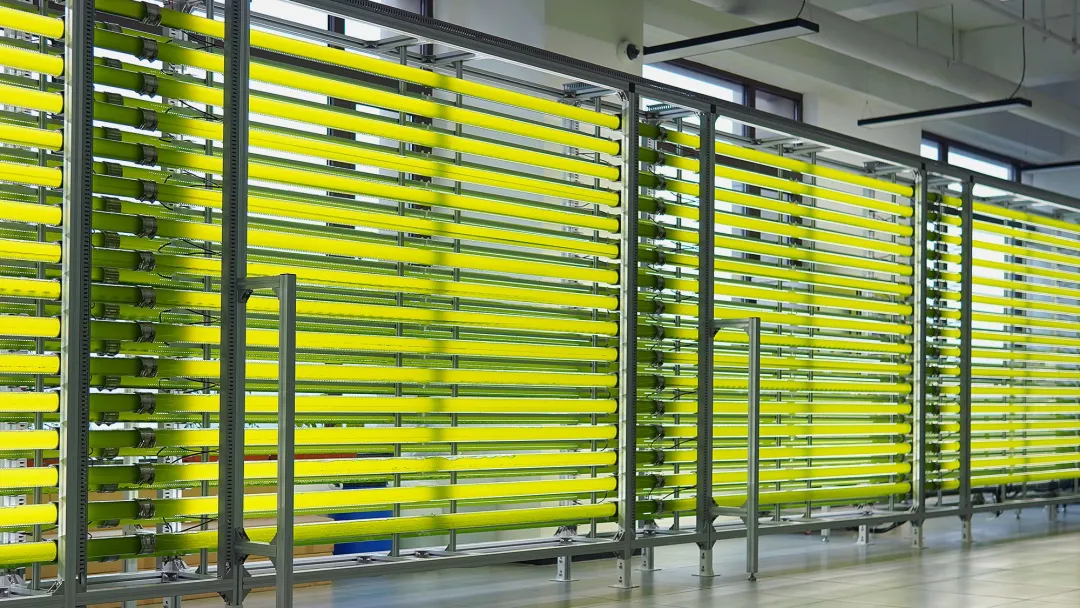
Microalgae circular fermentation system
Currently, SynMetabio operates two primary business models. The first involves direct sales of various grades of leather materials to downstream distributors or brand owners, with consistent performance and supply prices below market rates. The second involves partnerships with suppliers to major brands, providing them with slurry and technical support for leather processing — entering major brand supply chains indirectly but rapidly as an upstream supplier.
In 2024, with the completion and commissioning of its mass production facility, SynMetabio's first batch of mass-produced products is expected to hit the market, with a commercial inflection point potentially arriving next year and generating tens of millions of RMB in revenue.
Under the second business model, SynMetabio has signed a strategic cooperation agreement with Kuangda Automotive Trim Systems, an industry leader, to jointly develop low-carbon, bio-based artificial leather products for the automotive sector. Beyond automotive interiors, in footwear and apparel, SynMetabio has also completed performance and mass production validation of bio-based leather applications with multiple well-known sportswear brand suppliers, with products expected to reach the market in bulk as early as early next year.
In recent years, bio-based leather has attracted significant R&D attention internationally, with overseas development of mushroom leather, pineapple leather, barley leather, and other environmentally friendly materials whose performance and costs benchmark against genuine leather. SynMetabio's current bio-based leather development benchmarks against artificial leather for different application scenarios in terms of cost, appearance, hand feel, and mechanical properties — aiming to serve broader market demand. Currently, the artificial leather market is roughly 3-4 times the size of the genuine leather market and continues to grow.
Investor Perspectives
Li Li, founding partner of Starry Sky Capital, stated: "We're delighted to participate as the lead investor in SynMetabio's current round. We're very optimistic about the future prospects of synthetic biology in new materials, and particularly bullish on the significant social significance and commercial potential of bio-based leather in the ESG era. The SynMetabio team has demonstrated remarkable creativity and execution capability. Bio-based leather involves extremely interdisciplinary work spanning synthetic biology and materials science, with potentially intractable technical challenges at every step. Through their exceptionally pioneering thinking and execution capabilities, the team has achieved technical breakthroughs at critical junctures,打通 from strain screening and microbial fermentation to material preparation, achieving 100% bio-based leather and establishing themselves as industry leaders in this niche. We believe that following this round, SynMetabio will bring more surprises in the industrialization and commercialization of bio-based leather."
About Linear Capital
Linear Capital is an early-stage investment institution focused on "frontier technology + industry" — that is, frontier technologies represented by data intelligence, digital new infrastructure, next-generation robotics technology, and new technological transformations in traditional domains (such as biomedicine, materials, and energy), applied across vertical industries to substantially improve industrial efficiency, empower solutions to pain points, and complete industrial upgrades — achieving excess returns through the substantial enhancement of industrial value. It currently manages ten funds with total AUM of approximately $2 billion.
Our investment stage focuses primarily on leading angel to Series A rounds, with typical investment amounts of $3-8 million or RMB equivalent per project.
To date, we have made early-stage investments in over 120 entrepreneurial teams including Horizon Robotics, Kujiale, SensorsData, Tezign, Rokid, Guandata, and Agile Robots. The combined valuation of Linear Capital's portfolio companies is approximately $20 billion.
In the near term, Linear Capital is working to become the best "Data Intelligence Technology Fund." In the long term, it aims to gradually build itself into the most influential "Frontier Technology Application Fund."