Guangyu Yuanxin Closes Pre-A and Pre-A+ Rounds, Raising Over RMB 100 Million in Total | Linear Portfolio

Solving the three core challenges in Micro-LED industrialization.

Recently, Guangyu Yuanxin announced the completion of two consecutive funding rounds — Pre-A and Pre-A+ — with total financing exceeding RMB 100 million.
The global AR industry is reaching an inflection point, moving from technology validation to product commercialization. Micro-LED, with its high brightness, high contrast ratio, and low power consumption, is widely regarded by the industry as the optimal technical solution for AR micro-displays. Yet three core challenges have long blocked the path to mass production. Guangyu Yuanxin is tackling this from the ground up, rebuilding Micro-LED manufacturing at the materials growth layer through its SAG (Selective Area Growth) technology approach.
Linear Capital was the angel-round investor in Guangyu Yuanxin and looks forward to the company's continued iterative progress in product and technology development.
Guangyu Yuanxin (Hangzhou) Optoelectronics Co., Ltd. announced the completion of consecutive Pre-A and Pre-A+ funding rounds, with total financing exceeding RMB 100 million**. The Pre-A round was led by F&G Capital and Huarui Investment, with HSG, Xiang He Capital, and CASSTAR participating as co-investors. The Pre-A+ round saw follow-on investment from existing shareholder F&G Capital.
Micro-LED is considered the ultimate next-generation display technology, but mass production has been held back by three core challenges: achieving high-PPI micro-displays, the long-standing bottleneck in red-light efficiency, and the immaturity of monolithic full-color integration. Previous technical approaches have invested heavily in directions like light combining and quantum dot color conversion, but at micro-scale dimensions, efficiency and full-color consistency have remained difficult to reconcile.
Guangyu Yuanxin is tackling this through its SAG (Selective Area Growth) technology approach**, rebuilding Micro-LED manufacturing from the materials growth layer up.
SAG borrows from the most advanced transistor fabrication processes in the semiconductor industry: directly on mature silicon wafers, photolithography is used to pre-etch millions of nanoscale pixel "cavities" (growth regions). Then, through equipment like MOCVD, growth conditions are precisely controlled so that III-V semiconductor materials — the building blocks of LEDs — grow only in these predetermined cavities, "selectively."
"Grow light only where you need it" — with this approach, the company can achieve ultra-high pixel density with PPI exceeding 30,000**, fundamentally bypassing the efficiency losses that plague conventional micro-display processes when scaling down dimensions. At the same time, it breaks through the red-light efficiency bottleneck and enables monolithic full-color integration — solving all three core challenges of Micro-LED commercialization in one go**.
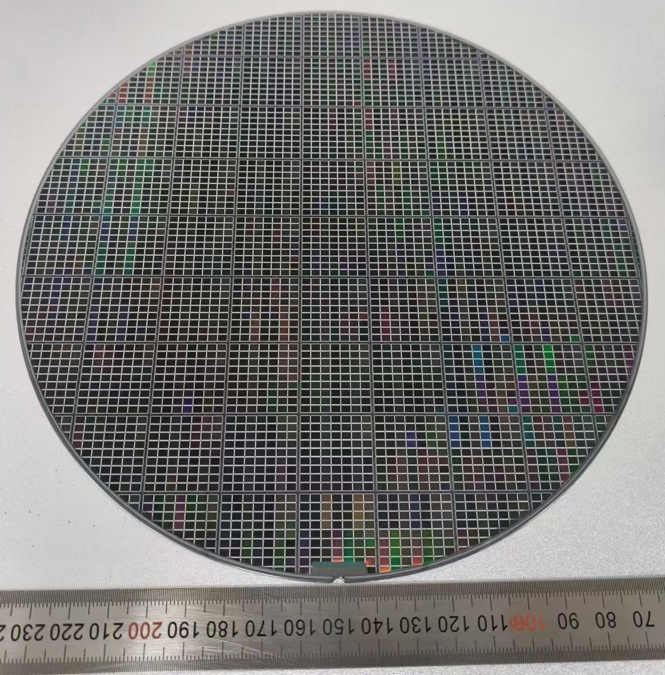
Figure 1: Guangyu Yuanxin Micro-LED micro-display wafer
The global AR industry is reaching an inflection point, moving from technology validation to product commercialization. Meta's release of the Ray-Ban Display smart glasses marks the formal entry of consumer AR glasses into a new stage of display-plus-AI convergence. Google showcased its SAG Micro-LED full-color glasses prototype at its 2025 I/O conference, following its acquisition of Raxium. Major overseas tech companies are accelerating the push to move AR glasses from concept to consumer market.
Micro-LED's high brightness, high contrast ratio, and low power consumption make it the optimal technical solution for AR micro-displays, and high-PPI full-color Micro-LED micro-display modules represent the critical hurdle for whether AR glasses can achieve lightweight, all-day wearable form factors.
Overseas manufacturer Aledia recently demonstrated a silicon-substrate monolithic 3D nanowire RGB tri-color epitaxial wafer based on SAG technology and launched a mass production platform, further validating that the SAG full-color integration path is both viable and commercially promising.
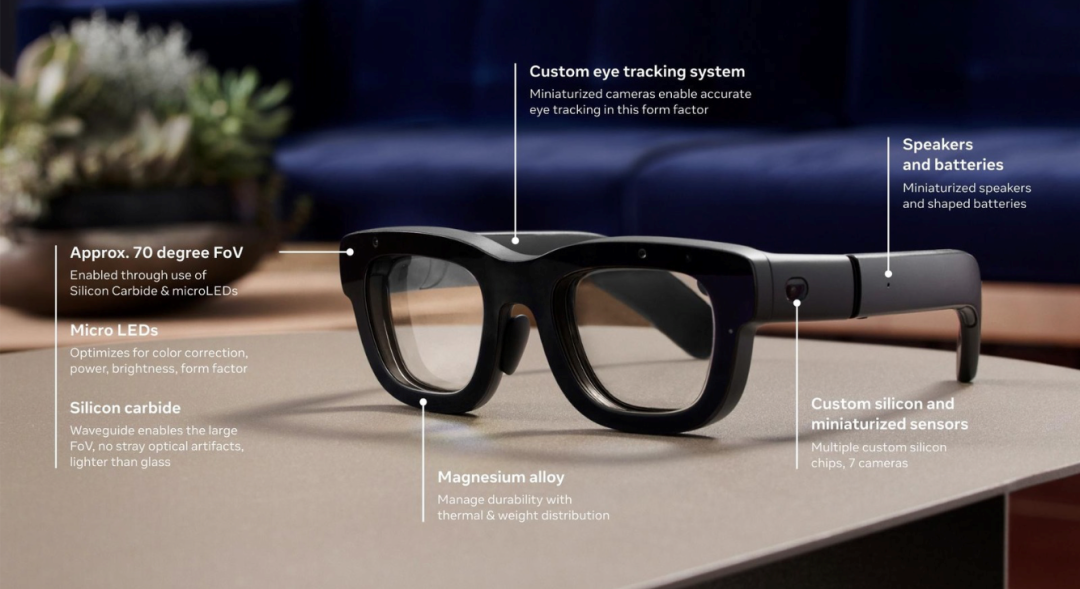
Figure 2: Meta Orion AR glasses based on Micro-LED display technology (image from public sources)
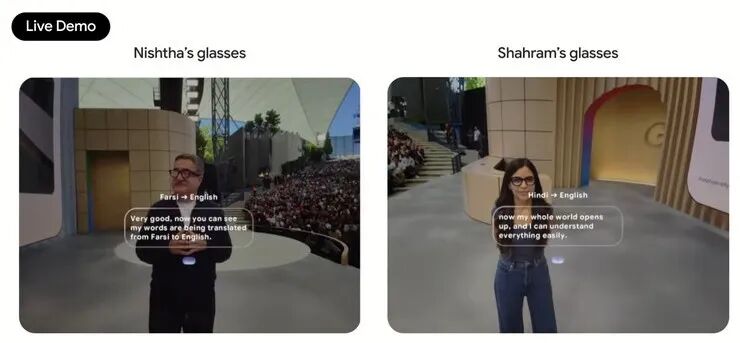
Figure 3: Android XR smart glasses demonstrated live at Google I/O 2025 (image from public sources)
On another front, optical interconnect is becoming critical infrastructure for the compute era. AI's exponential demand for compute power has pushed traditional copper interconnect to its limits in both bandwidth and power consumption.
Avicena released the industry's first Micro-LED optical interconnect evaluation platform, LightBundle eKit, in March 2026, opening validation access to AI infrastructure customers — signaling that Micro-LED optical communications are moving from technology validation toward engineering deployment.
The platform is based on ASIC transceivers integrating Micro-LEDs, photodetectors, and microlens arrays. It currently supports 512 Gbps throughput, with plans to scale to 896 Gbps, offering a new path to solving the AI compute interconnect bottleneck.
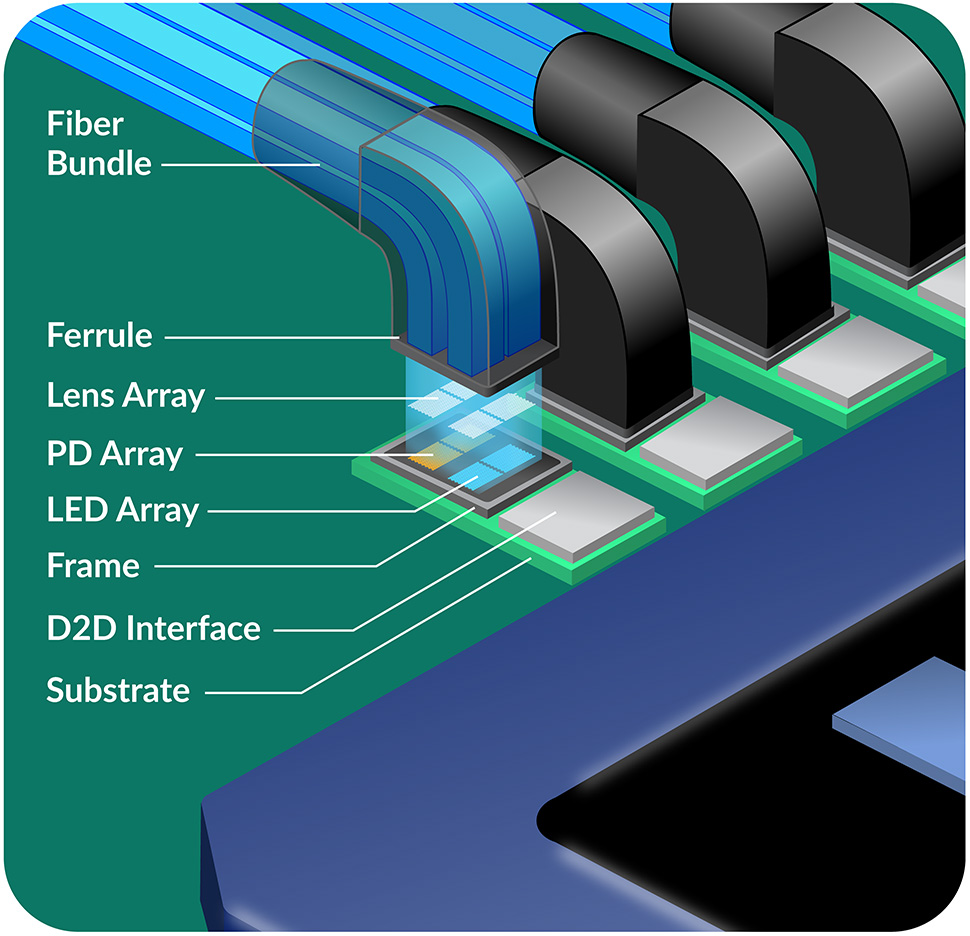
Figure 4: Avicena LightBundle™ optical interconnect technology schematic (image from public sources)
AR micro-displays and optical communications represent the two most important near-term applications for Micro-LED. The two share nearly identical technical foundations, but their market rhythms diverge: one is driving a form-factor transformation in consumer hardware, the other is supporting the upgrade of compute infrastructure — their timelines happen to complement each other.
The Guangyu Yuanxin team possesses world-class breakthrough technical expertise and deep industrial heritage, commanding both cutting-edge technology and advanced process capabilities alongside mature mass production experience. The team has long specialized in core Micro-LED processes and semiconductor manufacturing, successfully establishing a complete closed-loop technical pipeline spanning materials epitaxy, device design, and process integration — providing solid, reliable core support for the industrialization and mass production deployment of SAG selective area growth technology.