Dajie Industrial Software RoBIM Named to 2022 *Fortune* China Best Design List

Recently, *Fortune* magazine released its 2022 list of China's Best Designs, with RoboticPlus.AI's industrial software RoBIM making the cut for its innovative solutions and addressing real-world needs.
Recently, Fortune magazine released its 2022 China Best Design list, and RoBIM, the industrial software from Edge Construction Robotics, stood out from hundreds of submissions for its strengths in innovative solutions, addressing real-world needs, and driving social change — becoming one of China's 50 best designs and the only industrial software company on the list.

Sixty years ago, design was practically synonymous with product aesthetics. Today, the emphasis is on how design can serve as a starting point for innovation and transformation — enabling a product or service to elegantly fulfill its specific purpose or function. The "2022 Fortune China Best Design List" seeks out and celebrates design concepts that start from real human needs, attempt to solve complex problems, and demonstrate commercial potential or social impact. Whether it's a product, a building, a service, an algorithm, or a public welfare initiative, it improves the quality of life for a group of people and makes our society more inclusive, equitable, and efficient. RoBIM's successful inclusion on the list reflects, as Fortune's citation put it, how this software enables vision-sensor-equipped robots to better "read" construction drawings and, through self-learning, automatically generate motion trajectories and processing methods. In an industry still characterized by massive manual labor, this technology can elevate prefabrication levels, improve construction accuracy, and reduce labor costs and resource waste.
For the complete list, click "Read More" at the end of this article.
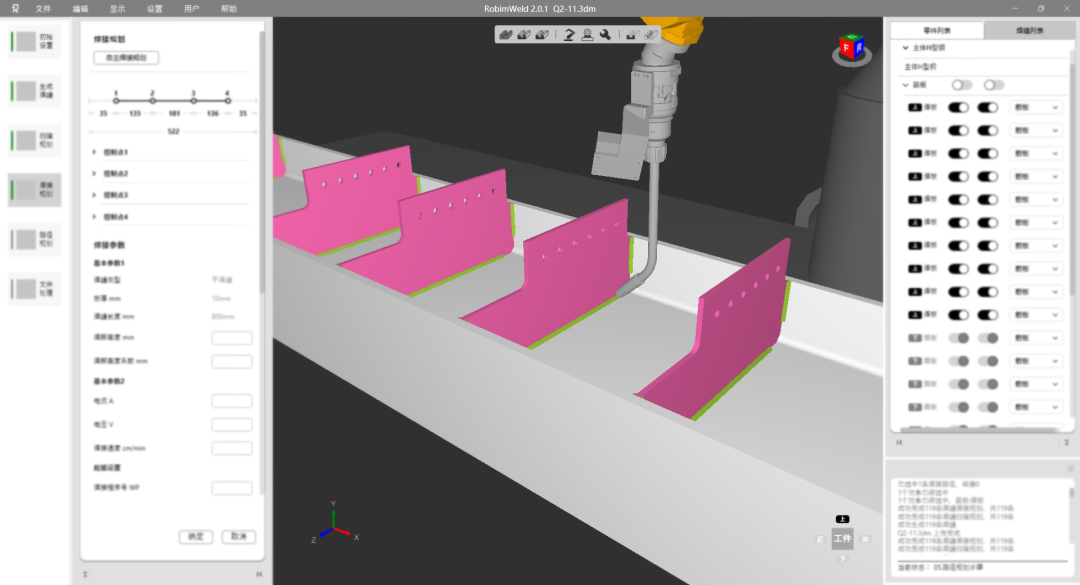
RoBIM is an industrial software dedicated to bridging digital design and industrialized production. By integrating computer technology with industrial robotics, it enables robots to rapidly identify a product's geometric information and automatically generate path planning through modular algorithms, achieving "design-to-manufacturing" integration. Its core technologies include:
- Intelligent algorithms connecting drawings, geometric data, and robot motion control
- A powerful algorithm library for diverse processes
- A simple, fast, and user-friendly human-machine interaction system
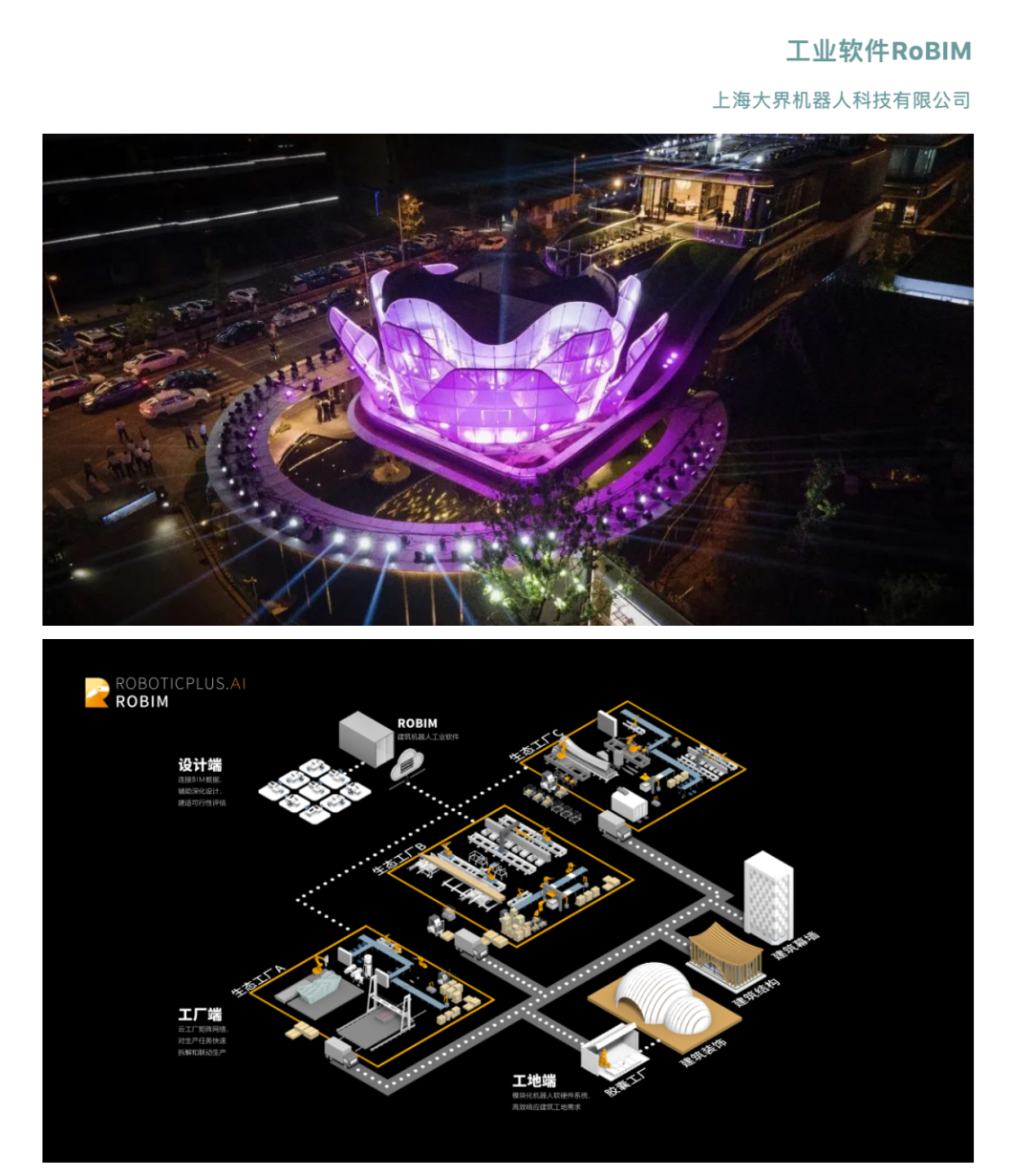
The architectural project powered by RoBIM software that contributed to this recognition is the Jianghan Nanhu Garden · Life Pavilion, located along the Xiangjiang River in Changsha. It is a movable roof-opening structure combining cultural tourism, exhibition space, and sales center functions. The design was created by Line+ Architecture, with an overall form inspired by the posture of an azalea flower — composed of a pistil (observation hall) and petals. The observation hall can elevate upward, carrying visitors from the corridor to the roof level; as it rises, the petals unfold to reveal river views.
Edge Construction Robotics leveraged RoBIM's core technology to provide intelligent construction services for this project, from design development through construction completion. During the design phase, full-process digital optimization was combined with automated steel component production at an intelligent factory and prefabricated construction methods, enabling precision control throughout the entire project lifecycle and maximizing fidelity to the architect's vision. Early on, installation simulations were conducted for all steel structures. Combined with pre-assembly processes, the steel production was broken down with reserved assembly fixture positioning and other measures. Spatial cutting, hole drilling, and assembly alignment marking were performed on the steel, with construction considerations embedded into the overall design and fabrication data to avoid on-site errors and improve construction efficiency.
During production, the RoBIM platform integrated all model information and connected data across different intelligent processing equipment, enabling automated production scheduling and data exchange throughout the manufacturing process. For steel component processing, 7-axis robotic arms were used for automated welding while simultaneously completing pre-assembly. Final verification showed overall steel frame assembly error within 3mm, effectively ensuring production precision and efficiency. After pre-assembly, the structure was divided into several large components based on transportation constraints, loaded for delivery, and rapidly hoisted on-site — achieving industrialized manufacturing of customized architecture.
Currently, leveraging its software platform advantages and partner factories' industrial production capabilities, the company has provided intelligent construction services to hundreds of real estate developers, domestic and international architectural design firms, and architects — realizing digital intelligent manufacturing for the construction industry's D to M (Design to Manufacturing) transformation.