"Starry Wilderness" Secures Exclusive Angel Investment from Linear Capital to Explore Next-Generation STARFIELD Robot Camera | Linear Portfolio

Let STARFIELD's creations go from niche to mass market.
Today, astrophotography equipment brand "Starry Field" announced the completion of an angel funding round, with Linear Capital as the sole investor.
"Starry Field" focuses on astrophotography equipment and intelligent imaging solutions, using landscape astrophotography as its entry point to explore a new generation of Robot Cameras for starry-sky shooting. In the past, works of landscape astrophotography have generally faced a paradox of "low aesthetic barrier, high creative barrier." Based on this, Starry Field hopes to lower the threshold for landscape astrophotography through portable smart devices.
Zeren Bai, Executive Director at Linear Capital, said: "DJI reinvented aerial photography; Shaoyang has the opportunity to reinvent landscape astrophotography. Over ten years of hands-on photography experience combined with serial entrepreneurship in hardware engineering gives him firsthand understanding of the pain points and solutions in this category. We look forward to Starry Field turning a niche experience into a language for the masses."
Starry Field, an astrophotography equipment brand, recently completed a new funding round with Linear Capital as the sole investor, committing several million USD. Previously, the company received funding from the Mingyue Lake International Intelligent Industry Innovation Base (XbotPark Chongqing) incubation fund and the Chongqing Seed Investment Fund.
Founded in 2024, Starry Field is an innovative technology company focused on astrophotography equipment and intelligent imaging solutions. Using landscape astrophotography as its entry point, the company is exploring a new generation of Robot Cameras for starry-sky shooting: through integrated hardware and software, transforming the starry-sky creation process that previously relied on professional equipment, complex parameters, and computer post-processing into a mobile imaging experience that ordinary users can accomplish.
Starry Field founder Zhou Shaoyang is a serial entrepreneur in the smart hardware space, with long-term experience in the R&D and commercialization of robotic systems and smart hardware products, possessing complete productization expertise. At the same time, Zhou Shaoyang has over ten years of experience in astrophotography and landscape photography, and is a contracted photographer with Visual China. His hobbies of mountaineering, motorcycle riding, and outdoor travel enable him to form deeper understanding of landscape astrophotography scenarios, outdoor shooting workflows, and user needs.
Astrophotography is mainly divided into two categories: deep-sky and landscape (star field). Deep-sky photography leans toward specialized creation, relying on telephoto lenses, equatorial mounts, astronomical telescopes, and high-precision long-exposure techniques. Its evaluation criteria involve guiding accuracy, signal-to-noise ratio, post-processing, and other high barriers, with relatively limited understanding and reach.
By contrast, landscape astrophotography centers on wide-angle perspectives, combining starry skies with ground scenery, people, architecture, travel, and lifestyle, emphasizing the authentic experience of "humanity between heaven and earth." It can present scenes such as camping and road trips, and is well-suited for landscape works on social media. Because the imagery is intuitive, emotionally resonant, and aesthetically accessible, landscape astrophotography has broader mass communication potential. It is the direction within astrophotography that covers the widest audience and is most easily expandable to general photography and mass creation.
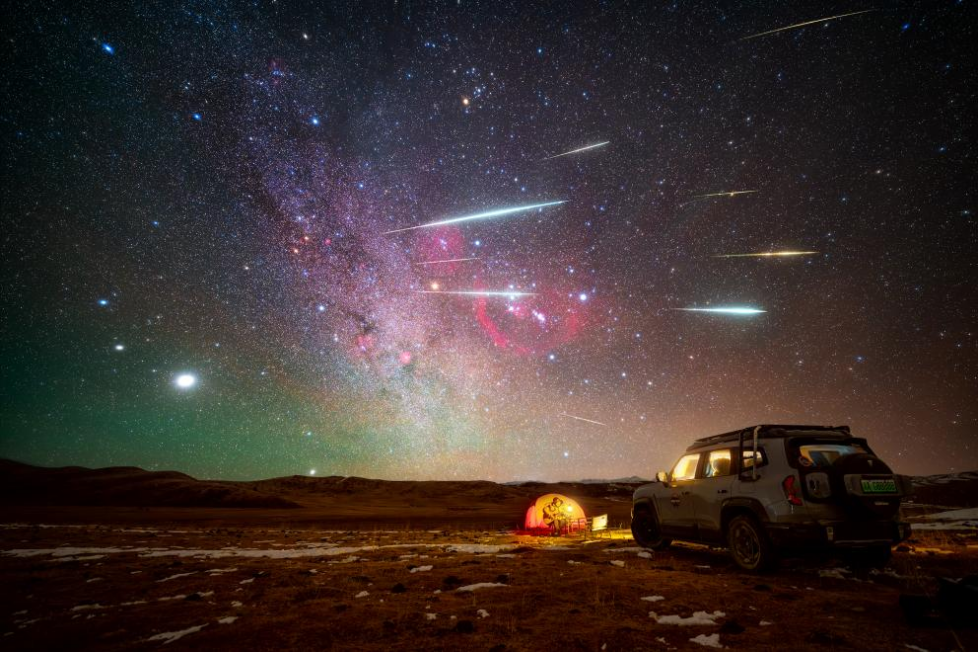
Zhou Shaoyang explained that although the final presentation of landscape astrophotography works appears polished, the creation process is extremely complex, with 90% of the difficulty concentrated in technical execution rather than aesthetic expression, creating a paradox of "low aesthetic barrier, high creative barrier." This is precisely the pain point Starry Field hopes to address — lowering the threshold for landscape astrophotography through portable smart devices.
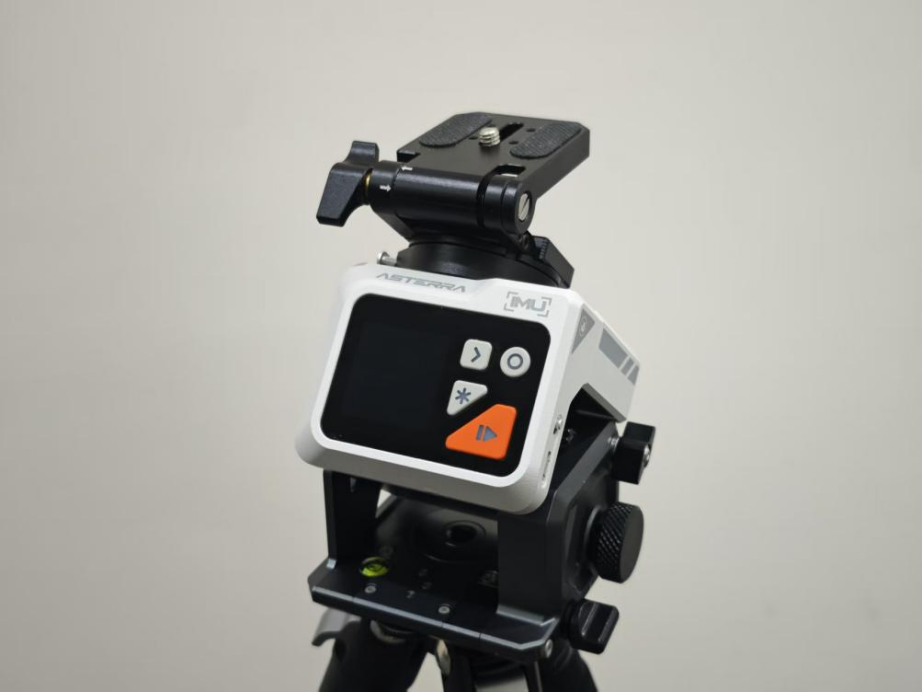
The team's first product, ASTERRA-Z, is a lightweight equatorial mount. In astrophotography, equatorial mounts are used to counteract Earth's rotation for long-exposure shooting. However, traditional equatorial mounts originate from astronomical observation needs, with large volume and heavy weight, making them unsuitable for mobile shooting.
The company's equatorial mount product launched at the end of 2024, and was upgraded to the Z Plus version in 2025, gaining widespread recognition in photography communities, especially among landscape astrophotography KOLs, with its main users being quasi-professional photographers.
While accumulating private-domain users with its first product, Starry Field is also developing its first landscape astrophotography robot camera. Zhou Shaoyang stated that even though ordinary users' phones already have star-shooting capabilities, they are still deterred by the need to additionally purchase and master equatorial mounts. Therefore, the future direction is to "leapfrog the equatorial mount" by embedding its functions into more accessible devices.
The new product adopts an entirely new multi-axis gimbal architecture, with a body size only slightly larger than the DJI Pocket 3 series. While maintaining portability, it achieves far greater motion capabilities than traditional gimbals. Beyond conventional stabilization functions, its unique compound motion system can simulate equatorial mount tracking logic, allowing users to complete star-tracking shots with one click — without complex equipment, professional calibration, or astrophotography experience.
For the first time, it lowers the landscape astrophotography capabilities that previously belonged to a small number of professional players to a threshold that ordinary photography users, even complete beginners, can easily enter, transforming landscape astrophotography creation from a "niche technique" into a mass-market imaging experience.
Centered on the special track of landscape astrophotography, the product also features designs more closely aligned with user needs. For example, traditional gimbals are not conducive to long exposures because their floating structures easily generate shake. The new device enhances static stability through unique mechanical design, ensuring clear long-exposure shots. In urban starry-sky shooting scenarios, because starlight and urban light pollution occupy similar wavelength bands, starlight is obscured. The new device expands users' practical shooting scenarios through special optical path design, capturing the Milky Way and starry skies even in cities.
The company is also developing software in parallel. The AI agent ASTRA Bot consists of two parts:
First, a creative recommendation system. Based on data such as location, time, weather, and moon phase, it proactively prompts users with "when, where, and what you can shoot" — for example, "Tonight at the seaside, the Milky Way may appear alongside the lighthouse" or "The fog at dawn is suitable for low-angle human silhouettes" — allowing users to continuously discover moments worth capturing in the real world. On this foundation, the system further provides automated shooting planning and parameter recommendations to help users actually complete their works.
Second, an image processing engine that fully automates the previously complex and specialized post-processing workflow of astrophotography. The system can complete complex processing such as stacking noise reduction, sky-ground stitching, color restoration, star enhancement, and panoramic stitching with one click on mobile, even supporting meteor shower compositing and automatic fusion of multiple materials — tasks that traditionally required computers and professional software.
The new product is expected to launch in October 2026, first through Kickstarter for overseas crowdfunding, while simultaneously building domestic sales channels. The ASTERRA-Z equatorial mount, currently sold only through domestic private channels, has strong word-of-mouth, with leading landscape astrophotographers widely adopting it as their primary equipment. The company has also begun engaging with overseas landscape astrophotography KOLs and vertical communities, laying groundwork for the new product's international marketing and testing.