A Cold Look at Tech Companies' Global "Voyages" | Linear Capital x Linkloud Event Recap

Going Global! To the US, Japan, and the Middle East

On December 8, Linear Capital co-hosted an offline "Linear AI Sharing Session" with SaaS/AI出海 community Linkloud in Shenzhen. The theme of this session was "Cold Reflections on Tech Companies' Global Voyages." We held in-depth discussions on topics including the impact of AI technology on enterprise growth, strategic focus for startups, the differentiated characteristics and challenges of regional markets, and practical experiences in global expansion — covering opportunities and challenges in the Japanese market, go-to-market strategies for the Middle East, and more.
Below is a written summary of the presentations from this event. Special thanks to SaaS/AI出海 community Linkloud for their support, and to our guest speakers: Ning Gao @ Linkloud, Can Zheng @ Linear Capital, and Bei Huang @ Hellotalk.
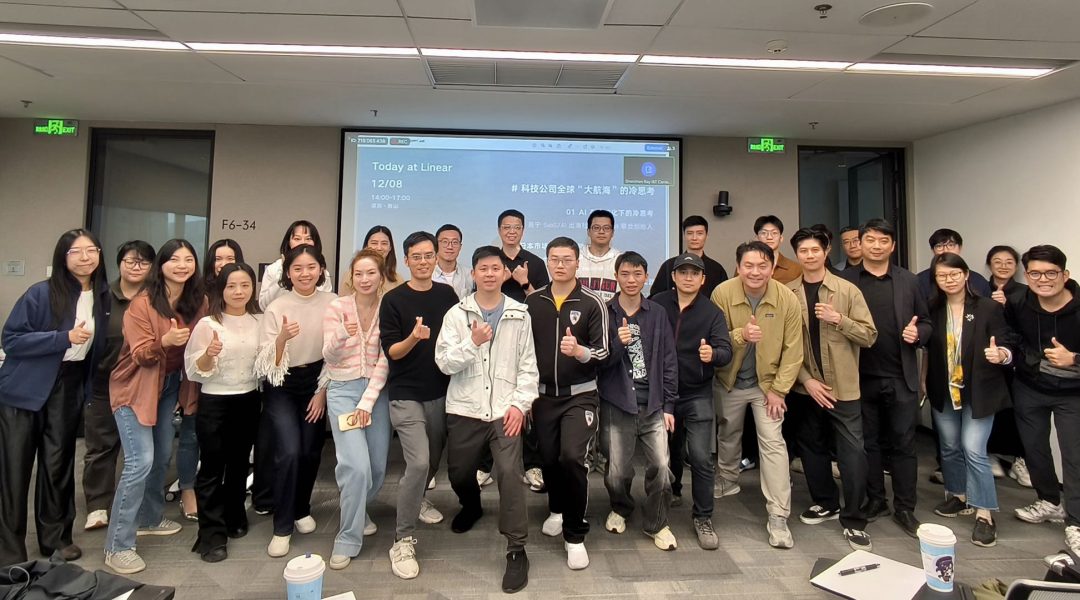 Photo | Group photo from the event
Table of Contents
👀 Reading Note: This article is lengthy; we recommend targeted reading based on key points
Part 01: Cold Reflections on AI in Globalization
- Market shifts and non-consensus views
- Palantir's AI strategy: Consulting — Co-creation — Productization
- What has AI changed?
- Focus is the startup's only weapon
- Small case studies in going global (and pitfalls encountered)
Part 02: Opportunities and Challenges in the Japanese Market
- Japan: A large market lagging in digitalization
- Shifts and opportunities in the Japanese market
- How to distribute and sell in Japan
- Challenges of going global in Japan
Part 03: Tech Companies' Practical Experience Going Global in the Middle East
- Overview of the Middle East market
- B2B go-to-market strategy for the Middle East
- Global opportunities in B2C markets
Part 01
Cold Reflections on AI in Globalization
Speaker: Ning Gao — Co-founder, SaaS/AI出海 Community Linkloud
1. Market Shifts and Non-Consensus Views
1) Decision-makers for enterprise software procurement are changing. "Mid-level" managers no longer hold as much decision-making power, so companies selling to mid-level or mid-market segments have had a "tough" year. They either need to become more PLG-driven in customer acquisition, or go directly after large enterprises and C-suite executives for better ROI.
2) AI's direct ROI improvement for GTM or sales remains unclear. Despite the emergence of many AI SDR startups, actual enterprise adoption still takes time. However, this hasn't stopped decision-makers from continuing to invest in AI.
3) After cost-cutting and efficiency improvements, most companies' cash flow and run rate have improved. Yet investors haven't become more optimistic about growth-stage investments, while founders themselves are starting to look more optimistic about the future.
2. Palantir's AI Strategy: Consulting — Co-creation — Productization
1) Consulting phase: Palantir launched AIP Boot Camp, an interactive workshop format primarily targeting C-suite executives and key decision-makers at traditional enterprises. Each Boot Camp lasts five days, covering AI capabilities, enterprise needs analysis, and demonstrations of Palantir's AI solutions. Over the past year, Palantir has held more than 1,000 Boot Camps, aiming to help users understand AI's potential and spark interest through light consulting.
2) Co-creation phase: Palantir deploys forward-stationed delivery engineer teams to client sites for deep research and co-creation, working closely with client teams on-site 2-3 weeks per month to study workflows, identify pain points (such as repetitive tasks and inefficient processes), and propose optimization solutions.
3) Productization phase: Teams rapidly develop prototypes based on customer feedback and industry pain points to validate solution feasibility and user acceptance. Based on industry demand, these gradually evolve into standardized productized solutions.
3. What Has AI Changed
1) Value Proposition: AI products' value propositions are shifting from traditional software sales models to outcome-based sales models. For example, 11x.ai, positioned as digital employees, completely abandons the concepts of software and SaaS, instead offering specific business roles directly. Users hire these digital employees rather than subscribing to traditional models — a shift that emphasizes actual business results rather than simply providing tools.
2) Pricing: AI products are gradually shifting from traditional subscription models to outcome-based pricing. The core of this model is charging based on actual results AI delivers — such as per-conversation fees, per-resolved customer service ticket fees, or per-generated qualified sales lead fees.
3) Go-to-market: AI products' go-to-market strategies are changing, with the focus on helping users clearly understand the product's actual value in the shortest possible time. Users have low tolerance for products; if expectations aren't quickly met, they may churn rapidly. More and more founders are communicating directly with users through social media, podcasts, or livestreams — approaches that can rapidly ignite product growth but also expose products to intense competition.
4. Focus Is the Startup's Only Weapon
1) Find your own "Product-Channel Fit." Finding the most suitable distribution channel is key to startup growth. In channel selection, avoid spreading resources thin; concentrate on one or two most effective channels for deep cultivation and optimization. For example: Jenni.ai focused on TikTok and Twitter as primary promotion channels, using influencers to create content posted on official accounts to algorithmically reach target user groups at low cost; Gamma founder Grant focused on LinkedIn, posting high-quality content daily with content planned two weeks in advance to precisely reach professional user groups.
2) Founders must personally lead product promotion. The founder's actions are a crucial way for users to understand the product, not only saving costs but also more accurately conveying brand value and improving promotion effectiveness. Beyond this, putting themselves in the public eye forces founders and their teams to directly face user feedback.
3) Maintain small-team operations and a ready-to-pivot mindset. Most companies achieving solid growth haven't significantly increased headcount. Small-team operations maintain flexibility and the courage to face transformation and deep cultivation. Jenni.ai founder David Park pivoted multiple times during his entrepreneurial journey, eventually focusing on the niche scenario of academic paper writing and achieving $10 million ARR. Despite this substantial revenue growth, team headcount is expected to increase only by single digits.
5. Small Case Studies in Going Global (and Pitfalls Encountered)
1) Find your Ideal Customer Profile (ICP): For startup teams, finding precise target users and clear scenarios is crucial — avoid the trap of overly diverse users leading to vague product positioning.
2) Define the problem & scenario: Precisely defining problems and scenarios is an important prerequisite for PMF (Product-Market Fit) validation. Vague scenarios lead to user confusion and churn. When user needs don't match product team assumptions, defining problems and scenarios becomes more complex than anticipated.
3) Communicate value, not features: The core message of a product should be "value" rather than "features." Users care more about the ultimate value a product brings them than specific functionalities.
4) Iteration ≈ subtraction: Product iteration is often about subtraction, not addition. "What not to do" matters more than "what to do." Clarifying priorities and focusing on core scenarios and users is the key strategy.
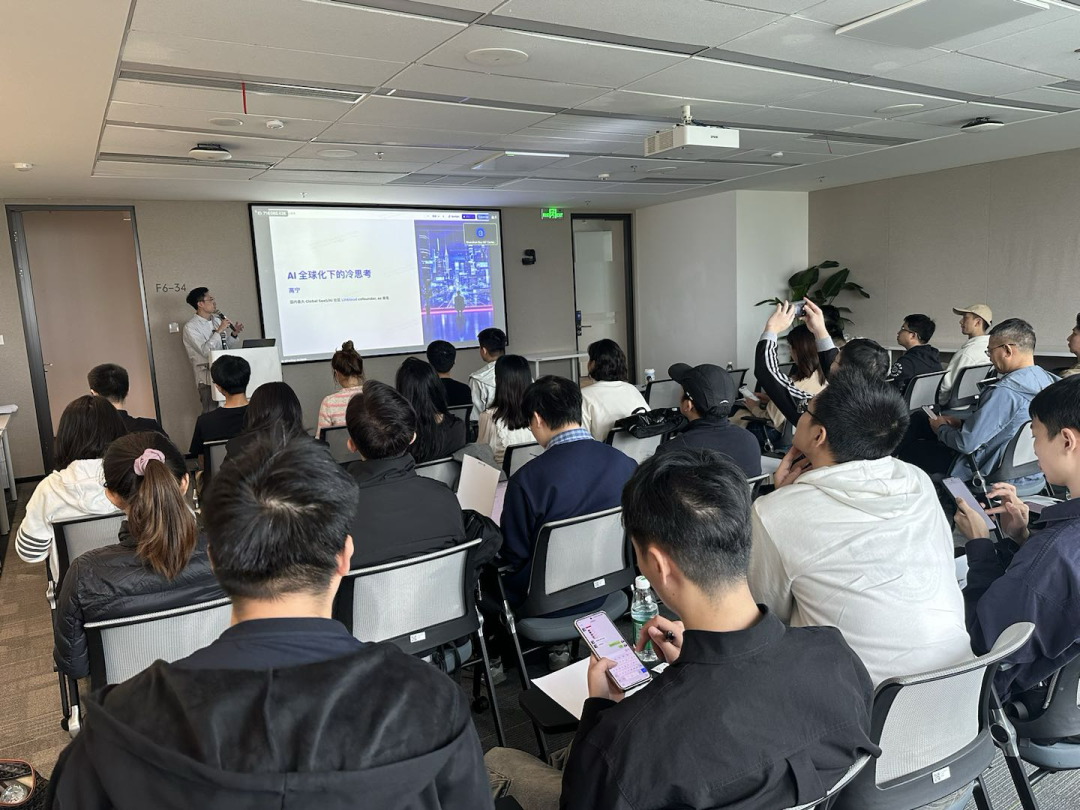 Photo | Ning Gao's presentation
Part 02
Opportunities and Challenges in the Japanese Market
Speaker: Can Zheng — Director, Linear Capital
1. Japan: A Large Market Lagging in Digitalization
1) Market size is comparable to China's, with 60% concentrated in Tokyo and the Kanto region. The market is highly concentrated; Tokyo and the Kanto region account for 45% of Japan's GDP.
2) Extremely backward digitalization, dependent on legacy information systems. Despite being a developed country, Japan's digitalization is severely lagging. Core processes in government and large enterprises still run on outdated information systems such as mainframes, COBOL, and embedded systems. The roots of this situation trace back to the 1970s-80s, when Japan's manufacturing industry experienced explosive growth. To support this growth, Japan built a very comprehensive information system. However, because this system was overly customized and closed, it lacked impetus for subsequent innovation and has been used continuously ever since.
3) Lacking IT talent, with no AI talent to speak of. Japan has approximately 1 million software engineers, compared to 7 million in China and 4 million in the US. When recruiting software engineers in Japan, there are on average 7 vacant positions per candidate — a severe IT talent shortage.
4) Startup investment as a share of GDP is far smaller than in China or the US. Startup investment in Japan accounts for only 0.05% of GDP, compared to 0.35% in both China and the US. That said, Japanese startup investment has grown 10x over the past decade, peaking in 2022, though overall development remains relatively slow.
2. Shifts and Opportunities in the Japanese Market
1) Severe aging population creating strong demand for digitalization. As Japan's aging problem intensifies, both government and enterprises are accelerating digitalization. In 2021, a Digital Agency was specifically established to promote related efforts, along with a 5-year startup support plan with total investment of approximately 1 trillion yen (about $7 billion) to further drive innovation and digitalization.
2) Tremendous attention on generative AI. The widespread Japanese attention to GenAI is closely tied to the "talent shortage" problem in the digitalization process — AI serves as a supplement and solution to traditional IT capability deficiencies.
3) SMEs comprise 97% of businesses, with strong willingness and ability to pay. In the SaaS market, companies primarily serving SMEs stand out; for example, top SaaS companies by revenue generally have annual revenues of 20-30 billion yen. Unlike China, Japan's SME market has supply falling short of demand with relatively little competition, forming a market with robust demand.
4) Shift toward SaaS/cloud services. Japanese SMEs are gradually moving from traditional customized solutions to SaaS and cloud services — a trend influenced by the US SaaS model and accelerated by the lack of IT talent to support on-premise deployments. Companies represented by Salesforce have achieved notable success in Japan's SaaS market.
3. How to Distribute and Sell in the Japanese Market
1) To Consumer: No need to build a ground team. Japanese customers want to see long-term commitment, but early-stage companies don't need on-the-ground teams.
2) To SMB: Best to have a local office. SaaS business can be done remotely and through channels.
3) Large Enterprise
- To serve large Japanese enterprises, you must have a local office in Japan, and channel partners are particularly important. Japanese customers have high trust requirements; in many cases, trust can only be established through channels.
- The early phase is very slow, with a 2-3 year cycle, often requiring custom development. First six months: BD (business development); second six months: begin POC (proof of concept); third six months: after POC success, internal champions help smooth relationships; fourth six months: begin full rollout. The upside is that revenue can start from the POC phase, but overall progress is very slow.
4) Hiring for local leadership: Sales-oriented, from consulting/IT services/banking. Hiring for local leadership is critical, especially when language isn't an advantage. The hiring focus leans toward sales talent, as the primary goal of the local office is sales. Sources include consulting firms (such as BCG, Bain, McKinsey), IT services companies (such as IBM, Accenture), or banks.
5) Sales channel development
- Building major sales channels is a slow process; industry upstream and downstream partners are also good options. Major channel partnerships progress slowly with high trust costs, typically requiring 2+ years. Beyond typical ISV (Independent Software Vendor) channels, companies can explore industry upstream and downstream partners — for example, customer service software automation AI could partner with e-commerce operation agencies.
- Japanese channels require strong support. Japanese channel culture emphasizes deep cooperation and long-term relationships; both parties need to make targeted investments to achieve high-quality products and services.
4. Challenges of Going Global in Japan
1) Going global is a CEO-level initiative; the competitor to overseas business is often domestic business. Enterprise globalization requires sustained investment, especially in the early phase and for a considerable period requiring resource balancing. Without a dedicated leader fully responsible throughout, overseas team needs may get delayed in scheduling or even ignored.
2) Single product ceiling isn't high. Taking Japan as an example, the ceiling for a single SaaS product is typically around 20 billion yen. Top Japanese SaaS companies usually adopt multi-product strategies, or jump from SMB to large enterprise markets.
3) Product form differs from domestic markets. Japanese SaaS product forms are closer to the US model, tending toward point solutions where each product addresses one specific problem, rather than the all-in-one platform products common in China. So product forms successful domestically may not apply in Japan; product redesign needs to be considered.
4) High localization requirements. Japanese users have extremely high demands for quality and localization. Successful companies going global in Japan often invest heavily in localization and quality control, even separating codebases to develop specifically for the Japanese market.
5) Procurement is a collective decision. In Japan, procurement decisions are typically not top-down; they require buy-in from multiple stakeholders. This increases BD (business development) difficulty while also placing higher demands on product usability, because end users need to participate in decisions and voice opinions.
5. Summary
1) A market where demand exceeds supply. Japan is a market where supply falls short of demand — very rare among global markets.
2) Quality-focused, with strong willingness to pay. Japanese customers place great emphasis on product quality; as long as quality is good, they are willing to pay for it.
3) Trust-focused, with high early-entry costs, emphasizing long-term cooperation. Japan's early market entry costs are high; customers strongly emphasize long-term cooperation, and trust is key to establishing partnerships.
4) Adjust expectations, accept "slow," pursue "long." Japan is a market where business gets easier over the long term. Early-stage high growth is unlikely, so before entering Japan, adjust expectations and accept relatively slower growth.
 Photo | Can Zheng's presentation
Part 03
Tech Companies' Practical Experience Going Global in the Middle East
Speaker: Bei Huang — CTO, Hellotalk / CTO, Laihuahua
1. Overview of the Middle East Market
1) Digital economy and internet industry: Middle East mobile broadband (4G/5G) users number approximately 64 million. 5G user penetration grew from 0.1% in 2019 to 20% in 2022, and is projected to reach 70% by 2025.
2) UAE startup market: Rapid overall value growth, with the internet industry showing explosive momentum. SMEs account for over 95% of all enterprises and 60%-70% of employment. Industry distribution focuses on: digital applications, gaming, web3.0, and audio/video (data source: Abu Dhabi Twofour54 community).
3) Saudi startup market: SMEs number as high as 890,000, with multiple ministries and VCs focused on e-commerce, gaming, fintech, and AI. Social, search, and communications services are dominated by international giants; local players focus mainly on local service and transaction-based applications (e-commerce, ride-hailing, delivery). In Q2 2022, Saudi SME numbers reached 890,000, accounting for 94% of total enterprises (compared to 570,000 in Q2 2020, a 56% increase in two years).
2. B2B Go-to-Market Strategy for the Middle East
1) Extreme polarization in the Middle East: The wealth gap in the Middle East is enormous. The truly wealthy hold tremendous decision-making power — even "one-man rule" in some cases. In early attempts at B2C products, promotion was difficult due to population base and infrastructure far lagging behind China. The B2B market is relatively easier; you only need to find the key decision-maker to advance projects, and payment processes are fairly straightforward.
2) Top-level design determines bottom-level implementation: The Middle East is a relationship-based society where trust is crucial. Middle Eastern clients typically prefer to establish cooperative relationships through referrals or introductions. Due to political and trust considerations, it's nearly impossible to conduct B2B business without a local company or on-the-ground personnel. Meanwhile, Middle Eastern clients are very cautious in early-stage decision-making, but once a decision is made, implementation moves very quickly.
3) International relations directly impact trade: International relations profoundly affect Middle East trade, even influencing specific commercial cooperation details. Personnel or policy changes due to political factors can directly impact the progress and success of business cooperation.
4) Seeing is believing: The Middle East market places great emphasis on "seeing is believing" — clients must actually see products to trust them. This requirement makes trade shows critical display windows; companies going global in the Middle East should pay close attention to major annual exhibition information.
5) Fast, fast, fast: Middle Eastern clients have short memory retention, especially after meeting at trade shows. Quick follow-up is needed to move into contract signing as soon as possible. Once clients leave the booth, subsequent contact becomes difficult. When communicating with Middle Eastern clients, seize brief in-person opportunities to rapidly nail down cooperation details and sign contracts. After contracts are signed, clients tend to be quite rule-abiding, but before signing, their sense of time is weak — lateness or no-shows may occur.
6) Unity is strength: Chinese companies going global in the Middle East need to leverage domestic resources and partner channels; try accessing major client resources through Chinese companies' Middle East channels.
3. Global Opportunities in B2C Markets
1) Global perspective: Global market language distribution shows English, Japanese, and Spanish dominating. China is not the center of the world, requiring companies going global to not only solve language issues but more importantly integrate into target market cultural circles.
2) Traditional customer acquisition methods revitalized: SEO, a classic traffic acquisition method, has gained new vitality driven by AI technology. AI has not only brought new keywords but also enabled full-process coverage from analysis to implementation through intelligent tools — such as automatically generating website structure and content — significantly improving efficiency.
3) Importance of short-video media: Short-video media is increasingly important, especially on platforms like TikTok. Duolingo achieved rapid fan growth to 13.5 million through TikTok's "unhinged" content operation strategy. This approach not only helped Duolingo召回大量长期用户 but also combined short-video educational attributes with entertainment, bringing new customer acquisition models and user retention methods for enterprises.
4) New customer acquisition methods: Emerging AI search engines are rapidly rising among IT and internet sector users, bringing significant traffic increments. Meanwhile, AI-driven full-process marketing models are gradually maturing — from user mining, analysis, placement to decision-making, AI's comprehensive involvement significantly improves efficiency. For example, using AI tools to generate website structure and content for rapid deployment and optimized customer acquisition efficiency has become a new model for companies going global.
5) New challenges:
- Laws and regulations are critical issues companies must face. Chinese companies need to comply simultaneously with local laws, overseas registration jurisdiction laws, and payment platform regulations. Some payment platform policies may restrict capital flows — for example, funds may become unwithdrawable in certain regions.
- Changes in competitive environment bring new pressures. AI-based small teams have emerged as new competitors. These teams typically have highly vertical market positioning and low-cost multilingual support, forming sharp contrast with Chinese companies' traditional conglomerate-style competition model.
- Cultural adaptation is another important challenge. Language is no longer the main obstacle; the real difficulty lies in how to integrate into target market cultural circles. Whether in Japan, the Middle East, or Western markets, successful companies going global need deep understanding and adaptation to local culture to achieve true market penetration.
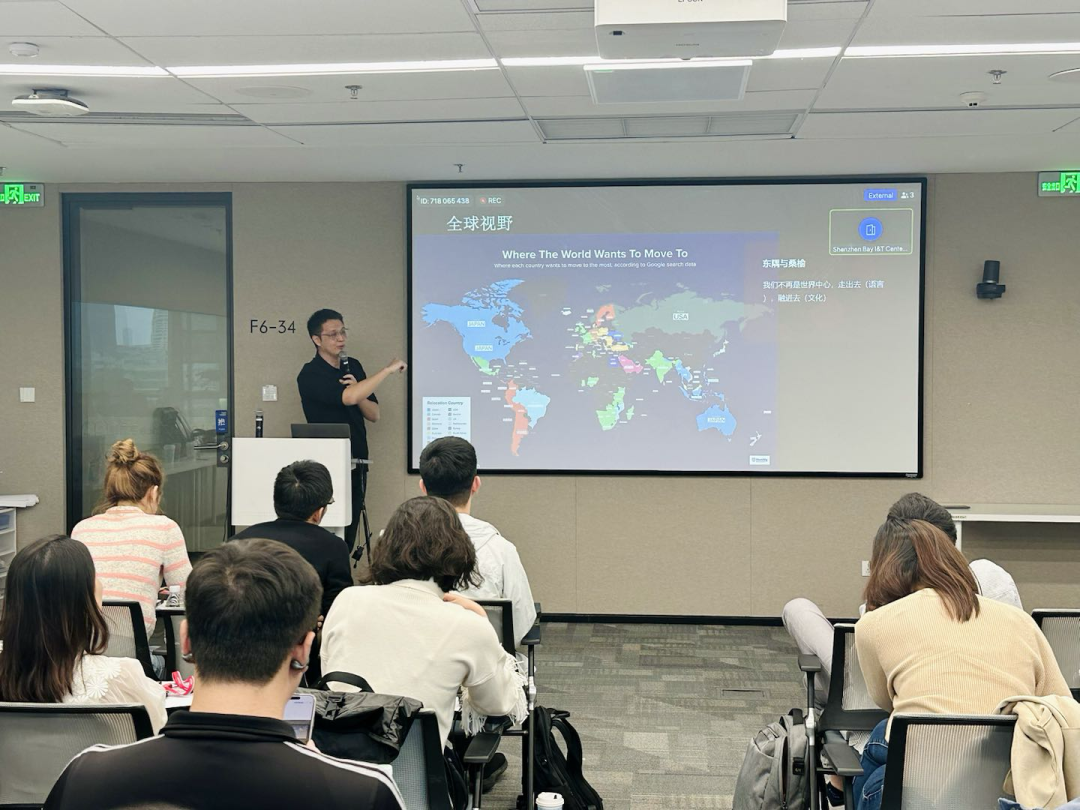 Photo | Bei Huang's presentation
📮 Tips
The above is the content from this Linear AI Sharing Session. We will continue to hold events on related themes; follow Linear Capital's WeChat official account for the latest event information.
About Linear Capital
Linear Capital is an early-stage investment institution focused on "frontier technology + industry" — that is, frontier technologies represented by data intelligence, digital new infrastructure, next-generation robotics technology, and new technological transformations in traditional fields (such as biomedicine, materials, energy, etc.), applied across vertical industries to substantially improve industrial efficiency, empower solutions to pain points, and complete industrial upgrading — achieving excess returns through substantial increases in industrial value. Currently managing ten funds with total AUM of approximately $2 billion.
Our investment stage focuses primarily on leading angel to Series A rounds, with individual investments ranging from $1 million to $10 million (or RMB equivalent). To date, we have made early-stage investments in over 120 startup teams including Horizon Robotics, Kujiale, Sensors Data, Tezign, Rokid, Guandata, Agile Robots, and others. The combined valuation of Linear Capital's portfolio companies is approximately $20 billion.
In the near term, Linear Capital is working to become the best "Data Intelligence Technology Fund," and in the long term, gradually build itself into the most influential "Frontier Technology Application Fund."