Meshy Closes Nearly $400 Million Funding Round, Expanding From AI 3D to AI for Fun

A system capable of producing content sustainably


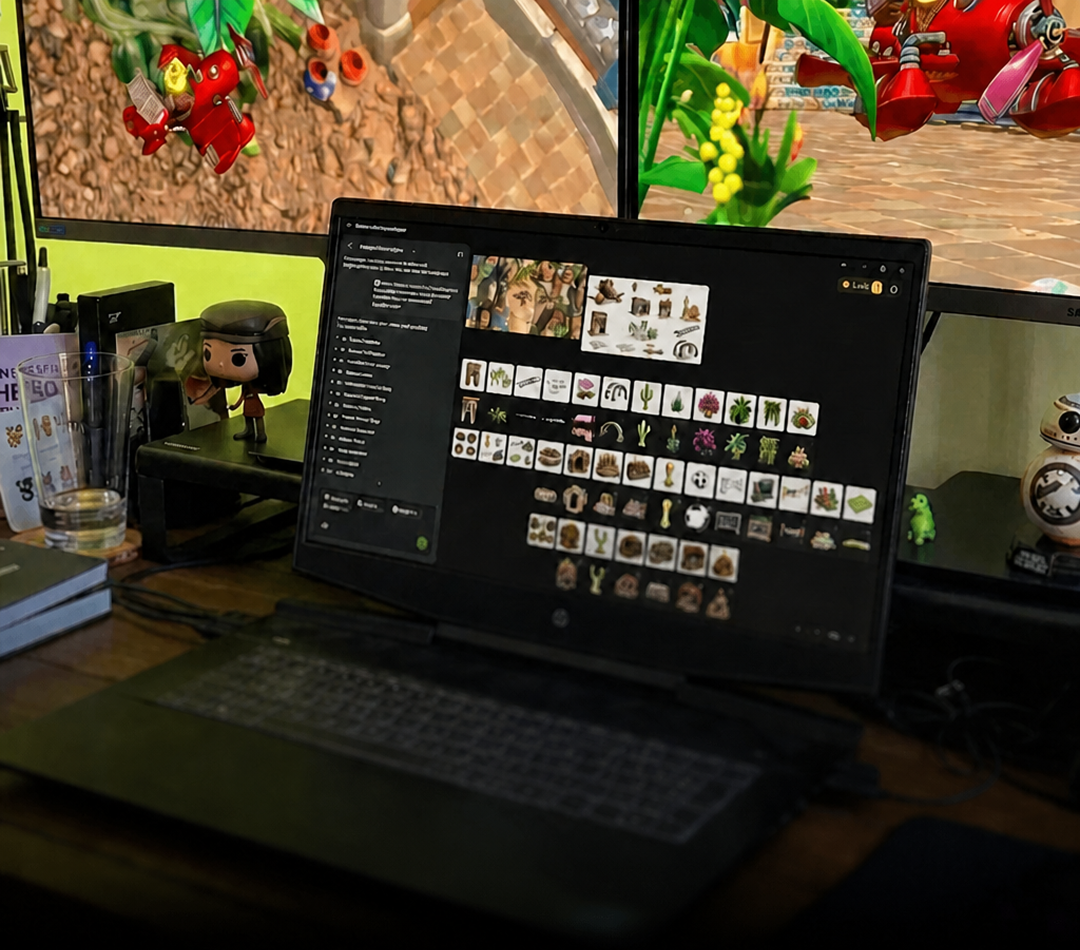
Recently, AI 3D company Meshy announced the completion of a nearly $400 million Series B round, lifting its post-money valuation above 10 billion RMB.
Xi Cao was among Meshy's earliest investors. While at Sequoia, he backed Ethan Yuanming Hu's Meshy at the seed stage and continued to participate in subsequent rounds; after founding Monolith, he doubled down again in the last round.
According to the company, this represents the largest single funding round in the AI 3D space to date. The capital will be directed primarily toward multimodal model R&D and global market expansion.
What Meshy does isn't hard to grasp.
A user types a sentence or uploads an image, and within minutes receives an editable 3D model that can be rotated, modified, textured, and animated — then imported into a game engine or sent straight to a 3D printer.
Previously, this kind of work required professional modelers using software like Blender or Maya, often taking days or even weeks. Meshy aims to compress the entire process into minutes and bring costs down to levels accessible to everyday creators.
Meshy has already turned AI 3D into a business with meaningful revenue.
The company disclosed that registered users have surpassed 12 million, with over 100 million models generated cumulatively. ARR grew 12x over the past year, and monthly growth of 20–30% was sustained for much of the prior two years.
Who's Paying Meshy
Historically, 3D modeling software monetized primarily around professional users and enterprise clients. Gaming, film, and industrial design companies had clear production needs and the budgets to cover software licensing and specialized teams.
It would seem AI 3D would start as an enterprise play.
The answer diverges from what many might expect.
Currently, Meshy has established a relatively stable paid base among individual creators, with demand concentrated in scenarios like 3D printing and game development.
We spoke with an overseas consumer who spent $2,000 on a 3D printer.
The printer can fabricate any shape, yet he himself can't model. This is the paradox many 3D printer owners face — the hardware can produce objects of rich form, but content depends on pre-existing digital models.
Previously, they mostly downloaded phone stands, storage boxes, and toys from model repositories, with little ability to create truly personalized, one-of-a-kind items.
Now, this user subscribes to Meshy for roughly $20 per month. He uploads photos of his pets, family portraits, or his children's drawings, generates corresponding 3D models, and prints them into physical objects.
"You can not only print any model with a 3D printer, but also generate digital models from any image."
Gaming is another core market.
The company initially assumed AI 3D's primary value would be reducing modeling costs for major game studios — characters, weapons, architecture, and environments all require substantial art production, much of it standardized and repetitive work.
After launch, Meshy discovered that indie game studios have equally strong demand. These teams typically number just a few people. Some can code, some understand game design, but few can afford a full art team. Complex model outsourcing can run into the hundreds or even thousands of dollars, easily inflating a 3D game's budget.
"Meshy generates models in two minutes. For prototype development and some routine asset production, it's already sufficient," noted a user from the gaming industry.
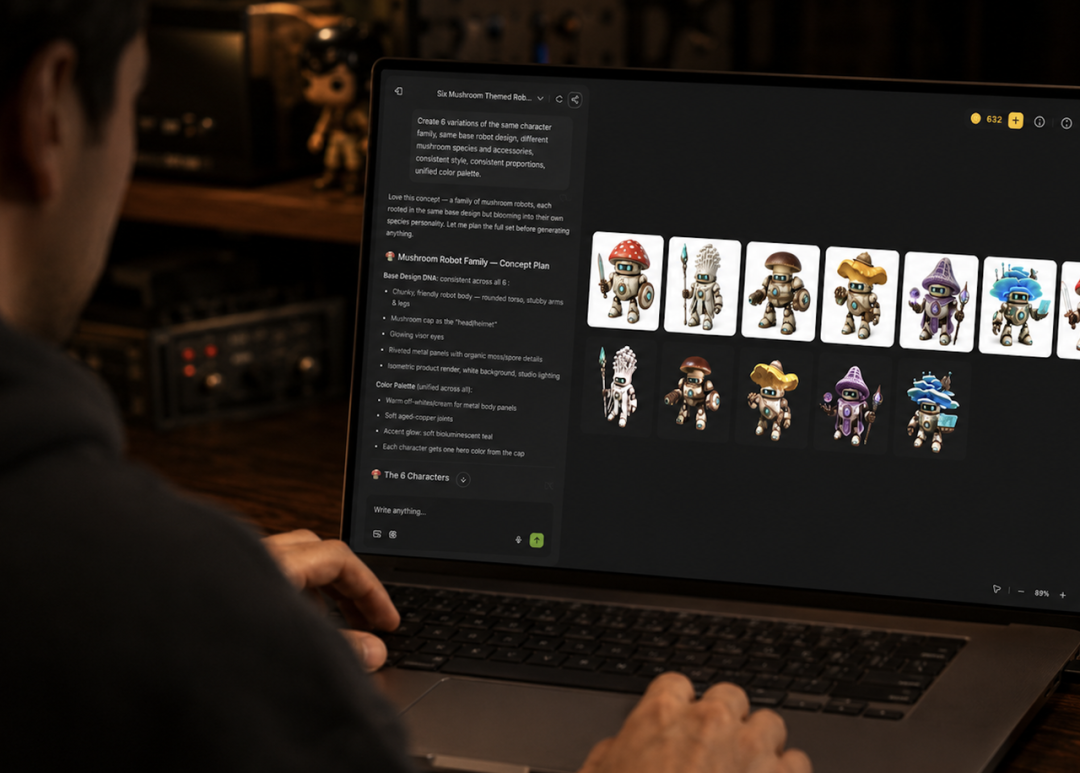
A user generating a set of same-style game props in one go with Meshy
For teams previously constrained by art costs, this isn't merely an efficiency gain — it means they can attempt 3D projects that were previously out of reach. Once AI lowers the production threshold, they gain the ability to complete full 3D projects for the first time.
This represents the most significant shift in Meshy's current commercialization.
For large studios, it's a productivity tool. For small teams, it supplies production capacity they previously couldn't afford.
Meshy has already built a global user base, serving both enterprises across gaming, film, technology, and 3D printing, as well as individual creators from various countries and regions.
One or Two More Model Generations
Post-funding, Meshy's most certain priority remains improving 3D model quality.
For casual users, a model that looks sufficiently realistic may suffice. But to truly enter professional production pipelines for games and film, the evaluation criteria become far more complex: Is the geometry accurate? Can components be separated? Is the topology clean? Is the polygon count reasonable? Are the textures clear? How easily can it be modified later — every detail affects whether the model is production-ready.
The challenge of 3D generation isn't just making models look realistic; it's making them geometrically valid.
Many current 3D generation methods still rely on a traditional pipeline at their core: converting meshes into distance fields, then re-extracting surfaces. In this process, thin plates may thicken, sharp edges may soften, and open surfaces, interior cavities, and complex topology may be lost.
These issues may not be visible in preview renders, but once a model needs to be separated, edited, animated, or 3D-printed, they directly determine whether it's usable.
Meshy is also working to address these problems at the representation level.
Its co-developed Faithful Contouring was selected as a CVPR 2026 Oral. Unlike traditional methods that convert meshes to distance fields before re-extraction, this work attempts to encode triangular meshes directly as sparse 3D tokens.
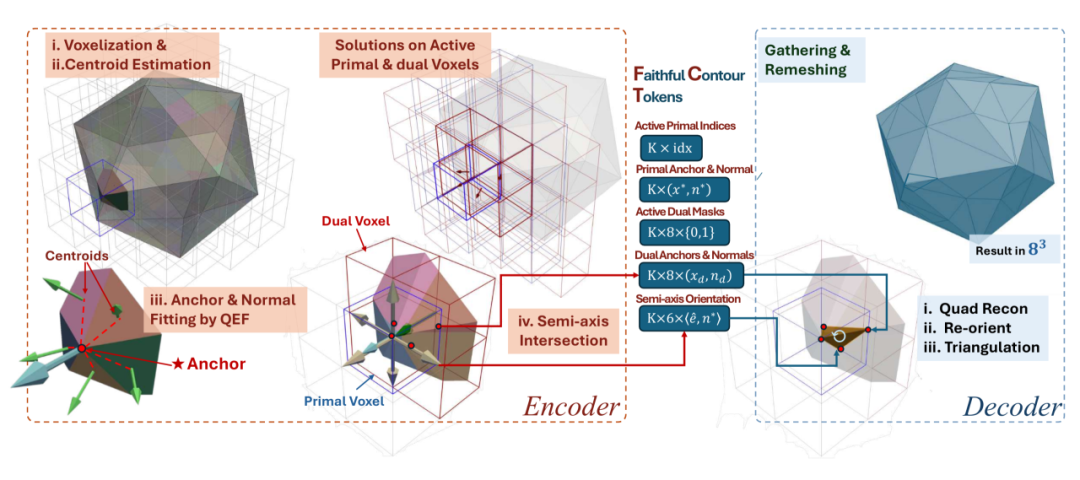
Faithful Contouring encodes local geometry and connectivity of triangular meshes into sparse 3D tokens, reconstructing the mesh through neighboring tokens.
The significance is that open surfaces, internal structures, and sharp edges in models can be preserved more completely, facilitating subsequent editing, separation, and assembly.
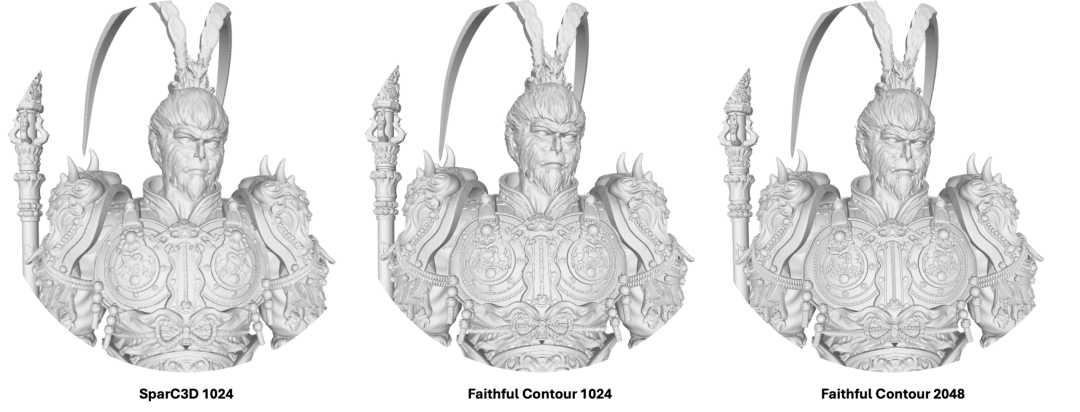
Faithful Contouring preserves more model details at higher resolutions.
On a single H100, this method completes 1024³ resolution mesh encoding/decoding in approximately 1.4 seconds, and 2048³ resolution in about 4.7 seconds. For Meshy, such foundational capabilities are the basis for 3D generation to achieve both high quality and real-time performance.
As models continue iterating, the gap between AI-generated assets and professional production pipelines is narrowing. Relatively standardized assets — common props, small scene objects, low-poly characters, and game prototypes — may be the first to adopt new production methods.
When we spoke with company insiders, a common refrain emerged:
"Probably one or two more model generations, and it'll reach human modeler level."
This doesn't mean senior artists will be directly replaced. Aesthetic judgment, stylistic design, and final quality control will still require professionals. But the workflow for large volumes of base assets may shift: artists will no longer build every model from scratch, but increasingly select, modify, and refine AI-generated outputs.
At that point, Meshy can already become a substantial AI tools company.
From Generating Assets to Producing Gameplay
Meshy calls its current phase AI for 3D; the next phase is AI for Fun.
Today's Meshy generates characters, weapons, and buildings. Tomorrow, it wants these assets to compose a persistent, interactive world that responds to users in real time.
To this end, the company has assembled a small AI game team and produced Black Box: Infinite Construction. Players freely combine different items, and the AI generates new weapons and attack effects in real time based on the combinations.
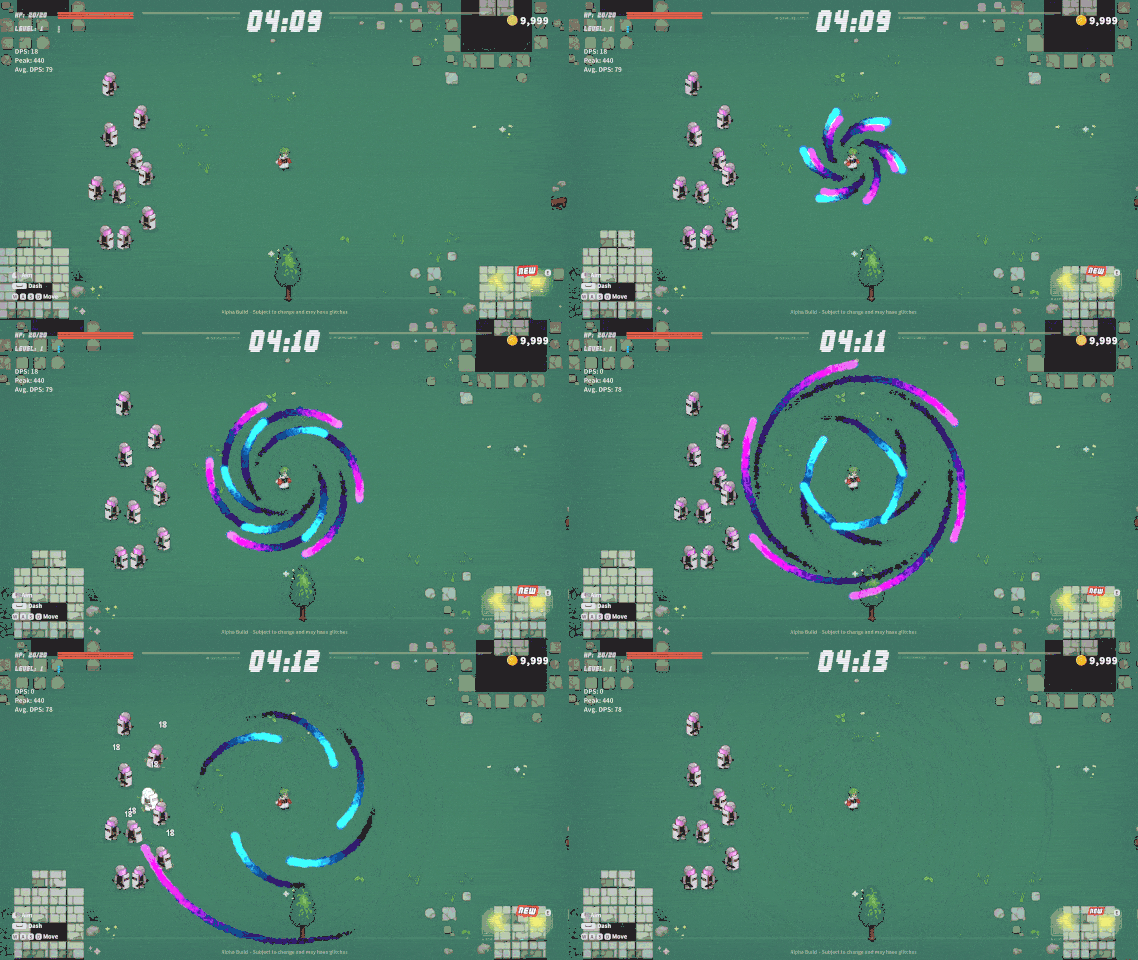
For Meshy, this game is first and foremost an experiment: when AI truly enters gaming, can it enable gameplay impossible through traditional production methods?
"We're making AI games not following the logic of making a traditional game and selling it for profit," Ethan Yuanming Hu has said. "We need to explore what new gameplay actually exists in the AI gaming era."
In Meshy's vision, future systems split into two parts.
One is the asset engine, responsible for generating characters, environments, materials, and visuals. The other is the content engine, responsible for story, rules, gameplay, and character behavior — determining how this world evolves next.
Rather than defining grand concepts like world models, Hu cares more about a specific question: how can AI-generated content run in real time and actually be fun.
Hu's early work on Taichi focused on high-performance graphics computing and GPU infrastructure. Today, that accumulated expertise has found its way back into Meshy's roadmap. Real-time interaction demands lower latency, higher throughput, and costs compressed to levels affordable on ordinary devices.
He wrote in an article:
"AGI pursues intelligence and science; Meshy pursues experience and art."
Moonshot AI's recent K3 release included demos of generated 3D open worlds, which excited Hu:
"Imagine, if such coding capabilities were used to drive a 3D world, and a new graphics pipeline upgraded that world's visual quality straight to AAA production values — what would happen?"
In the future, models could interpret user input during runtime and continue generating scenes, character behaviors, and narrative directions. What creators deliver may no longer be merely pre-made content, but systems capable of continuously producing content.
Games will no longer end on the day they ship. As a player, every time you enter anew, the content can keep unfolding.
Will you find that game more fun then?