OriginFlow's Shentao Qin: Restrained Desires Reveal Deeper Truths

At 25, He Wants to Turn the Human Body Into the Biggest Data Source for Robots


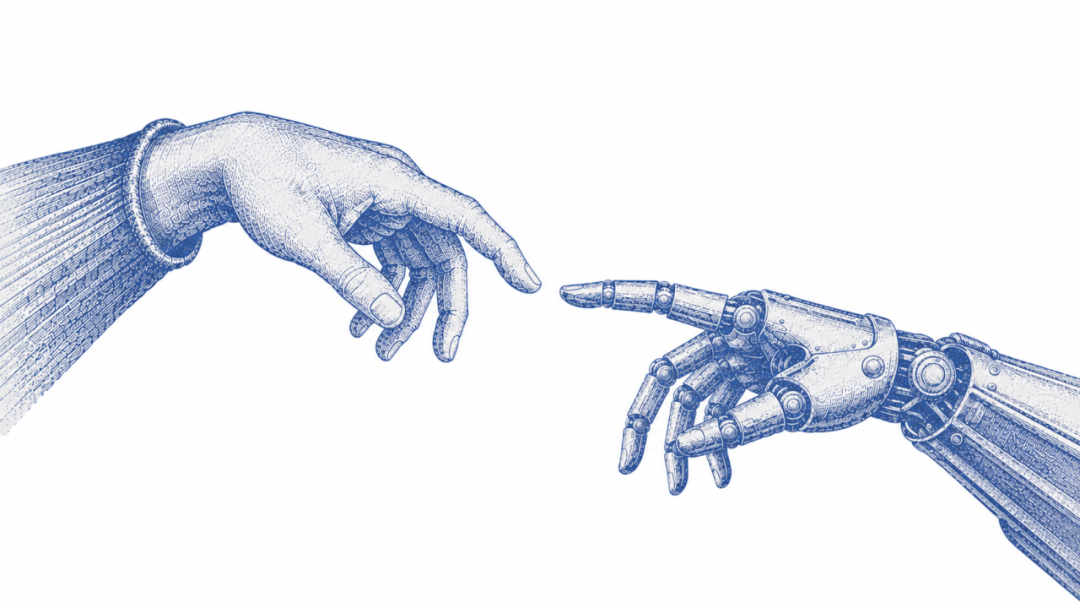
Over the past two years, most of the money in embodied intelligence has flowed into robot hardware: humanoids, quadrupeds, dexterous hands, robotic arms. Robots increasingly look human, capable of walking, jumping, grasping — their movements in videos ever more fluid. But the moment they actually enter factories, homes, and service environments, problems surface quickly: what robots lack isn't just a body; they need to learn how humans use theirs.
How a person picks up a cup, unscrews a bottle cap, judges the right amount of force, adjusts in the split second their hand slips, completes a task without sight. These experiences are so natural to humans they almost never get recorded. But for machines, they're precisely the scarcest data.
Large language models consumed decades of text accumulated across the internet; image and video models devoured massive visual datasets. In the physical world, robots need a different kind of corpus: the actions, forces, intentions, and feedback left behind when people interact with the real world.
OriginFlow wants to be the gateway to that corpus.
The company has been around for less than a year, yet its team already exceeds a hundred people, having completed several funding rounds — with Monolith leading one of them.
Its founder, Shentao Qin, turned twenty-five this May. He's still pursuing his PhD at Tsinghua University. Qin is an outlier not hard to spot, but he carries a contradictions not easily read at first glance. Born in Jincheng, Shanxi, to an engineer father, he was a heavy gamer from childhood, spending over six hours daily in games before age twelve. At eighteen, he felt life was meaningless and wanted to "delete his account and quit the game" — only to rebuild the foundation of his existence through reading the I Ching, Tao Te Ching, and Zhuangzi, and watching The Legend of 1900. His WeChat handle reads "Those with few desires are close to heaven's secrets," yet Xi Cao says he possesses an extraordinarily intense desire to win — perhaps among the most extreme 1% of entrepreneurs he's ever met.
With these curiosities in mind, Monolith sat down with Qin for an in-depth conversation, seeking to understand this young man who keeps throwing himself into harder dungeons.

Before the conversation, we first stepped into OriginFlow's Haidian office to feel how this startup actually operates.
It doesn't look like a company founded less than a year ago. The office has many people who appear twenty or thirty years Qin's senior. The pace is tight: on one side, someone wears equipment doing data collection, repeating seemingly everyday hand movements; on another, R&D staff huddle around signal curves on a screen in discussion; the corridor displays various robotic hands, arms, and robot terminals.
What stops you in your tracks is an employee with a physical disability operating a dexterous hand.
He moves his own hand, and the mechanical hand replicates the corresponding motion. Human intention emerges from the body, captured by a wrist-worn bracelet, then decoded by a model and mapped onto a machine body.
In that moment, the phrase "growing a new organ on a person" suddenly lands on solid ground.
OriginFlow's current most important product form is a self-developed neural myoelectric bracelet — it collects sEMG (surface electromyography), surface neuromuscular electrical signals. Simply put, when a person wants to move, the brain first sends neural signals, which travel to muscles, which recruit and contract, then drive bones and hand movement.
Today most robots learn from humans through cameras. But cameras see the final movement; what OriginFlow wants to read is an earlier layer: the intention of exertion that already appears in the body before the action occurs.
Qin gave us an example: a person lifts a half-full cup, fingers needing to apply sufficient pressure. Too little force, the cup slips; too much, the cup deforms.
Humans complete this action naturally because we've accumulated bodily experience about weight, friction, contact, and feedback since childhood. But robots lack this experience. Cameras can see finger position changes, see the cup being lifted, yet struggle to reconstruct exactly how much force was applied at that moment.
Thus, OriginFlow chooses to take signals from further upstream in the body. The bracelet, worn on the wrist, collects weak electrical signals generated by muscle activity, then uses a model to infer action and force intention. Such signals may precede the final movement by roughly 50 milliseconds — meaning a machine could potentially perceive human movement intention ahead of time for the first time, rather than passively recognizing it after the fact.
But the difficulty lies here too: the closer to the source, the more authentic the signal — and the greater the noise. Myoelectric signals are weak, complex, and highly individual. It's somewhat like reconstructing a clear photo from a blurry one — though human hand movement is complex, joints are highly coordinated; with sufficient signals and a strong enough system, there's opportunity to extract the useful parts.
Internally, OriginFlow calls this the Human Tokenizer. Large language models need tokenizers to slice language into tokens; in the physical world, robots similarly need tokens, except these come from the human body: movements, forces, intentions, contact, and feedback. What OriginFlow wants to build is this tokenizer for the physical world.
The bracelet is only the entry point; sEMG is the current path. The true goal is to make interaction data in the physical world capable of scaling up.
Qin once offered a larger analogy for this: Steve Jobs gave humanity an external organ — you have to grip the phone in your hand, an additional, compromised organ. What he wants to do is grow a truly new organ on a person — one that doesn't require holding, that simply grows on you, capable of reading your intentions, your forces, every instant of your contact with the world.
The ultimate vision in this direction: devices given away for free, foundation models on subscription, eight billion people globally always on, bodies constantly producing data, feeding back into a trillion-parameter neural foundation model. Eventually, human-machine interaction becomes as frictionless as machine-to-machine — no panels, no buttons, no dialog boxes.

This startup's vision is vast, but its execution begins with the most "dumb" work.
OriginFlow found its reference frame in autonomous driving. Tesla once made work a mechanism called Shadow Mode — cars drive on the road, human drivers operate normally, the system continuously records in the background without disturbing people, yet brings back real data in an endless stream. OriginFlow wants to do something similar in embodied intelligence.
How a cleaning worker wipes a table, how a skilled worker tightens a screw, how a chef handles ingredients — these actions happen every day, yet have barely been effectively recorded. Today most robot companies' data still comes from labs, teleoperation, or expensive specialized equipment: too costly, too scarce, too distant from real scenarios.
In discussions with one global ultra-large manufacturing client, a typical pain point was repeatedly raised: when switching product models, insufficient flexible manufacturing capability could halt production lines for two to three months, with losses reaching hundreds of millions. What OriginFlow is doing is, without interrupting normal production, converting skilled workers' experience into data that machines can learn from.
The real difficulty here is that collection cannot interfere with people. No one changes how they tighten a screw or wipe a table just because they're wearing a watch — the bracelet matters precisely because it's a non-invasive device. OriginFlow's bracelet weighs approximately 55 grams, with 8-hour battery life, and will become lighter and more natural in the future.
For a company founded less than a year ago, this progress means it has already begun moving from a large technical belief toward a closed loop that industrial clients can validate — front-end collection of real human movements and neuromuscular signals, into model training, then into robot control, ultimately entering industrial or home scenarios.
Qin has high expectations for commercialization. He hopes to secure one truly effective validation in industrial scenarios this year, and to see revenue rapidly catch up to or exceed the early slope of a star AI company like Surge AI.
But he immediately added that short-term revenue itself has no value. Some seemingly large orders would actually divert team energy — better not to take them, "leave it to time." For him, revenue is proof that this system can enter real scenarios and form a data closed loop. The money raised shouldn't lie idle as wealth management. "If investors wanted to buy wealth management products, why wouldn't they just do it themselves in secondary markets? I must turn every penny into part of a steep slope."

OriginFlow is a company founded just over half a year ago. Its founder, Shentao Qin, was born in 2001, turned twenty-five this May, and hasn't yet finished his PhD.
Xi Cao says he observed an intense impulse to win in Qin quite early. Among the many entrepreneurs he's met, this desire to win ranks near the top, approaching an extreme state.
Qin says this drive came from gaming as a child. Before twelve, he was a heavy gamer, preferring to win through skill rather than spending money. He especially loved losing battles — winning matches the ELO system wanted you to lose, that rush was addictive.
He later summarized it: Don't humiliate opponents when winning, don't give up when losing. If teammates want to win and you don't have this mentality, you might as well play casual matches. Applied to entrepreneurship: don't sit at the table if you haven't thought it through. But once you're in, you can only go big.
Qin is from Jincheng, Shanxi. His father, an engineer, once took first place in technical skills at a factory of over ten thousand people, had been to Russia, and told him when he was six or seven: If someone has done something before, you should be able to do it; if no one has ever done it, you should be the first.
He early on saw life itself as a more complex game. In eighth grade, a homeroom teacher called him over, saying he had good talent; if he wanted to walk from the Taihang Mountains into a larger world, he needed to learn to solo — to do things those around him wouldn't do for a long time.
But at that time he was still deep in gaming. Six hours on school days, over ten on holidays, completely immersed. Until someone told him, "You want to win so badly, why not play 'World Online'? The real world is the hardest game." That sentence struck him.
Not long after, he decided to quit gaming. The first week of withdrawal, his whole body itched. But thinking that the real world was also a game, he simply couldn't accept being an NPC — following rules by rote, knowing all the answers, seeking local optima. He would treat the real world as his main quest.
After quitting games, things weren't smooth sailing either; life is just problems stacked on problems. In his final year of high school, he hit his first extreme confusion — suddenly feeling his life game was "pointless," wanting to "delete his account." His father said little, only renting him a place for a few hundred yuan a month outside, letting him think alone.
During that year living alone, three things reshaped the foundation of Qin's life.
First, reading books like the I Ching, Tao Te Ching, and Zhuangzi. Qin says reading these books felt like glimpsing the operating principles of this world — putting change, constraints, choices, and consequences into the same system to view. The essence of Yi is change, is deduction. Much of the content he forgot after reading, but it internalized into the algorithm of his life.
Second, The Legend of 1900. In the film, the pianist never walks off that ship. When asked why he doesn't go ashore, he says, the keys on land are infinite; infinite keys make no music, that's God's piano. After watching, Qin wept, suddenly feeling he didn't need an infinite keyboard to play something good — because within finite conditions already lay infinite possibilities.
Third, an early interview with Elon Musk — nearly bankrupt, belittled by elders, breaking down in public, yet saying, I must do this, unless I completely lose my ability to act. This interview showed him the best life state he wanted to pursue — being questioned itself is a gift, because it means you stand where there's massive room for growth.
These three things kept a young man who wanted to "delete his account" in the game.
What truly pushed him toward OriginFlow later was a cognitive shift during his PhD at Tsinghua.
He originally worked on autonomous driving at Tsinghua, proceeding along the academic path. But the more he looked into industry, the more he felt real-world problems were more complex than theory presented. Around 2023, the scaling law hit him hard: when one type of data becomes sufficiently abundant, models begin distinguishing signal from noise themselves. At that moment he realized that neuromuscular signals, previously considered difficult to generalize, hard to clean, and noisy, might also grow new capabilities at sufficient scale.
This became one of OriginFlow's most critical starting points.
From then on, he chose a dumber, slower path: collecting dirty, tiring, repetitive, non-standard data from the real world; processing noisy neural signals; doing the underlying work that may not look good short-term but might truly determine the industry's ceiling.
Xi Cao mentioned a quote from Hou Hsiao-hsien: "Creation truly begins only when you turn your back to the audience." In fact, building companies and making investments are the same — turning your back to LPs, to peers and media, facing the world directly is where power lies.

Since starting his company, the question Qin gets asked most is: how does a twenty-five-year-old get people far more senior to follow him?
Many on the team are ten to twenty years older, some even older than his father.
Qin initially thought people came to OriginFlow because the work was interesting enough. Many already didn't lack ordinary jobs; what they lacked was a hard problem worth reinvesting in. Later he discovered it was more than that — some people ten to twenty years his senior seemed reignited through this process, staying up late again, arguing, getting excited, having a vitality they last felt at twenty.
OriginFlow's organizational style is also direct. Qin calls it "extreme top down," compressing the very top and very bottom to the same layer. His explanation is simple: if a judgment is correct, it should be executed immediately, not consumed by hierarchy and process.
In startups, experience has value but cannot become authority. In technical discussions here, Qin only recognizes data, research capability, and real problems. The company puts eighty percent of R&D resources into an internal department called OriginBrain, which also has a Neuro Science team specifically to touch those most fundamental, hardest-to-define problems.
OriginFlow knows exactly who it's looking for: 1% of people are geeks, and 1% of geeks are crazy. This is who they want. This person could be a scientist, engineer, product talent, or a builder who can construct systems from 0 to 1; not necessarily the most polished resume, but must have a strong sense of questioning about the world, nearly偏执 judgment about technology, and the ability to endure uncertainty and pain long-term.
What happens when such a group gathers? Qin used one word: Rockflow. Magma flowing underground — high temperature, high pressure, but alive. Not chaotic, not performative striving, but a long-sustained flow with temperature and pressure.
This may also be the temperament OriginFlow truly wants. Today it's still hard to judge where it will go, but the company already has a rare look for an early-stage startup: the problem is large enough, the path hard enough, the founder restless enough, and the team doesn't look like a temporarily assembled crew.
Many years ago, in winter in Harbin, Qin often walked alone on the road from Harbin Institute of Technology to the technology park. It was a place near the far north, the sky bitter cold, snow thick, almost no one on the road. He later recalled those deep nights, walking while thinking much about life, choices, and the future.
He didn't yet know what kind of company he would later found, or that over a hundred people would follow him to do something without an answer. He only vaguely sensed that the real world held harder dungeons, larger systems, vaster horizons, waiting for him to walk into.
Now, he's entered the highest-difficulty dungeon. But in the snow, what remains are no longer only his own footprints.

Welcome to share your thoughts after reading this article, or any observations and reflections, in the comments. By 24:00 on June 11, we will select five high-quality comments based on comment quality and likes, and send out special Monolith commemorative gifts.