"Micro-Nano Starry Sky" Debuts at Shanghai Commercial Aerospace Conference: The "Underwater Anchor Tenant" That Raised 1.56 Billion Yuan in a Year | Xinxing PORTFOLIO

A leading domestic high-end satellite manufacturer.

In March, portfolio company Micro-nano Starry Sky made its debut at the inaugural Shanghai Commercial Aerospace Conference and Exhibition. The National Space Administration, top Shanghai municipal officials, and several renowned academicians from the aerospace sector were all in attendance. With its independently controllable high-performance satellite core technology, scaled batch production capabilities, and multi-scenario application solutions, Micro-nano Starry Sky showcased the hardcore strength of China's private satellite manufacturing enterprises to the entire industry, becoming a central focal point for understanding the future of the space economy and building industrial collaboration ecosystems.
In late 2025, Micro-nano Starry Sky announced it had raised RMB 1.56 billion in equity financing for the full year, with proceeds earmarked primarily for R&D investment and capacity expansion, strengthening independent controllability, and taking on more national and commercial missions. The company completed IPO guidance filing with the Beijing Securities Regulatory Bureau in September 2025, with its review status updated to "under review" by January 2026. Micro-nano Starry Sky is among the earliest commercial aerospace enterprises in China focused on complete satellite manufacturing and is now a leading player in the domestic high-end satellite manufacturing space.
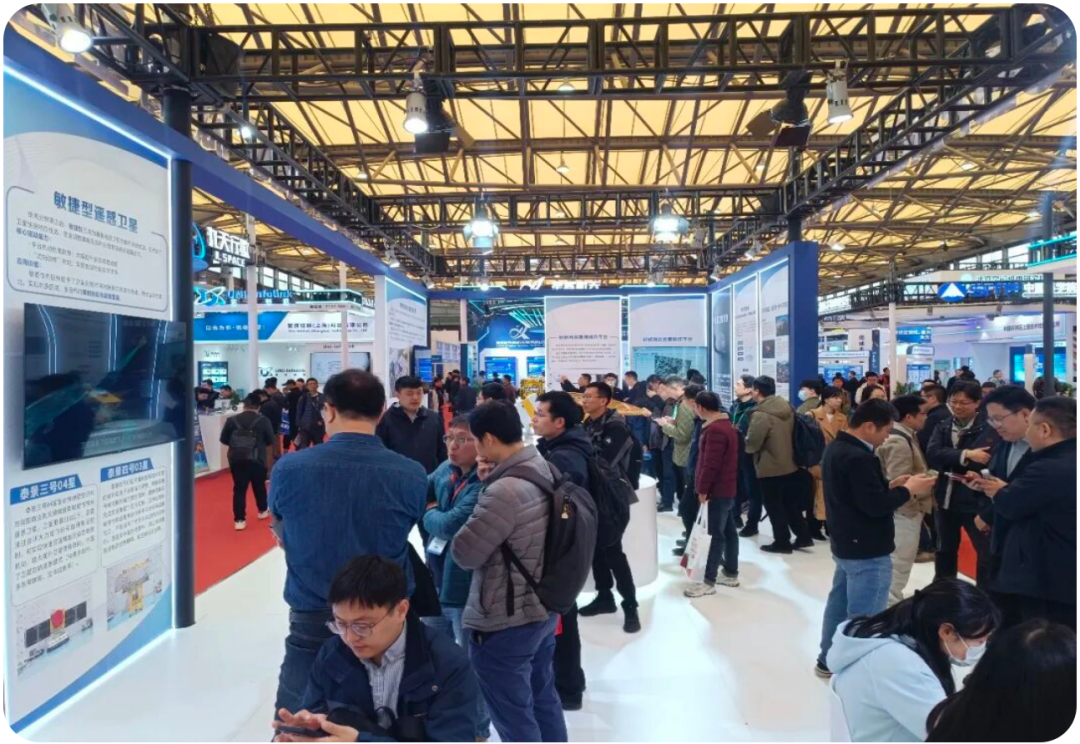
Micro-nano Starry Sky booth at the Shanghai Commercial Aerospace Conference and Exhibition
We are republishing portions of an article written by ChinaVenture this January that traces Micro-nano Starry Sky's growth trajectory — highly recommended reading. The following is excerpted and slightly abridged from ChinaVenture's "The 'Underwater Chain Master' of Commercial Aerospace: Beijing, Chengdu, and Wuxi All Invested":
/ The trillion-level market potential is still exploding.
Who will become the "chain master" of the commercial aerospace track? This is a question with a professional barrier to entry. But if asked at the end of 2025, many could give the answer: rocket companies.
Using the two rocket recovery tests of LandSpace's Zhuque-3 and the Long March 12A as milestones, alongside concurrent reports that SpaceX was preparing to launch what would be the "largest IPO in history" at an overall valuation of RMB 10.6 trillion, commercial aerospace smoothly took the baton from large language models, embodied intelligence, and semiconductors to become the capital market's latest traffic magnet. Everyone was discussing when the "first commercial aerospace IPO" would arrive; satellite ETFs on the secondary market had already posted several consecutive limit-up sessions. Riding this wave, commercial aerospace rapidly completed a round of market education. Stable and reliable rocket launch capability + affordable and reasonable launch costs have become consensus as the prerequisite for commercial aerospace to deliver on its trillion-level market potential.
Theoretically, this answer hardly qualifies as a "misunderstanding." A key reason Starlink became the benchmark project in commercial aerospace is that SpaceX can compress rocket launch costs to roughly $4,000 (approximately RMB 28,000) per kilogram, while China's satellite orbit insertion costs currently run RMB 60,000–120,000 per kilogram — this logistics cost differential directly determines whether commercial aerospace can form stable business models, in turn covering R&D costs across satellite and other segments to achieve positive industry-wide circulation.
The "Shanghai Stock Exchange Guidelines for Application of Listing Review Rules No. 9 — Applicability of STAR Market Fifth Set of Listing Standards to Commercial Rocket Enterprises" (hereinafter referred to as the "Applicable Guidelines"), issued on December 26, also provides important corroboration. In 2025, all five leading domestic rocket companies — LandSpace, Space Pioneer, Galactic Energy, i-Space, and CAS Space — initiated STAR Market IPO processes and entered guidance filing. Against this backdrop, the Applicable Guidelines clarified the priority of "rocket launch costs," explicitly stating: Commercial rocket enterprises applying for listing should have achieved, at minimum, the milestone of first successful orbital insertion of a payload using reusable medium-to-large launch vehicle technology.
But from an industrial perspective, compared to "rocket companies," what better satisfies the definition of "occupying a core position in the industrial chain, capable of consolidating and linking the maximum number of upstream and downstream players" is actually "complete satellite manufacturing."
At the market level, satellite companies are the demand starting point of the industrial chain — whether for communications, mapping, or surveillance, the core commercial scenarios of commercial aerospace all correspond to constellation plans involving thousands of satellites, directly creating确定性 markets for downstream industries including rocket launches and component manufacturing. At the technical level, satellite companies are the drivers of standards and supply chains — to achieve large-scale, low-cost manufacturing, complete satellite enterprises must lead design standardization (such as flat-panel satellite configurations) and push supply chains to adopt new processes and industrial-grade standards, then use their own mass production demands to force rapid iteration of core components like antennas, power systems, and payloads.
So while rocket companies are undeniably cool and sexy — absolute traffic magnets — investors have quietly opened a secondary track as the industry heats up, actively seeking "complete satellite" enterprises with the greatest potential to deliver on these expectations. Micro-nano Starry Sky is among them:
In late 2025, Micro-nano Starry Sky announced it had raised RMB 1.56 billion in equity financing for the full year 2025, with investors including new and existing shareholders such as Chengdu Gaoxin Ceyuan Capital, Beijing Commercial Aerospace and Low-Altitude Economy Industry Investment Fund, Xi Chuang Tou, Meishan Huantian Industry Development Group, and Zhongcai Rongshang Capital. According to the press release, the RMB 1.56 billion in new funding will be used primarily for R&D investment and capacity expansion, strengthening independent controllability, and taking on more national and commercial missions.
"Underwater Chain Master"
While commercial aerospace as a whole remains in a "technology verification phase" where most startups struggle to achieve profitability, this does not mean there are no stable commercial scenarios. A basic logic applies: while commercial aerospace is a young track, aerospace itself is not. Counting from the Soviet Union's successful launch of Sputnik-1 in 1957, over 60 years of space development history has long established two core positioning for "satellites": 1. Infrastructure supporting communications; 2. Tools for collecting scarce data to serve various applications.
Under this premise, both policymakers and entrepreneurs have known the "direction of effort" for many years, and have long understood who their customers are. For example, when the National Development and Reform Commission first defined the scope of new infrastructure in April 2020, it explicitly included satellite internet in the "new infrastructure" category. For another example, when Chengdu built the "Chengdu Aerospace Industry Functional Zone" in 2020, it very clearly noted that one advantage of Chengdu's commercial aerospace industry development was that "remote areas such as Ganzi, Aba, and Liangshan have clear market demands for emergency communications, forest fire monitoring, geological disaster monitoring, and low-cost broadband access for isolated village schools."
In other words, "building satellites" has higher operability and lower monetization difficulty than "building rockets," making it more suitable for venture capital logic — and Micro-nano Starry Sky's development trajectory perfectly illustrates this.
Going back to 2017: this was the first year that the National Space Administration and relevant departments issued documents such as the National Civil Space Infrastructure Medium- and Long-Term Development Plan (2015–2025) and China's Space Activities in 2016, encouraging private capital to enter the aerospace sector. Before this, neither state capital nor market-oriented funds treated commercial aerospace as a conventional, replicable investment theme. Combined with the inherent "sensitivity" of aerospace, institutions with commercial aerospace investment experience were few and far between.
According to publicly available information, Gao Enyu holds a Ph.D. in aerospace engineering from the joint training program between Beijing Institute of Technology and Pennsylvania State University in the United States. Before founding Micro-nano Starry Sky, he served as chief system designer and senior chief system designer at the China Academy of Launch Vehicle Technology and the China Academy of Space Technology, both under China Aerospace Science and Technology Corporation.
Unlike investment logic in other sectors, a founder's "national team" background in commercial aerospace is a major plus. The straightforward logic: due to various objective factors, China's aerospace equipment R&D has been dominated by "national-level strategic projects" with extensive over-engineering — at the chip level, for instance, the price gap between aerospace-grade and industrial-grade chips spans three orders of magnitude. This means the technical barriers entrepreneurs face are relatively limited, required R&D investment is predictable, and what they need to do most is subtraction: establishing a modern supply chain logic and "downgrading" to meet commercial-grade application requirements.
In fact, the name "Micro-nano" itself reflects this characteristic: in popular stereotype, satellites are massive objects weighing thousands of kilograms — but in the commercial domain, a shoebox-sized, roughly 10-kilogram "micro" or "nano" satellite is already sufficient. For example, Planet Labs' Dove satellites, from the American commercial aerospace unicorn, measure only 10×10×30 centimeters and weigh approximately 5 kilograms.
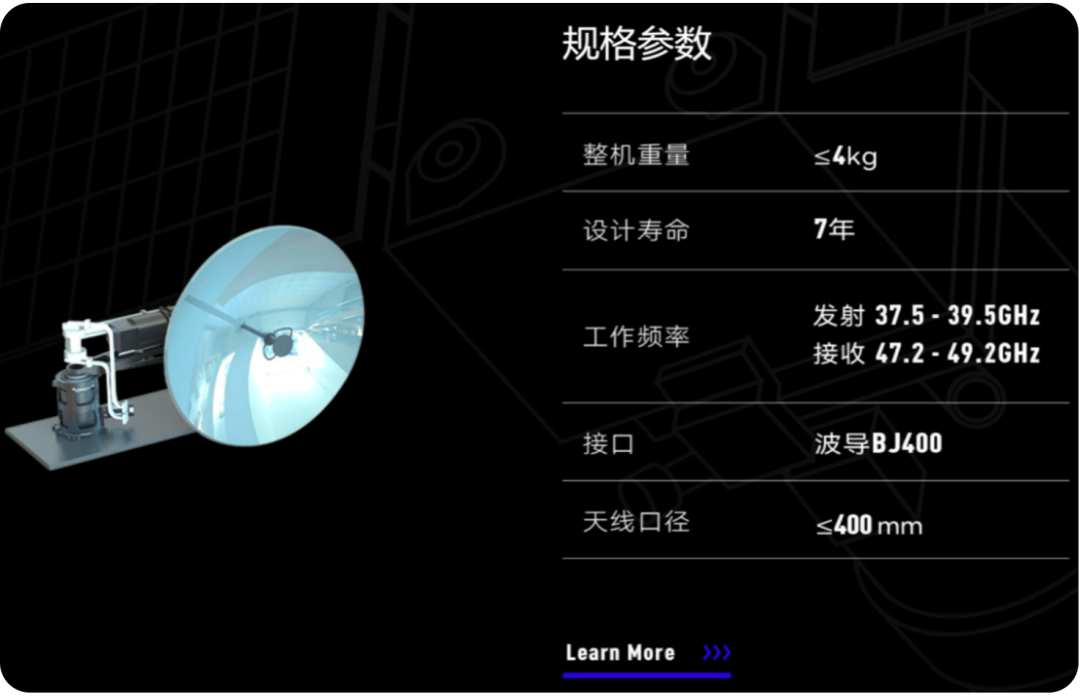
(Micro-nano Starry Sky's current in-orbit communications satellite products)
Micro-nano Starry Sky did indeed, as anticipated, receive market feedback "too quickly" for a startup. In a 2018 interview with The Paper, Micro-nano Starry Sky revealed that satellite sales revenue exceeded RMB 1 million just three months after founding. After the 2018 Spring Festival, the company received orders for several 200-kilogram satellites with contract values reaching hundreds of millions of yuan. Wu Shufan, then chairman of Micro-nano Starry Sky and distinguished chair professor at Shanghai Jiao Tong University's School of Aeronautics and Astronautics, described Micro-nano Starry Sky's market positioning thus: "There is a disconnect between the development of China's private aerospace sector and the supply of micro/nano satellite manufacturing capabilities... Currently, numerous private companies focus on satellite operation and application but cannot develop satellite manufacturing capabilities in the short term."
But at the industrial level, any theoretical "growth potential" or "investment value" requires continuous "phased verification." Based on this practical need, for the commercial aerospace story to hold water, the importance of "complete satellite" enterprises like Micro-nano Starry Sky, Spacety, and Chang Guang Satellite Technology is self-evident.
As mentioned earlier, Micro-nano Starry Sky was not lacking in product delivery capability — it secured satellite orders just three months after founding, and by October 2018 — one month after completing its Series A financing — it had independently developed and launched the "Future" satellite, setting the then-record for shortest time from development to launch for a commercial aerospace enterprise. By February 2022, Micro-nano Starry Sky was already capable of "one rocket, five satellites."
Satellites are fundamentally systems integration, encompassing six subsystems: satellite management, power, telemetry and control and data transmission, structure, thermal control, and attitude and orbit control. To match the company's rapid development, Micro-nano Starry Sky invested heavily in production line construction, completing its domestic "one factory (Beijing satellite factory), four stations (Beijing, Shanghai, Yunnan, and Xinjiang satellite telemetry and control stations), two centers (Beijing R&D center)" layout as early as its 2021 Series B financing. Beyond this, as Micro-nano Starry Sky rose, numerous critical links in the commercial aerospace industry chain — from launch vehicles and satellite platforms to laser communication terminals and satellite electric thrusters — gained commercial viability and became viable entrepreneurial options.
Ding Cheng, president of E-Dong Aerospace, a developer and manufacturer of spacecraft attitude and orbit control products, noted at a closed-door meeting in 2023: "In commercial aerospace, downstream complete satellite enterprises currently play a very important role — they take on certain risks or pressures to drive upstream enterprises in completing product verification at the application end."
By September 2025, when it formally completed IPO guidance filing with the Beijing Securities Regulatory Bureau with plans to list on the STAR Market, publicly available information showed that Micro-nano Starry Sky had successfully developed and launched 27 satellites, possessed eight satellite platforms ranging from 10-kilogram to 1,000-kilogram classes, and achieved production line delivery capacity of more than 60 satellites annually.
"Inflection Point Approaching"
In fact, even without familiarity with commercial aerospace industry logic, one can discern Micro-nano Starry Sky's "underwater chain master" credentials from its equity structure. As of September 2025, when it initiated IPO guidance, Micro-nano Starry Sky had 14 publicly traceable financing events with cumulative funding exceeding RMB 2 billion. Participating investors fall broadly into three categories:
The first is local state capital with long-term commercial aerospace deployment or extensive related industries for integration, such as Beijing Commercial Aerospace and Low-Altitude Economy Fund, Chengdu Ceyuan Capital, Wuxi Xi Chuang Tou, Meishan Huantian Industry Development Group, and Yuanhe Chongyuan-Wuxi Jingkai Shangxian Industry Investment Fund. The second is institutions with university research backgrounds capable of mutual technology transfer support, such as CASSTAR and Yuanhang Capital. The third is market-oriented institutions that have been actively investing in hard technology in recent years, betting on paradigm shift dividends — such as Lightspeed China (now Heart Capital led by Yan Han), CDH Investments, Yonghua Capital, Gopher Asset, and others.
It is fair to say that in China's commercial aerospace investment narrative, anyone with ideas about "forming an ecological chain" will find Micro-nano Starry Sky an unavoidable proposition. The RMB 1.56 billion financing completed in 2025 can largely be seen as a continuation of this investment logic: according to its official website, Micro-nano Starry Sky's current complete satellite business includes optical remote sensing satellites, microwave remote sensing satellites, and communications satellites, with products covering narrowband low-power communications, broadband internet satellite communications, medium-to-high resolution optical remote sensing, hyperspectral infrared remote sensing, high-resolution synthetic aperture radar, and science and technology experimental satellites, among other fields.
It is not difficult to imagine the "capital feast" that Micro-nano Starry Sky, as a direct beneficiary, will unleash once China's reusable rocket technology achieves breakthrough and satellite launch costs drop from the current RMB 60,000–120,000 per kilogram toward SpaceX levels.
Micro-nano Starry Sky also aligns with this trend. Its financing history can be read as a positive signal: the entire track has completed the most critical "phased verification," clearly seeing where the "inflection point" lies and what paths may lead there; it can also mean that commercial aerospace has truly begun its "industrialization" process, learning to use tools provided by the market to answer questions posed by the market.
Founded in 2022, Heart Capital is an early-stage venture capital fund focused on technology and digitalization in China. The Heart Capital team is primarily composed of Yan Han, founding partner of Lightspeed China, core investors, a chief financial officer, and senior investors from industry. The team's past investments include Series A investments in Xpeng Motors (NYSE: XPEV, 09868.HK) and Full Truck Alliance (NYSE: YMM), Pre-A investment in MetaX (688802.SH), as well as RoboSense (02498.HK), FinVolution (NYSE: FINV), LandSpace, Micro-nano Starry Sky, Huitian, Xi Wang, ROX Motor, Sunmi, World Logistics, Baichuan, Yunmanman Cold Chain, Fan Deng Reading, Lanhu, Starfield, and others. Rooted in China with a global perspective, Heart Capital is committed to finding true value in non-consensus. Heart Capital respects the value of "people" and advocates the potential of "heart," looking forward to accompanying more young Chinese entrepreneurs in strengthening China and going global.